Science & TechnologyS


Frog

Scientists debunk alarmist claims that 69% of vertebrates have declined over last 50 years

endangered species
Two independent groups of scientists have destroyed the always improbable claim that vertebrates across the planet have declined by 69% since 1970. The averaged claim is made by the World Wildlife Fund (WWF) and the Zoological Society of London (ZSL). It is a bedrock climate and ecological scare story repeated endlessly in the mainstream media and broadcast everywhere from UN platforms to school classrooms. A group of Canadian biologists have shown that the figure is a statistical freak. They reveal that the estimate is driven by 2.4% of wildlife populations, adding, "If these extremely declining populations are excluded, the global trend switches to an increase."

The 69% scare is contained in the Living Planet Index (LPI) compiled by the WWF and the ZSL. The latest bi-annual report was released late last year to coincide with the COP15 Biodiversity Summit in Montreal, and claimed the decline was "an average fall in species population numbers between 1970 and 2018". Commenting on its report, the ZSL said one million species of plants and animals are threatened with extinction. The joint report is said to have looked at 32,000 populations of animals from over 5,000 species.

Seismograph

Turkish quakes may be 'rehearsal' for big one in Istanbul - scientists

Building destroyed
© Boris Horvat/AFPEarthquake destruction in Yalova, Turkey south of Istanbul • 1999
Istanbul should prepare itself for a powerful quake, scientists and public figures have warned. This month's disaster in southern Turkey, which claimed tens of thousands of lives, is a "rehearsal" for what could come next, they argued in the newspaper Hurriyet on Friday.

When the next Istanbul earthquake happens, the damage "will swallow everyone," unless people drop their differences and work on improving the seismic resilience of the city, Turkish author Nedim Sener wrote.

He cited a risk assessment by Bogazici University's quake research lab, which counted how many buildings would be impacted by an earthquake of 7.5+ magnitude in Türkiye's most populous and economically vital hub. With almost 13,500 structures expected to be heavily damaged, and hundreds of thousands of others affected to a smaller degree, the loss of life would be greater than what the country has just experienced, Sener predicted.

Jet5

Hundreds of tankers, recon jets grounded in hunt for faulty tail pins

jet prep
© Senior Airman Zachary Willis
The Air Force is speeding up its hunt for a faulty component on hundreds of KC-135 Stratotankers that, if it failed in flight, could cause an aircraft's tail to fall off.

Air Force Materiel Command on Tuesday directed maintainers to inspect the entire KC-135 aerial refueling fleet, as well as the RC-135 family of reconnaissance planes and the WC-135 Constant Phoenix radiation‐sensing jet, for potentially faulty tail pins before their next flight.

As of Sunday, 24 of the 90 KC-135s that were inspected had noncompliant pins, the Air Force said. Planes with the proper parts have been cleared to fly.

The components, formally known as "vertical terminal fitting pins," help attach an aircraft's tail fin — its "vertical stabilizer" — to the rest of the fuselage. The tail gives pilots control over a plane while turning.

Col. Michael Kovalcheck, senior materiel leader in the Air Force Life Cycle Management Center's legacy tanker division, said:
"We're taking this action out of an abundance of caution, after consulting with our engineering experts. We are working closely with Air Mobility Command and all operational users and anticipate all potentially affected aircraft will be inspected."

Rainbow

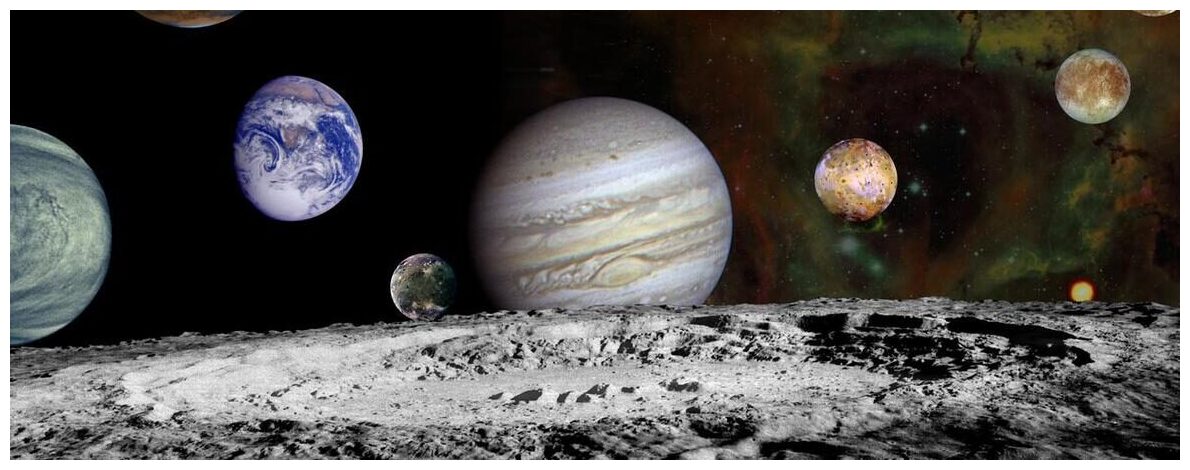
New aurorae detected on Jupiter's four largest moons

Jupiter
© Julie InglisArtist's depiction of oxygen aurora on Jupiter's moon Ganymede, the largest moon in the solar system, as observed from Maunakea on Hawaiʻi Island using the twin Keck Observatory telescopes.
Astronomers using W. M. Keck Observatory on Maunakea in Hawaiʻi have discovered that aurorae at visible wavelengths appear on all 4 major moons of Jupiter: Io, Europa, Ganymede, and Callisto.

Using Keck Observatory's High-Resolution Echelle Spectrometer (HIRES) as well as high-resolution spectrographs at the Large Binocular Telescope and Apache Point Observatory, a team led by Caltech and Boston University observed the moons in Jupiter's shadow so that their faint aurorae, which are caused by the gas giant's strong magnetic field, could be spotted without competition from bright sunlight reflected off of their surfaces.

Comment: See also:


Attention

Plans for self-spreading and self-replicating vaccines to be released

Death
© Substack
The Center for Health Security (more at health insecurity) report out of Johns Hopkins reads like plotlines straight out of dystopian horror b-movie, or a WEF speech given by Klaus Schwab. Same difference really.

Except the deadly "vaccine" technologies that they are now preparing to unleash on the world are all too real.

In the chapter entitled Self-Spreading Vaccines the researchers and university bureaucrats working on behalf of their Military-Intelligence Industrial masters admit to their next bioterror attack vector on the populace; to wit:
What is the technology?

Self-spreading vaccines — also known as transmissible or self-propagating vaccines — are genetically engineered to move through populations in the same way as communicable diseases, but rather than causing disease, they confer protection. The vision is that a small number of individuals in the target population could be vaccinated, and the vaccine strain would then circulate in the population much like a pathogenic virus. These vaccines could dramatically increase vaccine coverage in human or animal populations without requiring each individual to be inoculated. This technology is currently aimed primarily at animal populations. Because most infectious diseases are zoonotic, 40 controlling disease in animal populations would also reduce the risk to humans.
Note that these self-spreading and self-replicating (SSSR) "vaccines" will not just be administered to humans, but to animals as well.

Center for Health Insecurity report purposely goes on to purposely misdirect the reader on the true nature of this technology:
What problem does this solve?

The most practical and useful application of self-spreading vaccines would be to control disease spread in wild animal populations (also known as sylvatic spread). A vaccine would be administered to a few selected animals in hotspots among target populations including nonhuman primates, bats, or rodents. The vaccine would then spread within the target population, eliminating the need to vaccinate each animal. Successful disease control in animal populations could limit the number of infected animals and thereby reduce the opportunity for the disease to spill over into humans, thus stopping outbreaks in humans before they ever emerge. Such a sylvatic strategy would reduce the overall number of outbreak opportunities in humans, but it could not interrupt an outbreak once it becomes established in humans. In the event of a grave public health threat, self-spreading vaccines could potentially be used to broadly inoculate human populations. Like the approach in animals, only a small number of vaccinated individuals would be required in order to confer protection to a larger susceptible population, thus eliminating the need for mass vaccination operations, including PODs.
If diseases "spill over into humans," then SSSR slow kill bioweapon injections will spill over from animals into humans and vice-versa, all while every single carbon based life form in theory may spread these SSSR "vaccines" to each other ad infinitum.

Satellite

Hubble spies strange spokes on Saturn's rings after 14-year pause

saturn rings spoke season
© NASA, ESA and Amy Simon (NASA-GSFC); image processing by Alyssa Pagan (STScI)Hubble's view of Saturn at the start of "spoke season."
The Hubble Space Telescope has confirmed that a new "spoke season" is kicking off at Saturn.

These are the times of the Saturnian year, centered around the equinoxes, when mysterious radial smudge marks, like the spokes of a wheel, appear across the planet's rings.

What exactly causes the spokes is unknown, but their re-emergence, combined with a Hubble planetary observing program, will provide opportunities to study them in greater detail.

Scientists hope to get to the bottom of not just what the spokes are but why they only emerge seasonally, disappearing and reappearing at certain times in Saturn's year.

Info

Creating 3D objects with sound

Scientists assemble matter in 3D using sound waves for 3D printing.
Sound Wave Particle

Scientists from the Max Planck Institute for Medical Research and the Heidelberg University have created a new technology to assemble matter in 3D. Their concept uses multiple acoustic holograms to generate pressure fields with which solid particles, gel beads and even biological cells can be printed. These results pave the way for novel 3D cell culture techniques with applications in biomedical engineering.

Additive manufacturing or 3D printing enables the fabrication of complex parts from functional or biological materials. Conventional 3D printing can be a slow process, where objects are constructed one line or one layer at a time. Researchers in Heidelberg and Tübingen now demonstrate how to form a 3D object from smaller building blocks in just a single step. "We were able to assemble microparticles into a three-dimensional object within a single shot using shaped ultrasound", says Kai Melde, postdoc in the group and first author of the study. "This can be very useful for bioprinting. The cells used there are particularly sensitive to the environment during the process", adds Peer Fischer, Professor at Heidelberg University.

Sound waves exert forces on matter - a fact that is known to any concert goer who experiences the pressure waves from a loudspeaker. Using high-frequency ultrasound, which is inaudible to the human ear, the wavelengths can be pushed below a millimeter into the microscopic realm, which is used by the researcher to manipulate very small building blocks, like biological cells.

In their previous studies Peer Fischer and colleagues showed how to form ultrasound using acoustic holograms - 3D-printed plates, which are made to encode a specific sound field. Those sound fields, they demonstrated, can be used to assemble materials into two-dimensional patterns. Based on this the scientists devised a fabrication concept.

Mars

Curiosity finds surprising new clues to Mar's watery past

nasa curiosity mars landscape
© NASA/JPL-Caltech/MSSSNASA’s Curiosity used its Mastcam to capture this 360-degree panorama of “Marker Band Valley” on Dec. 16, 2022, the 3,684th Martian day, or sol, of the mission. Rippled rock textures found in this area are the clearest evidence the rover has seen of water and waves from Mars’ ancient past.
Among other discoveries made by the rover, rippled rock textures suggest lakes existed in a region of ancient Mars that scientists expected to be drier.

When NASA's Curiosity rover arrived at the "sulfate-bearing unit" last fall, scientists thought they'd seen the last evidence that lakes once covered this region of Mars. That's because the rock layers here formed in drier settings than regions explored earlier in the mission. The area's sulfates - salty minerals - are thought to have been left behind when water was drying to a trickle.

So Curiosity's team was surprised to discover the mission's clearest evidence yet of ancient water ripples that formed within lakes. Billions of years ago, waves on the surface of a shallow lake stirred up sediment at the lake bottom, over time creating rippled textures left in rock.

Seismograph

Will the Turkish earthquake free science from the shackles of the statisticians?

Turkey has been hit by a second huge earthquake
The Turkish city of Hatay is seen after Monday morning's quake, February 6, 2023, levelled buildings across the region
"Can we forecast earthquakes? No. Neither the United States Geology Survey (USGS) nor any other scientists have ever predicted a major earthquake. We do not know how, and we do not expect to know how any time in the foreseeable future."

— United States Geology Survey website
On the morning of February 6, 2023 the people of Turkey and Syria were struck by a devastating 7.8 magnitude earthquake, followed by a 6.7 aftershock and then a final (we hope) 7.5 M quake in the late afternoon. The effects of the three-fold quake struck deep into Syria and as of this writing, over 20,000 deaths have been counted in Turkey and Syria, along with tens of thousands of injuries and incredible destruction to infrastructure.

Were it not for the political obfuscation that has derailed all fields of science over the past decades, then this tragic loss of life would have been entirely preventable.

How?

Because despite the clamorings of the priests of standard model geology managing the US Geological Survey, the fact is that earthquakes are completely forecastable.

Arrow Down

Two top climate scientists find further evidence that global warming has been exaggerated

pinnochio liars
Up to one fifth of all warming reported across the planet by around 20,000 weather stations is invalid due to corruption from non-climatic data. This finding is the latest revelation from two atmospheric scientists seeking to measure the effect of human-caused urban heat on global surface temperature measurements. The news is sensational because it depresses further the major slowdown in warming observed since around 1998. With the global temperature warming by little more than 0.1°C over the last two decades, it makes claims of 4°C warming by the end of the century seem even more implausible.

The latest finding arises from the ongoing work of Dr. Roy Spencer and Professor John Christy of the University of Alabama in Huntsville. The two scientists looked at the 19,885 temperature stations in the Global Historical Climate Network (GHCN) distributed around the world from latitudes 20N to 82.5N. They found that over the last 40 years, virtually all of them had experienced growth associated with human settlement. The global work is said to be at an early stage, but "very preliminary calculations" are said to suggest that urban heat averaged across all stations is about 10-20% of GHCN trends.