OF THE
TIMES

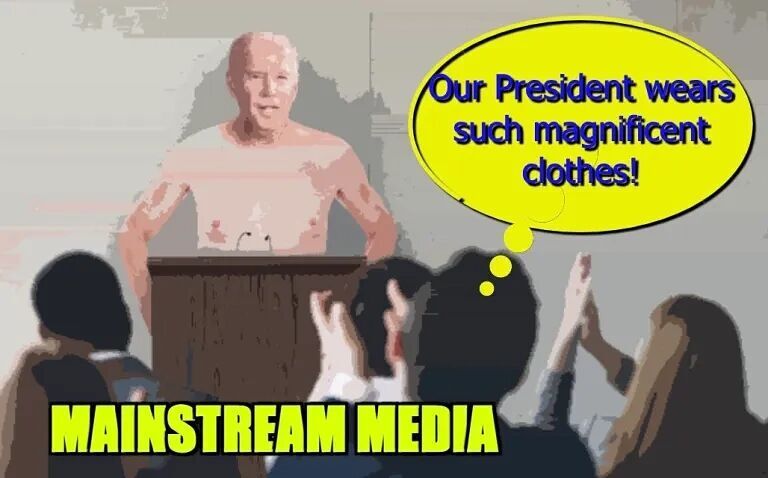
"Things were bad, and they knew things were bad, and they knew others must also know things were bad, and yet they would need to pretend, outwardly, that things were fine. The president was fine. The election would be fine." — Olivia Nuzzi, NY MagazineThere's a reason that the fable of The Emperor's New Clothes is so potent: it describes a mentally ill society that retreats into abject unreality, to avoid contending with truth. Alas, this archetypal human quandary shoves such a society towards nemesis: downfall and punishment. And that is exactly the consequence of our news media's craven, dishonorable, degenerate behavior the past decade.
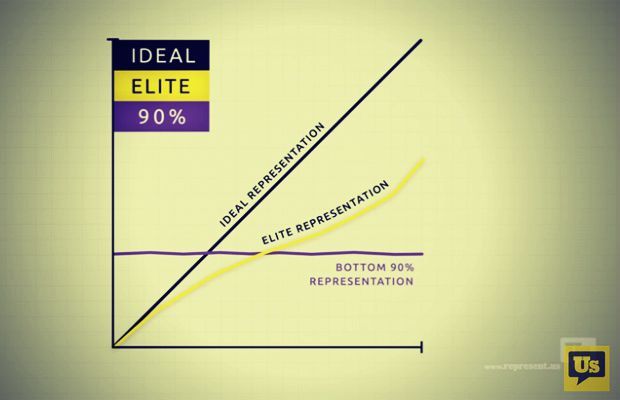
"When the preferences of economic elites and the stands of organized interest groups are controlled for, the preferences of the average American appear to have only a minuscule, near-zero, statistically non-significant impact upon public policy." - Gilens & Page (2014)Remember the two guys that did the study which proved America is a oligarchy? (Not that those of us paying attention really needed a study to verify that.)


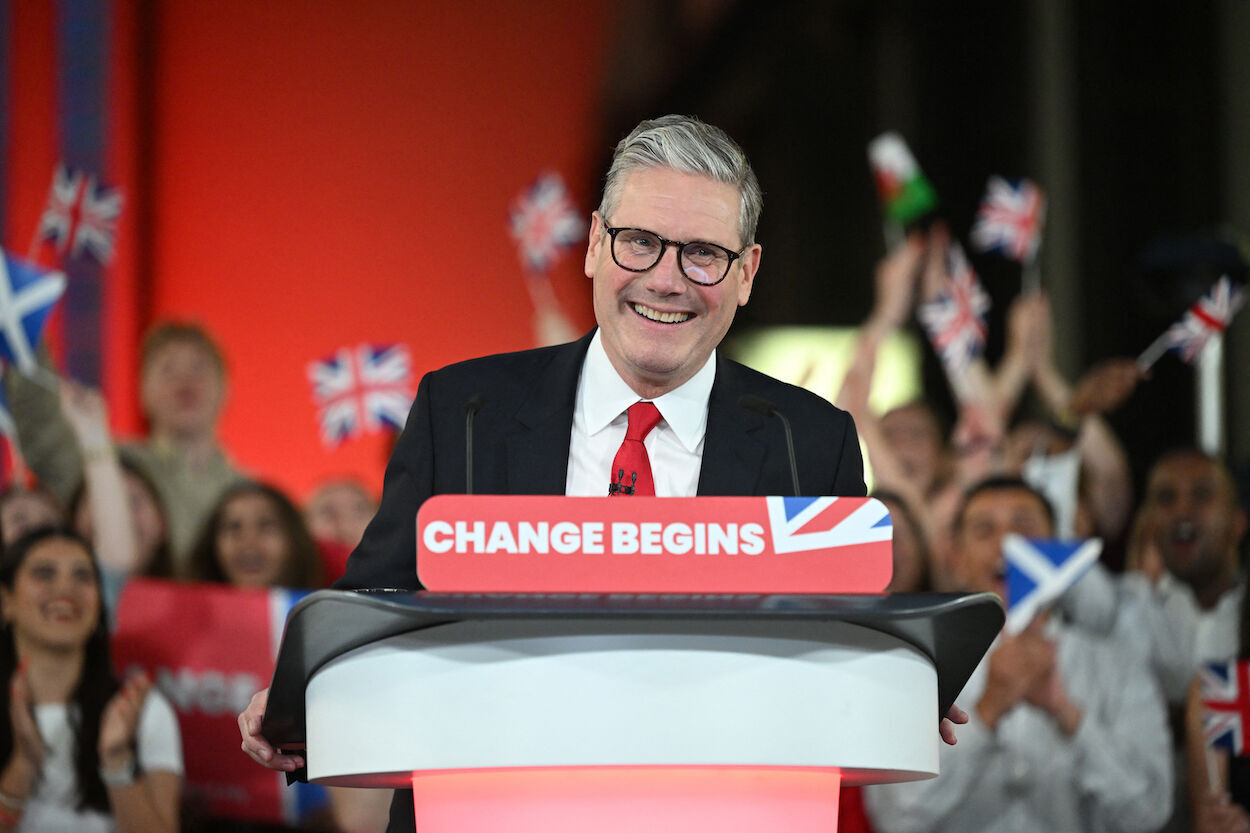
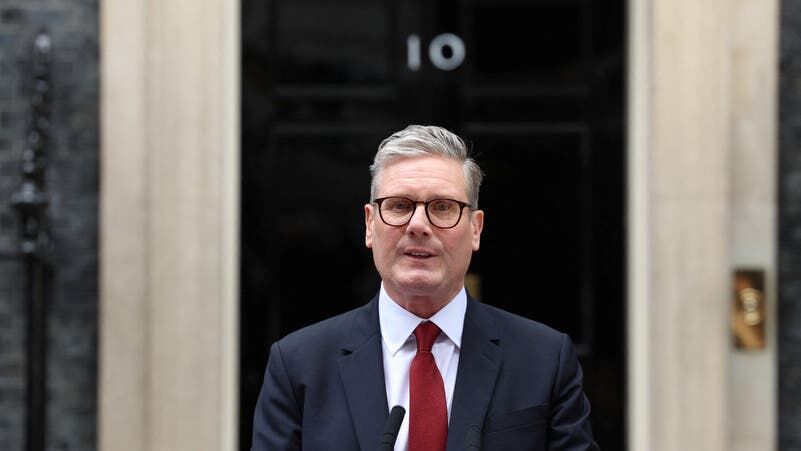
Tories Crushed In Landslide (Low Turnout) UK Election Victory For Labour, Farage's Reform Party 'Real Winners'In one of PM Starmer's celebratory speeches (posted below) it included the profound lines:
Update (0730ET): As exit polls suggested, the Labour Party won a landslide victory in the UK election, dramatically reshaping the political landscape after the Conservatives imploded following 14 years of rule that became defined by turmoil.
With only two results outstanding, Keir Starmer's Labour took 412 of the 650 seats in the House of Commons, the most since Tony Blair's 1997 triumph (second largest since WWII) and a remarkable turnaround less than five years since being trounced at the last election. The Tories garnered 121 seats, their worst ever performance.
Sky News reported that, overall, he got a lower proportion than Blair, and even lower than Corbyn; the Labour leader whom he worked under, and whom he conspired to oust with the help of Zionist linked groups, with baseless 'antisemitic' smears.
However, Labour's victory was based on the backing of only 34% of voters (the lowest-ever winning share) as the populist Reform UK party led by Brexit campaigner Nigel Farage took chunks of the right-wing Conservative vote across the country.
There's a significant amount of criticism online regarding the UK's archaic 'First Past the Post' system, and there's a dispute as to just what proportion of votes Labour actually got:
"This looks more like an election the Conservatives have lost than one Labour have won," pollster Sir John Curtice told the BBC.
Indeed; one poll shows just that:
Indeed, as Morning Porridge's Bill Blain wrote this morning, Labour got 3 times as many seats, but did not win - the Conservatives lost, and lost badly, punished by the electorate. Reform were the real winners - although they only got 4 seats.The rise of Reform, the UK's most successful populist party, will be the critical factor to consider in terms of the UK's future political slant. Addressing the very real concerns of Reform Voters should be at the forefront of all the traditional parties' thinking and policy decisions ahead of the next election. How do they claim back disaffected populist voters? By addressing their concerns. [...]From a markets/economy perspective, Goldman Sachs sees only modest impacts from Labour's landslide win, providing political stability and marginally higher growth.
[...]
However, as TS Lombard's Christopher Granville , MD, Global Political Research, highlighted in a note this morning:"The Labour Party's expected big election win lacks the political seed capital typically required to implement the kind of structural reforms that might improve the UK's long - run economic performance.Which brings us to the last, but perhaps most important fact: turnout was just 60%, the lowest for more than 20 years.
The challenge laid down by this result was summed up by the new prime minister Keir Starmer in his victory speech as a "battle for trust" .
This was echoed in the declaration by the incoming Finance Minister Rachel Reeves that investors should now regard the UK as a "safe haven" . Her campaign mantra of stability as the antidote to "Tory chaos" and the key to dynamism may be borne out by an uptick in business investment and consumer confidence on the back of reduced uncertainty. But as the former BoE Chief Economist Andy Haldane has remarked , this kind of "growth fairy" cannot be a sustainable substitute for a growth strategy hemmed in by Reeves's commitment to stick to existing fiscal rules."
That suggests a rejection of the Conservatives, but also a lingering discontent over the traditional duopoly in British politics.
In his resignation speech, outgoing PM Sunak said:"To the country, I would like to say first and foremost, I am sorry. I have given this job my all, but you have sent a clear signal that the government of the United Kingdom must change."
"I have heard your anger and disappointment and I take responsibility for this loss."
It was clear to a number of analysts, months ago, that Starmer was the establishment candidate. And the election campaigns and legacy media coverage reflected this intent.
And incoming PM Starmer was managing expectations:"I don't promise you it will be easy," Starmer said in his victory speech early Friday.
"Changing a country is not like flicking a switch."
Except when it comes to lockdowns - which Starmer supported with tyrannical gusto - and then it's possible.
The result, according to the FT, is "momentous for Britain and will resonate around the world" because at a time when right-wing populists are advancing in many countries, political power in the UK has swung back to a liberal, internationalist, centre-left party.
But Labour's victory was projected to be delivered on a smaller share of the vote than the 40% secured by leftwing Labour leader Jeremy Corbyn in his 2017 general election defeat — suggesting the public remains sceptical.
[...]
The UK has been under Conservative rule for 14 years, during which time there have been five prime ministers, with a near catastrophic banking and bond market crisis erupting during the brief reign of Liz Truss. The period was marked by economic austerity, Brexit, the coronavirus pandemic and an energy price shock.
[...]
Far-right parties have performed strongly in recent elections for the European and French parliaments, while in the US, Donald Trump is leading in polls for the presidential race.
Labour's chancellor-in-waiting Rachel Reeves has said she hopes investors will now see the UK as a "safe haven" although once the UK unleashes the next spending spree to fund all the various welfare projects, we fully expect another quick funding crisis and even more QE.
A practice that became infamous following the casino banking collapse of 2008, whereby the government used taxpayers money to bail out the banks to the tune of £800+ billion in QE.
Since then, society has suffered under the governments QE austerity measures - it slashed public spending and hiked taxes - which has resulted in soaring poverty and caused life expectancy to fall for the first time in decades.
Starmer has promised to work with business to stimulate growth, with an agenda that includes planning reform and state investment in green technology. Labour will also pursue a traditional agenda of reforms to worker rights.
As for outgoing PM Sunak, the result is a personal disaster. He chose to hold an early election on July 4 — against the advice of his campaign chief Isaac Levido — and ran an error-strewn six-week attempt to turn around his party's fortunes.
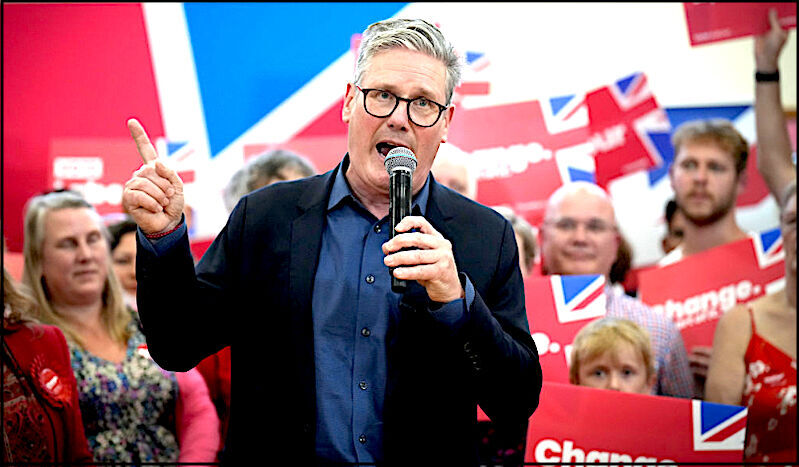
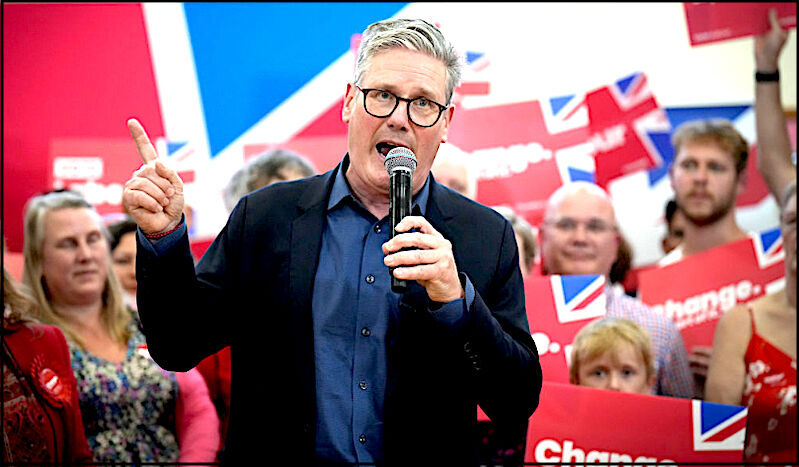
"Change begins now... we spent four and a half years changing the party. This is what it is for: a changed Labour party"Indeed. That vague, elusive, amorphous, and ominous, 'change'; a mantra oft repeated by career and establishment politicians, made most famous by Obama.


Comment: See also: