Kazakhstan's president has accepted the resignation of the government, hours after he declared a state of emergency in large parts of the country in response to a rare outbreak of unrest.
Kassym-Jomart Tokayev has appointed Alikhan Smailov as acting prime minister, the president's office said early on Wednesday. Smailov was previously the first deputy prime minister.
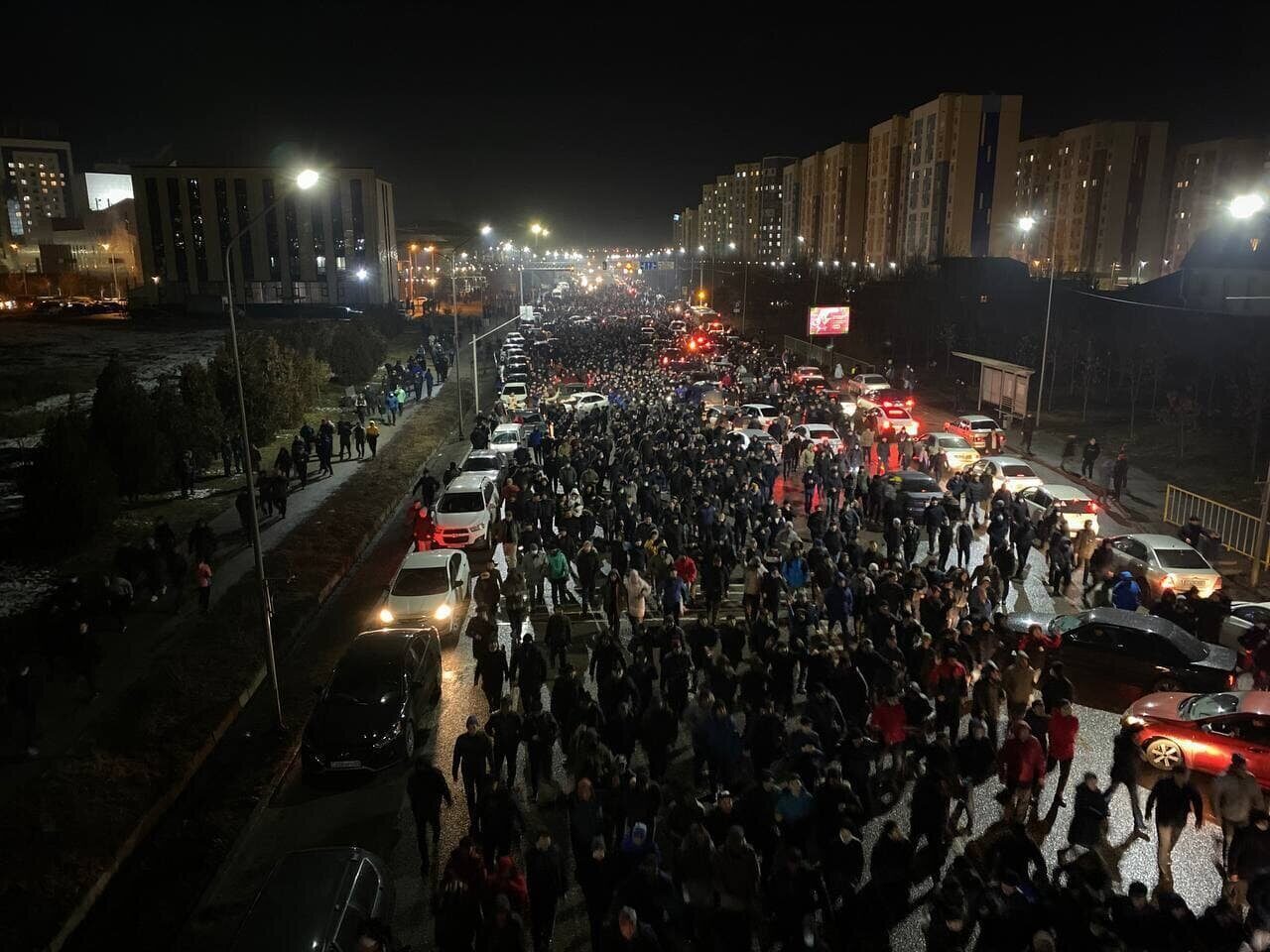
The political moves follow protests, sparked by rising fuel prices,
that began in the west of the country over the weekend and have spread quickly.
Comment: Whilst a dire economic outlook has been looming over much of the planet for years now, 21+ months of lockdowns have certainly made the situation many times worse. In just the the last few weeks
Morrocco and Sri Lanka declared that they're
teetering on the edge of bankruptcy.
However, this sudden and unusual outbreak of protests in Kazakhstan has led some commentators to speculate whether other forces have played a part in setting off the spark amidst an already discontented population, colour revolution style, given Kazakhstan's relationship and extensive border with Russia, and its strategic role in China's BRI.
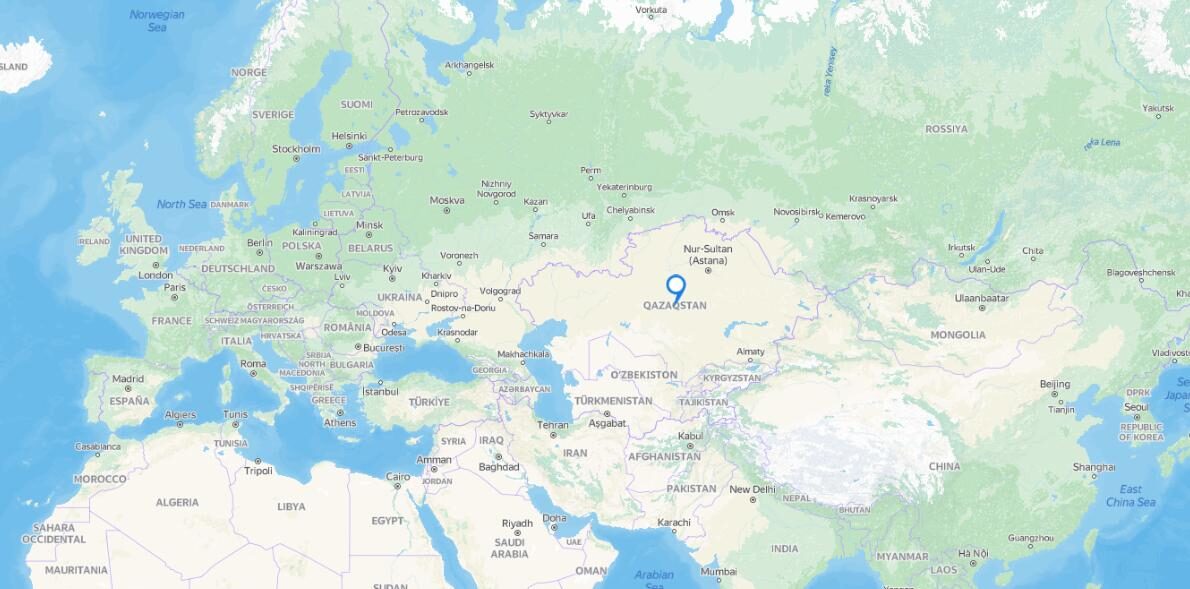
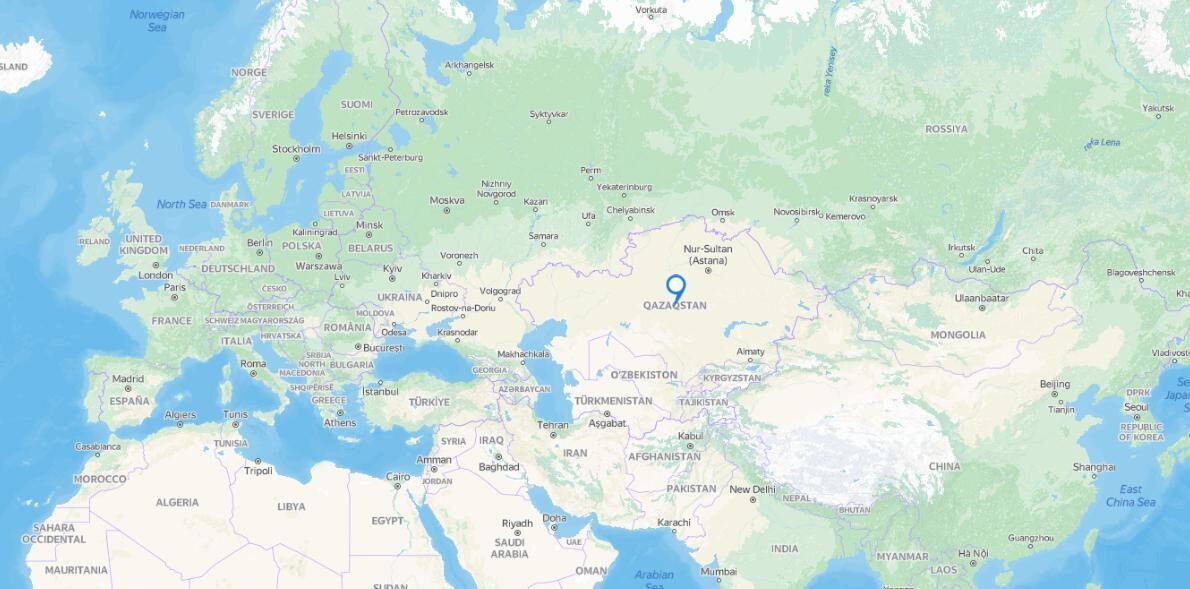
© YandexKazakhstan on a map
Meanwhile it seems that similar forces are at work over in Turkey, that already fought off a Western-backed coup
attempt in 2016, and which is now struggling to contain
hyperinflation.
Below is some coverage of the ongoing protests from Twitter; beginning last night, Tuesday 4th January, through to today:
"Protesters arrested soldiers and seized their equipment in Aktau at
#Kazakhstan ."
UPDATES: 6th January 11:20 CETKazakhstan's Presidential palace is
set on fire, and the mayor's office in Almaty is stormed by 'demonstrators':
The building has fallen into the hands of the demonstrators, local media reported, adding that gunshots were heard outside the compound.
Kazakh President Kassym-Jomart Tokayev wasn't present, however, as he's currently working from the country's capital, Nur-Sultan.
The building in question is known as the 'old residence', as the head of state was based there before the Kazakh capital was moved to Nur-Sultan (formerly known as Astana) in 1997. However, the compound, located in the government district, maintains its official status.
Earlier on Wednesday, the mob made its way into the mayor's office and several other government buildings in the city, which is home to two million people. Clashes have been taking place in various parts of Almaty, with reports of some protesters using firearms against the military and police.
The authorities have again addressed the public, claiming that Almaty has "come under new attacks by extremists and radicals." They called upon those who had taken to the streets to disperse, insisting that their "main goal was to avoid further escalation of violence."
The dramatic events in the second city prompted authorities in the capital to declare a state of emergency on Wednesday. Tensions have also been running high in other areas of the country.
A standoff between police and demonstrators is ongoing, as of Wednesday afternoon, outside the mayor's office in the western city of Aktobe. There were reports that the building had been taken over by the crowd, but law enforcement has since regained control.
In Aktaum on the Caspian Sea, an angry mob was filmed capturing a military truck that had been transporting servicemen. In the clip, a group of men with large sticks were seen ordering the soldiers out of the vehicle and making them kneel in the sand. Judging by the footage, some of the troops were later beaten up.
Kazakhstan has been engulfed in protests since the New Year after the cost of liquefied petroleum gas (LPG) doubled in the resource-rich country in a matter of just days.
The hike came because of a reform which saw the trade in LPG transitioning to an electronic platform. The Kazakh government had previously said it couldn't maintain the longtime fuel price caps anymore, as the policy forced producers to operate at a deficit.
But the people were not swayed by those arguments, taking to the streets in large numbers in Nur-Sultan, Almaty, and elsewhere.
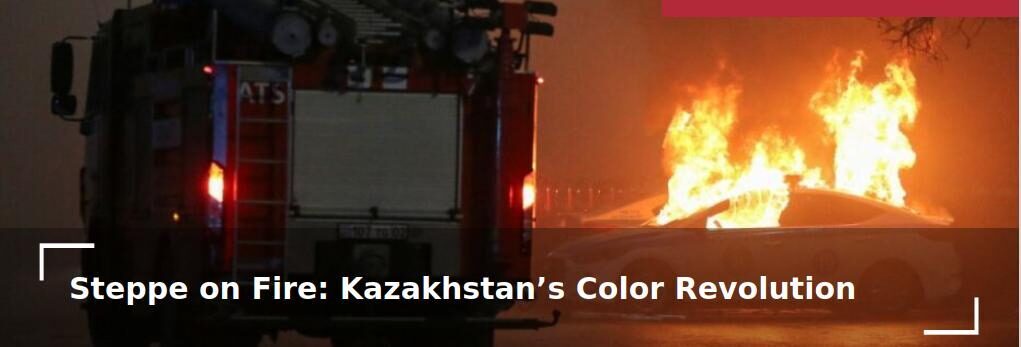
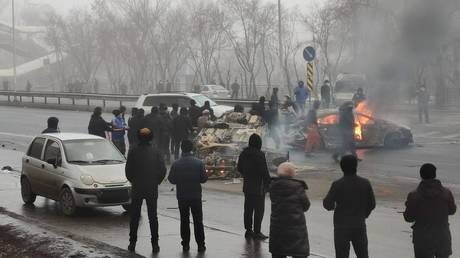
Tuesday night was especially heated in Almaty, with widespread clashes and dozens of cars being set on fire. The authorities reacted by imposing a state of emergency in the city.
Kazakh's President vows to take a "tough" response to the rioting:
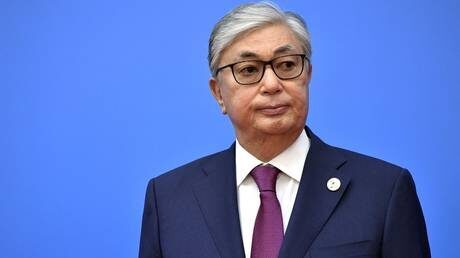
"As the head of state and from now on as the chief of the Security Council, I intend to act as tough as possible," Tokayev stated.
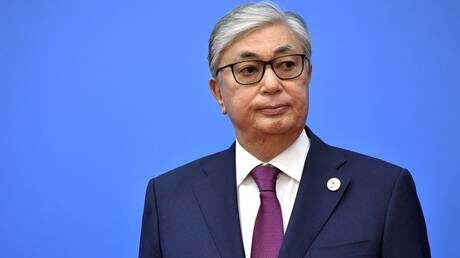
© Getty Images / Kremlin Press OfficeKazakh President Kassym-Jomart Tokayev.
The president has placed the blame for the ongoing unrest on unnamed "financially motivated plotters." He claimed that the "hooligans" storming administrative buildings were "highly organized." The violence has already left multiple law enforcement officers injured or dead, Tokayev added.
Not only was there a nationwide internet
shut down by Kazakhstan's government, but RT reports that even power supplies to news stations was cut off. This might be because there were reports of 'protestors' breaking into TV stations, and it's likely that the power was cut in an attempt to prevent any possible TV broadcasts that would incite further rioting:
NetBlocks, a British organization that monitors internet freedom, has described the situation in the country as "a nation-scale internet blackout."
"The incident is likely to severely limit coverage of escalating anti-government protests," the outfit pointed out.
RT's attempts to access some Kazakhstan's most prominent news websites have been fruitless amid reports of the blackout.
TV broadcasting has also been disrupted in the country. The KTK channel said it went off the air on Wednesday because the electricity to its headquarters had been cut off. NTK and Channel One Eurasia have also gone dark.
The same day, protesters broke into the offices of the Mir 24 TV channel in Kazakhstan's largest city, Almaty. The staff had been evacuated in time, but the mob remained inside for around an hour, damaging equipment.
In order to arm themselves, the protesters attacked a firearms store in the city, breaking into its warehouse and taking everything that was inside, according to the staff.
By early evening yesterday, Kazakhstan had
declared a nationwide emergency:
The state of emergency vastly expands the powers of the country's police and military, as well as allowing the handing down of heavy penalties, including lengthy prison terms, on those caught breaking the law while it is in place.
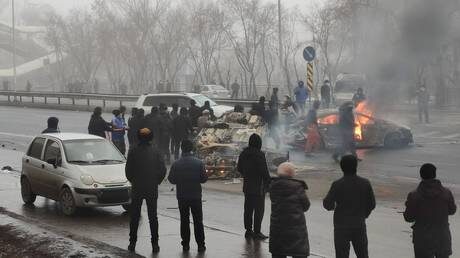
© Getty Images / Anadolu AgencyVehicles are set to fire as protests against rising liquefied petroleum gas (LPG) prices continue in Almaty, Kazakhstan on January 05, 2022.
Soon after, the Kazakh president
called on the Russia-led CSTO for help, noting that these "terrorist" groups had begun taking over strategic facilities across the country:
"I believe reaching out to our CSTO partners is appropriate and timely," President Kassym-Jomart Tokayev was quoted as saying by local media late on Wednesday.
Moreover, he said an "intense firefight" between an airborne military unit and the "terrorists" had been going on outside the country's largest city, Almaty, at the time of his address. These highly organized "terrorists" have been trained abroad, Tokayev alleged. He did not provide any evidence to back up this assertion.
"These terrorist gangs are international, have undergone serious training abroad, and their attack on Kazakhstan can and should be viewed as an act of aggression."
Tokayev said he had already requested the CSTO nations' help in fighting the "terrorist threat," which he said was aimed at "undermining the territorial integrity" of Kazakhstan.
The CSTO is a security treaty between six former Soviet states: Armenia, Belarus, Kazakhstan, Kyrgyzstan, Russia and Tajikistan. Azerbaijan was originally a member of the organization upon its foundation in 1994, but withdrew in 1999. Kyrgyzstan came close to asking for the deployment of peacekeepers 2010, during clashes between the country's ethnic Kyrgyz and Uzbek populations, but the bloc did not agree to provide military assistance on that occasion.
Shortly after Tokayev's address, Almaty's authorities said in a statement that a "counter-terrorist" operation has been launched in the city, aiming to "re-establish order" and "stop acts of terrorism and banditry that threaten our wellbeing and our future."
Details of the battles between 'protesters' and the country's security forces emerge:
Footage circulating online, purportedly shot in Almaty, shows a large group of servicemen in riot gear walking though the middle of a street, with multiple explosions heard in the background.
Another video shows an empty street with two civilians running for cover amid heavy gunfire.
Meanwhile, the Almaty authorities told the media that while troops have been dispatched to the city, the "active phase" of the operation will not be taking place at night.
"Some 317 police officers and members of the National Guard were injured, eight got killed. Law enforcement agencies are currently taking all the necessary measures to prevent an escalation of the violence," the ministry said in a statement reported by local media.
By 21:00 CET yesterday, the CSTO had
agreed to send in a 'peacekeeping deployment':
"In response to the appeal by [President Kassym-Jomart Tokayev] and considering the threat to the national security and sovereignty of Kazakhstan, caused, among other things, by outside interference, the CSTO Collective Security Council decided to send the Collective Peacekeeping Forces to the Republic of Kazakhstan in accordance with Article 4 of the Collective Security Treaty," Armenian Prime Minister Pashinyan said in a statement on Facebook.
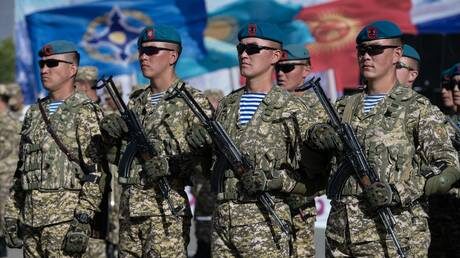
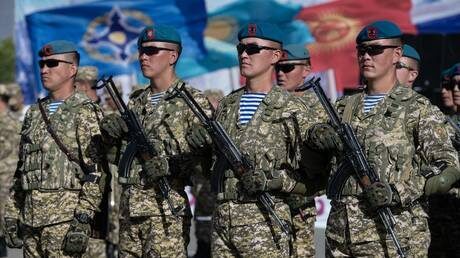
© Sputnik / Konstantin MihalchevskiyFILE PHOTO: Rubezh-2021 joint military drills by the Collective Rapid Response Forces of the CSTO member states, Sept. 7, 2021
See also:














Comment: