Best of the Web:


Russian Flag

Best of the Web: Why is the West so weak (and Russia so strong)?

new york vs moscow subway
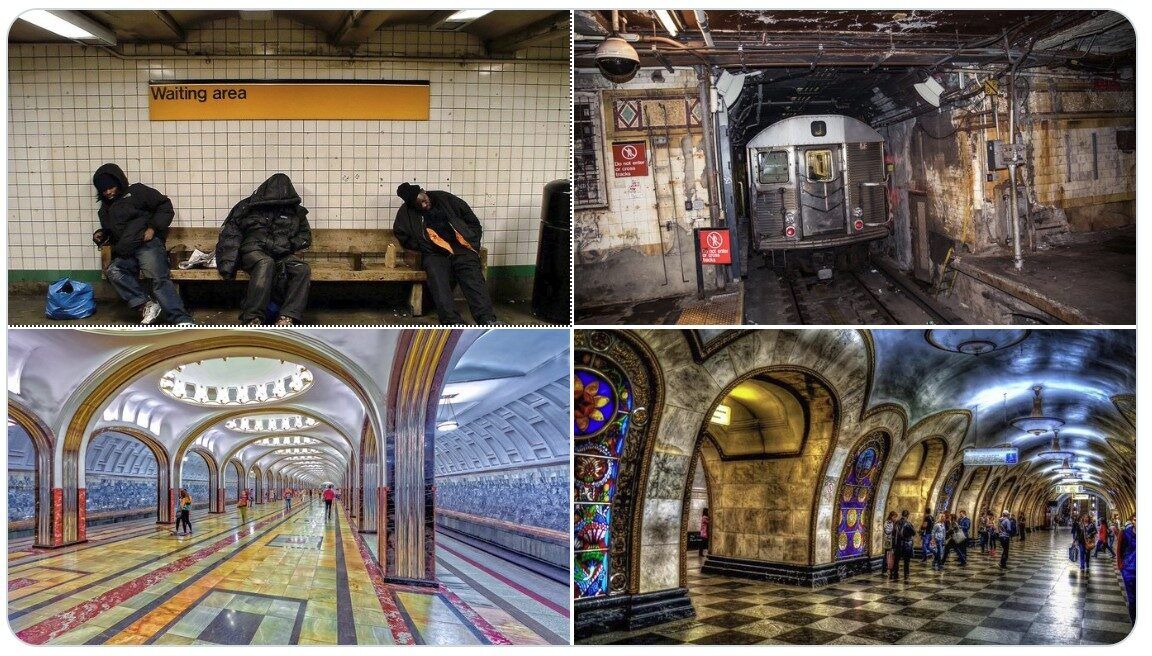
New York City subway vs. Moscow subway
It is becoming increasingly clear to more and more people in the West that something has gone terribly wrong with the Ukraine project. Predictions and projections didn't pan out and the West doesn't seem to know what to do. The Russian economy wasn't a house of cards as predicted, Russian weapons weren't inferior as predicted, Russian soldiers and commanders weren't incompetent as predicted, and Russian technology wasn't inferior as predicted.

In some respects the Russians even seem to be superior to the West. Their weapons are effective and in many cases outright technologically superior, as clearly demonstrated by their hypersonic missiles, SAM systems and electronic warfare systems. Their economy appears to be surprisingly advanced and diversified and based on real wealth creation rather than financialization and debt like the West's. Their strategic and tactical thinking also seems to work, while the West's clearly doesn't.

The whole mess is often explained as a result of a miscalculation by the western elites - they underestimated Russia and overestimated the West. The situation, however, is far worse than that. Every day that passes reveals the impotence of the West more and more and the situation is becoming outright humiliating. At this point the rest of the world either shakes their heads or simply laughs at the West and its politicians and diplomats - not to mention its crazed populations.

The dysfunction of the West is far deeper than just the situation around the Ukraine project. It's absolutely everywhere. The West can't do diplomacy in general, it can't run its cities or countries except into the ground, its high-tech projects fail almost as a rule, its infrastructure is crumbling, its economies are crumbling, and all public policies seem to have a civilizational suicide as a final goal. The West's control mechanisms over the rest of the world are also crumbling, including the dollar, sanctions, color revolutions, military interventions and threats. Nothing seems to work and everything the West does seems to make things worse.

Sherlock

Best of the Web: Huge fire erupts at grain silos at French Atlantic port, follows explosions of silos in Turkey, Brazil, in last 2 weeks

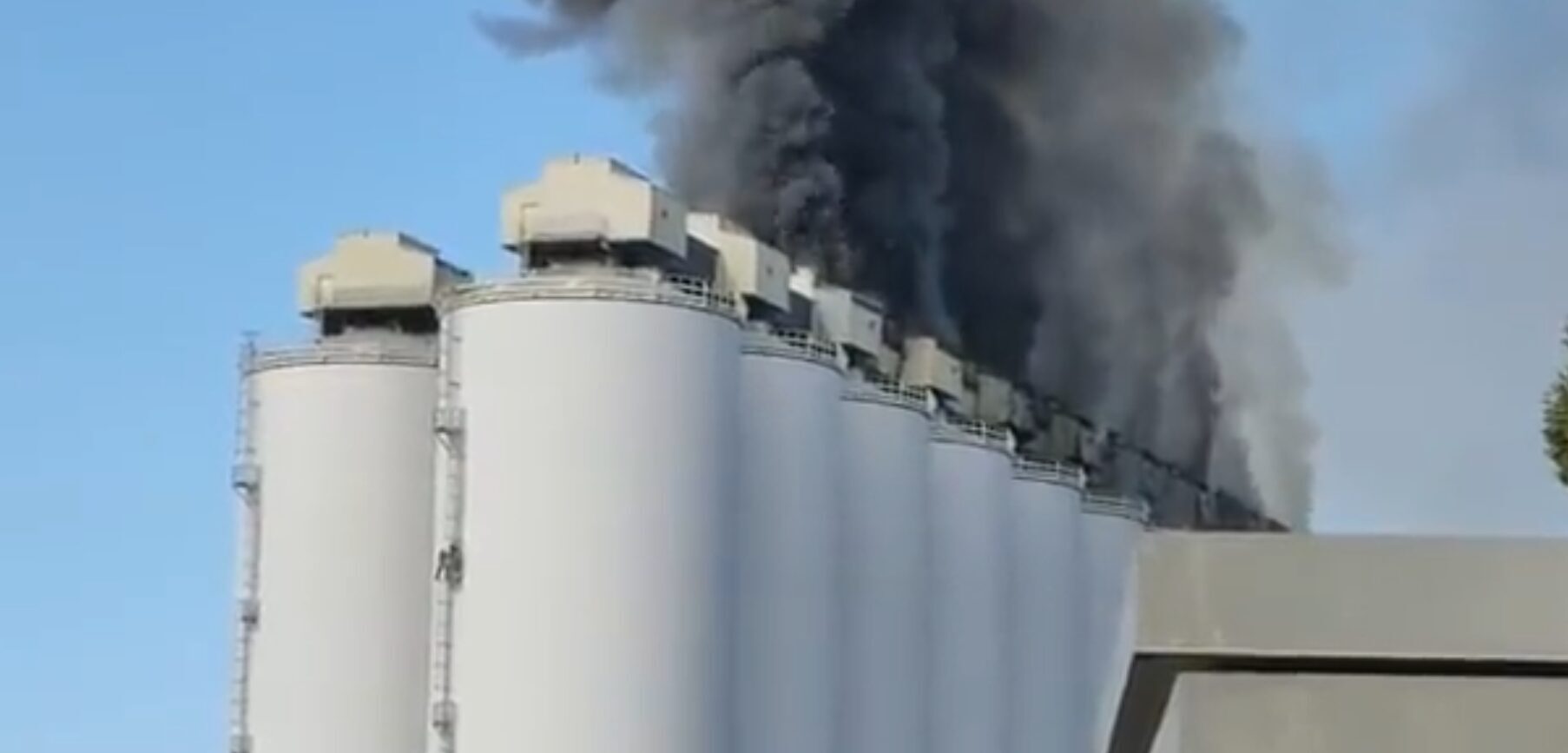
grain silo fire
More than 80 firefighters fought a huge blaze at grain silos in the French Atlantic port of La Rochelle on Thursday, disrupting shipping activity at one of France's biggest grain export terminals.

The fire started on a conveyor belt at around 8:00 a.m. (0600 GMT) and spread to four grain silos operated by SICA Atlantique, the local prefecture said.

Staff from SICA Atlantique and neighbouring companies in the terminal were evacuated and no injuries were reported, it said.

The fire had been brought under control and had not reached compartments containing stored grain, a representative of SICA Atlantique said.

France is the European Union's biggest grain producer and the cereal terminal at La Rochelle, known as La Pallice, is an important export outlet as it handles larger panamax vessels.

Comment: This incident in France, that comes on the heels of the explosions at grain silos in Turkey (just a few days ago), and Brazil (2 weeks ago), serve as support for the theory that, as with the highly suspect food plant fires that began in earnest in the last 2 years, these incidents at grain silos might be part of a concerted effort to disrupt the already highly vulnerable food supply: Explosion at grain silos at Turkey's Derince port, several injured

A selection of the food plant fires in the last year or so:


Cloud Precipitation

Best of the Web: Northern Europe faces widespread disruption as Storm Hans triggers heavy summer rains, floods, landslides and strong winds

Unrelenting Storm Hans Batters Northern Europe
Unrelenting Storm Hans batters Northern Europe
Norway, Denmark, Sweden, Lithuania, Finland, Estonia, Latvia have faced flight delays, road closures, power outages

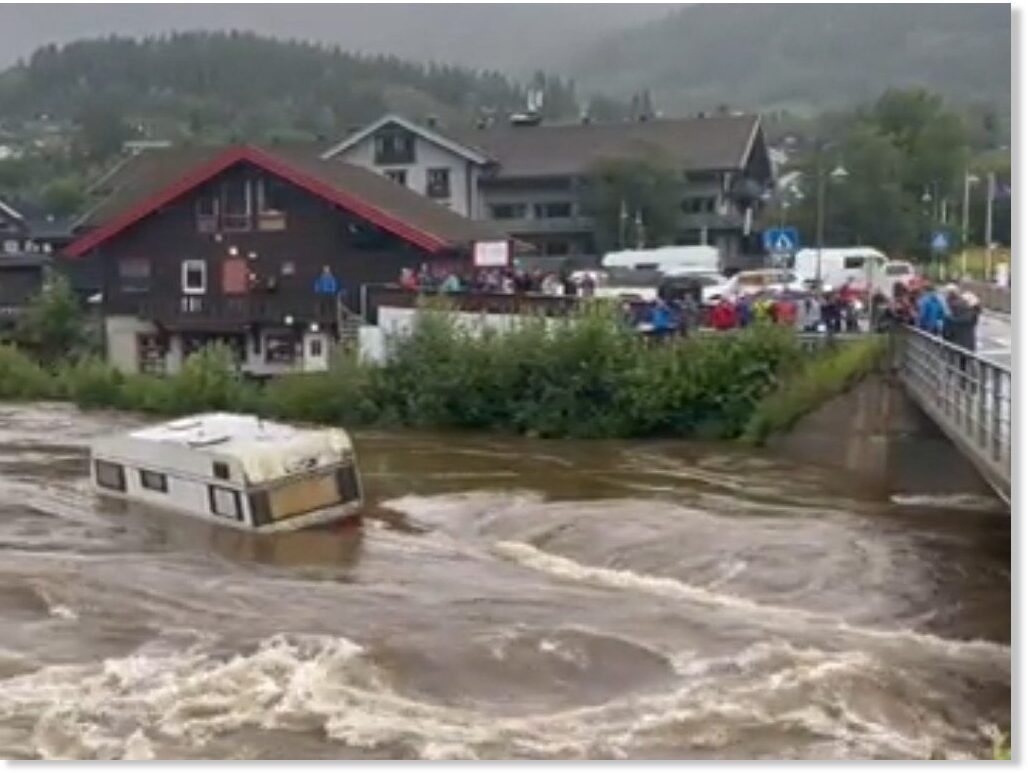
Norwegian authorities warned Tuesday to prepare for "extremely heavy rainfall" after Storm Hans caused two deaths, ripped off roofs and upended summertime life in northern Europe.

Strong winds continued to batter the region along with rains, causing a lengthy list of disruptions in Norway, Denmark, Sweden, Lithuania, Finland, Estonia and Latvia. Ferries were canceled, flights were delays, roads and streets were flooded, trees were uprooted, people were injured by falling branches and thousands remained without electricity Tuesday.

In Oslo, officials urged people to work from home. On its website, the Norwegian Water Resources and Energy Directorate warned of "extremely heavy rainfall" in the country's south, adding "unnecessary traffic should be avoided."


Black Magic

Best of the Web: Ukraine is world leader in organ transplants - Russia's Foreign Ministry

Zelensky
© AFP 2023 LUDOVIC MARINUkraine's President Volodymyr Zelensky gives a press conference during the NATO Summit in Vilnius on July 12, 2023
Ukraine has long been known as a world leader in organ trafficking. Scandals involving the illegal removal of organs from corpses began to appear in the late 1990s in the wake of the country's socioeconomic deterioration.

The problem began to mount in the early 2000s, and the violent coup in Kiev in February 2014 and the ensuing conflict in Donbass were an additional contributing factor. In 2014, the OSCE stated that corpses with removed internal organs had been found in mass graves in areas where fighting was taking place. Most probably, they were victims of black market transplant specialists.

Organ trafficking increased in scale after the start of the Russian special military operation in Ukraine, following the Kiev regime's passage of laws that drastically simplified the work of transplant specialists in the country.

Comment: It's also a world leader in child surrogacy, even - or perhaps especially - as the conflict rages on: Ukraine's baby factories rake in record profits amid chaos of war

Note that this isn't the first time Ukraine's sinister organ trafficking has been exposed: Illegal organ market is a lucrative business in war-torn Ukraine

The following video is extremely disturbing testimony from a specialist involved in the Ukrainian organ harvesting:


Cloud Precipitation

Best of the Web: Flash floods, landslides hit parts of Slovenia after month's amount of rain falls in a day - 6 dead (UPDATES)

A massive clean-up operation is underway in Slovenia and Austria following the floods
© Gregor RavnjakA massive clean-up operation is underway in Slovenia and Austria following the floods
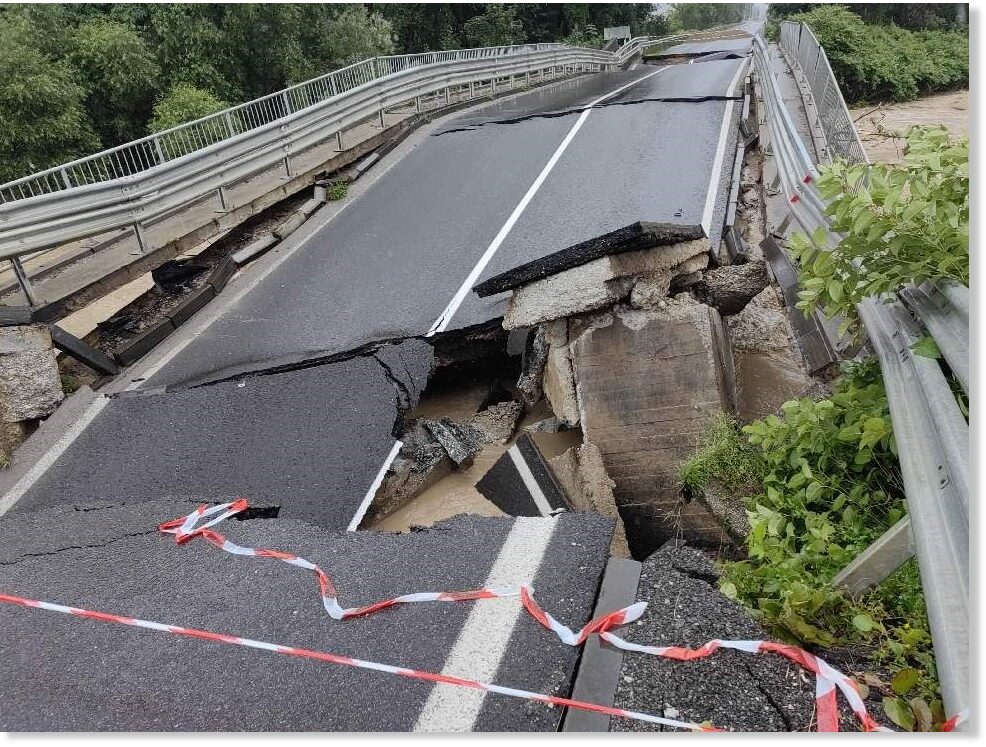
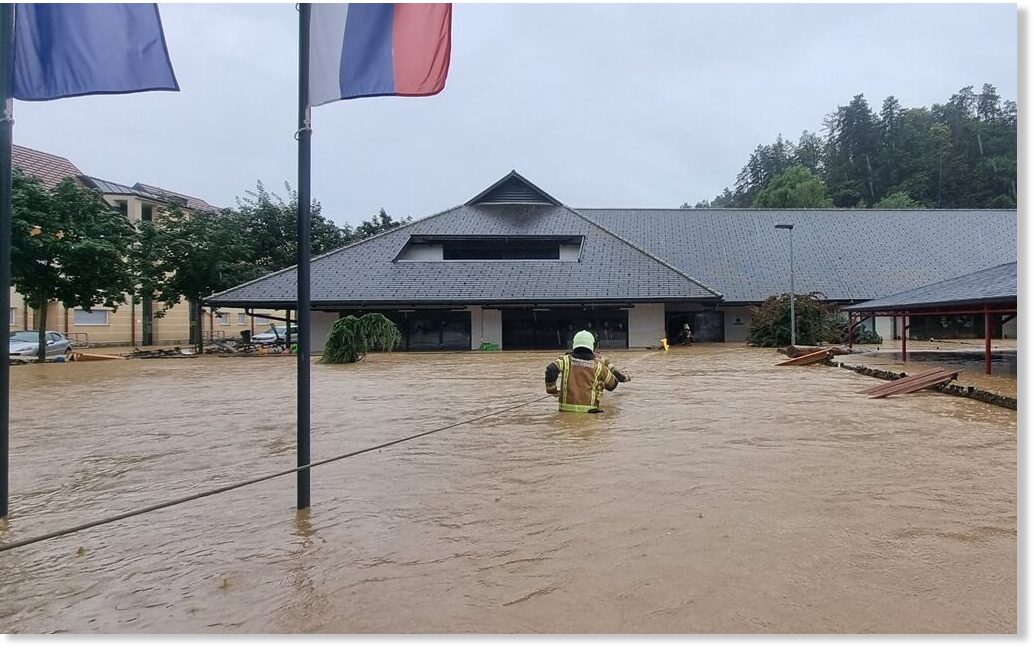
Heavy rains have caused flash floods and landslides in parts of Slovenia, blocking roads and bridges, flooding buildings and forcing evacuations on Friday.

Slovenia's environmental agency, ARSO, raised the weather alert after a month's amount of rain fell within 24 hours in northern, north-western and central parts of the country.

The official STA news agency reported evacuations in several regions, including campsites.


Comment: Update

Deutsche Welle reports:
Three people were killed after a month's worth of rain in 24 hours caused floods and landslides in northeastern and central Slovenia and southern Austria, authorities said Friday.

Flood alert sirens sounded off in Slovenia's capital, Ljubljana, along with Maribor and Celje, after the country's environment agency put out the highest "red alert" because of the heavy showers that began overnight.

The bodies of two foreign tourists were found in a mountain area and a woman was found in another flooded area, police spokeswoman Maja Adlesic told AFP news agency.

No injuries were reported in Austria.

Flood damage in Slovenia, 04 August 2023.
© Government of SloveniaFlood damage in Slovenia, 04 August 2023.

Firefighters evacuated children from a kindergarten in the town of Menges
© PGD MengesFirefighters evacuated children from a kindergarten in the town of Menges.
Update August 8

AFP reports:
The death toll from days of heavy rains and flooding in Slovenia has climbed to six, police said Monday (7 August), as clean-up operations continued with help from neighbouring countries.

Prime Minister Robert Golob has described the torrential rains and severe flooding that hit the Alpine country of two million as its worst natural disaster since independence three decades ago.

Flash floods and landslides that began Thursday had submerged large swathes of central and northern Slovenia, cutting off access to villages and disrupting traffic.

On Sunday, emergency workers recovered the body of a 35-year-old man in a river near the village of Mirna Perc in the east.

Another man, who was taking part in the clean-up operations, was found dead after falling into a cesspit near the town of Kamnik close to Ljubljana, police said.

The bodies of two Slovenians and two Dutch citizens had been found earlier.

On Monday, rescue workers tried to reopen roads to the most remote or isolated places, while assessing damages which the government has said could exceed half a billion euros.

According to public radio, civil protection authorities were keeping an eye on numerous flood-hit areas where landslides could threaten infrastructure and houses.

Harrowing accounts have emerged of rescue workers and volunteers helping to save locals and tourists from the floods, and sheltering them in community halls and other places.

Slovenia, an EU member, has asked for help from the bloc, seeking in particular heavy machinery such as excavators and prefabricated temporary bridges to deal with the aftermath of the flooding.

Slovenia has also asked NATO to provide transport helicopters and soldiers to help with the recovery efforts.

A first truck with humanitarian help and food arrived from Hungary late Sunday, followed by a helicopter, while Croatia provided a military helicopter to help close and secure a broken levee on the Mura River.


Vader

Best of the Web: War with Poland?

europe post ww1
The Next Step?
Preface

When I started this article, I didn't know exactly where it would take me. I had to read up on WWI, the Treaty of Versailles, the history of Eastern Europe, WWII and much more — a lot of history. I found that most that I had learned in high school and college — or was supposed to have learned (since I skipped most of my classes) was wrong. Here I am at 76, soon 77 educating myself — again.

Read Part One here.
MICIMATT

There are many places to start another war — but Europe is still a good market for those profit most from it — Ray McGovern's "MICIMATT" — the American Military Industrial Media Academic Think Tank Complex. So what I called the Deep State Cartel in my last article is hard at work feeding its ever-hungry illegitimate progeny.

Every dollar in "aid" makes an American millionaire more ...um...millionish and billionaires more billionairy.

The Invention of Poland

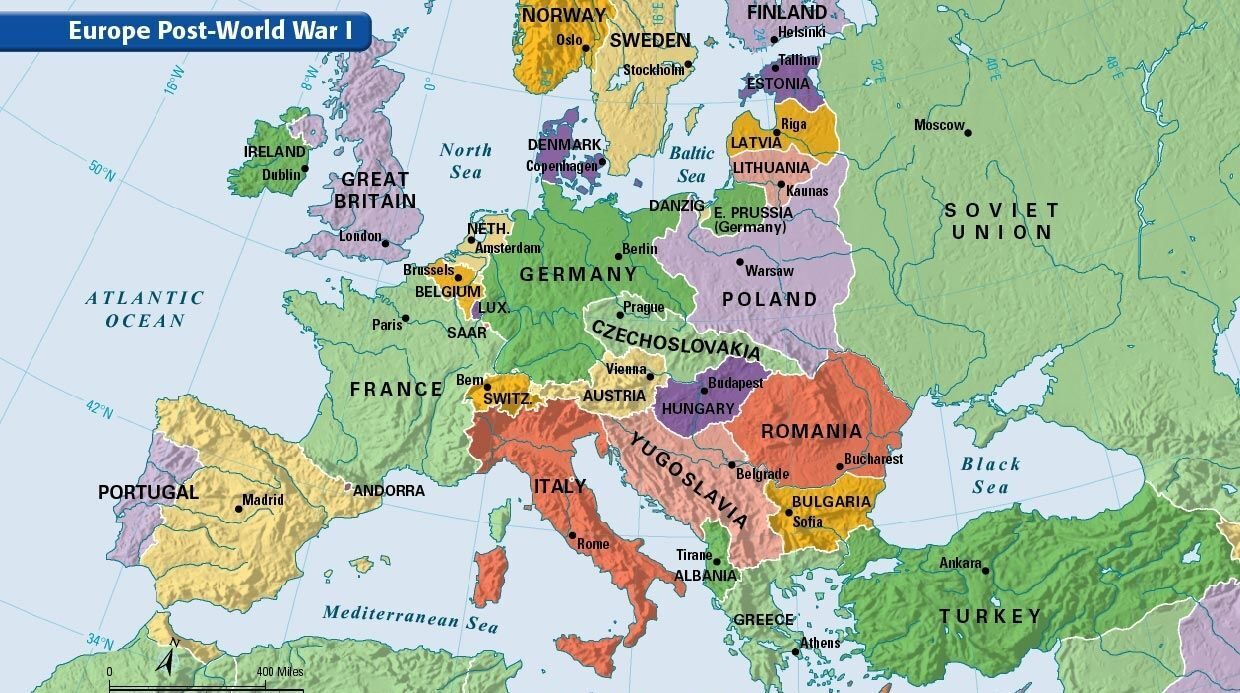
Poland was invented at the end of WWI, largely by Woodrow Wilson, who made it one of his famous "14 Points".

Eye 1

Best of the Web: The psychology of psychopaths - Predators who walk among us

psychopaths
The following is a transcript of this video.
"Human predators populate our society."

Stefan Verstappen, Defense Against the Psychopath
Psychopaths are human predators. They coerce, manipulate, lie, steal, defraud, abuse, and take life, without feeling guilt or remorse. A leading expert on psychopathy, Robert Hare, estimates that 1% of people are psychopaths; while the clinical psychologist Martha Stout suggests this figure is closer to 4%. Studies indicate that psychopaths are over-represented in the corporate executive world and in politics. In this video we are going to explore the psychology of the psychopath as this knowledge can help us minimize the damage they inflict on us, those we care about, and humanity at large.

Camcorder

Best of the Web: More than a dozen Ulez cameras stolen or vandalized every week in London

cut the cord
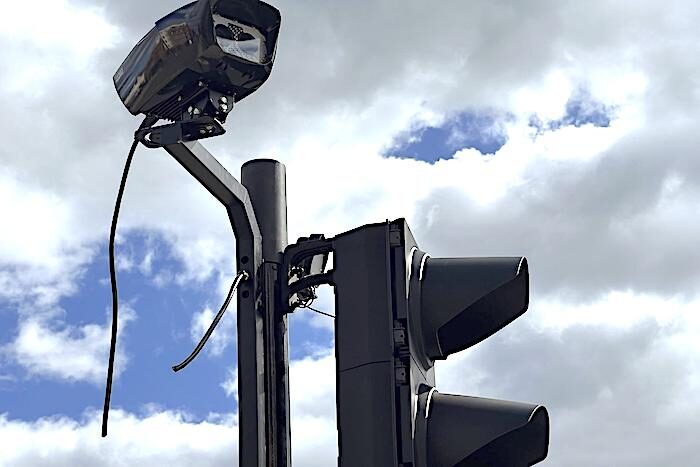
© BBCSurveillance camera with snipped wires
More than a dozen Ulez enforcement cameras are vandalised or stolen every week, it was revealed on Wednesday.

With less than four weeks to go until the clean air zone is expanded to the Greater London boundary, the Met said it is investigating multiple reports of vigilantes attempting to sabotage Transport for London's equipment.

The theft of 11 Ultra Low Emission Zone cameras and 17 incidents of vandalism were reported to detectives between July 21 and August 1. At least eight in Chiswick have had their wires cut in recent weeks by so-called "blade runners".

It follows a spate of attacks earlier this year - with two men being charged with criminal damage in May.

The equipment uses Automatic Number Plate Recognition (ANPR) technology to identify the most polluting vehicles, that will face a £12.50 daily charge when the Ulez expands to outer London on August 29.

TfL contractors still have almost 1,000 cameras to install before the scheme goes live, while having to contend with vandalism and opposition from some councils to having them erected on local roads.

Comment: Some folks see through a government-self-serve moneymaking trap at the expense of and penalty to the people.


Books

Best of the Web: What is Wrong with the University?

John Henry Newman
© John Everett Millais, 1881/WikipediaTheologian John Henry Newman, was an English theologian, academic, intellectual, philosopher, polymath, historian, writer, scholar and poet, first as an Anglican priest and later as a Catholic priest and cardinal.
Consider corporations like the BBC, the NHS, Google, Amazon, Biontech. No one worries about them. It would not be the end of the world if they were to wither away. But there are several corporate institutions which we do worry about. The state is one. The church is another. Perhaps the third great one is the university.

Even though schools are ancient, and universities are medieval, we only began worrying about the university in the 19th Century. This is when the church began to wane and the state began to wax in the eye of the university. The most famous writer in England about the university was Cardinal Newman. He gave a series of lectures in the 19th Century published under the title of The Idea of a University. Newman was a worrier. He worried about the state. Then he worried about the church. Finally he worried about the university.

Newman's argument, in short, was that the university had become a superimposition of several ideas: one was religious, one was what he called liberal and one was utilitarian. A few years ago I wrote an academic article explaining that the university is a composite entity: a superimposition of an 'eternal' institution, an 'immortal' institution and an 'immediate' institution. Fancy words: but I wanted to make Newman's conceptions clearer than I think they have been to even those people influenced by his 'idea' - all those Leavises and Scrutons. The university is built on three contradictory ideas:

Comment: No doubt the average university worker bee will view the above prescriptions as elitist, when in reality, Dr. Alexander is pleading for a return to the standards that produced intellectual advances from the Renaissance to the earliest of the 20th century. The decline in true paradigm breakthroughs, as opposed to flashy technological developments, is an argument for his thesis.


Boat

Best of the Web: Thousands forced to flee Beijing as Typhoon Doksuri brings heaviest rainfall in 140 years, causing severe flooding and 21 deaths (UPDATE)

mmmmmm
Two people are reported to have died in severe flooding that has engulfed parts of Beijing, as Typhoon Doksuri passed through China's capital.

People's Daily reported on Monday that two people were found unresponsive in a river in Mentougou, a district in west Beijing that has suffered some of the worst flooding. According to state broadcaster CCTV, more than 31,000 people have evacuated their homes in the city.

Heavy rain continued to fall in Beijing as well as in Hebei, Tianjin and eastern Shanxi as Doksuri dissipated over northern China, the China Meteorological Administration said.

Doksuri is one of the strongest storms to hit China in years and caused widespread flooding over the weekend in the southern province of Fujian, driving hundreds of thousands of people from their homes.


Comment: Update August 2

Associated Press reports:
China's capital has recorded its heaviest rainfall in at least 140 years over the past few days as remnants of Typhoon Doksuri deluged the region, turning streets into canals where emergency crews used rubber boats to rescue stranded residents.

The city recorded 744.8 millimeters (29.3 inches) of rain between Saturday and Wednesday morning, the Beijing Meteorological Bureau said Wednesday.

Beijing and the surrounding province of Hebei were hit by severe flooding because of the record rainfall, with waters rising to dangerous levels. The rain destroyed roads and knocked out power and even pipes carrying drinking water. It flooded rivers surrounding the capital, leaving cars waterlogged, while lifting others onto bridges meant for pedestrians.


The number of confirmed deaths from the torrential rains around Beijing rose to 21 on Wednesday after the body of a rescuer was recovered. Wang Hong-chun, 41, was with other rescuers in a rubber boat when it flipped over in a rapidly flowing river. Four of her teammates survived.

At least 26 people remain missing from the rains.

Among the hardest hit areas is Zhuozhou, a small city in Hebei province that borders Beijing's southwest. On Tuesday night, police there issued a plea on social media for lights to assist with rescue work.

Rescue teams traversed the flooded city in rubber boats as they evacuated residents who were stuck in their homes without running water, gas or electricity since Tuesday afternoon.

"I didn't think it would be that severe, I thought it was just a little bit of water and that it would recede," said 54-year-old Wang Huiying. She ended up spending the night on the third floor of her building as the water seeped into the first floor, which holds her steamed bread shop. All the machinery is now underwater.

It's unknown how many people are trapped in flood-stricken areas in the city and surrounding villages. Rescue teams from other provinces came to Zhuozhou to assist with evacuations.

"We have to grasp every second, every minute to save people," said Zhong Hongjun, the head of a rescue team from coastal Jiangsu province. Zhong said he had been working since 2 a.m. Wednesday when they arrived, and expects to work into the night. They've rescued about 200 people so far. "A lot of the people we saved are elderly and children," he said.

On Wednesday, waters in Gu'an county in Hebei, which borders Zhuozhou, reached as high as halfway up a pole where a surveillance camera was installed.

Gu'an county resident Liu Jiwen, 58, was evacuated from his village on Tuesday night. "There's nothing we can do. It's natural disaster," he said.

Two other people were trying to pass through the flooded areas to rescue a relative trapped in a nearby village.

Nearly 850,000 people have been relocated, local authorities in Hebei province said.

The previous record for rainfall was in 1891, the Beijing Meteorological Bureau said Wednesday, when the city received 609 millimeters (24 inches) of rain. The earliest precise measurements made by machines are from 1883.

Ma Jun, director of the Institute of Public and Environmental Affairs, called the recent rainfall "extreme." Last year's total rainfall in Beijing did not even top 500 millimeters (19.6 inches).

Ma said there should be a review of how cities are planned because some places experience repeat flooding. "We need to avoid building large-scale construction ... in low-lying areas," Ma said.

The record rainfall from Doksuri, now downgraded to a tropical storm, may not be the last. Typhoon Khanun, which lashed Japan on Wednesday, is expected to head toward China later this week. The powerful storm, with surface winds of up to 180 kph (111 mph), may also hit Taiwan before it reaches China.

Thousands of people were evacuated to shelters in schools and other public buildings in suburban Beijing and in nearby cities. The central government is disbursing 44 million yuan ($6.1 million) for disaster relief in affected provinces.

The severity of the flooding took the Chinese capital by surprise. Beijing usually has dry summers but had a stretch of record-breaking heat this year.