Storms
S

Tornado2

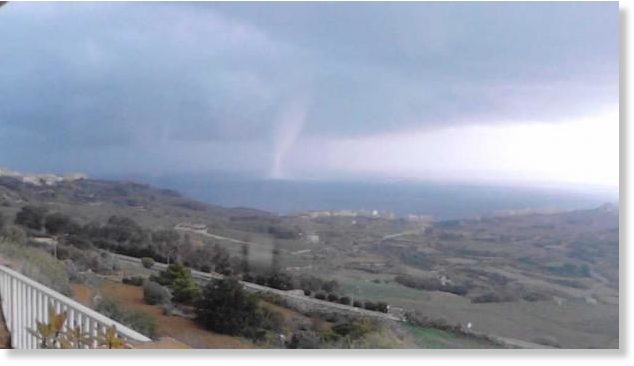
Waterspout filmed off Malta

Waterspout off Gozo
Waterspout off Gozo
Last week came to an end with some of the first bouts of severe weather to hit Malta this season, and a video shared on Facebook last Friday really helped show people what was happening just off the islands' shores.

Leandro Cassar, a diver who works at the St. Paul's Bay fish farms, was on a maintenance boat with over 15 other people when strong winds and heavy rainfall hit the islands.

"The boat was tied to the tuna cages because we were working on some maintenance there," Leandro told Lovin Malta. "At first, a large tornado passed by close to us, so I took out my phone to record it."

An impressive video of the tornadic waterspout itself (shot by a young Italian diver) also went viral, with large international Facebook groups like Severe Weather Europe and Meteo Real Time sharing it. That video has now amassed over a million views, but Leandro's video showed an even closer - and more worrying - angle to it all.


Comment: For more reports of waterspouts as well as tornadoes, hurricanes, typhoons, hail and snowstorms and lightning strikes visit our dedicated storms pages here.


Cloud Lightning

3 killed by lightning strikes in Zimbabwe

LIGHTNING
Villagers in Marondera East said they were leaving in fear of lightning strikes, following the onset of the rainy season which have so far claimed three lives in the province.

Last week, two male adults from Marondera East died after they were struck in separate incidents, shortly after a Grade Seven pupil succumbed to a bolt of lightning while cleaning the school yard in Murewa.

Marondera District Council chairperson, Patrick Chidhakwa confirmed the incidents and identified the deceased as Jonah Chihaka (25) of ward 20 and another yet to be identified herdboy from ward 37.

"It is a pity that we continue to lose lives in this area because of lightning. I am of the belief that rains mean life, but that's not it. Two people were struck by lightning in ward 20 and 37 and we are currently running around to assist with burials," he said.

Cloud Lightning

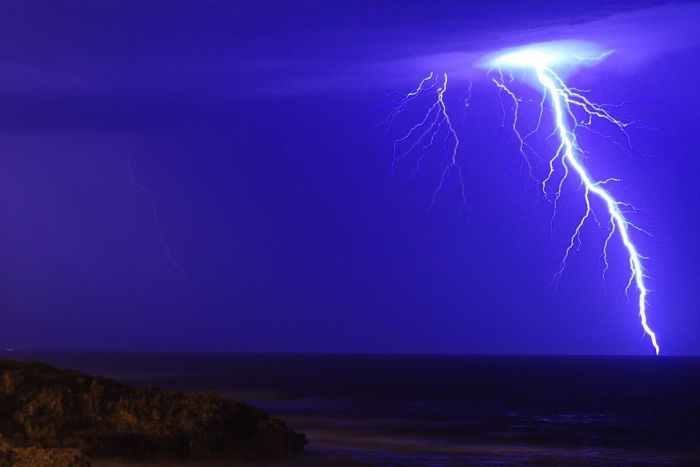
Series of thunderstorms create massive lightning display over Perth, Western Australia

Perth lightning
© ABC News: Andrew O'ConnorLightning appears to reach the sea surface as an electrical storm crosses the coast south of Perth.
Western Australia's south was treated to an evening show of light, sound and fury as a series of thunderstorms passed over the southern half of the state, producing hail, lightning and power blackouts.

The most severe storm hit Meadow Springs in Mandurah, south of Perth, about 5:30pm on Sunday.

Duty forecaster at the Bureau of Meteorology James Ashley said a hot air mass combined with moisture in the atmosphere produced the stormy conditions.

"Everything in the atmosphere lined up perfectly," he said.

"We had a good upper-level disturbance move over the area and there was just enough moisture and lift to produce some really decent thunderstorms.


Comment: See also: Electric universe: Lightning strength and frequency increasing


Cloud Grey

Iraqi government scrambles for solutions as dust storms overtake the country

Iraqis in masks
© HAIDAR HAMDANI/AFP/Getty ImagesShiite Muslim pilgrims walk through a dust storm in Najaf, southern Iraq, Oct. 30, 2017.
On Nov. 3, NASA published clear images taken by its satellites of the severe dust storm that hit Iraq recently. The climate changes sweeping Iraq are causing human casualties and economic damages. Hundreds of cases of suffocation were recorded. The Ministry of Health announced Oct. 30 that there were more than 4,200 cases of suffocation in most governorates, including 528 in Karbala. During the dust storm, the Iraqi Civil Aviation Authority canceled its flights, and Iranian flights to Baghdad and Najaf airports were also canceled. Ninevah province recorded 1,108 cases of suffocation in the camps for internally displaced persons.

The storms also affected the course of the battles between the Iraqi forces and the Islamic State (IS). On Oct. 31, the Iraqi forces were forced to postpone the campaign aimed to retrieve the city of Qaim, west of Anbar, from IS because of the lack of visibility caused by the dust storms.

While dust storms are occurring in neighboring countries such as Saudi Arabia, Kuwait and even Iran, "Iraq is one of the most affected countries by the storm, at the level of its environment, individuals' health and economy," said Amer Habib of the Technical College Musayyib in Babil province and the director of a project on organic fertilizers in Babil. "This is due to the fact that Iraq is a barren land where vegetation is scarce. Human activities have swept away orchards and agricultural lands, which also led to the decrease of the rivers' water levels and the lack of rainfall, which resulted in the drying up of huge areas of agricultural spaces."

Snowflake Cold

Arctic blast targets the Mid-Atlantic and Northeast US

peeps in coats
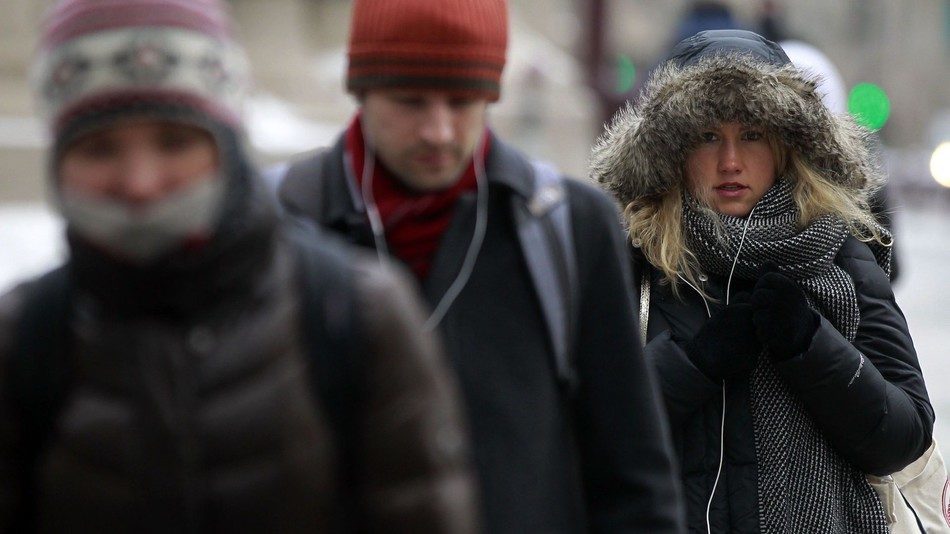
© KIICHIRO SATO/AP/REX/SHUTTERSTOCKYou'll need to bundle up like these folks did.
Among New Yorkers, there's a dark hypothesis about fall weather in the city, which is that there's only one "perfect" fall day with crisp sunshine and cool temperatures. For that single day, the city's harsh climate, with torrid heat in the summer and frigid cold and wintry mix events in the winter, is forgiven.

But after that day, which typically occurs in mid-to-late October, the weather turns dreary and cold. And then comes the wintry mix.

Well, that perfect day has come and gone, and the frigid air is knocking at the city's doorstep, poised to rush in overnight this Thursday, and really make itself known by Friday morning and into the first part of the weekend.

This Arctic blast means business. The frigid air mass first entered the lower 48 states on Wednesday, and on Thursday morning, air temperatures were in the single digits Fahrenheit in Minnesota, and below zero Fahrenheit in North Dakota.

By Friday morning, wind chill readings in New York City and Boston will be in the teens Fahrenheit, the coldest they've been so far this season.

Cloud Lightning

24 killed, 15 injured by lightning strikes in Huambo Province, Angola over 2 month period

LIGHTNING
Twenty-four people were killed and 15 others wounded in central Huambo province from September 17 to 6 November following heavy rains coupled with lightning strikes.

This was confirmed Thursday to Angop by the local Firefighter Department spokesperson, Francisco Muepa, underlining that the people were victims of lightning strikes.

He said 38 residences were partially and totally destroyed in above period.

The municipalities of Caรกla, Bailundo, Cachiungo, Chicala-Cholohanga, Ucuma, Longonjo, Londuimbali and Mungo, were mentioned as having recorded major damages.

Source: Angola Press Agency

Cloud Lightning

Lightning bolt kills 3 students in Tanzania

LIGHTNING
Three students died and one survived after being hit by lightning in south-western Tanzania's region of Songwe, local authorities said on Wednesday.

Christopher Kafuru, head of Ndyuda Secondary School, said that the killed were all pre-form one students at the school located in a small town of Mlowo in Mbozi District, Songwe Region.

Kafuru said the incident occurred on Tuesday at around 4:30 p.m. (local time) when the students were playing outside the classrooms when the lightning hit the area.

"They were four students and one of them survived the tragic incident and is the one who informed teachers on the accident," the official said, adding that the victims were rushed to the nearby hospital, and it was confirmed that the children were already dead.

Acting Songwe Regional Police Commander, Yusuph Sarungi confirmed the incident, describing the incident as the first one to happen this year.

Tornado2

2017 hurricane season produces most reported tornadoes in U.S. in nearly a decade

2017 tornado map for US
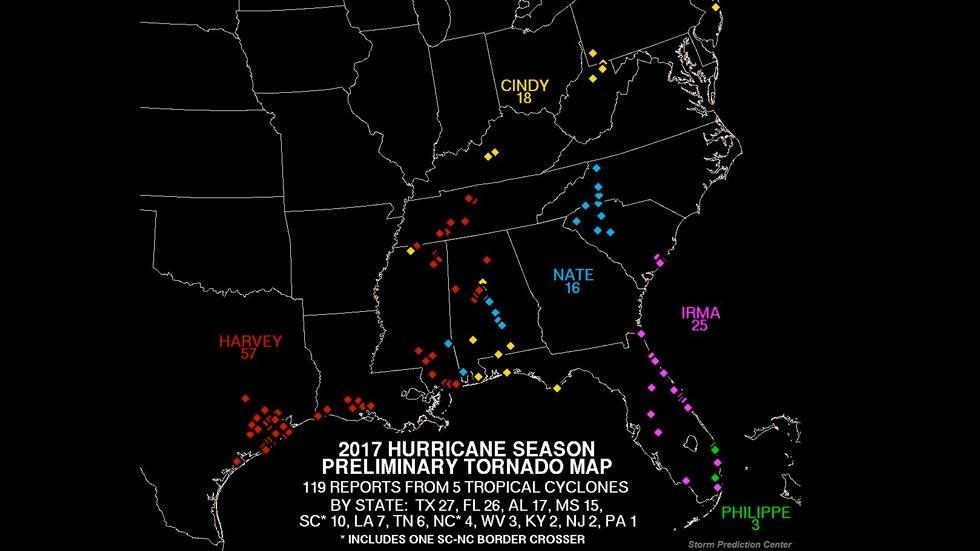
© NOAA Storm Prediction CenterPlotted on the map are the tornadoes associated with the hurricanes and tropical storms that affected the U.S. in 2017.
The 2017 hurricane season has produced the largest number of reported tornadoes spawned by tropical storms and hurricanes in the continental United States since 2008, and the fourth-most overall in 23 years.

Five tropical cyclones were responsible for 119 reports of tornadoes in a dozen states, according to preliminary data provided by NOAA's Storm Prediction Center (SPC). This includes two tropical storms (Cindy and Philippe) and three hurricanes (Harvey, Irma and Nate).

Although Emily made landfall in Florida, and Jose and Maria brushed parts of the East Coast, there were no reported tornadoes from those three systems.

Hurricane Harvey had the largest number of tornado reports with 57, mostly clustered near the southeastern Texas coast, where devastating flooding occurred in the Houston metro area. Tornadoes were also spawned by Harvey as it weakened to a tropical storm and a tropical depression in Louisiana, Mississippi, Alabama and Tennessee.

Harvey's tornado reports account for 48 percent of the total 119 for all five tropical storms and hurricanes. Irma (25), Cindy (18), Nate (16) and Philippe (3) round out the other 52 percent of the reports.

When examined on a state level, Texas and Florida were neck-and-neck with 27 and 26 tornado reports, respectively. The main difference between those states is that Florida saw its tornado reports from three separate tropical cyclones (Cindy, Irma and Philippe), while all reports in Texas came solely from Harvey.

Comment: See also: Study: Tornado outbreaks are increasing - but scientists don't understand why. A coauthor of this paper states "What's pushing this rise in extreme outbreaks is far from obvious in the present state of climate science."

Recently other climate scientists were saying hurricane Harvey "should serve as a warning", as they continue to push the man-made climate change/global warming lie. They are not considering the importance of atmospheric dust loading and the winning Electric Universe model in their research. Such information and much more, are explained in the book Earth Changes and the Human Cosmic Connection by Pierre Lescaudron and Laura Knight-Jadczyk.
The accumulation of cometary dust in the Earth's atmosphere plays an important role in the increase of tornadoes, cyclones, hurricanes and their associated rainfalls, snowfalls and lightning. To understand this mechanism we must first take into account the electric nature of hurricanes, tornadoes and cyclones, which are actually manifestations of the same electric phenomenon at different scales or levels of power.
Increasing cometary and volcanic dust loading of the atmosphere (one indicator is the intensification of noctilucent clouds we are witnessing) is accentuating electric charge build-up, whereby we can expect to observe more extreme weather and planetary upheaval as well as awesome light shows and other related mysterious phenomena.


Snowflake

Late snowstorm strikes South Island, New Zealand

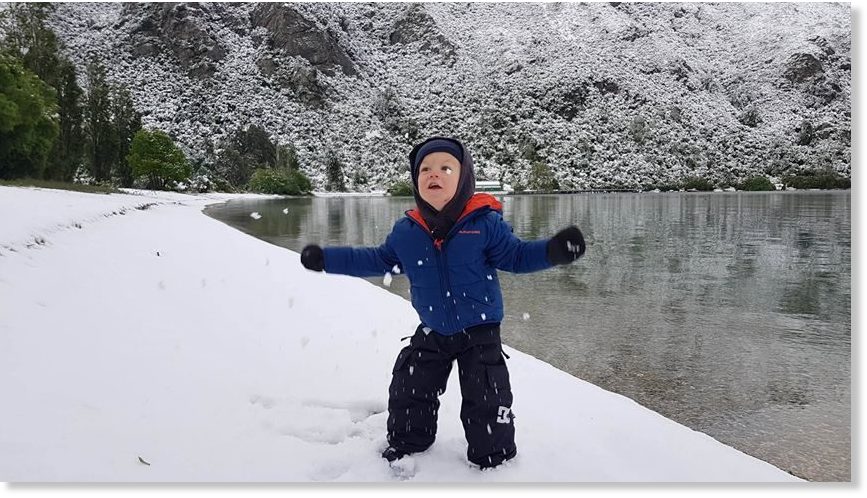
Jakob Williams (2) plays in the snow on the shores of Lake Wakatipu at Kingston
© Warren WilliamsJakob Williams (2) plays in the snow on the shores of Lake Wakatipu at Kingston
The snow and flooding that hit the South overnight caused several schools to close today, affecting hundreds of pupils.

The Ministry of Education advised of the closures, saying regional teams had been contacting schools and early childhood centres.

"Three of the seven schools were forced to close because their school buses couldn't get through on the roads. We are helping all the impacted schools and early learning services. No reports of damage have been received,'' Katrina Casey, deputy secretary of Sector Enablement and Support, said.

The affected schools are: Tapanui School, Blue Mountain College, Heriot School, Northern Southland College, Lumsden School, Mossburn School and Garston School, while the early learning services are: Riverstones Early Learning Centre in Lumsden and Kidz Way Early Learning Centre in Tapanui.

Heavy snow blanketed the mountains around Wanaka overnight down to 300 metres affecting roads, but it is clearing in most places as the day wears on.


Snowflake Cold

Violent weather anomaly brings giant hail, unseasonal snow and destructive winds in New South Wales, Australia (VIDEO)

Violent weather anomaly brings giant hail, unseasonal snow and destructive winds in New South Wales, Australia
© ABC.net.auFarmers fear for their animals and cultivations as the damage from Sunday night's storm was "massive".
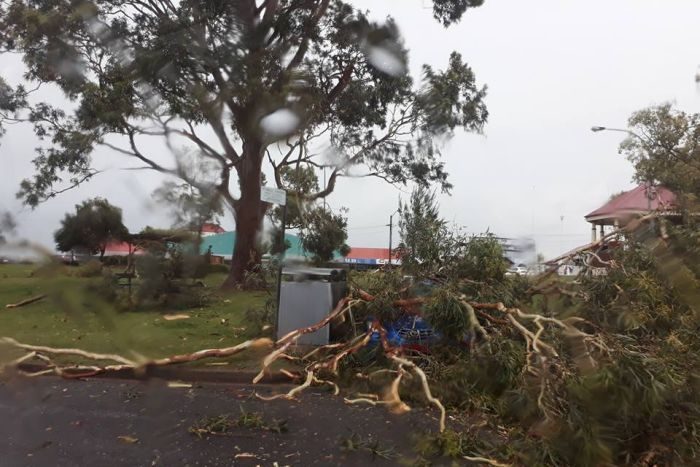
A severe weather anomaly swept across New South Wales, Australia on November 6, 2017. Two people were sent to hospital after a roof collapsed due to intense rain, giant hail and destructive winds across NSW. Unseasonal snow also reported. Some describe as the storm as the most severe hailstorm experienced in 30 years in the area.