Storms
S


Snowflake

Study finds extreme Arctic snowfall in 2018 caused near 'complete reproductive failure of plants and animals'

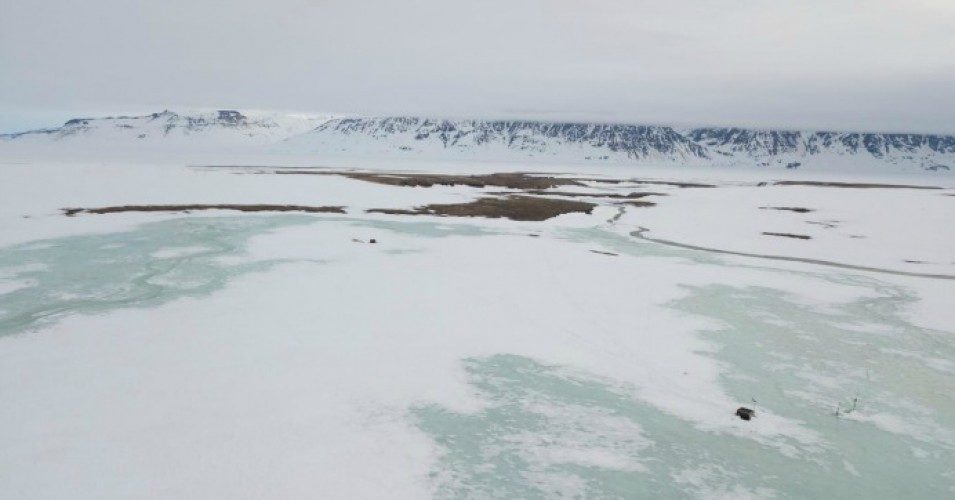
The Zackenberg valley in Northeast Greenland
© Lars Holst HansenThe Zackenberg valley in Northeast Greenland, summer 2018. Huge amounts of snow still covered the ground in late June, where the snow-covered season usually is coming to an end.

"2018 may offer a peep into the future, where increased climatic variability may push the arctic species to — and potentially beyond — their limits."


A new study published Tuesday looked at the implications of extreme snowfall in the Arctic in 2018 — the kind of increased precipitation event scientists link to climate change — and researchers say the scenario could be a harbinger of how ecosystems in the region will be negatively affected by a rapidly warming planet.

"The result was an almost complete reproductive failure of plants and animals of all sizes," the authors wrote.

The takeaway for arctic ecosystems, the authors found, is that "changes in precipitation may prove as crucial as changes in temperature — if not even more."

For the study, published in the journal PLOS Biology, researchers focused on the monitoring site of Zackenberg in Northeast Greenland. In 2018, the Arctic — including the High Arctic where the Zackenberg facility is — saw unusually large amounts of snow. That meant there was a significant delay in snow melt, which in turn made it difficult for plants to grow and for animals to access resources.

The result? The "most complete reproductive failure encountered in the terrestrial ecosystem during more than two decades of monitoring," said the study.
Comment: Elsewhere in the Arctic a wildflower meadow photographed in Arctic oases surprises scientists.


Snowflake

Historic midwest blizzard has farmers "Expecting massive crop losses - as devastating as we've ever seen"

frozen fence
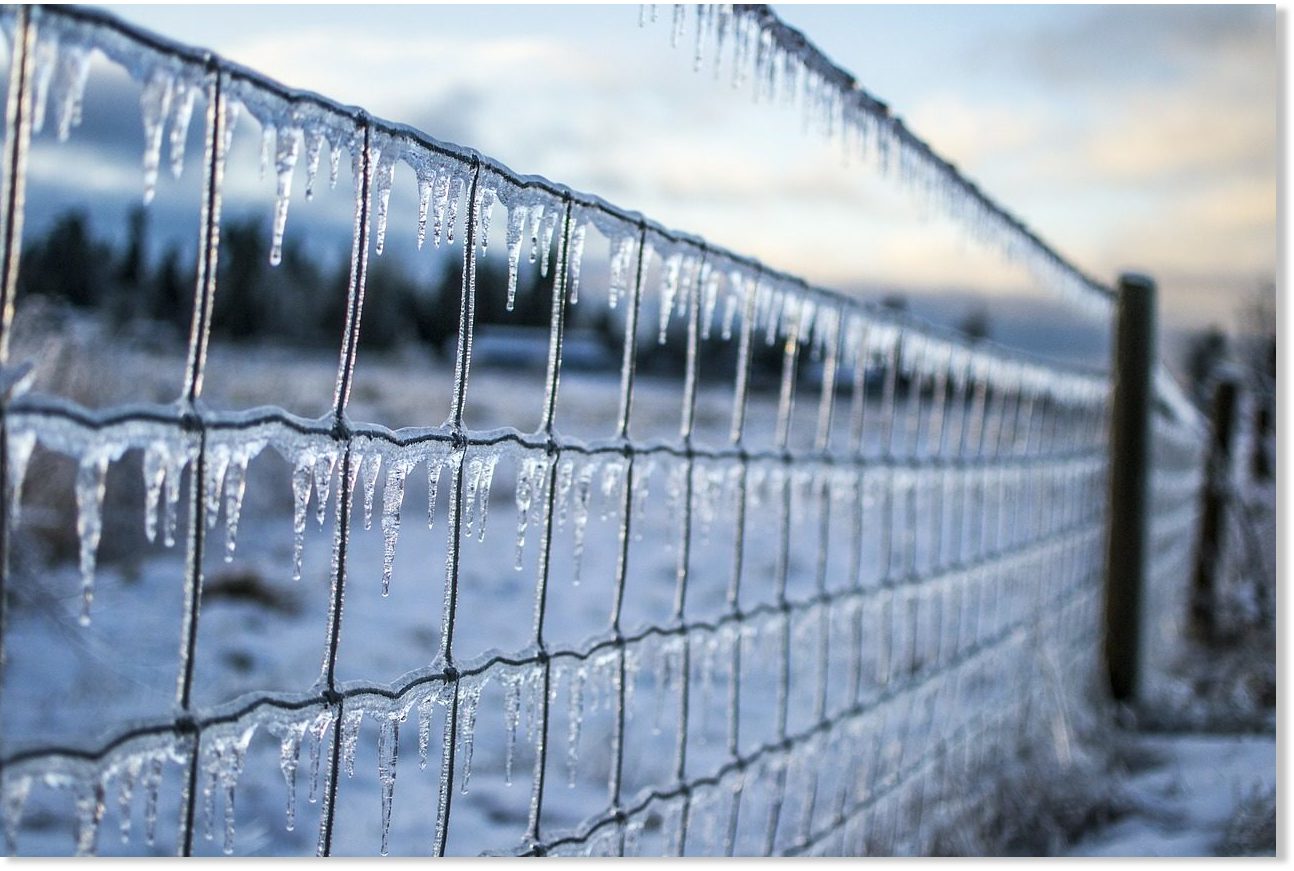
An unprecedented October blizzard that hit just before harvest time has absolutely devastated farms all across the U.S. heartland. As you will see below, one state lawmaker in North Dakota is saying that the crop losses will be "as devastating as we've ever seen". This is the exact scenario that I have been warning about for months, and now it has materialized. Due to endless rain and horrific flooding early in the year, many farmers in the middle of the country faced very serious delays in getting their crops planted. So we really needed good weather at the end of the season so that the crops could mature and be harvested in time, and that did not happen. Instead, the historic blizzard that we just witnessed dumped up to 2 feet of snow from Colorado to Minnesota. In fact, one city in North Dakota actually got 30 inches of snow. In the end, this is going to go down as one of the worst crop disasters that the Midwest has ever seen, and ultimately this crisis is going to affect all of us.

According to the USDA, only 15 percent of all U.S. corn and only 14 percent of all U.S. soybeans had been harvested as of October 6th...

Seismograph

Scientists discover big storms can create 'stormquakes'

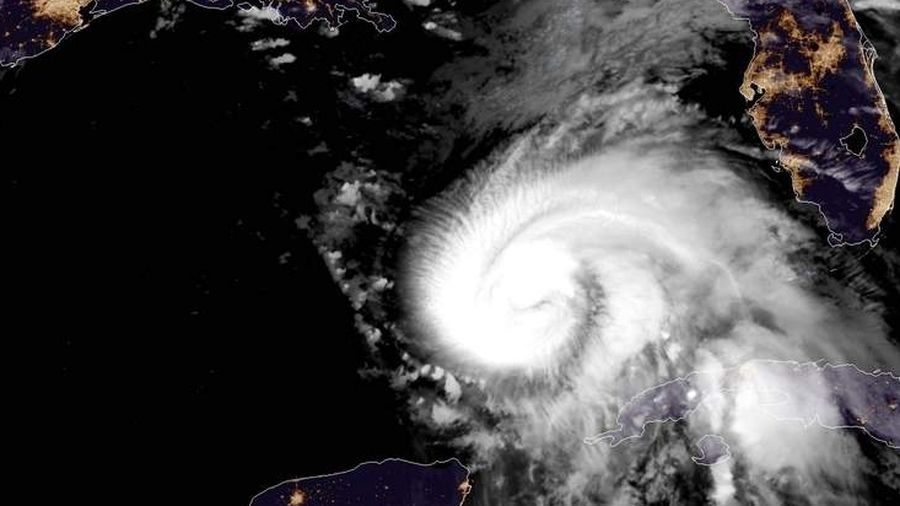
This satellite image shows Hurricane Michael on Oct. 9, 2018, as it enters the Gulf of Mexico
© NOAAThis satellite image shows Hurricane Michael on Oct. 9, 2018, as it enters the Gulf of Mexico. It made landfall near Mexico Beach in the Panhandle as a Category 5 storm. Florida State University professor Wenyuan Fan said the storm probably created "stormquakes" offshore in the gulf, too.
Scientists have discovered that the sea floor shakes during hurricanes and nor'easters, with a rumbling as strong as a magnitude 3.5 earthquake.

They've dubbed the phenomenon "stormquakes."

The scary sounding mash-up was detailed in research by Florida State University scientists published this week in the journal Geophysical Research Letters.

The shaking of the sea floor during hurricanes and nor'easters can last for days, according to the study. While fairly common, the quakes weren't noticed before because they were considered seismic background noise.

A stormquake is more an oddity than something that can hurt you, because no one is standing on the sea floor during a hurricane, said Wenyuan Fan, a Florida State University seismologist who was the study's lead author.

The combination of two frightening natural phenomena might bring to mind "Sharknado," but stormquakes are real and not dangerous.

Comment: A few days ago as Typhoon Hagibis slammed into southern Japan, Tokyo was simultaneously hit by 5.3M earthquake.


Tornado1

Freak tornado rips off roofs as it tears through French town damaging 173 houses

Tornado damage, Arles
Several people injured as the tornado leaves southern French town of Arles in destruction.

A tornado has torn through the southern French town of Arles, ripping off roofs and throwing caravans onto their sides.

The swaths of destruction on Tuesday left several people injured and forced 60 people to evacuate from a nearby campsite.

Arles, in the Bouches du Rhone, was one area placed on an orange weather alert by Meteo France on Monday, warning residents of the imminent danger of severe storms.

Comment: Footage posted of the event:


Just last year the same town saw two tornadoes touch down in one day: Tornado rips through 2 towns in French Pyrenees (UPDATE)

Also check out SOTT radio's:


Cloud Lightning

Lightning strikes claimed 35,384 lives across India from 2000 to 2015

lightning
The NDMA says that on an average, over 2,500 people die annually due to lightning. In Tamil Nadu, about 500 people died between 2011 to 2015.

J Radhakrishnan, Commissioner of Revenue Administration, Disaster Management and Mitigation, told the Express that a circular has issued elaborating Do's and Don'ts to be followed during lightning.

"It's an unfortunate incident and prediction of lightning as to the precise time and location is very difficult. I am informed by Pudukkottai district officials that the condition of the injured is stable."

Authorities are closely working with Regional Meteorological Centre in Chennai to improve the dissemination of lightning forecast. "A six-hour advance warning is being received from met department."

Snowflake

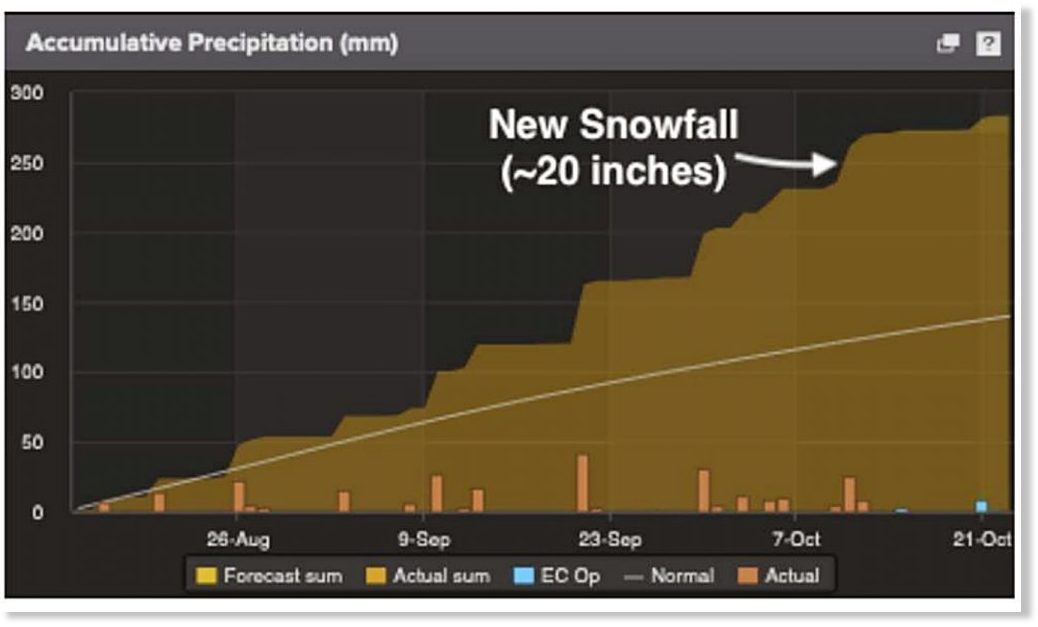
Unusual North Dakota snow storm cripples corn and soybean harvests

chart
"The normal temperature (east central North Dakota) on Oct. 11 is 49F, while the observed average temperature the day the storm hit was 31F. This represents an event in the 90th percentile so, temperatures in this range can occur around once per decade. However, the combination of cold with a winter storm is much more rare. The last instance of such a snowstorm this early was Oct. 9, 2005 in North Dakota. Prior to that event, it had been 130 years so, the cold plus snow is something that only happens once or twice a century," said Isaac Hankes, Weather Research Analyst.

"Starting late last Thursday, a historical blizzard enveloped the U.S. Northern Plains and northern portions of the Midwest, leaving 2-20 inches (5-50 cm) of snow covering the eastern half of North Dakota, and the northern halves of South Dakota and Minnesota. Additionally, sustained hard freeze conditions were felt in southern Minnesota, northwestern Iowa and portions of Nebraska.

Cloud Precipitation

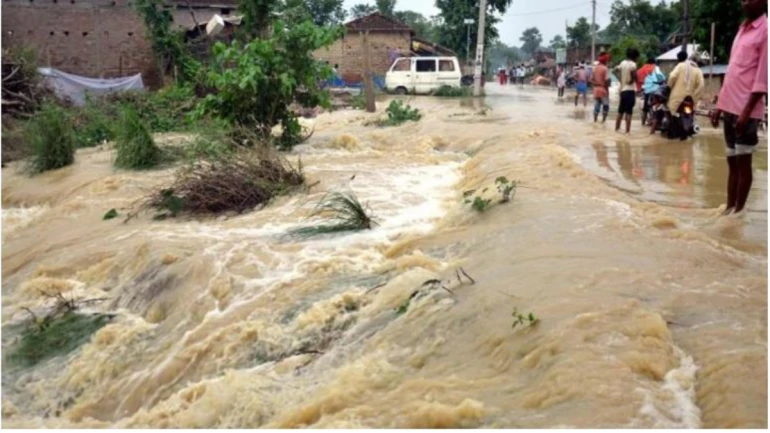
Over 2,100 dead in monsoon rains, floods across India

Monsoon flooding India
© PTI
More than 2,100 people have lost their lives and another 46 were reported missing this monsoon season in rains and floods which affected more than 25 lakh people in 22 states.

More than 2,100 people have lost their lives and another 46 were reported missing this monsoon season in rains and floods which affected more than 25 lakh people in 22 states, Union home ministry officials said on Wednesday.

The highest 399 people died in Maharashtra, followed by 227 deaths in West Bengal in rains, floods and landslides that hit as many as 357 districts in the country.

According to the officials, 738 people were injured and nearly 20,000 animals were lost. The heavy rains and floods fully damaged 1.09 lakh houses, partially damaged 2.05 lakh houses and destroyed 14.14 lakh hectares of crops.

Arrow Down

Landslide kills 22 in southern Ethiopia after 10 hours of heavy rainfall

The landslide was caused by heavy rains in
© FBCThe landslide was caused by heavy rains in southern Ethiopia.
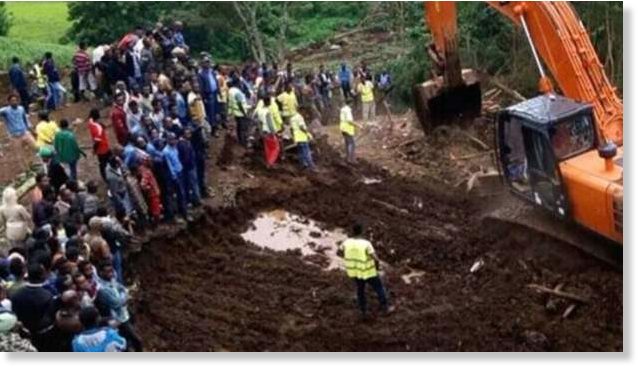
Rescue workers on Tuesday used excavators to dig out bodies after a landslide in southern Ethiopia washed away homes and killed more than 20 people, a local official said.

The landslide in the remote district of Konta occurred Sunday following 10 hours of heavy rains, said the official, Takele Tesfu.

"There are 22 people dead and we have only been able to dig up 17 using manpower and machine power," Takele told AFP.

"So far, we cannot get the others, so tomorrow we will continue to dig."

Cloud Lightning

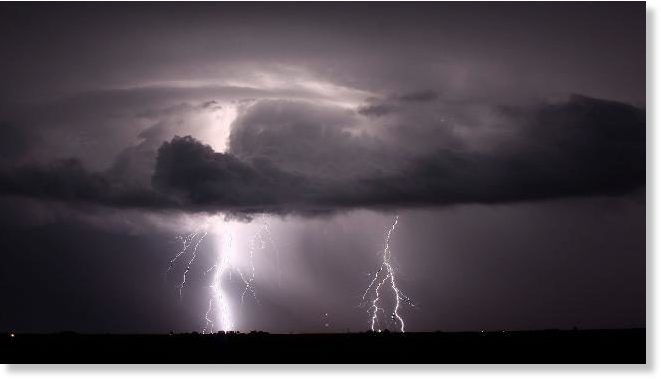
Lightning bolt kills 4, injures 25 in Tamil Nadu, India

lightning
Four women died and 25 others suffered injuries when a lightning struck them while they were working in a field at Vaithur in Pudukkottai district of Tamil Nadu on Tuesday afternoon.

The deceased have been identified as Kalaiselvi, 45, Shanthi, 35, Lakshmi, 60 and Vijaya, 47, of the same village.

The lightning struck them around 3pm while they were harvesting groundnut. It was raining in the area.

The injured were rushed to Government Medical College Hospital in Pudukkottai. Three of the injured were critical, sources said.

Snowflake

'No lights, no heat. Nothing. Period': Unprecedented snowstorm forces state of emergency in Manitoba, Canada

Winnipeg snow storm
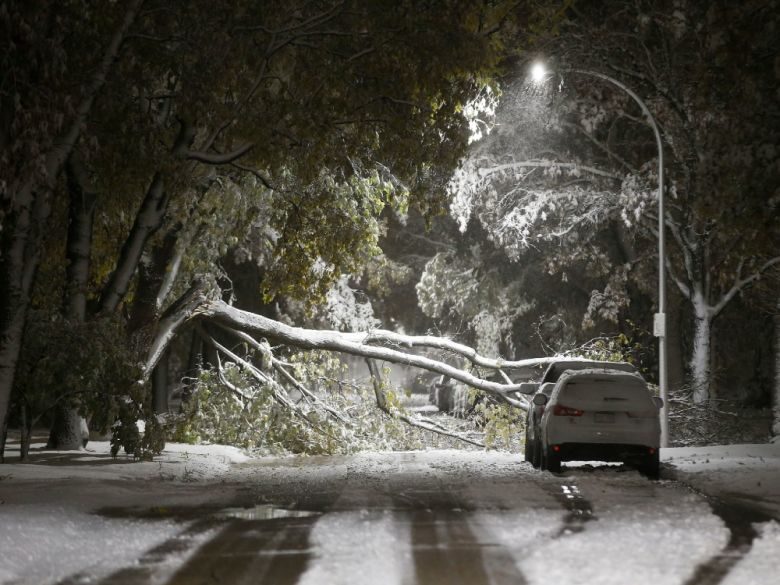
© John Woods / The Canadian PressAn early winter storm with heavy wet snow caused fallen trees, many on cars, and power lines in Winnipeg early Friday morning, October 11, 2019. Snow clearing crews were forced to hit the streets to clean up the damage.
As an early season snow and windstorm hammered Manitoba over the weekend, Marlene Beardy's pregnant granddaughter found herself stranded in Lake St. Martin, three hours north of Winnipeg, without heat or power and days away from giving birth.

"There was no heat, nothing at all. No lights, no heat. Nothing. Period," said Beardy, an evacuee from the northern Manitoba community, who was waiting to check into a hotel in Winnipeg on Monday.

Beardy is preparing to spend the next two weeks in a Winnipeg hotel with her granddaughter — who made it safely to Winnipeg after initial challenges evacuating — and newborn great-grandson, who was born in Winnipeg at 7:38 a.m. on Monday.

Thousands of people have been evacuated from northern First Nations communities in Mantioba as Manitoba Hydro works to rebuild vast stretches of the power grid in the province, warning it could take four days to restore full power to Winnipeg and 10 days to restore power to hard hit parts of the province outside the city.

Evacuating the northern communities proved especially challenging because the storm, which blew into Manitoba on Thursday night, knocked down thousands of trees, power poles and power lines in the province, blocking roads in places and knocking out both power and, in some areas, cell phone towers and phone connections.


Comment: Manitoba, Canada is getting pummelled by an early winter snowstorm