Storms
S


Bizarro Earth

Tide of dead seabirds keeps rolling in on Southern England beach

Dead Seabird
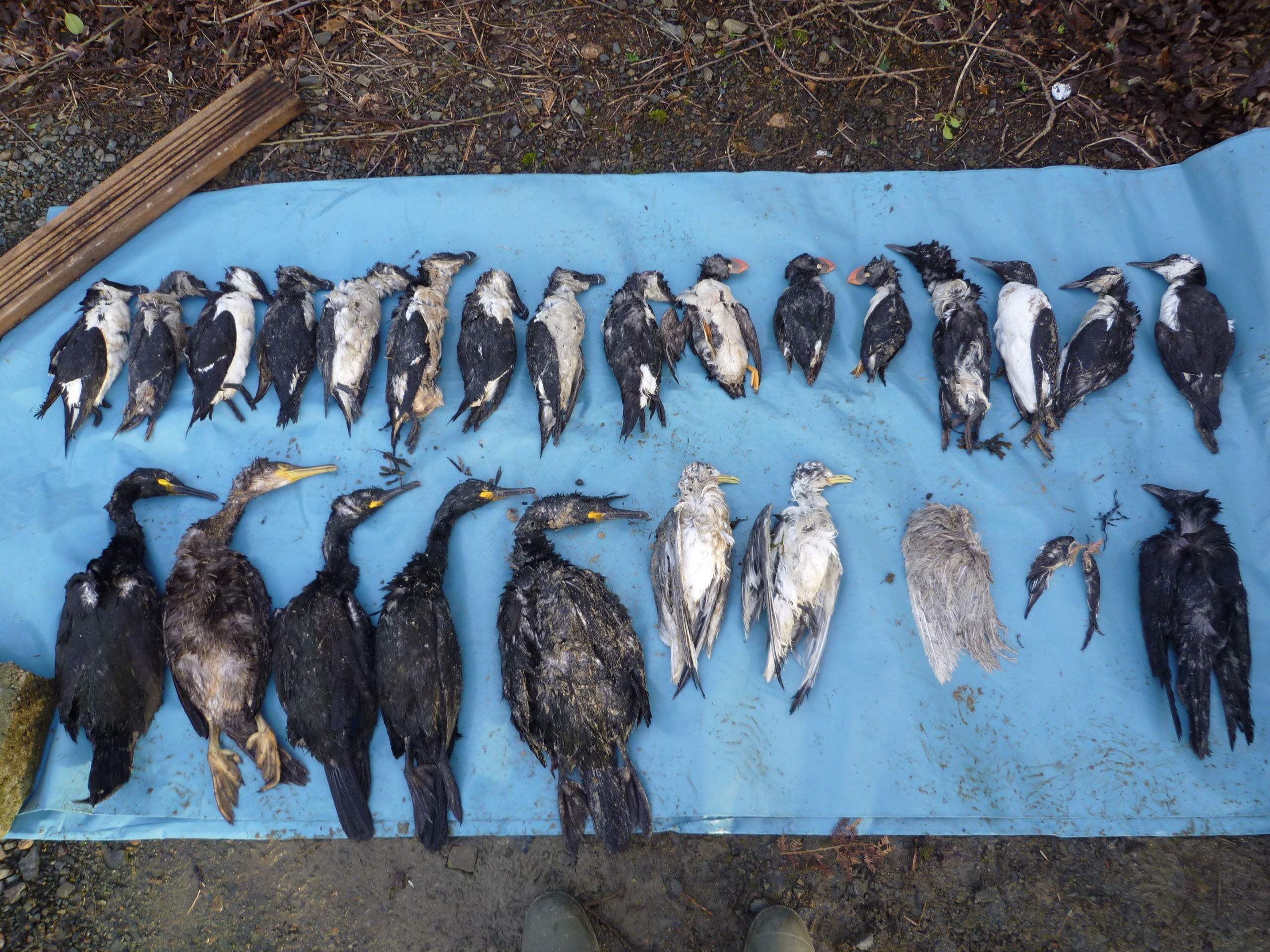
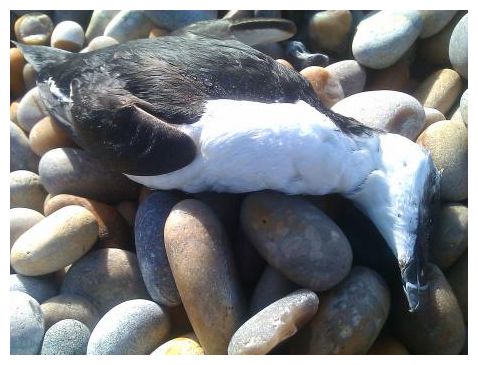
© Dorset EchoOne of the dead seabirds.
Dead seabirds are continuing to be washed up on Chesil Beach.

A combination of storms and pollution are thought to be to blame because some of the birds are covered in oil.

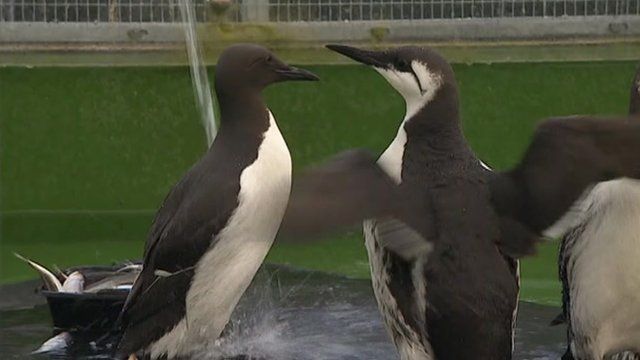
The weekend saw an overnight tide wash up more dead seabirds on Portland including razorbills, guillemots and gannets and lumps of what is thought to be palm or vegetable oil.

Concerned Wyke Regis resident Peter Minter said: "On Saturday morning people visiting Chesil Cove discovered that a lot of dead seabirds had been washed up.

"There were huge amounts of an oily, sticky white substance which after tests may be confirmed as palm oil also washed ashore early this month.

"The substance emits a pungent, overpowering odour."

The Echo reported last week that Dorset Wildlife Trust officers rescued distressed sea birds that washed up on Chesil Beach following a spell of storms and wild weather. Most birds washed up dead.

Snowflake

Winter storm Seneca brings another dangerous wintry blast to Midwest

Winter Storm Seneca wound down over the Midwest Friday, casting a final round of heavy snow and vicious winds across the area.
Image
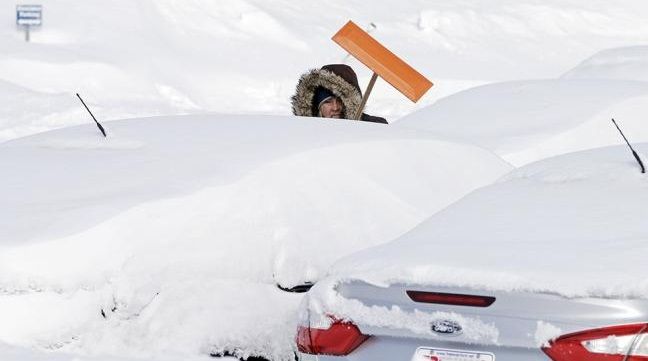
© AP Photo/Jim MoneSales consultant Debra Anderson makes her way through the lot to clear snow off new cars Friday, Feb. 21, 2014 in Bloomington, Minn., following a snow storm that dumped heavy, wet snow over eastern Minnesota and western Wisconsin, closing many schools including those in Bloomington and Minneapolis
At least two deaths occurred - one on icy roads in Minnesota and one in Michigan. More than 1,000 flights were canceled Friday, according to FlightAware.

Here's a rundown of the latest news from the areas that were impacted by Winter Storm Seneca.

Snowflake

Polar vortex to make encore performance in Midwest, East U.S.

Image
Consider the weather this week a mere pause in a tough winter that will resume next week with cold air and the potential for snowstorms.

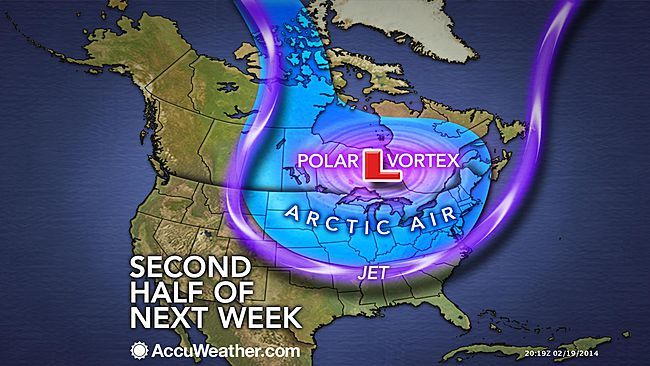
Signs are pointing toward another southward dip from the polar vortex. The polar vortex is essentially a mass of very cold air that usually hangs out above the Arctic Circle and is contained by strong winds.

According to Long Range Expert Mark Paquette, "We noticed a minor Sudden Stratospheric Warming event taking place back on Feb. 6-7, 2014."

When sudden warming takes place high in the atmosphere, it initiates a chain of events that tends to displace the polar vortex between 14 and 30 days later.

"In addition to the exact timing of the cold outbreak is you never know for sure initially which continent the cold air will be directed," Paquette said, "This time it appears it will take aim at the eastern part of North America."

Cloud Precipitation

UK Winter wettest on record - Met Office

Image
With a week still to go in the winter, the UK's rainfall record for the season has already been broken.

The incessant storms and rainfall over the past two months have made this the wettest winter since records began in 1910.

According to provisional figures from the Met Office, the UK received 486.8mm of rain between 1 December 2013 and 19 February 2014.

This beat the previous record of 485.1mm of rain set in 1995.

Cloud Lightning

Record numbers of puffins have perished because of the recent storms in the Bay of Biscay

Image
Puffins come back to Britain in the spring in order to breed
Puffins have suffered in the recent storms in the Bay of Biscay. The British Trust for Ornithology (BTO) has received a record number of reports of the birds, wearing uniquely numbered metal rings that identify them as puffins that would have been heading for breeding colonies in the UK, being found dead on the coasts of France and Spain.

In a normal winter, the BTO would expect two or three ringed puffins to be found in France and Spain, but during the past few weeks more than 35 have been reported.It is well known that British puffins fly out into the Atlantic for the winter months, riding out the worst of the weather there. As the winter progresses, our puffins make their way into the Bay of Biscay before heading back to their breeding colonies and the burrows that they used the previous summer. Birds found in this current wreck have come from colonies in west Wales, northern Scotland, Orkney and Shetland.Mark Grantham, Ringing Officer at the BTO, commented, "Up until the last couple of weeks it seemed that our puffins might have survived the worst of the winter. However, from the reports of ringed birds that are being washed-up on the Biscay beaches it would seem that the recent storms were just too much for many of the birds."He added, "It is still early days and the number of ringed birds found is likely to rise further, and we must remember that if more than 35 ringed birds have been found, many un-ringed birds must have been affected, too."Bird ringing in the UK is organised by the British Trust for Ornithology and is carried out by licensed volunteers, who ring over a million birds of a wide variety of different species every year. It is the information received from these rings, when found and reported to the BTO, that enables scientists at the Trust to chart events such as this.

For more information and to report a ring number to the BTO, please visit www.bto.org

Cloud Lightning

Hundreds of seabirds washed ashore in South West UK

Image
Animal charities are caring from some of the hundreds of guillemots, razorbills and puffins that have washed up in Hampshire, Dorset, Devon and Cornwall in the past week
Hundreds of seabirds - some dead and others covered in oil - have been washed ashore in south-west England.

The RSPB believes most of the deaths were a "sad but natural occurrence" after the recent stormy weather.

In Devon, about 40 puffins, guillemots and razorbills were found at Thurlstone, while others have been reported from Hampshire to Cornwall.

Some of the "pitiful" oiled birds are being cared for at the South Devon Seabird Trust in Teignmouth.

The trust's founder, Jean Bradford, told BBC News: "It's a catastrophe and I think with everything else that's going on with people, the birds and other animals have been overlooked a little bit."

Mrs Bradford said the oiled and storm-blown birds that had been rescued were in a "pitiful state".

"Even if these birds get to shore, very often it's the case that they're washed back out to sea by the enormous waves that are coming in.

"By the time they reach another beach, perhaps at low tide, many of them are too ill to be saved."

A number of birds were rescued from Chesil Beach in Dorset earlier in the week and taken to the RSPCA West Hatch animal centre in Taunton.

Attention

10 key moments of the UK winter storms

uk storms 3
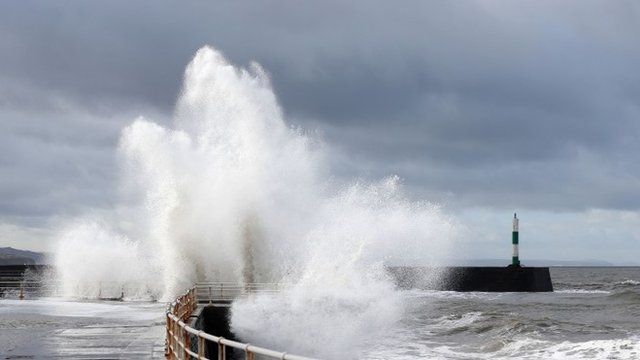
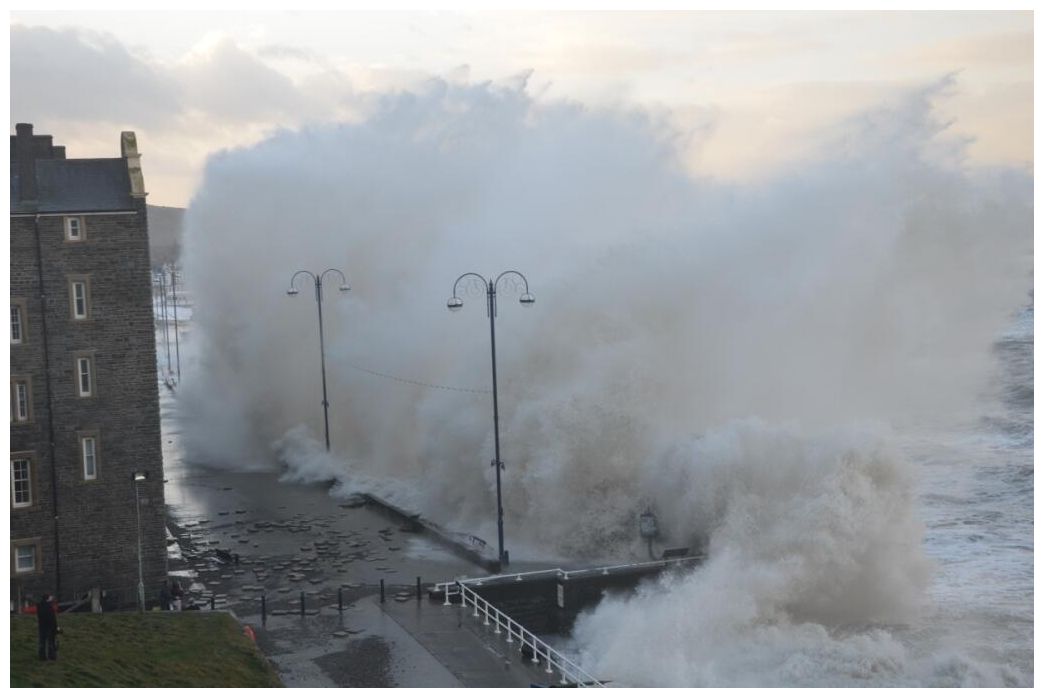
The UK has been battered by strong winds and lashed by heavy rain in a series of ferocious storms that have barrelled across the Atlantic.

The storms, which began in October last year, have forced many from their homes and are set to make the 2013-14 winter the wettest on record. More than 5,000 homes and businesses have been flooded and many rivers in southern England have reached their highest ever recorded levels.

Arrow Down

Sinkholes opening up all over Britain at a terrifying five times normal rate

  • Sinkholes seen in Kent, South-East London and Hemel Hempstead
  • One in High Wycombe engulfed a car as it was parked in the driveway
  • Expert believes sinkholes are appearing five times their normal rate
  • Forecast heavy rain could mean more holes appear around the country
On Saturday, a huge sinkhole opened up at the side of a house in Hemel Hempstead, Hertfordshire. Swallowing up half of the front lawn, it was 35ft wide and 20ft deep.

Last week, a hole as deep as a double-decker bus is high suddenly opened up in the back-garden of a house in South-East London, almost swallowing a child's trampoline as the ground collapsed without warning.

Had the poor owner's daughter been rushing out to play on the trampoline, she could have very easily have been seriously injured or even killed.

british sinkhole
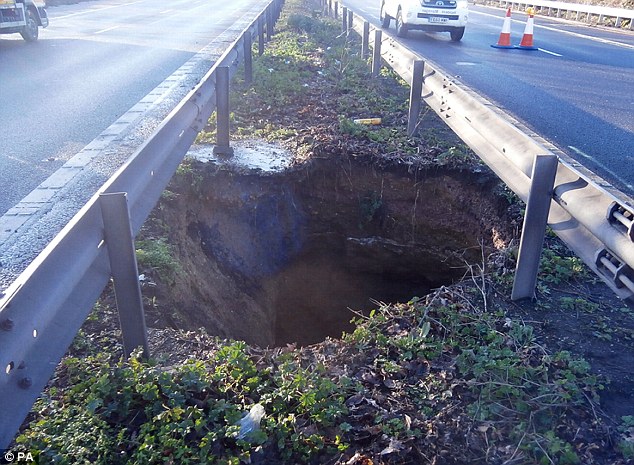
© Press AssociationDangerous: A 50ft-deep hole appeared in the central reservation on a busy section of the M2 in north Kent last week
Two weeks ago, there was a similarly narrow escape for a family living in High Wycombe, when, overnight, a deep hole appeared without warning in the driveway just next to the house.

This time the adult daughter's car did end up buried at the bottom of the hole, thankfully, while there was no one in it.

And in Kent last week, motorists hoping to use the M2 were left fuming by the motorway's temporary closure, after a substantial hole - 15ft deep - suddenly appeared in the central reservation. Again, no one was hurt but had the hole opened up just a few yards away, it is obvious what a different story it could so easily have been.

All of these holes are what the public call sinkholes and now, after weeks of heavy rain, they seem to be appearing with ever greater regularity. Hard statistics are difficult to find - not least because sinkholes that appear on farmland often go unreported - but having studied them for 35 years, I'd estimate that sinkholes are currently appearing at four-to-five times their normal rate.

Comment: The appearance of sinkholes worldwide is has been accelerating for many years now. Truly a sign of the times. Here is just a small sample of stories SOTT has archived:

Sinkholes - A Sign of the Times?
Will the Dead Sea be eaten by sinkholes? Huge chasms are appearing in the region at a rate of one per day
Sinkholes become an item of study
45 sinkholes open up in Kaski, Nepal - 50 families displaced so far


Snakes in Suits

'If you buy a house on a flood plain you know the risks': Environment Agency boss Lord Smith blames flooded families for damage to their homes

Image
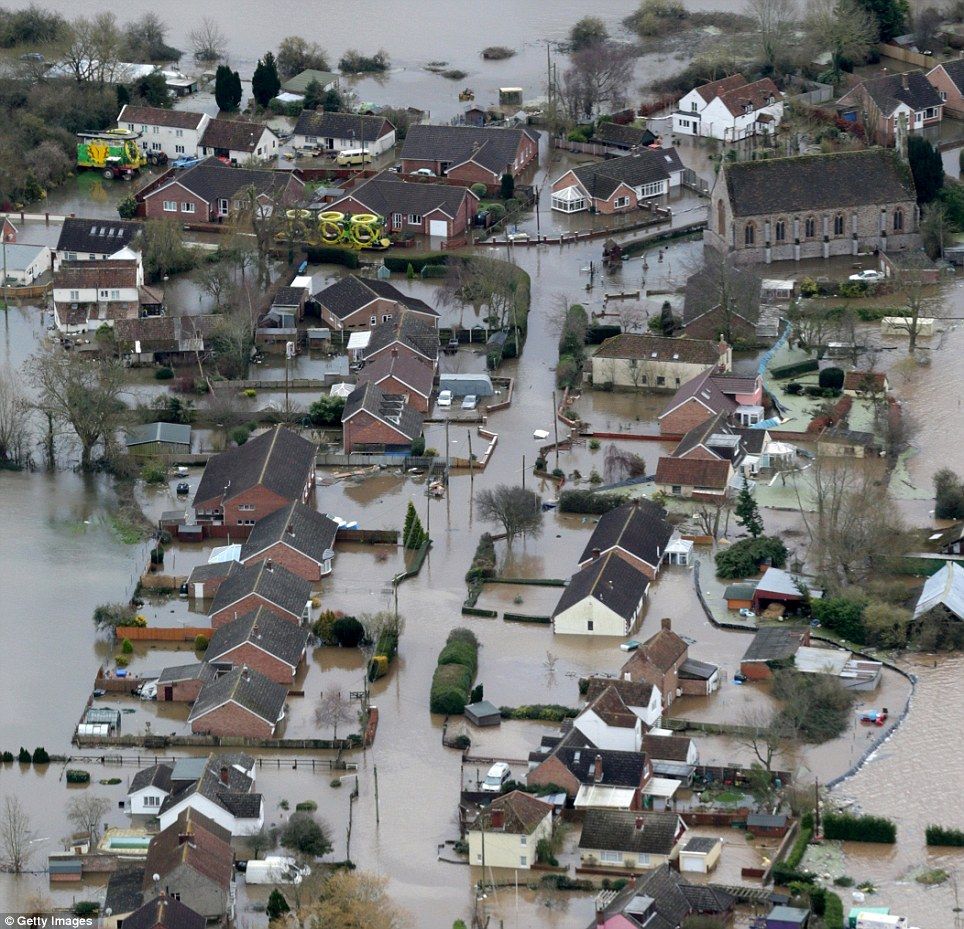
Devastation: Water surrounds flooded properties in the village of Moorland on the Somerset Levels near Bridgwater.
  • 16 severe flood warnings remain in place - two in Somerset and 14 along the River Thames in Berkshire and Surrey
  • More than 300 other flood warnings and alerts have been issued in the South East, South West and the Midlands
  • Homeowners who've already had to evacuate their homes have pleaded for troops to stop looters raiding properties
  • EA chief: 'Anyone who builds in a flood plain or buys a property in a flood plain needs to think about the flood risk'
Lord Smith has appeared to suggest developers and buyers of homes in flood plains must take their share of the blame for the flooding crisis.

The embattled Environment Agency chairman, who is a former Labour Cabinet minister, has risked fresh controversy over his comments.

He said: 'Anyone who builds in a flood plain, anyone who buys a property in a flood plain, needs to think about the flood risk.'

David Cameron, who is struggling to contain a Cabinet war over the official response to the floods, has refused to rule out sacking Lord Smith.

He pledged 'no restraints' on disaster spending as Labour accused ministers of 'fighting like rats in a sack' in an unedifying blame game with the EA.

Cloud Lightning

Seabird wreck in the Channel Islands, UK

Image
The last two weeks have been marked by a run of storms in the Atlantic that have brought very high winds and seemingly endless rainfall. At first we worried about the weather's impacts on the land with widescale flooding in southern England. How would landbirds find enough food if the ground became saturated and the rain prevented them from foraging. Even our garden birds were suffering.

At the same time our coasts were being battered with high winds and huge waves. As defences were being breached, seawater was coming inland and would impact on plant communities and eventually their associated birds. Then, last week we started to see exactly what the storms were also doing to our seabird populations. North-west Europe has many millions of seabirds and the majority of these winter out in the Atlantic. We could only guess what it must be like out there for small birds that need to be able to dive for fish in roaring seas and winds up to 100 mph.