Storms
S


Cloud Lightning

Update: Tens of thousands of dead seabirds have now washed up in Bay of Biscay

Image
© Tim Ransom
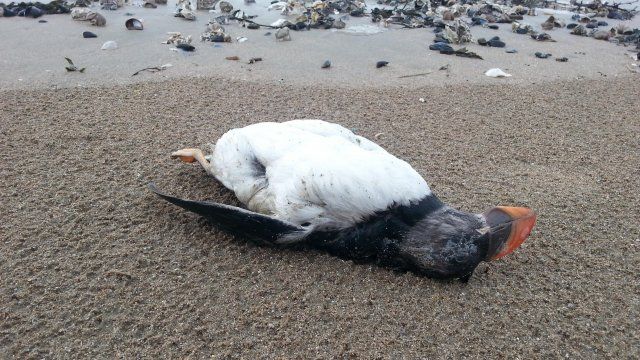
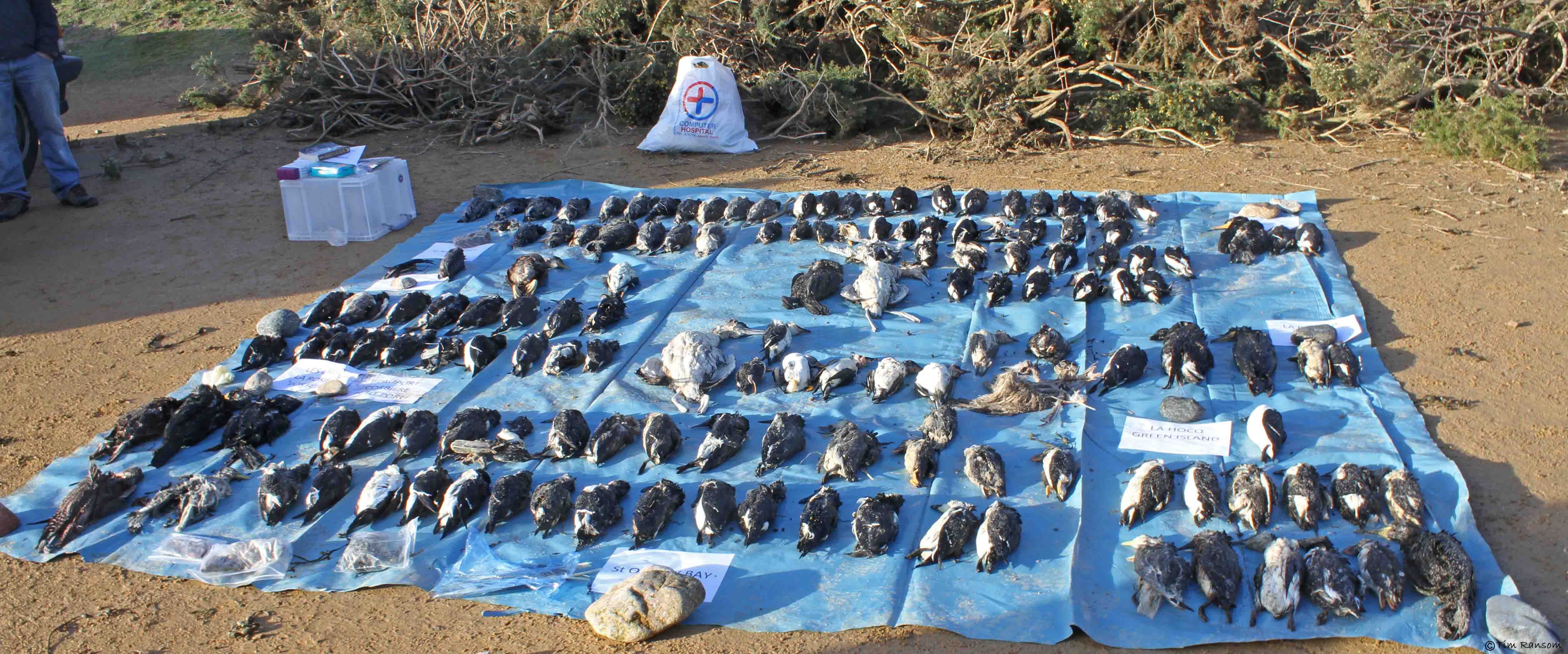
A survey of stranded seabirds on the Atlantic coast of France has found more than 21,000 of their corpses washed up on shores between Brittany and Spain.

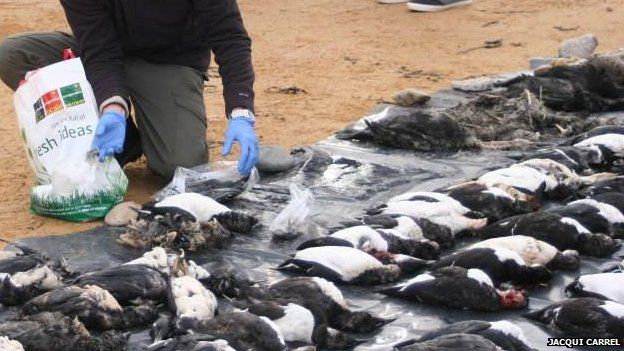
A co-ordinated count that took place last weekend (22-23 February) from Finistère to the Spanish border resulted in 21,341 dead birds begin retrieved, along with and another 2,784 brought to veterinary centres to aid recovery. Several thousand dead seabirds were already counted earlier in the month and fishermen and other boat users reported that there were "carpets of dead birds" still floating at sea.

The vast majority were Puffins (more than 12,229 individuals), with smaller numbers of Common Guillemots (5,443) and a lesser percentage of Razorbills (376) and Kittiwakes (no exact figure available yet). The numbers are expected to increase in the coming days and weeks as more birds are washed ashore.

The British Trust for Ornithology (BTO) have already previously reported a record number of British-ringed Puffins being washed up dead on the coasts of France and Spain. Instead of the usual two or three birds reported in a normal winter, the BTO has had more than 35 reported in the last few weeks. The previous highest number of ringed birds found was back in 1979 when 17 dead Puffins were reported.

Cloud Lightning

Prize animals injured in Amberley, New Zealand tornado

tornado injures animals
© Jan SwarbrickSunday's tornado has left rural animals in the worst-hit areas on antibotics, traumatised and even lost.
Sunday's tornado has left rural animals in the worst-hit areas injured and traumatised.

Jan Swarbrick was out feeding her dogs and putting the chooks away when the twister tore through her Amberley property.

''The sky was just evil. It was the most unbelievable sky I have ever seen in my life.''

Within seconds, the ''black funnel'' of the tornado was just 200 metres away from Swarbrick.

As she ran for a shed, willow tree branches lashed her face and body. Once inside, branches continued ''smashing'' against the shed.

''I thought any moment it's going to go.''

While it would have only lasted for a few seconds, it was one of the most horrifying things of her life, Swarbrick said.

From inside the shed, she watched as an 850kg horse float and a ''big drum'' were sent flying into a paddock, spooking the three horses grazing nearby.

The animals suffered terrible cuts as they were sent into fences, however all three horses were on the mend following vet checks.

Cloud Precipitation

Southern California prepares for the one-two storm punch

Image
© Justin Sullivan/Getty ImagesA small pool of water is surrounded by dried and cracked earth that was the bottom of the Almaden Reservoir on January 28, 2014 in San Jose, California. Now in its third straight year of drought conditions, California is experiencing its driest year on record, dating back 119 years, and reservoirs throughout the state have low water levels.
The rain comes amid a drought emergency and after the driest year on record in California

Residents in foothill neighborhoods under the threat of mudslides and flooding surrounded homes with sandbags this week as communities prepared for Southern California's first significant winter storm in months.

The storm brings the possibility of mudslides in areas burned by wildfires, but also much-needed rain -- and snow in the mountains -- after the state's driest year on record. Two storms will usher moisture into the region, moving down from Northern California Wednesday morning before bringing about a half-inch to an inch of rain to Southern California.

The heaviest rain Wednesday is expected after the evening commute and into the overnight hours. The more powerful of the two storms will arrive Thursday at about 7 p.m. and bring up to 2 inches of rain in central and southern valleys, 2 to 4 inches in foothill areas and 6 inches of rain in some mountains.

Showers are expected to continue into Saturday.

Flash flooding is possible in some foothill areas below burn areas, including the hills that burned in January's Colby fire above Glendora.

Camera

NASA image shows Polar Vortex plunging southward into U.S.

Image
© NASA
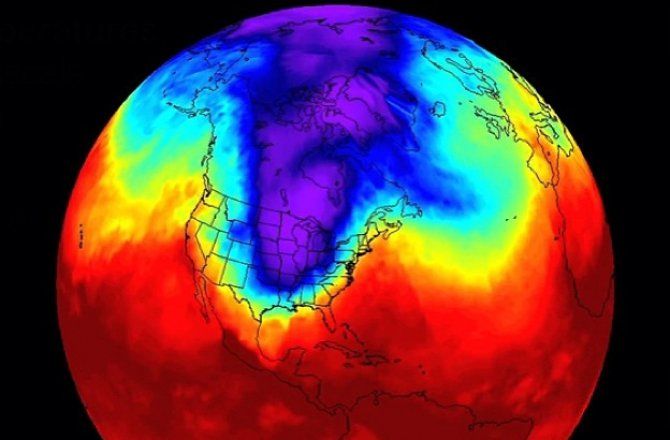
NASA today released this image of the polar vortex, the weird atmospheric twitch that flooded into the United States last month. The purple wavy line above that wanders down from the Arctic shows the below-average temperatures that set cold records in many states.

From NASA's Facebook page:

"The Big Chill - Blistering cold air from the Arctic plunged southward this winter, breaking U.S. temperature records. A persistent pattern of winds spins high above the Arctic in winter. The winds, known as the polar vortex, typically blow in a fairly tight circular formation. But in late December 2013 and early January 2014, the winds loosened and frigid Arctic air spilled farther south than usual, deep into the continental United States. On Jan. 6, 2014, alone, approximately 50 daily record low temperatures were set, from Colorado to Alabama to New York, according to the National Weather Service. In some places temperatures were 40 degrees Fahrenheit colder than average."

Igloo

Next freeze will cover two-thirds of country, weather service says

Image
© Chad Weisser/iReport
Don't pack away those winter coats and hats yet!

We're in for another blast of cold Arctic air, which is gearing up to roll across most of the country this week, but it won't be as bad as the shocking freeze in January.

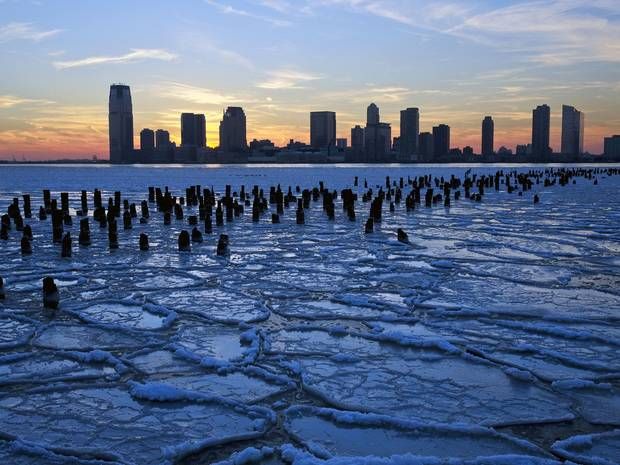
The National Weather Service says some places from the central U.S. to the Ohio and Mississippi Valleys could be having some frosty high temperatures, as low 20 to 30 degrees below normal.

If you call it Polar Vortex Part II (or III or IV), meteorologists say you'd be wrong -- nor was the first big cold spell of 2014, strictly speaking, a strike of the Polar Vortex.

The Polar Vortex stays anchored over Baffin Bay, to the north of Canada, and doesn't move, says CNN meteorologist Sean Morris. But its shifting pattern allows cold Arctic air to spill southward into the United States.

"When it weakens, this allows the cold Arctic air that is often mislabeled the "Polar Vortex" to spill southward across the U.S. border and bring us bone-chilling temperatures," Morris explained.

Snowflake

U.S. Polar Vortex returns after short period of Spring weather

Image
© IndependentThe US is experiencing a repeat of January's icy weather, which saw the Niagara Falls freeze over.
After a brief taste of spring weather, parts of the US are being plagued once again by the polar vortex.

The worst of the icy weather will centre on the upper Midwest, the Climate Prediction Centre predicts.

"Record cold temperatures are possible for the High Plains, Upper Midwest and Great Lakes later this week," the US National Weather Service said in an online forecast.

There are reports that Minneapolis has been hit by temperatures 10 to 20 degrees below normal, with current reports stating that it is -16 C.

Cities including Chicago, Detroit and Buffalo, are also expected to experience unusually low temperatures, with the mercury in some areas dropping by as much as 40 degrees to below 0 C by midweek, according to AccuWeather.

"The polar vortex is essentially a mass of very cold air that usually hangs out above the Arctic Circle and is contained by strong winds," AccuWeather meteorologist Alex Sosnowski told USA Today.

Cloud Lightning

Wildlife casualties of floods grow amid fears over 'polluted' wetlands in UK

Image
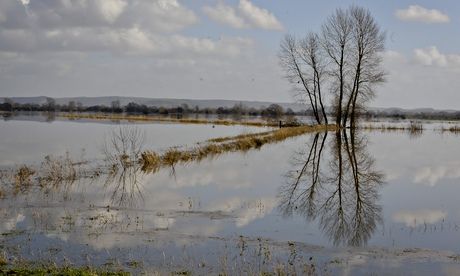
© Ben Birchall/PAThe Somerset Levels at the height of the floods. As communities begin to recover, the cost to wildlife is only now becoming apparent.
The terrible loss of lives and homes has been well documented, but the damage to populations of birds, mammals, fish and insects, and habitats, will also have a long-term impact on the ecosystem

Seals, moles, hedgehogs, badgers, mice, earthworms and a host of insects and seabirds are among the unseen casualties of the floods, storms and torrential rains of the last few weeks, say wildlife groups.

As the waters started to subside across England, conservationists reported that about 600 guillemots, puffins, razorbills, kittiwakes and gulls have been washed up on the south coast and 250 seals drowned in Norfolk, Cornwall and the Channel Islands. A further 11,000 seabirds are reported to have been found dead on the French coast.

"The relentless storms hitting our coast have had a cumulative effect on animals, which can usually cope with bad weather, but are now on really low reserves and are dying in large numbers," said Niki Clear from Cornwall Wildlife Trust, which has reported that dozens of seal pups were washed up on beaches.

Cloud Lightning

UK: Jersey seabird death toll 'at least 600 and growing'

Image
Cris Sellares said there were a total of 136 birds found on Sunday
More than 600 dead seabirds have now been found on Jersey's beaches, wildlife experts have confirmed.

The National Trust for Jersey organised a second count on Sunday to track the impact of recent storms.

For the second week about 130 birds were discovered dead. Experts put this down to them struggling for food in heavy wind and rain.

Wildlife experts are calling for the Channel Island governments to work to assess the scale of bird loss.

Dozens of volunteers answered a call to scour the island's coast on Sunday to collect some of the hundreds of dead birds which have washed up during the extreme weather early in February.

Cris Sellares, from the National Trust, said there were a total of 136 birds found and some specimens, such as local shags, an oiled razorbill, a kittiwake and some puffins were saved for post-mortem analysis.

She said: "It is one storm after another, after another, they can't feed in this weather, they get weak.

Cloud Lightning

Thousands of puffins wiped out in storms: Record numbers wash up dead on coasts of Spain and France

Image
Normal winters would have brought 3 or 4 puffins to the Bay of Biscay, but this winter saw 35, with countless more thought to have drowned in the ocean
* Record numbers of puffins have been washed up on Bay of Biscay

* A few die each year, but recently many more have died due to storm weather

* Drowning is common cause of death for the puffins

* They are often swept away in strong storms while hunting at sea


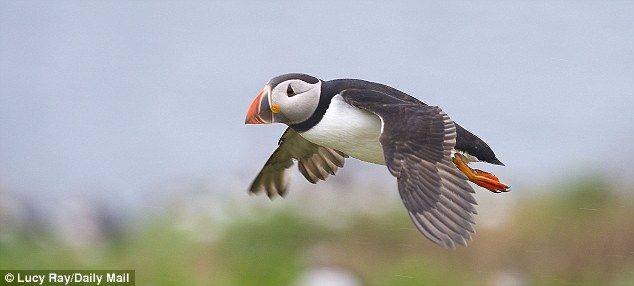
Thousands of puffins are feared to have been killed in the recent storms that have hammered the UK for the last month.

The British Trust for Ornithology said today it's received a record number of reports of puffins, wearing uniquely-numbered metal rings showing they are from the UK, being washed up dead on the coasts of France and Spain.

It's feared they have been wiped out in their thousands while hunting far out to sea in the storm-lashed Bay of Biscay for their favourite food, sand eels.

BTO spokesman Paul Stancliffe said: 'Sadly, the sight of a puffin, beak full of sand eels, might be a little harder to come by this summer as they struggle to survive the recent storms that have rocked the Bay of Biscay.'

In a normal winter, the BTO would expect two or three ringed puffins to be found in the Bay, which covers western France and northern Spain, but during the last few weeks, more than 35 have been reported and countless more are feared to have been drowned and lost forever far out at sea.

Cloud Lightning

Number of dead seabirds found on the French coast increases to 15,000

Image
© Maxppp A puffin found dead on a beach.
Numerous birds storm victims: the slaughter continues on the beaches of Charente-Maritime

For the third consecutive weekend, the LPO Charente-Maritime asks its volunteers to identify bird flood victims, some may still be saved if they are caught early.

Since the early storms in January, 15,000 dead birds or more were found all along the coast of the Atlantic. They number in the thousands in Charente-Maritime for over a fortnight. They were mostly guillemots and puffins, birds of the high seas who found no food in the sea due to bad weather .

At Charente-Maritime, those who are found alive on the beach are supported, warmed and fed, the Centre for the Protection Departmental Dolus-D'Oléron the only department. Since January 29, 275 birds are often very weak were housed, only a third survived.