Animals
S


Heart - Black

Wind company PacifiCorp Energy convicted in the deaths of eagles and other birds

Image
© Wyoming Jackrabbit/Flickr/Creative Commons LicenseWind turbines near Medicine Bow, Wyoming
A Portland-based wind energy company that recently sued the federal government to keep its bird death data secret has been convicted in federal court over deaths of protected birds at two of its wind facilities in Wyoming.

The carcasses of 38 golden eagles were found at PacifiCorp Energy's "Seven Mile Hill" and "Glenrock/Rolling Hills" installations in Carbon and Converse counties between 2009 and this year, along with 336 other birds protected under the Migratory Bird Treaty Act. According to the U.S. Fish and Wildlife Service, PacificCorp disregarded risk to eagles and other birds when it built its turbines at the two facilities.

"PacifiCorp Energy built two of its Wyoming wind projects in a manner it knew would likely result in the deaths of eagles and other protected birds," said Sam Hirsch, the U.S Department of Justice's Acting Assistant Attorney General for Environment and Natural Resources.

Fish

Angler hooks 89 STONE greenland shark setting new world record for biggest fish caught on a rod

Image
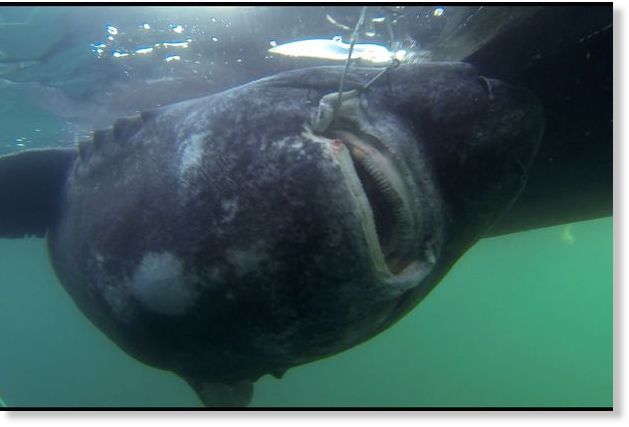
© FreeWaterPictures/BNPSCatch of the day: Angler Joel Abrahamsson reeled in the huge beast
Builder Joel Abrahamsson caught the Greenland, which weighed as much as an adult male polar bear, while fishing off Norway

An angler who built up his strength by reeling in blocks of concrete caught a record-breaking 89-stone shark.

Builder Joel Abrahamsson, 33, caught the 15ft Greenland while fishing off Norway.

The monster catch is a world record for a fish caught on rod and reel from a kayak.

Joel built up his strength for the record attempt by lifting rocks and practiced his technique by lowering 60lbs cement blocks into his local lake and then reeling them in.

To give him the extra power needed to reel in the 1,247lbs shark, he strapped himself into a harness that was attached to his rod, meaning if the shark had overpowered him, he could have been pulled into the freezing waters.

Wolf

Villagers in Kazakhstan use 'guard wolves' for protection

Image
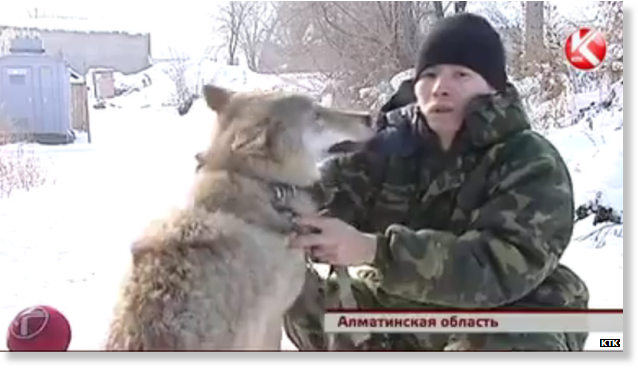
Mr Zhylkyshybay says he takes his wolf, Kurtka, for walks through the village
Villagers in Kazakhstan are increasingly turning to an unusual animal to guard their land - wolves, it's been reported.

"You can buy a wolf cub for just $500 (£320), they say, and hunters are adamant that if treated well the wild animal can be tamed," the KTK television channel reports. Nurseit Zhylkyshybay, from the south-eastern Almaty region, tells the channel he bought a wolf cub, Kurtka, from hunters three years ago, and the animal is perfectly happy wandering the yard of his house. "He's never muzzled, I rarely put him on a chain and do take him for regular walks around the village. Our family and neighbours aren't scared of him at all," Mr Zhylkyshybay insists. "If the wolf is well fed and cared for, he won't attack you, although he does eat a lot more than a dog."


Fish

New bizarre-looking species breaks record for world's deepest fish

Image
© National News and PicturesAberdeen University researchers have set a new record for the deepest fish ever found (shown in red ring)
A never-before-seen fish has been caught on camera, setting a new depth record in the Pacific Ocean.

The world's deepest fish was captured on camera at depths of 8,145 meters (26,700 feet) in the Mariana Trench in the western Pacific Ocean. The newest discovery breaks a depth record set in 2008 by nearly 500 meters (1,640 feet).

The previously unknown creature, believed to be a snailfish, was filmed several times floating along the sea floor. It is a white translucent fish with an eel-like tail and wing-like fins.

Binoculars

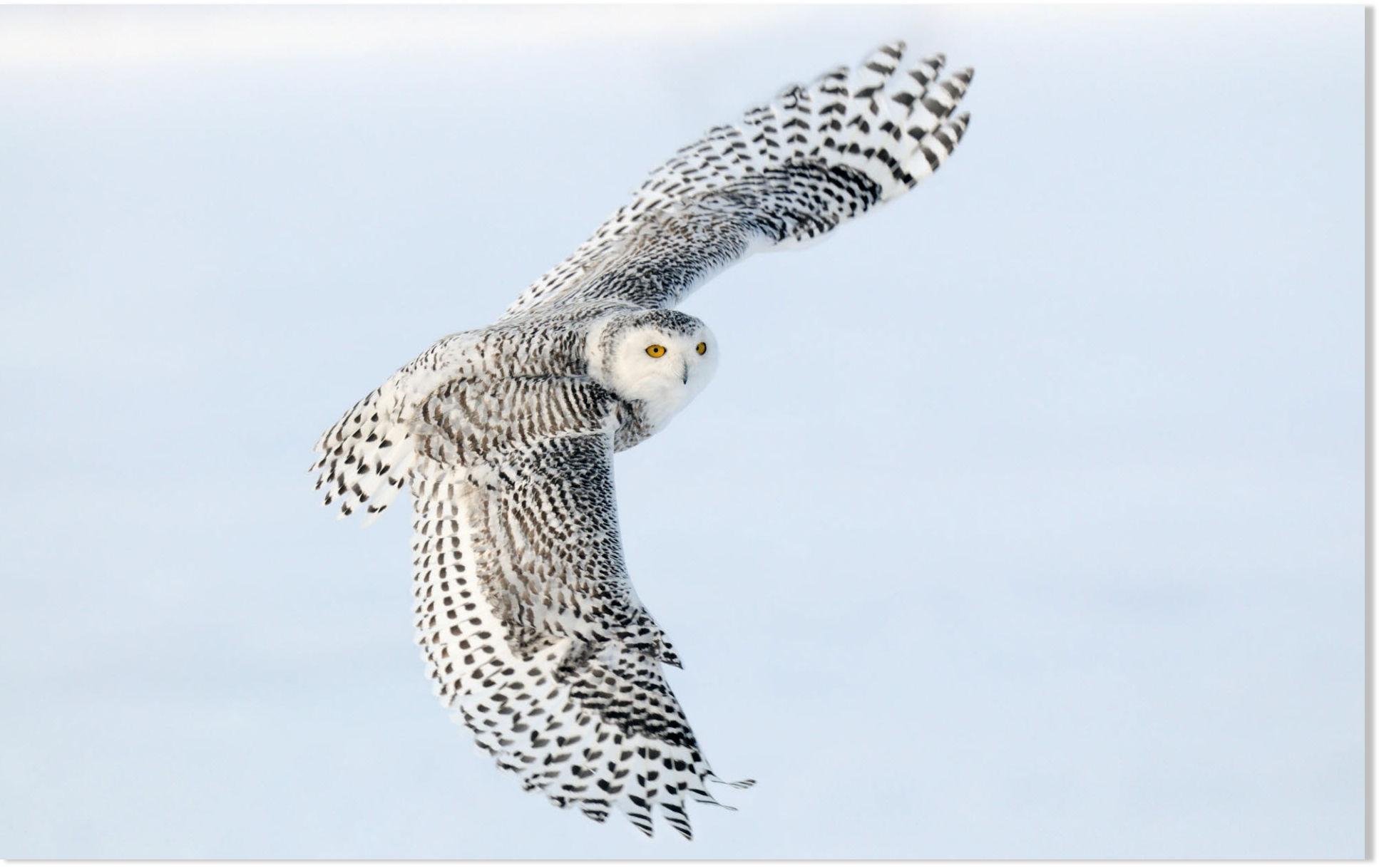
Snowy owl sightings on the rise across the upper US

Image
If you have a passion for birds or even if you're so-so about them, you're going to love this. All the indicators are present telling us this year is going to be witness to another snowy owl eruption across the upper United States. That means for us up here on the Range, too!

Last year, 2013-2014, we saw what was possibly the largest eruption of snowy owls during the last century. This year could be even better. There have already been 44 snowy owls reported in Minnesota alone.

There are different theories on why Snowy Owls leave the Arctic. Some believe that due to such great nesting success, a shortage of food forces the younger owls to leave the area in search of better hunting territories. Others believe the younger owls leave because they have not perfected their hunting skills yet and would not be able to survive competing among older, wiser owls. No matter the reason, what this really means to most of us is this will be a great winter to get out and see one of these beautiful visitors from the Arctic Tundra.

Binoculars

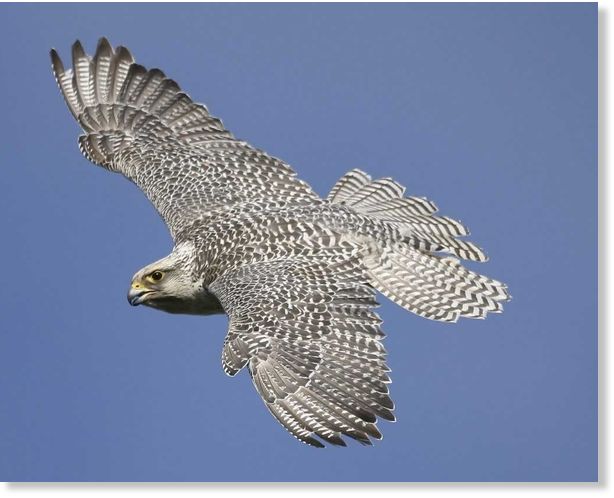
Rare Arctic gyrfalcon seen in Madbury, New Hampshire

Image
© Hanne & Jens Eriksen/VIREO
Gyrfalcon travels south from normal Arctic range

The largest of the falcons, a rare gyrfalcon, was seen in Madbury during the past week, according to the Audubon Society's rare bird alert.

Fast like a peregrine falcon and wearing a faint mustache, gyrfalcons live in the Arctic.

According to the Peregrine Fund, the birds of prey are very sensitive to changes in the environment.

The group said pesticides, loss of habitat or a decrease in prey can affect populations of gyrfalcons.

Cloud Lightning

Birds may detect approaching storm from 900km away by infrasound waves

Image
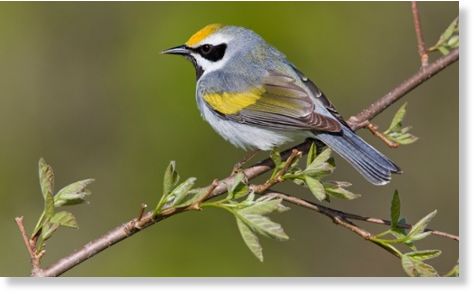
© AlamyThe golden-winged warblers may have picked up infrasound from tornadoes, which travels through the ground.
A group of songbirds may have avoided a devastating storm by fleeing their US breeding grounds after detecting telltale infrasound waves.

Researchers noticed the behaviour after analysing trackers attached to the birds to study their migration patterns. They believe it is the first documented case of birds making detours to avoid destructive weather systems on the basis of infrasound.

The golden-winged warblers had just returned from South America to their breeding grounds in the mountains of Tennessee in 2013 when a massive storm was edging closer. Although the birds had just completed a migration of more than 2,500km, they still had the energy to evade the danger.

The storm, which spawned more than 80 tornadoes across the US and killed 35 people, was 900km away when the birds, apparently acting independently of one another, fled south, with one bird embarking on a 1,500km flight to Cuba before making the return trip once the storm had passed.

Black Cat

First mountain lion seen in Kentucky since before the Civil War shot by wildlife officer

Image
© US Fish and Wildlife Service.
A Kentucky Department of Fish and Wildlife officer killed a mountain lion on a Bourbon County farm on Monday, marking the first confirmed sighting of a mountain lion in Kentucky since before the Civil War, said Mark Marraccini, a spokesman for the agency.

Marraccini said a farmer spotted the cat in a tree and alerted the department. When the officer responded, he found the animal had been trapped in different tree by a barking dog and decided it was best to "dispatch it."

Mountain lions were once native to Kentucky but they were killed off here more than a century ago, Marraccini said.

Mountain lions are the largest cats found in North America and can measure up to eight feet from nose to tail and weigh up to 180 pounds. Also known as cougars, pumas, panthers and catamounts, the cats are considered top-line predators because no other species feed on them.

Comment: Just in case the reader thinks this killing might be an exceptional or isolated incident undertaken by a wildlife officer, then take a look at this article: Out of control: USDA's Wildlife Services killed 4 million animals in 2013 (including 345 pumas)

Also this story: Wildlife officers kill four mountain lions in Black Hills, South Dakota


Arrow Up

Carnivore Comeback: Bear and wolf populations are thriving in Europe

Image
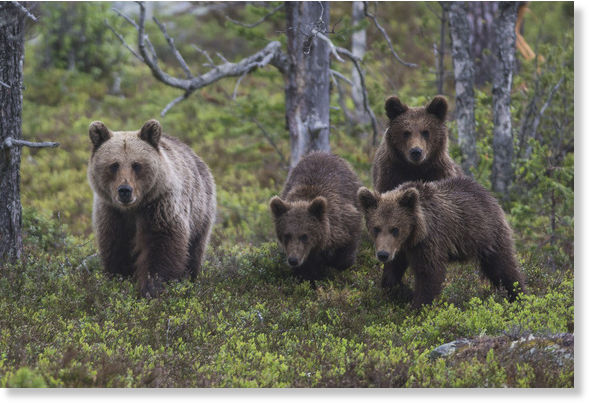
© Kjell IsaksenA female brown bear (Ursus arctos) with three yearlings in Gutulia National Park in Hedmark, South East Norway.
Despite having half the land area of the contiguous United States and double the population density, Europe is home to twice as many wolves as the U.S.

A new study finds that Europe's other large carnivores are experiencing a resurgence in their numbers, too - and mostly in nonprotected areas where the animals coexist alongside humans. The success is owed to cross-border cooperation, strong regulations and a public attitude that brings wildlife into the fold with human society, rather than banishing it to the wilderness, according to study leader Guillaume Chapron, a professor at the Swedish University of Agricultural Sciences' Grimsö Wildlife Research Station.

In Europe, "we don't have unspoiled, untouched areas," Chapron told Live Science. "But what is interesting is, that does not mean we do not have carnivores. Au contraire; we have many carnivores."

Binoculars

Crows join humans, apes and monkeys in exhibiting advanced rational thinking

Image
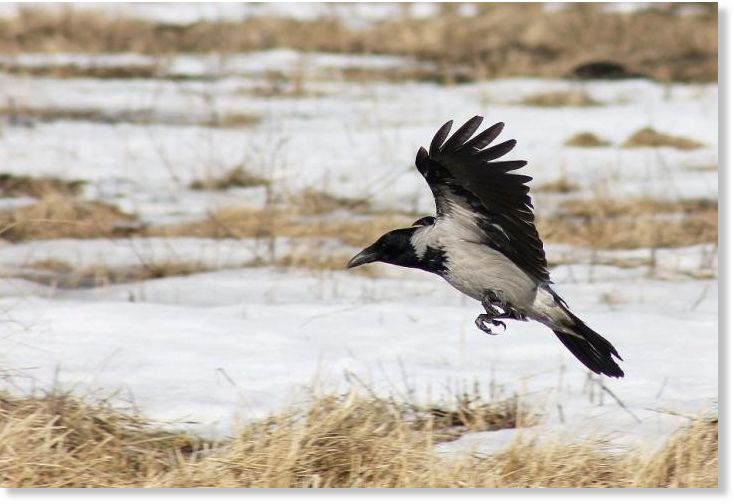
© Lomonosov Moscow University.Study finds crows spontaneously solve higher-order relational-matching tasks.
Crows have long been heralded for their high intelligence -- they can remember faces, use tools and communicate in sophisticated ways.

But a newly published study finds crows also have the brain power to solve higher-order, relational-matching tasks, and they can do so spontaneously. That means crows join humans, apes and monkeys in exhibiting advanced relational thinking, according to the research.

Russian researcher Anna Smirnova studies a crow making the correct selection during a relational matching trial.

"What the crows have done is a phenomenal feat," says Ed Wasserman, a psychology professor at the University of Iowa and corresponding author of the study. "That's the marvel of the results. It's been done before with apes and monkeys, but now we're dealing with a bird; but not just any bird, a bird with a brain as special to birds as the brain of an apes is special to mammals."