
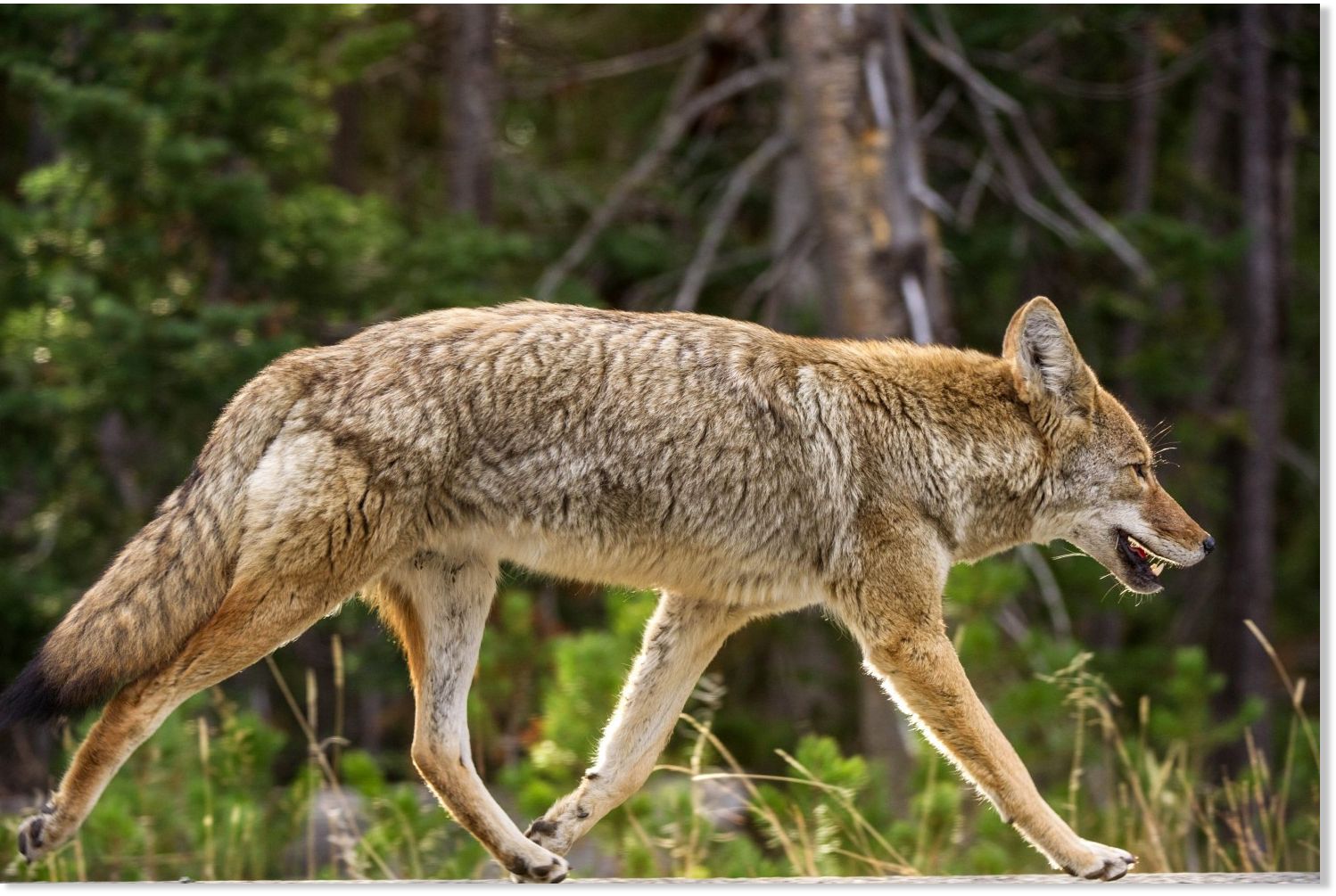
© KAREN BLEIER/AFP/Getty ImagesA coyote keeps pace with a car (not seen) as it runs down the road in Yellowstone National Park in Wyoming.
The more than 4 million animals shot, poisoned, snared or trapped by the Department of Agriculture's Wildlife Services in fiscal year 2013 included 75,326 coyotes, 866 bobcats, 528 river otters, 3,700 foxes, 12,186 prairie dogs, 973 red-tailed hawks, 419 black bears and at least three eagles, golden and bald.
Though there's a list of animals killed, there's little data showing the cause for each killing, the methods used and the reasons behind mistakes that lead to massive kills of animals that aren't targeted.
At least two members of Congress have called Wildlife Services secret and opaque for failing to provide more information, and there are mounting calls for an investigation into how it operates.
Wildlife Services says that it responds to requests by government agencies nationwide and works to "resolve human/wildlife conflicts" in a strategic way. "As wildlife damage increases, requests for assistance also increase," said spokeswoman Carol Bannerman. Ranchers and farmers pay half the agency's costs of killing animals that they view as a threat.
But the agency provided no explanation for why the kill total can be 1.5 million in one year and 5 million the next.
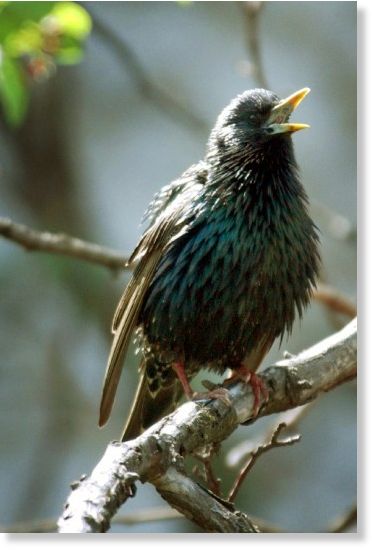
© DANIEL BALECKAITIS /APStarling. Killed/Euthanized: 1,485,449
Freed/Released/Relocated: 285
Dispersed: 5,914,756
Freed/Released/Relocated: 285
Dispersed: 5,914,756
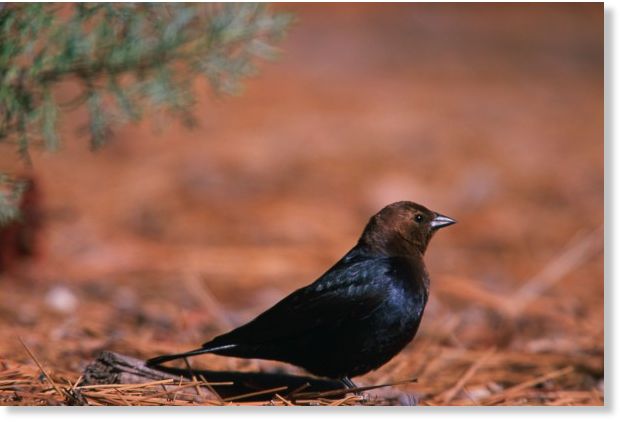
© Gray Kramer /USFWSBrown- headed cowbird. Killed/Euthanized: 850,505
Freed/Released/Relocated: 0
Dispersed: 211,332
Freed/Released/Relocated: 0
Dispersed: 211,332
Now it's back up, well past 4 million in the most recent count, and critics are pressing for a better explanation for why.
Wildlife Services' primary purpose is to eradicate invasive creatures introduced from other parts of the world. They include greedy feral hogs, giant swamp rats called nutria, big aggressive Argentine lizards called tegus and swarms of hungry starlings that destroy the habitats of animals native to the United States.
But the agency also kills native animals en masse, sometimes based solely on a homeowner's or farmer's perception of a threat.
Birds that invade airports and swipe cattle feed at farms contribute to the high totals. Non-native European starlings, sparrows, pigeons and such accounted for 87 percent of animals killed. Birds in general are singled out as a nuisance.
The rise in the number of exterminated animals came despite growing scrutiny and protest.
Last December, the Center for Biological Diversity filed a petition demanding that the agency explain the exact reasons why it makes each kill of a native animal, for whose benefit and the methods used. The petition called Wildlife Services "a rogue agency" that was "out of control."
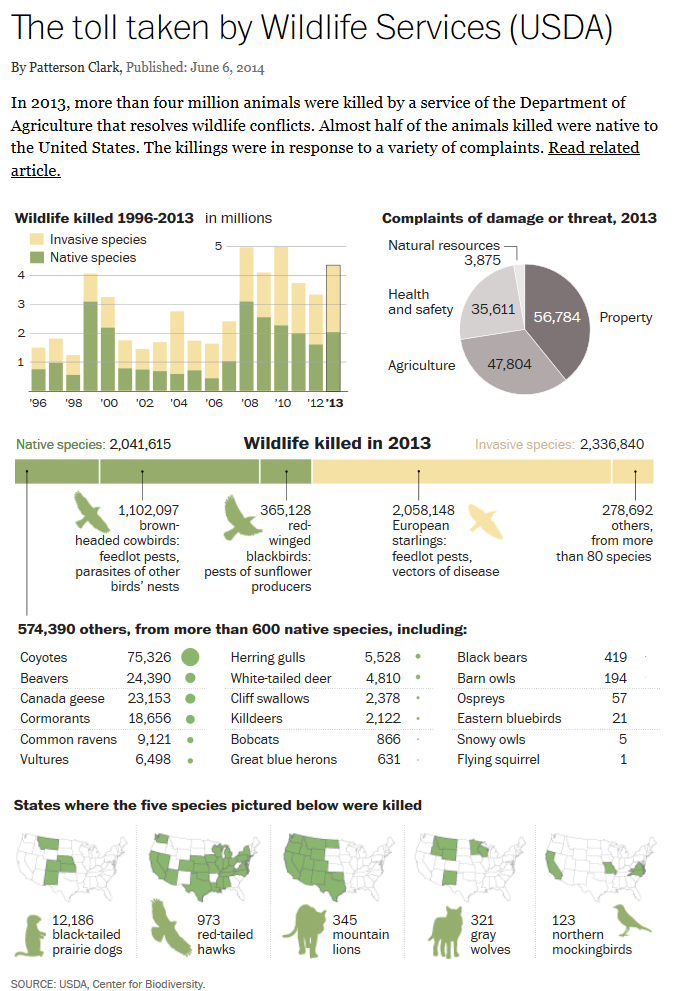
© USDA, Center for Biodiversity.
Cole said the agency is guided by a science-based decision-making model. For example, wolves are killed to "lessen the negative impacts of expanding wolf populations," even though those populations are still recovering from earlier government programs that aimed to exterminate them.
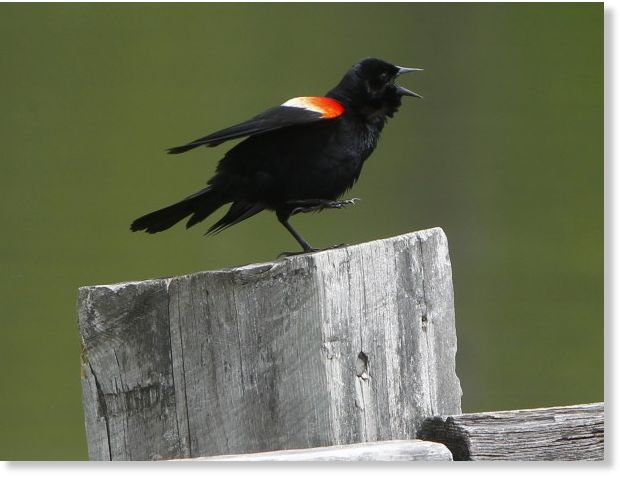
© Toby Talbot /APRed- winged blackbird. Killed/Euthanized: 306,203
Freed/Released/Relocated: 0
Dispersed: 2,587,755
Freed/Released/Relocated: 0
Dispersed: 2,587,755

© NOAH SEELAM /AFP/Getty ImagesPigeons. Killed/Euthanized: 91,181
Freed/Released/Relocated: 54
Dispersed: 117,543
Freed/Released/Relocated: 54
Dispersed: 117,543
Wildlife Services has been around under different government names for more than a century. It essentially cleared away wildlife for America's westward expansion.
In a 2012 report, Wildlife Services relied on a National Agricultural Statistics Service survey to show that wildlife caused $944 million in agricultural damage in 2001.
Atwood dismissed the "science-based model" Cole mentioned as a document that "basically says they can use whatever methods at their disposal whenever they want."
Her organization's petition called on the USDA and the Obama administration to develop a policy based on ecological science, showing how removing animals from the wild affects the natural balance of the habitats.
In the Northeast, for example, the elimination of red wolves led to a proliferation of coyotes, which the wolves rarely tolerate in their range. Coyotes push away foxes, which prey on deer mice, which spread ticks.
The execution of wolves and other predators, such as bears, allows deer to proliferate across the country, destroying trees that serve as habitat for other animals.
Atwood described Wildlife Services' work as "a staggering killing campaign, bankrolled by taxpayers" and happening "beyond the view of most Americans."




After some coyotes at the state park here got a little too friendly (coyote was trying to play with/grab a stick a child was dragging and nipped her (superficial wound.) She was with her parents in a known wildlife area....it was dusk and they let her trail behind them quite a ways (dumb...we also are in cougar country here...)
at the same park (i live in Nehalem, Oregon) I saw a group of teen tourists corner a deer and try to "pet it." i walked over and told them, pointedly, "dumb idea. every watch the movie 'The Darwin Awards'?"
so what happens when dumb tourists do dumb things and wild animals are involved?
wildlife services comes in with black trucks and (secretly) traps and shoots ALL the coyotes they can capture. who knows how many. they and the state park here out and out lied when i or other locals asked pointed questions. so, guess what? now we have a pretty bad rabbit problem.
so now, the wolves are re-establishing themselves in eastern oregon...i am actually thrilled because this is a natural balance...i mean, we have cougars, bobcats, elk, deer, coyotes and all sorts of smaller critters here. it's natural and it's a wilderness and people here know that if you are a dumb fucktard and do dumb things you may get hurt or killed. but damned...this feels like REAL life...we don't need to watch reality shows to see who "gets voted off of the island" ... we get to live it. Not like Alaskans, mind you...that is really hardcore. I mean, they have grizzlies. And do they think they need to go out and shoot them all to "make things safe for neighboring communities." Hell no.
Live smart or die dumb. 'Nuf said.