Strange Sounds
S


Comet 2

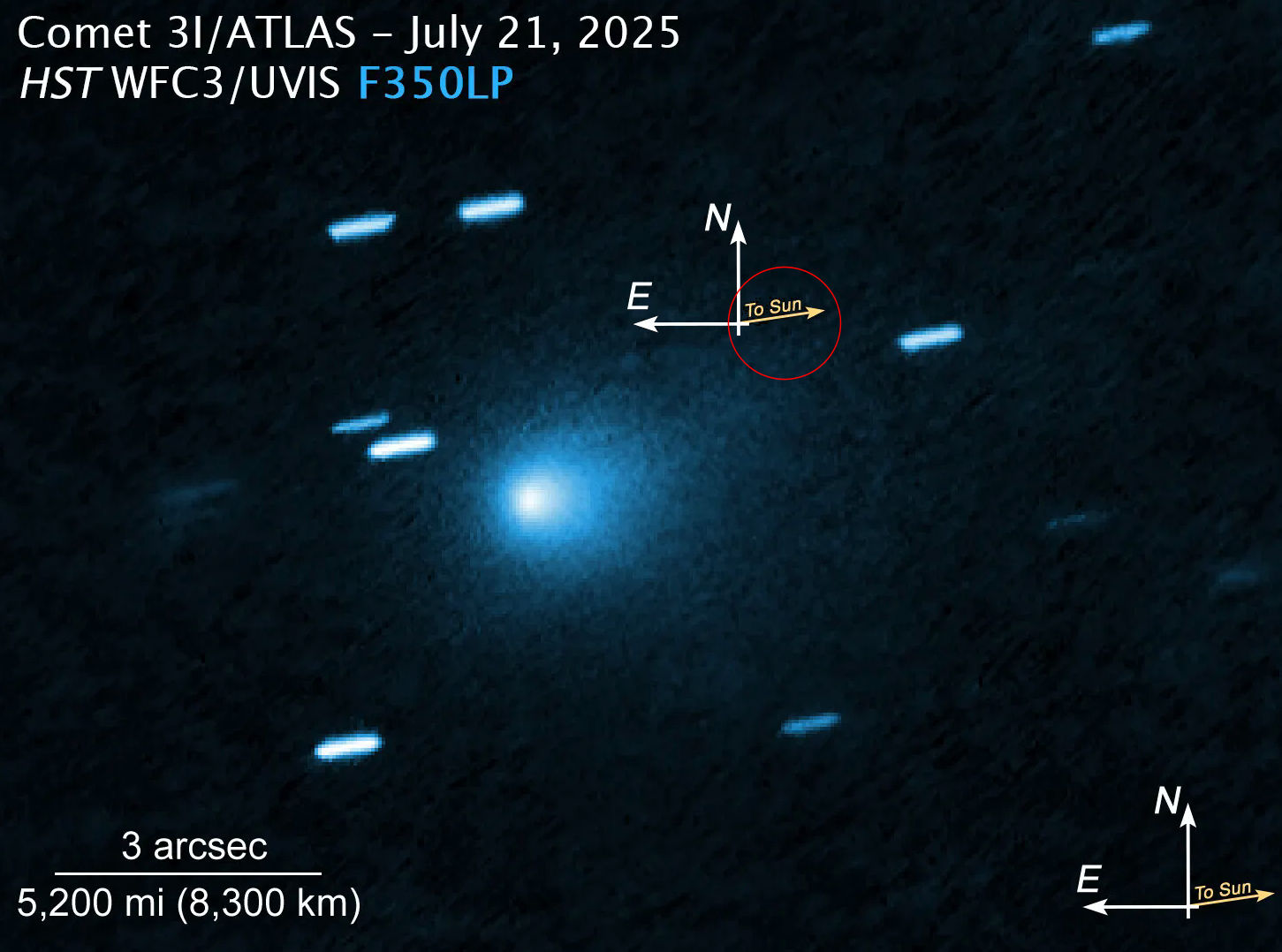
The backward tail of interstellar comet 3I/ATLAS

Last month, when astronomers used the Hubble Space Telescope to photograph 3I/ATLAS, they had a "Eureka!" moment. The mysterious interstellar visitor had a fuzzy atmosphere and a growing tail. Clearly, it was a comet.

However, something was not quite right. Take a look, and see if you can spot the problem:

comet 3I/ATLAS
© Spaceweather.com
The tail of 3I/ATLAS points almost straight toward the sun. Normally, comet dust tails are pushed away from the sun by radiation pressure. 3I/ATLAS is doing the opposite — it's backwards.

Why? Researchers led by David Jewitt of UCLA believe they have an explanation: "It is due to the preferential sublimation of ice on the hot day side of the nucleus and the near absence of sublimation on the night side," they wrote in a paper reporting the observations.

Bizarro Earth

Canada is breaking apart: Geologists reveal hidden fault line that could unleash devastating quakes

A hidden seismic threat is awakening beneath Canada's Yukon Territory. The Tintina fault, long thought to be inactive, now shows signs of significant movement, suggesting it could unleash massive earthquakes.
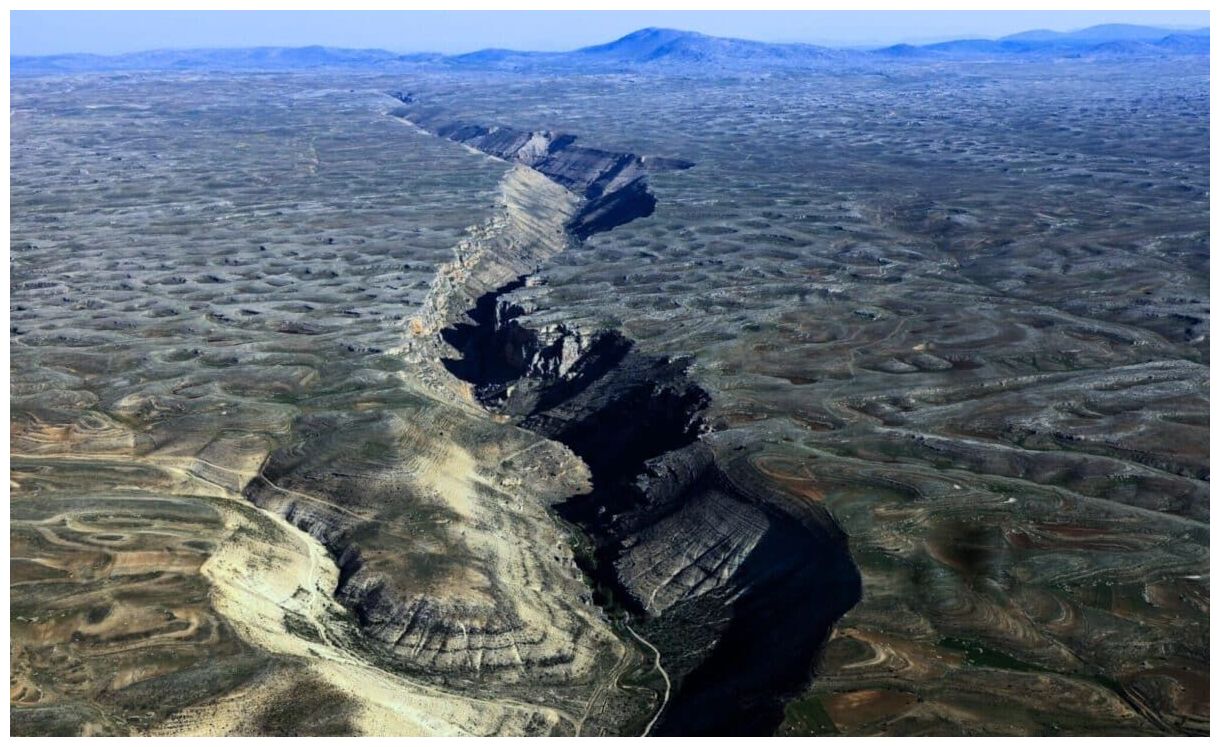
Aerial Photograph of Geological Landform, Mersin – Turkey.
© iStockAerial Photograph of Geological Landform, Mersin – Turkey.
What Is the Tintina Fault, and Why Does It Matter?

Stretching over 1,000 kilometers (621 miles) from the Yukon into Alaska, the Tintina fault is one of the major geological features in western North America. It runs parallel to the Yukon River, marking a significant divide in the Earth's crust where two tectonic plates meet. Over its history, the fault has shifted laterally by a remarkable 450 kilometers (280 miles), making it an essential player in understanding the region's seismic landscape.

For a long time, scientists believed the fault had been inactive for at least 40 million years, largely because there had been no significant seismic events associated with it during recorded history. This view began to shift when recent research uncovered new evidence that the fault may still be capable of large ruptures, potentially putting the area at risk for powerful earthquakes in the future.
Yukon Territory Fault Line
© Geophysical Research LettersPhysiography and seismotectonics of the Yukon Territory. Quaternary scarps along the Tintina fault in this study are highlighted with a red line.

Info

India is breaking apart — Geologists detect deep continental fracture

A massive tear deep beneath the Himalayas could mean India is literally splitting in two, scientists warn.
Continental Fracture
© The Daily Galaxy
A groundbreaking geological study, unveiled during the latest American Geophysical Union (AGU) conference, is stirring up the scientific community with a bold proposition: India may be splitting into two. The research, backed by seismic data and isotope analysis, offers compelling evidence that a segment of the Indian Plate is undergoing delamination — a process in which the lower part of a tectonic plate peels away and sinks into the mantle. This tectonic development could dramatically reshape our understanding of how the Himalayas formed and may have deep implications for earthquake risk in the region.

Info

Earth's first crust composition discovery rewrites geological timeline

Researchers have made a breakthrough discovery that changes our understanding of Earth's early geological history, challenging beliefs about how our continents formed and when plate tectonics began.

A study published today in Nature reveals that Earth's first crust, formed about 4.5 billion years ago, probably had chemical features remarkably like today's continental crust.
Earth Crust
© Macquarie UniversityMeteor bombardment: Early Earth was bombarded by meteors which played a crucial role in disrupting and recycling Earth’s first crust.
This suggests the distinctive chemical signature of our continents was established at the very beginning of Earth's history.

Professor Emeritus Simon Turner from the Faculty of Science and Engineering at Macquarie University led the study, which included researchers from around Australia and the UK and France.

"This discovery has major implications for how we think about Earth's earliest history," says Professor Turner.

"Scientists have long thought that tectonic plates needed to dive beneath each other to create the chemical fingerprint we see in continents.

"Our research shows this fingerprint existed in Earth's very first crust, the protocrust - meaning those theories need to be reconsidered."

Bizarro Earth

Oceanic plate between Arabian and Eurasian continental plates is breaking away

Arabian and Eurasian plates
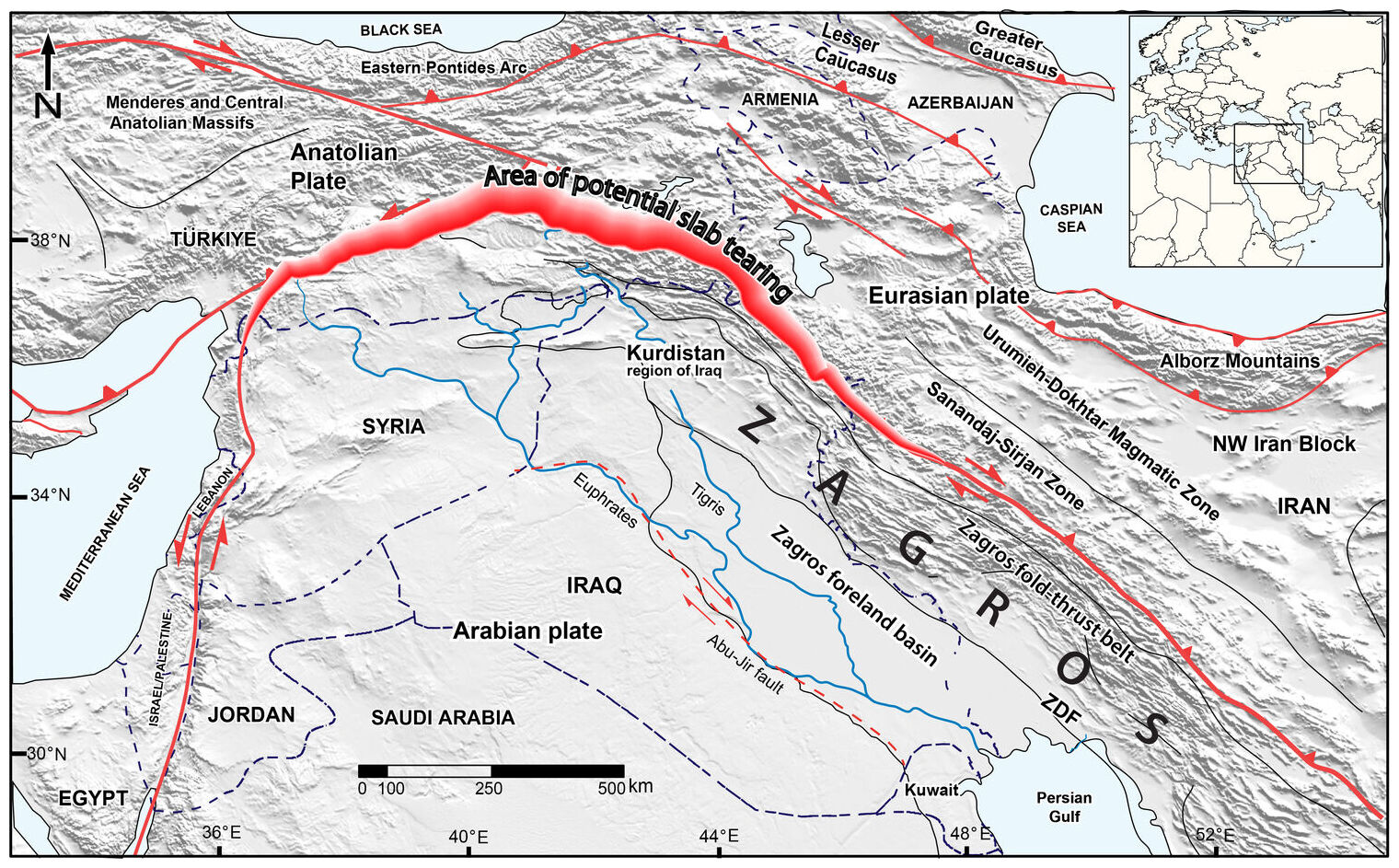
© Available under Creative Commons 4.0 license from Solid Earth (https://doi.org/10.5194/se-15-1365-2024) and edited by Renas KoshnawMap of the northern Middle East showing the Arabian and Eurasian plates and their collision zone, as well as the study area, the Kurdistan region of Iraq.
An international research team led by the University of Göttingen has investigated the influence of the forces exerted by the Zagros Mountains in the Kurdistan region of Iraq on how much the surface of the Earth has bent over the last 20 million years. Their research revealed that in the present day, deep below the Earth's surface, the Neotethys oceanic plate - the ocean floor that used to be between the Arabian and Eurasian continents - is breaking off horizontally, with a tear progressively lengthening from southeast Turkey to northwest Iran. Their findings show how the evolution of the Earth's surface is controlled by processes deep within the planet's interior. The research was published in the journal Solid Earth.

When two continents converge over millions of years, the oceanic floor between them slides to great depths beneath the continents. Eventually, the continents collide, and masses of rock from their edges are lifted up into towering mountain ranges. Over millions of years, the immense weight of these mountains causes the Earth's surface around them to bend downward. Over time, sediments eroded from the mountains accumulate in this depression, forming plains such as Mesopotamia in the Middle East. The researchers modelled the downward bend of the Earth's surfaces based on the Zagros Mountain's load where the Arabian continent is colliding with Eurasia. They combined the resulting size of the depression with the computed topography based on the Earth's mantle to reproduce the unusually deep depression in the southeastern segment of the study area. The researchers found that the weight of the mountains alone cannot account for the 3-4 km deep depression that has formed and been filled with sediment over the past 15 million years.

Health

Another study shows low-frequency vibrations from wind turbines can harm human health

New research by Dr. Bellut-Staeck in the journal Medical Research and Its Applications suggests chronic infrasound exposure can lead to serious blood vessel problems. This underpins earlier literature that have reached the similar conclusions.

But the government refuses to accept the results.

Wind Turbine
© NoTricksZone
Wind turbines are known to disrupt wildlife and severely damage the surrounding biotope, And, despite being inaudible, it is known that low-frequency vibrations from wind turbines can be harmful to human health.

Hat-tip: Tichy's Einblick here.

Humans can only perceive sound waves over a range of approximately between 20 and 20,000 Hertz. Sound waves below 20 Hz cannot be heard by humans and are called infrasound.

Natural infrasound emitted by nature is harmless but it is increasingly being understood that infra-sound generated by wind turbines pulsates and make people who are subjected to them over extended time periods sick.

Bizarro Earth

Gargantuan waves in Earth's mantle may make continents rise, new study finds

Dramatic cliffs and high plateaus are caused by the same wave triggered in Earth's middle layer when continents pull apart, a new study finds.
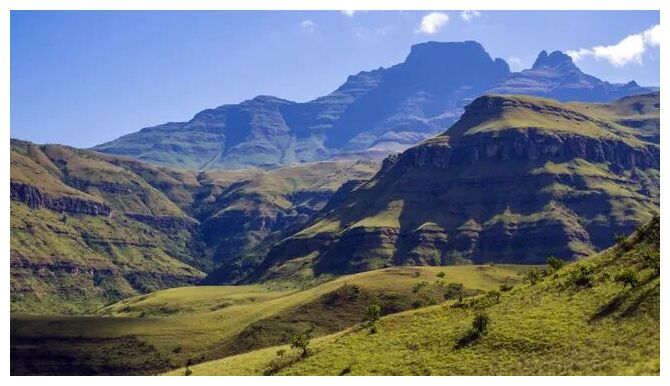
Monks Cowl in the Great Escarpment of South Africa
© Leisa Tyler via Getty ImagesMonks Cowl in the Great Escarpment of South Africa. This dramatic formation arose during the breakup of Gondwana, a new study shows.
High plateaus rise in the interior of continents thanks to churning deep inside Earth hundreds of miles from where they eventually spring up, new research suggests.

As continents break up, massive cliff walls may rise near the boundaries where the crust is pulling apart. That breakup sets off a wave in Earth's middle layer, the mantle, that slowly rolls inward over tens of millions of years, fueling the rise of plateaus, the new study found.

Scientists have long known that continental rifts triggered the rise of massive escarpments, like the cliff walls that separate the East African Rift Valley from the Ethiopian plateau, said lead author Thomas Gernon, a geoscientist at the University of Southampton in the U.K. And these steep cliffs sometimes fringe inland plateaus that rise from the strong, stable cores of continents, known as cratons.

But because these two landscape features usually form tens of millions to up to 100 million years apart, many scientists thought the different formations were driven by different processes, Gernon told Live Science in an email.

Attention

Airbursts: An underappreciated hazard

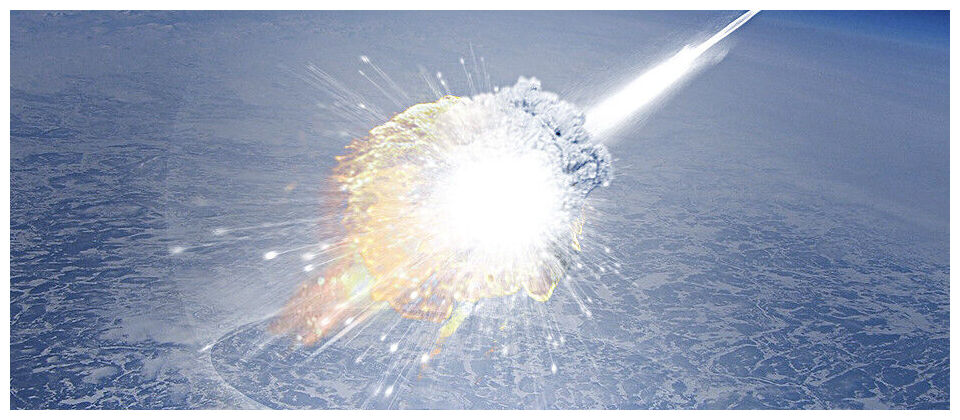
Airburst
© astronomynow.com
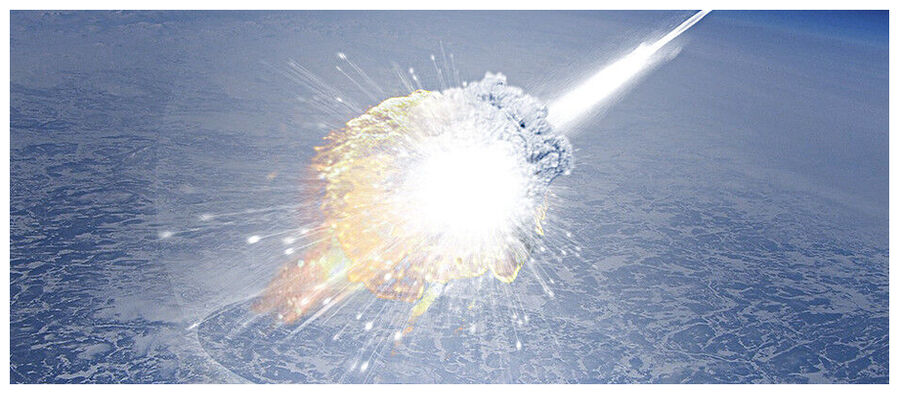
A paper published in March of 2021 in the journal Science Advances reports on the discovery of evidence for a large airburst type impact within the SØr Rondane Mountains, Queen Maud Land, East Antarctica. The report bears the names of a 15-member international team that did the research. The lead author was M. Van Ginneken with the Belgian Geological Survey. In the first sentence of the abstract to the article the authors support something I have been saying for literally decades: "Large airbursts, the most frequent hazardous impact events, are estimated to occur orders of magnitude more frequently than crater-forming impacts."

This fact is confirmed simply because airbursts don't leave impact craters. In this case the fingerprints of the event took the form of condensation spherules resulting from "a touchdown event, in which a projectile vapor jet interacts with the Antarctic ice sheet." The authors go on to explain that "Finding evidence of these low-altitude meteoritic events thus remains critical to understanding the impact history of Earth and estimating hazardous effects of asteroid impacts." They further report that "In recent years, meteoritic ablation debris resulting from airburst events have been found in three different locations of Antarctica. The material . . . all appears to have been produced during a Tunguska-like airburst event 480 thousand years (ka) ago."

With respect to their research, they say: "Here, we present the discovery of extraterrestrial particles formed during a significantly larger event recovered on . . . Queen Maud Land, East Antarctica. The characteristic features of the recovered particles attest to an unusual type of touchdown event, intermediate between an airburst and a crater-forming impact, during which the high-velocity vapor jet produced by the total disruption of an asteroid reached the Antarctic ice sheet." This event was estimated by the team to have occurred about 430 thousand years ago.

The authors provide some critical perspective on the effects of these type of impacts:

"The impact hazards resulting form the atmospheric entry of an asteroid that are currently being addressed by impact mitigation programs depend mainly on whether the impactor reaches the ground or is entirely disrupted in the atmosphere (i.e., airburst). For small-to medium-sized impactors (50- to 150-m diameter) producing airbursts, the main hazard is limited to blast effects resulting in strong overpressures over areas of up to 100,000 km2 wide. [38,600 sq miles] Thermal radiation may also result in fires over an area of 10 to 1000 km2 wide. . . . in addition to shockwaves and thermal radiation covering the aforementioned areas, these events are potentially destructive over a large area, corresponding to the area of interaction between the hot jet and the ground. The authors point out that such an event over Antarctica would inject ice crystals and impact dust into the upper atmosphere but would not directly affect human activity. However, they explain that "if a touchdown impact event takes place above a densely populated area, this would result in millions of casualties and severe damages over distances of up to hundreds of kilometers."

Now comes a new report in Earth and Planetary Science Letters on the discovery of evidence for yet another airburst event over Antarctica. The 11-member team responsible for the report is comprised of geologists, astrophysicists, and archaeologists from the U.S., the United Kingdom, Belgium, Russia, Japan, France and Italy.

Attention

Large ingenous events, cosmic impacts and crises in the history of life

Impact
© Randall Carlson Newsletter - March 2024
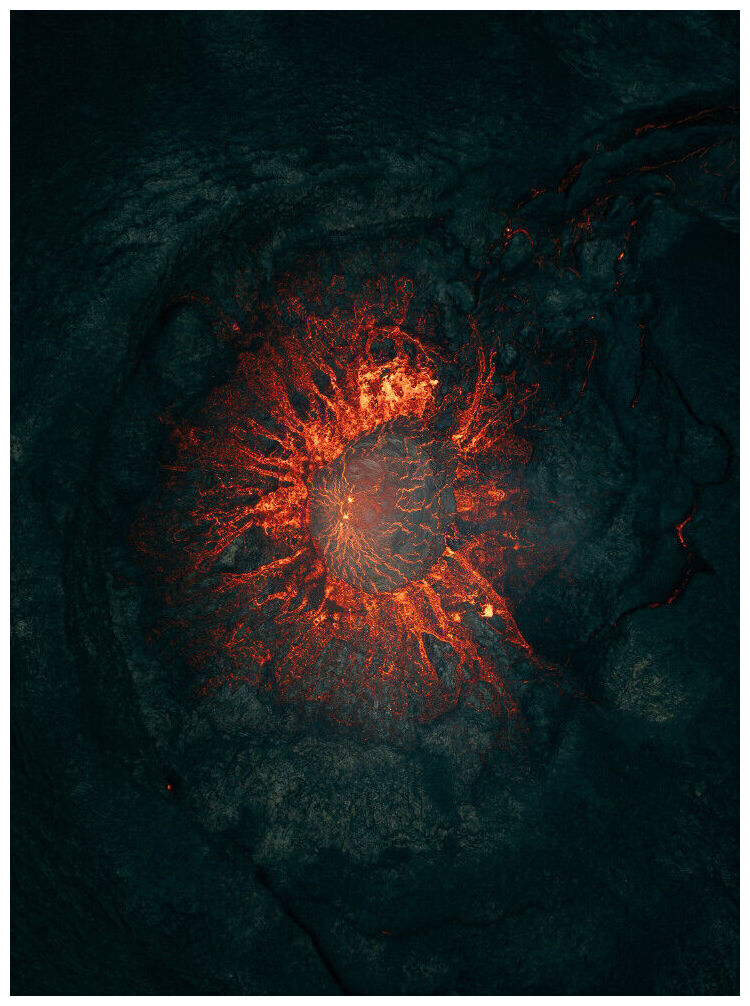
Last month, in the February 2024 issue of the Kosmographia Newsletter I reported on new research correlating a series of large-scale igneous events which produced the Central Atlantic Magmatic Province (CAMP) and the Siberian Traps with mass extinction episodes. On February 8 another paper was published in the journal Global and Planetary Change which further supports correlations between mass extinction episodes with gigantic volcanic eruptions and catastrophic cosmic impacts. The lead author of the paper is Michael Rampino, who has for decades been in the forefront of researching catastrophic events in Earth history. I have been following his work since the early 1980s and hold him in high regard as a scientist who is willing to think outside established paradigms of Earth history. The abstract to the paper begins:

"We find that Large Igneous Province (LIP) volcanism, mostly continental flood basalts (CFBs), along with the largest extraterrestrial impacts show significant correlations with mass-extinction events in the Phanerozoic geologic record. The ages of the 6 major marine mass extinctions (≥ 40% extinction of genera) of the last 541 MY ̶ the end-Ordovician (~444 Ma), late Devonian (~ 372 Ma), end-Guadalupian (~259 Ma), end-Permian (~ 252 Ma), end-Triassic (~201 Ma), and end-Cretaceous (66 Ma) extinctions are significantly correlated with high-quality U — Pb zircon and 40Ar/39Ar ages of 6 continental flood basalts (CFBs) ̶ the Cape St. Mary's, Viluy, Emeishan, Siberian, CAMP, and the Deccan Basalts.

U — Pb zircon dating (Uranium-lead) is a widely used method for dating metamorphic rocks typically employing a thermal ionization mass spectrometer. Zircon is used because it includes uranium and thorium atoms in its crystalline structure when forming but rejects lead, so any lead found in a zircon crystal is radiogenic, meaning it results from radioactive decay. Argon dating can measure Argon isotopes from a single mineral grain. The ratio of Argon 40 to Argon 39 yields the age of the sample.

The extinctions listed above are considered to be major events in the history of life on Earth. A number of less severe extinctions have taken place, although these events are somewhat more difficult to discern in the geologic/palaeontologic record. Nevertheless, a correlation can be discerned between these extinctions and both volcanic eruptions and cosmic impact.

Bizarro Earth

Geologists unravel plate tectonic chain reaction

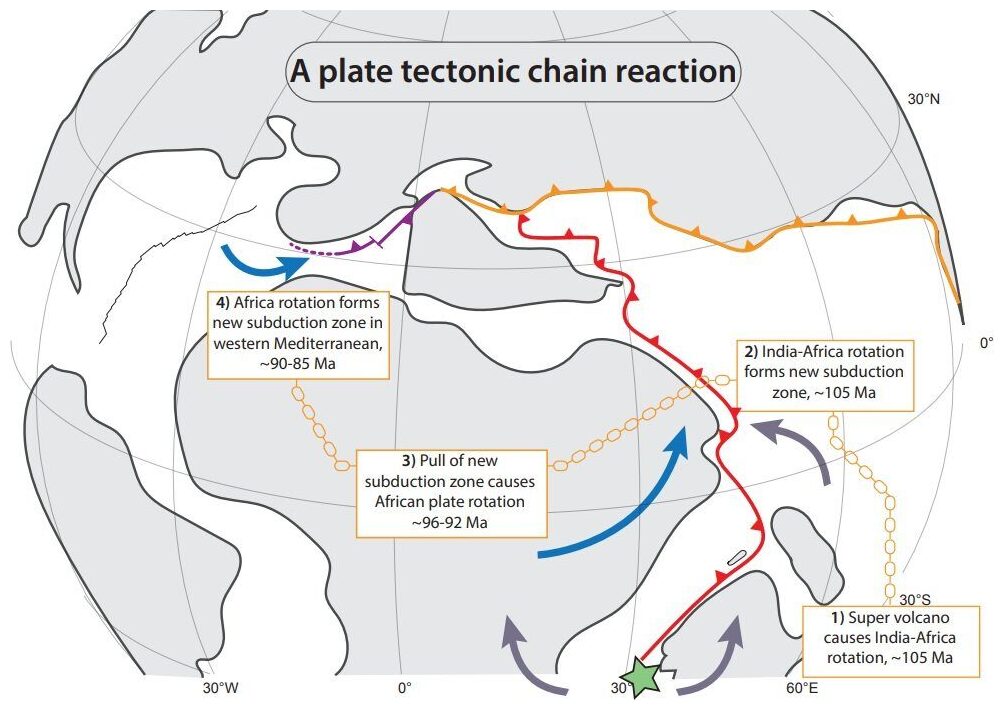
A plate tectonic chain reaction.
© Utrecht UniversityA plate tectonic chain reaction.
Geologists at Utrecht University are working hard to unravel the secrets of plate tectonics, the mechanism that continuously shapes Earth's crust and is causing earthquakes and volcanic eruptions. This time, another mystery has been dissected. In the Earth's geological past, there were 'short' periods of a few million years during which many tectonic plates around the world suddenly changed their speed and direction. What caused these abrupt changes in plate movements? Earlier research showed that changes in movement between two plates can result from continental collisions or rising mantle plumes. But could such collisions or mantle plumes set off a global chain reaction? Now geologists have succeeded in finding evidence that supports this. "With this discovery, we are able to better understand the driving forces behind plate movements, and thus processes such as mountain formation or volcanism."

This paper, published in Nature Geoscience, was a collaboration between geoscientists from Utrecht University, Australian National University, and Ben-Gurion University of the Negev. To test their hypothesis, the researchers asked themselves the following question: did the formation of a new subduction zone north of Arabia that was triggered by a mantle plume that caused a super volcano near Madagascar ~100 million years ago set off a chain reaction? Utrecht professor of plate tectonics and paleogeography Douwe van Hinsbergen, geologist, former Utrecht PhD student and first author Derya Gürer, and geophysicist Roi Granot, analysed the consequences step by step. "If our hypothesis is correct, the new subduction zone that formed north of Arabia should have caused forces that accelerated, and rotated the African Plate in the 10 million years after subduction initiation. However, to analyse this, we had to solve a major problem," says Gürer.