
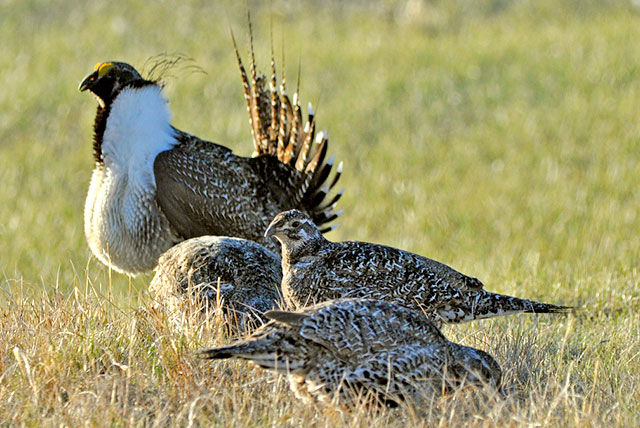
The study from the Pew Charitable Trusts comes as the U.S. Fish and Wildlife Service prepares to make a decision before the end of September on whether the bird should be protected under the Endangered Species Act.
U.S. Secretary of the Interior Sally Jewell announced on that a sub-species of the sage-grouse found in California and Nevada did not require protection under the Endangered Species Act. Environmentalists criticized the decision.
The move was a victory for mining, energy and farming companies which fear sage-grouse protections could restrict their livelihoods in the 11 Western states where the bird lives, including Washington state, Colorado and Montana.
Millions of sage-grouse are believed to have once inhabited a broad expanse of the Western United States and Canada. The U.S. Fish and Wildlife Service estimated in 2010 that between 200,000 and 500,000 birds remain.












Comment: The decline in the populations of numerous species of birds and animals has been accelerating in recent years. Perhaps these are signs that the future of life on planet earth is becoming more precarious?