Animals
S


Attention

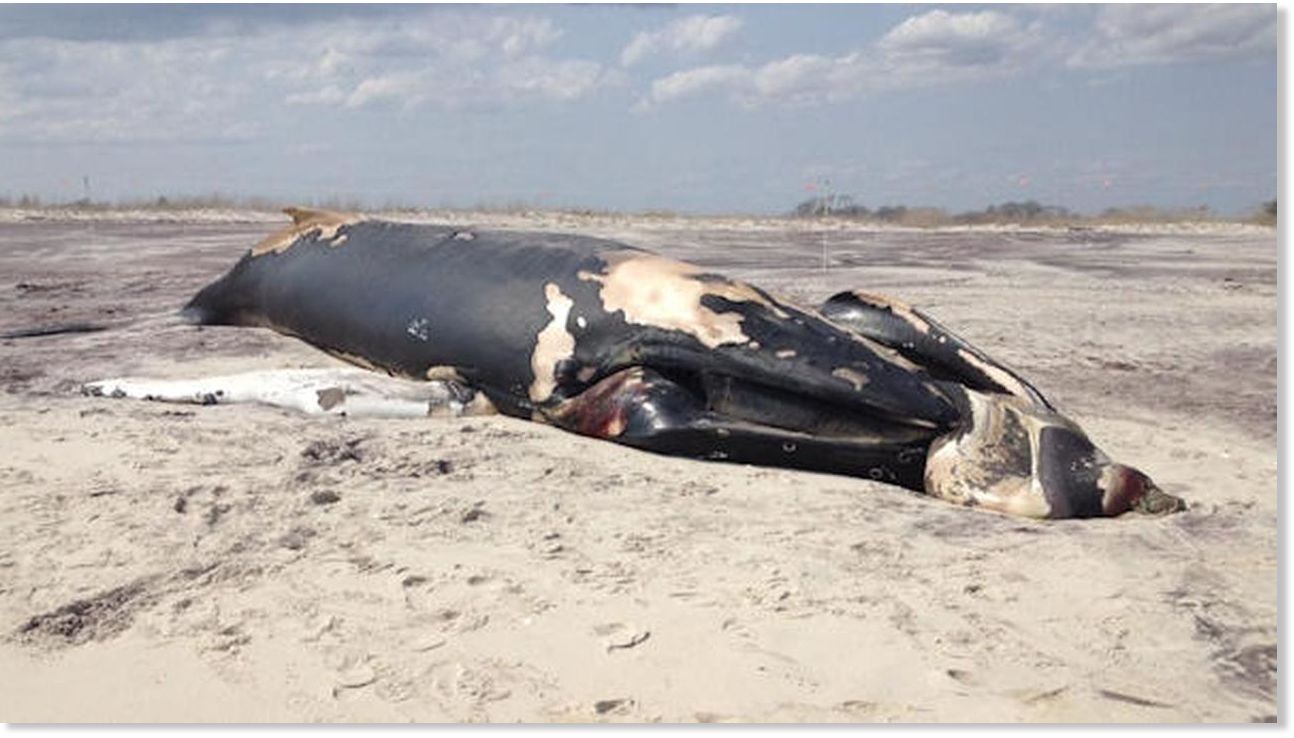
Dead humpback whale found on Fire Island, New York

Image
© Fire Island National Seashore A dead humpback whale washed up Tuesday afternoon, April 21, 2015 near the east end of Fire Island, according to Fire Island National Seashore.
Authorities said a dead humpback whale washed up near the east end of Fire Island.

A spokeswoman for the Riverhead Foundation for Marine Research & Preservation told Newsday that the organization was making plans to do an on-scene necropsy.

The whale was discovered Tuesday afternoon in an area not easily accessible. She said the necropsy has to be done on the scene at low tide.

Heavy equipment will be needed to pull the whale away from the surf on Wednesday, the spokeswoman said. A thunderstorm is expected Wednesday afternoon.

Humpbacks are endangered.

Source: AP

Attention

On mass animal deaths and human anxieties

Image
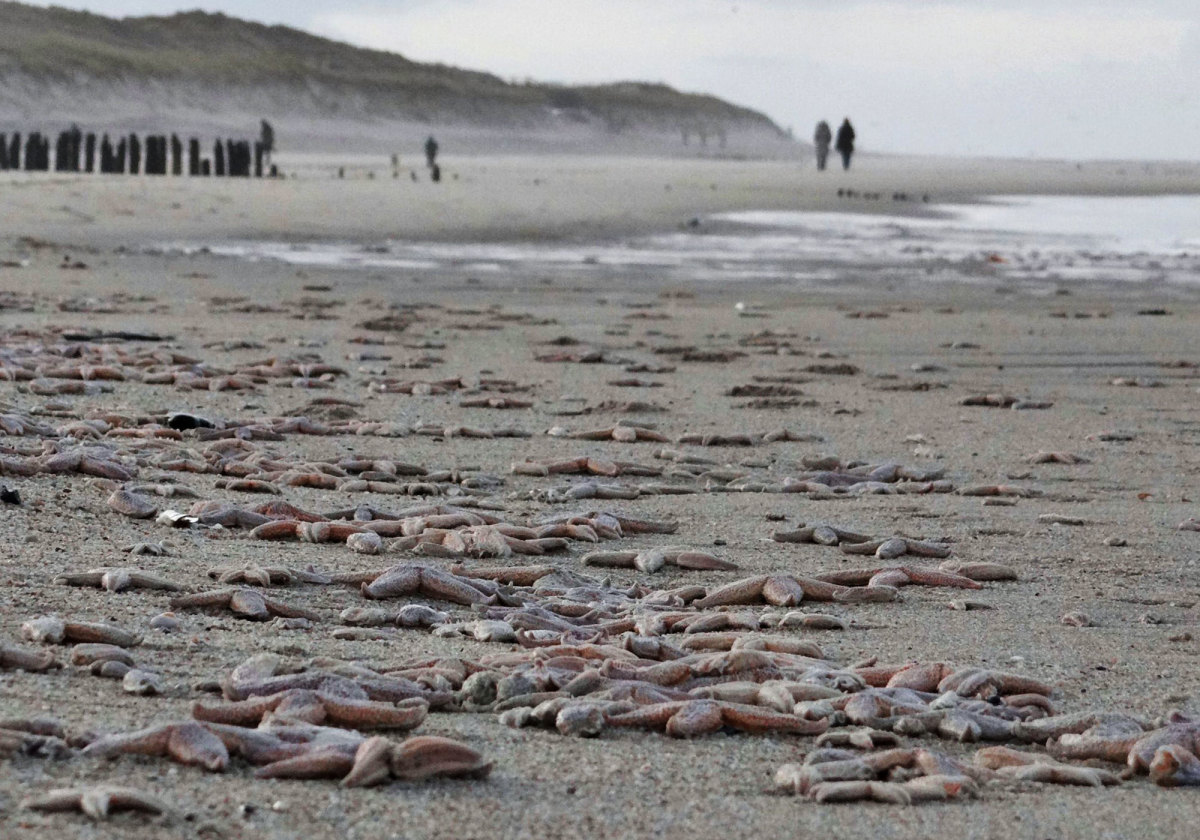
© Daniel Friederichs/Picture-aliance/DPA/APDead starfish line the shore of the German island of Sylt. Mass wildlife die-offs have been interpreted as omens of an impending environmental collapse.
At first light on June 4, 2013, Steve Fradkin, a National Park Service ecologist, led a small team down a gravel strand called Beach 4 on Washington's Olympic coast. The group's destination was a rocky bench known—fatefully, it would turn out—as Starfish Point. There it would carry out an annual count of intertidal life forms as part of a long-term survey of the Pacific shore. Conditions were perfect, the sea calm beneath a blue sky dotted with cotton-ball clouds.

The day's beauty ended at Starfish Point. "It was a horror show," Fradkin told me. Instead of the usual spangling of purple, orange, and brick-red on the rocks, many of the starfish, which are known to biologists as sea stars, were contorted, marke­d with white lesions, or seemingly melting into goo. "They were missing arms," Fradkin said, "and there were even instances of arms walking around by themselves."

The team's observations are considered the first official record of an ongoing outbreak of a sea-star wasting disease that has killed millions of starfish from Baja California to southern Alaska, typically wiping out more than ninety per cent of each population it strikes. It's the greatest wildlife mass-mortality event, or "die-off," of the present day.

Mass-mortality events are sudden, unusual crashes in a population. On the spectrum of death—mortality's rainbow, if you will—they fill the space between the cool regularity of background death rates and the hot flare of species burning out into extinction. If you think that you are hearing about them more often these days, you're probably right. (Elizabeth Kolbert described frog and bat die-offs in a 2009 article; her subsequent book won a Pulitzer Prize this week.) Even mass-mortality experts struggle to parse whether we're witnessing a genuine epidemic (more properly, an epizootic) of these events. They have also raised another possibility: that we are in the throes of what one researcher called an "epidemic of awareness" of spooky wildlife deaths.

Wolf

Baby loses half her face as stray dog enters house and attacks in Haimen, China

Image
Recovering from surgery: Little Qingqing, who is just ten weeks old, has bandages around her damaged face
A baby girl has been badly disfigured in a dog attack at home after her parents left her by herself while they worked in nearby fields.

Ten-week-old Qingqing is currently in a critical condition in hospital in eastern China, following emergency surgery to repair her mauled face.

Her mother told the People's Daily Online: 'We left after our baby girl fell asleep. Who knew this would happen?'

The woman, named only as Ms Li, said that on the day of the attack, she and her husband fed their daughter then went to work near their house in Haimen City, eastern China.

But Ms Li could not stop thinking about her daughter so returned home after just ten minutes.

When she arrived, a white dog with blood around its mouth came running towards her, she said.

Horse

Zebras escape pen to run loose in Brussels, Belgium

Image
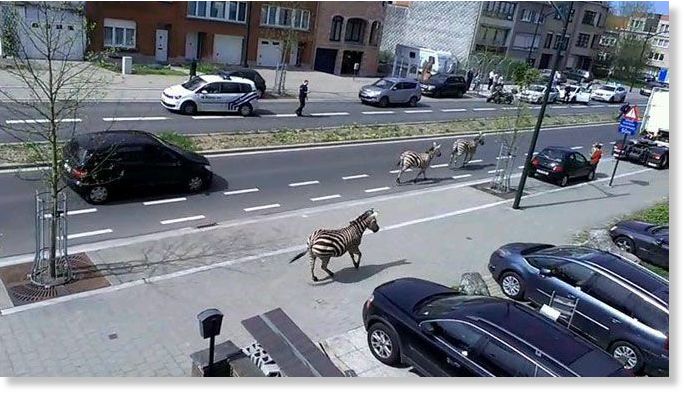
© Twitter/@ludovicbytebierThe zebras also passed Neder-over-Heembeek on their way to Brussels..
Brussels residents got the shock of their lives when they looked out of their windows earlier today after three zebras escaped from their pen in Koningslo near Vilvoorde. The zebras caused considerable disruption on the roads, as you can imagine, but fortunately the animals were swiftly recaptured, first one, and then the other two.

The zebras escaped from Koningslo, south-west of Vilvoorde and immediately made for Schaarbeek before arriving at the City of Brussels.

In an impressive effort, police, fire services and animal welfare officers were mobilised to ensure the animals could be caught, but this turned out to be more difficult than initially thought. Police actually had to chase the animals in a police van for several kilometres, as these proved quite fast.


Red Flag

Take this cage and shove it: Wolverine at Newark Airport is an unwilling rider

Image
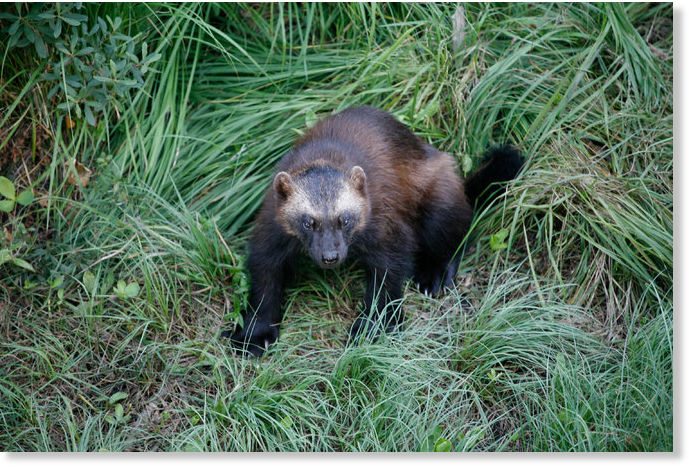
© Ole Martin Buene/Kristiansand Zoo Kasper the wolverine: You can keep your steenkin' cage
If there were a manual for transporting wolverines, Rule No. 1 would probably go something like this: Make sure the wolverine cannot get out of the cage.

At Newark Liberty International Airport on Tuesday, it became clear that this precaution had not been taken.

A 40-pound male wolverine named Kasper was being shipped from a zoo in Norway to a conservation park in Alaska. At around 3:30 p.m., he arrived in Newark to change planes and go through United States Customs.

It was there that the animal's handler, Sarah Howard, noticed there was a hole in Kasper's cage.

"His head was sticking out,"
said Ms. Howard, a curator for the Alaska Wildlife Conservation Center, the wolverine's intended new home. She had flown to Newark to meet him.

The cage was made of metal, said Joseph Pentangelo, a spokesman for the Port Authority of New York and New Jersey, which runs the airport. "It's believed he chewed a hole in it."

Attention

Whale shark strands on beach in Ecuador

Image
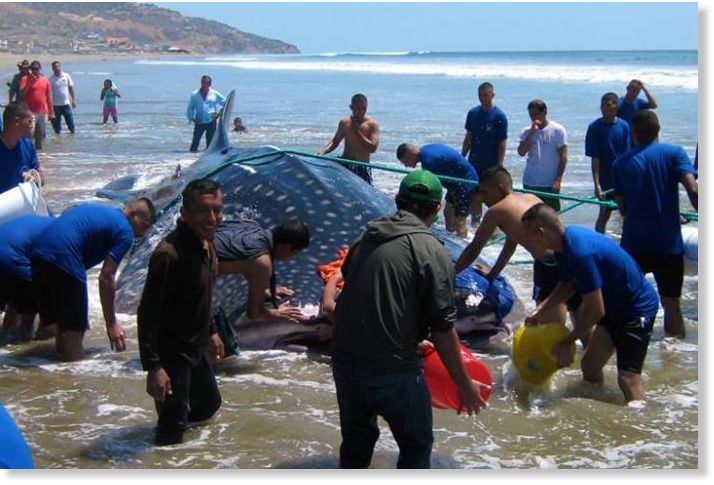
© Tanya Layman Rescuers try to pull the whale shark into the water
More than 100 volunteers have failed to save the life of a nine-metre whale shark which washed up on a beach in Ecuador.

The female whale shark became stranded on the beach of the small town of Santa Marianita after being caught in the shallow waters as the tide went out.

The shark was spotted by local fishermen on Monday morning and within a few hours dozens of volunteers including police, fishermen and tourists arrived to help pull it back into the sea using ropes.

Tanya Layman, who studied marine biology at Townsville's James Cook University, lives 15 minutes from where the whale shark was beached and found out about it through a friend's Facebook post.


Sheeple

Portents and signs: 5-legged lamb born in Wales

lamb
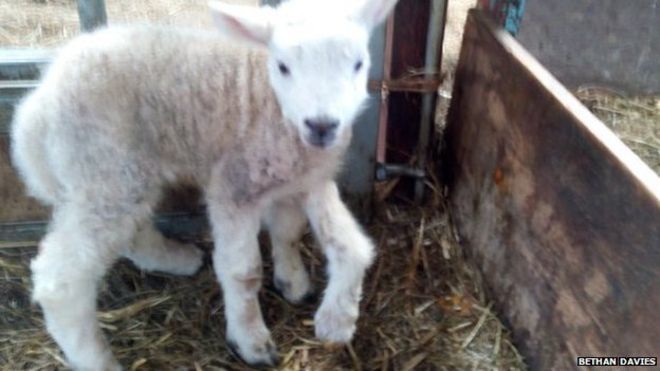
In defiance of all natural odds, a healthy, bouncing, lamb has been born at a farm in Wales - with five legs.

The chipper little lamb, named by the farmer as Jake in reference to the song 'Jake the Peg', can be seen walking happily around his pen in a video uploaded to YouTube after his birth on April 17.

The farmer, Bethan Davies, who runs Rhiwlas Farm in Wales, told the BBC the lamb was thriving and had total control of his extra leg.

"He seems really happy, he's feeding well and bouncing around like a normal lamb. He is doing really well."

"We have never had anything like this before, apparently it's really rare," she added.


Comment: See also: Bizarre 'octogoat' with eight legs born in Croatia

Six-legged calf born in Shandong, China

Bizarre deformed calf with TWO HEADS born in Moroccan mountains

Two-headed calf born in Oregon

Deformed calf 'pretty unusual'


Attention

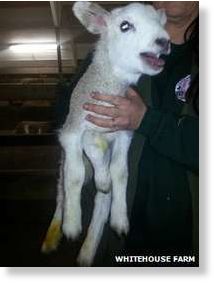
Five-legged lamb born at Whitehouse Farm, Morpeth, UK

Image
Quinto is proving a hit with visitors
A lamb has been born with five legs at a farm in Northumberland.

Named Quinto by staff at Whitehouse Farm Centre in Morpeth, it was among three born on Sunday.

The additional front limb is fully formed and does not appear to be causing the animal any problems, according to manager Heather Hogarty.

Ms Hogarty said a vet was due to assess Quinto in the next day or so and a decision made whether or not to amputate her extra leg.

Quinto has quickly become one of the star attractions at the farm, which also features llamas, wallabies and meerkats.

Ms Hogarty, who has run the farm's visitor centre for 16 years, said: "We've never come across anything like this before and neither has anyone we've spoken to.

"She's doing absolutely fine at the moment and does not appear to have suffered any adverse effects from being born with an extra leg.

Attention

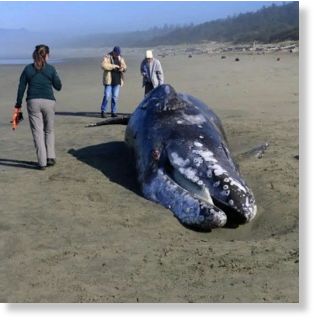
Dead grey whale washes up near Ucluelet, Canada

Image
© CHEK NewsA grey whale carcass was discovered on April 20 on Wickaninnish beach near Ucluelet, B.C.
A grey whale carcass was discovered on Monday morning on Wickaninnish beach near Ucluelet, B.C.

Some of its injuries indicate it may have collided with a boat.

Grey whales are common this time of the year as they migrate from California to the cooler waters of Alaska.

Parks Canada is studying the carcass, but there are no plans to remove it.

Fire

Firefighters discover parrots calling for help in burning Boise home

Image
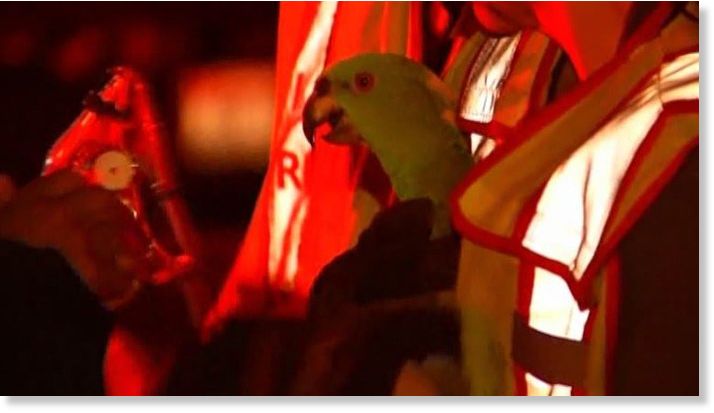
© KBOI/CNNThe parrots were given oxygen after being rescued from a house fire.
Firefighters said they heard calls of "Help!" and "Fire!" before rushing in to save what they thought would be human beings.

Firefighters responding to screams for assistance in a burning Idaho home said they thought they were saving people but instead rescued a group of parrots.

Emergency crews first heard the pleas for help as they approached the outside of the residence in Boise.

"What was actually recorded was them saying 'fire, fire,' " Victor Islas with the Middleton Fire Department told KBOI. "That's what we got. 'Help. Fire.' Yeah. It's a smart bird, smart bird. So there was actually nobody besides the birds inside the house."

The birds were removed and given oxygen. The cause of the fire is under investigation.