Six dogs have been killed by wolves in northern Minnesota in the last five weeks, outpacing last year's total for the entire state.
Minnesota Public Radio News reports most incidents have happened near Duluth. Four other dogs have been seriously hurt.
Controls on gray wolves in Minnesota have been limited since a federal judge put the animal back on the endangered species list in December. Now, Minnesota residents can only kill wolves in defense of human life.
Minnesota also can't hold managed wolf hunts, but if an attack on pets or wildlife is confirmed, federal officials can trap and kill wolves within a half mile of where it happened.
There are about 2,400 wolves in Minnesota, according to the state Department of Natural Resources.
Residents in a rural area between Duluth and Two Harbors say they're seeing more wolves than usual.
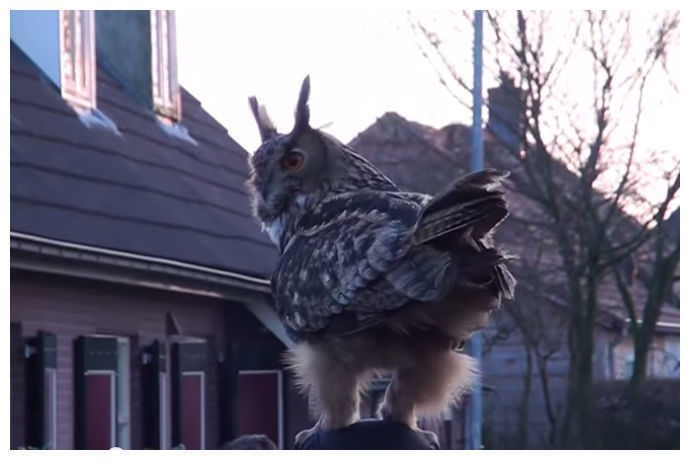
A friendly and precise Eurasian Eagle-owl is catching the fancy of bird lovers in the Netherlands as it routinely lands on people's heads.
The owl was first filmed landing on the head of Marianne in Noordeinde. Her husband captured the whole event, with the huge owl swooping down on her.
Marianne had the foresight to put up her hood and the owl perched on her head for about 30 seconds before flying off.
From the couple's YouTube page: "Tonight I went to the Eagle Owl in Noordeinde while shooting landed the Eagle Owl with Marianne on the head. The dear animal is totally not aggressive and it was a super experience for Marianne as an animal lover."
6 year old Arjun undergoing treatment at Manawar Community Health centre.
A six year old boy was attacked by a panther when he was sleeping outside his house in Sadadiya Kua village of Manawar tehsil in Dhar district on Thursday night. He was rushed to the community health centre in Manawar where he was given medical treatment and his condition is now out of danger.
Manawar SDO (Police) Dhiraj Babbar told that Arjun, a six year old boy, a resident of Sadadiya Kua village was sleeping outside his house when the panther picked him up. When Arjun cried loudly, other members of the family shouted on the animal and ran after him, on which it left the child and fled into the jungle. Arjun received injuries in his neck and cheeks as the panther had gripped its jaws on his neck while attacked his face with its paws.
Dhar Divisional Forest Officer Gaurav Chowdhry reached Sadadiya Kua village on Friday afternoon to take a stock of the situation and discussed the issue with the local villagers. Later, on why the man- animal conflicts have increased drastically in the last few years, he said that the habitat of the wild animals has been widely destroyed due to encroachment into forest land and large scale allotment of lease certificates under Forest Rights Act. Due to these two aspects, along with their habitat, fauna is also lost, due to which small animals are not available for the carnivores and they enter into the human settlements in search of cattle for food.
Sometimes, they try to take the human babies also.
A wild deer has allegedly attacked and injured five people in Polasara block of Ganjam district in Odisha.
One of these injured Ramchandra Nahak of Kokabandha village had to be admitted in Polasara Community Health Centre (CHC). Four others of the area have also been injured by this wild deer.
Ramchandra was attacked when he had come out of his home early morning to attend to nature's call. Inhabitants of Sana-Ichhapur have also complained to the forest department about this stray wild deer which is attacking humans.
According to forest officials, this deer may be injured and attacking humans that come close to it. Forest officials have started tracking the deer to capture it and release it in jungle away from human habitats
A 7-year-old boy was flown to Nationwide Children's Hospital after he was viciously bitten in the face by a dog Sunday night, according to Lancaster police.
"He's a strong little boy and he's going to be fine," said Ashley Robinson, the boy's mother, on Monday.
Police reported that the boy, identified as Cole Robinson, looked down at the dog and it bit him on his face around 7:15 p.m. Sunday. Police responded to an apartment in the 400 block of O'Gara Avenue where the attack occurred, and a helicopter landed in Miller Park to fly the boy to Columbus for treatment.
Robinson said her son has had two surgeries and is doing well. Hospital officials said Cole is in fair condition.
Robinson said Cole could be released in the next couple of days and he is in better condition than people have rumored. One of the rumors, Robinson said, is that Cole lost his eye from the attack, but that isn't true. She said the surgeries were meant to fix the cuts he sustained on his face.
Birdwatchers believe a funnel of air caused them to overshoot France and land in Ireland
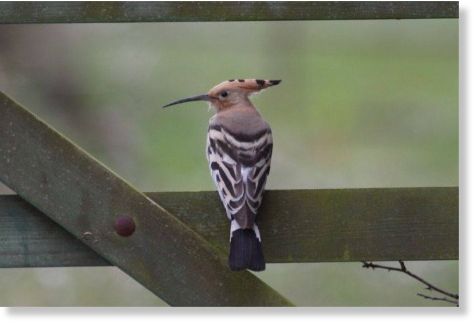
If you think you spotted an unusual pink bird with zebra-patterned wings in recent weeks, you are not alone.
The hoopoe, so called because of the sound it makes, has come to these shores in unexpectedly large numbers this year, with at least 50 being spotted, according to Birdwatch Ireland's head of operations, Oran O'Sullivan. It is 50 years since so many hoopoes have been spotted here.
Usually, fewer than 10 are recorded in early spring or late autumn when migrating birds stray off course.
Mr O'Sullivan said the exotic birds, about the size of a starling or thrush, were a Mediterranean species, typically nesting in trees and olive groves.
"They have very big wings and when they take off you see a flash of black and white. When they land they throw up this crest, like an Indian chief's head dress. They are exotic all the way."
He said the birds wintered in Africa and could fly as far as northern France. "Even a few breed in the very far south of England. They come up in good weather and in spring they can overshoot France and hit Wexford."
A pair of new studies published Wednesday in Nature are disturbing when taken separately, but so much more chilling when laid out next to each other: The first provides new evidence that neonicotinoid insecticides can have a negative effect on bees, adding weight to the theory that these chemicals could contribute to colony collapse disorder and endanger our food supply. In the second study, another group of researchers found that bees don't avoid these harmful pesticides. They may actually seek them out and get addicted to them.
While the jury is far from out, some researchers point to neonicotinoids, which have been banned in Britain for two years but are still widely used in the United States, as a potential culprit. These nicotine-related insecticides are favored for their relative safety to humans, because they target specific nerve receptors in invertebrates. But while they're safe for humans in the short term, some studies have argued that they're killing off bees on a scale so large that our food security is threatened.

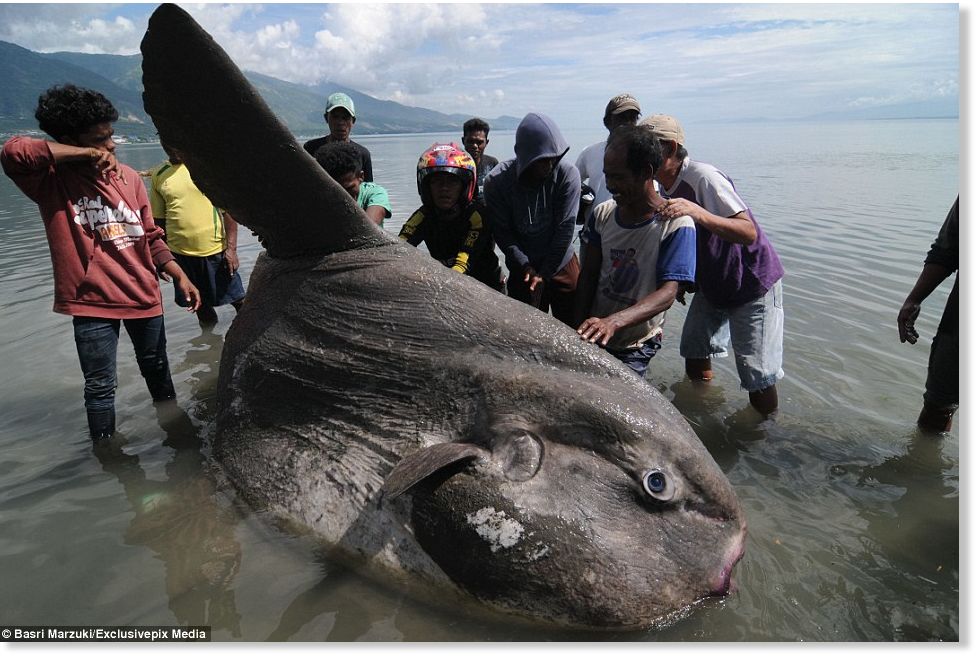
















Comment: Other recent reports of sunfish turning up where they are not usually found: Spate of rare deep sea tropical fish found on Norfolk beaches, UK
Rare deep sea Ocean Sunfish found for the first time in Pakistan's waters
Deep ocean sunfish found on beach in North Queensferry, Scotland
"Rare" 300-pound warm-water Mola sunfish washes up on Washington coast
What is that thing? Giant 'fish' pulled up from Seattle's Elliott Bay
Additionally, in December 2012, Norfolk in the UK was subjected to a similar event: Sunfish invasion continues as third massive marine beast washed up in Norfolk