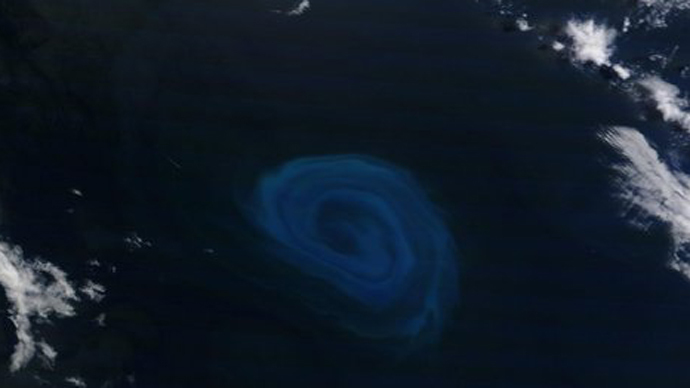
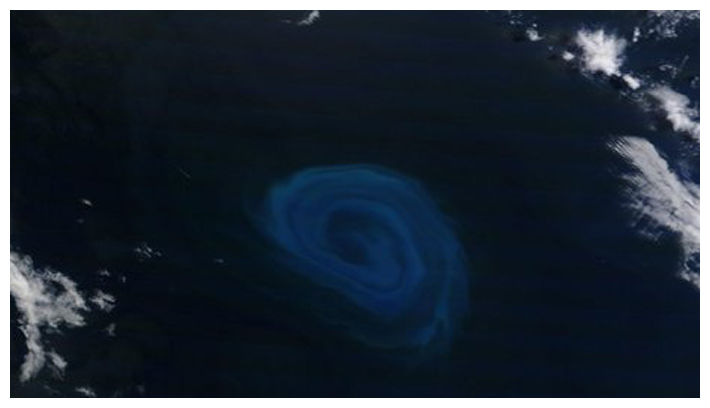
© NASA Earth ObservatoryExample of an ocean eddy (not from the study) as seen from space.
A team of German and Canadian marine biologists have for the
first time ever witnessed so-called 'dead zones' in the Atlantic Ocean - places where no life can thrive, owing to there being almost no dissolved oxygen in the water.
Zones depleted of oxygen do exist in nature and have previously been discovered along populated coastal areas off the eastern and southern coasts of the United States and the Baltic Sea. But this is the first time such a place has been observed in the open ocean.
In a paper
published in the journal
Biogeosciences, researchers outline the existence of pockets of low-oxygenated patches of water in the Atlantic Ocean.
They are vast - sometimes 100 square miles in size. They travel constantly and are also seasonal. One of the biggest ever discovered forms each year in the Gulf of Mexico.
What makes these things tick is a hodge-podge of nutrients and microbes delivered from elsewhere. It's a cyclical process: the nutrients are food for algae blooms, which in turn get devoured by microorganism. This creates waste, which is then eaten by other microbes. This process uses up a lot of oxygen, creating oxygen-free pockets.





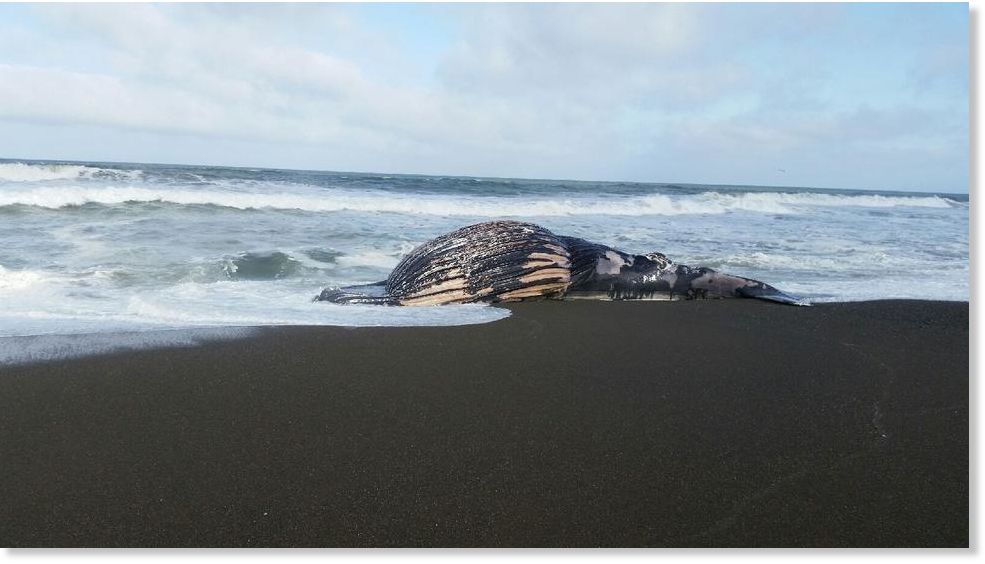








Comment: Here's the updated list for dead whales washing up on the west coast of North America so far in 2015: Authorities investigate two dead gray whales off Santa Cruz County coast
Dead sperm whale found on beach in Pacifica, California
Dead killer whale found near Fort Bragg, California
Fin whale found dead in San Pedro harbor, California
Dead grey whale washes up near Ucluelet, Canada
Humpback whale found dead near Westport, Washington
Dead Humpback whale washes ashore in Monterey, California
Dead gray whale found off Torrey Pines State Beach, California
Beached pygmy sperm whale dies at Point Reyes, California
Dead gray whale discovered at Seattle ferry terminal
14 whales and 16 turtles wash up dead on Baja California Sur coast