Will Stewart and Rod Ardehali Daily Mail Thu, 19 Oct 2017 13:27 UTC
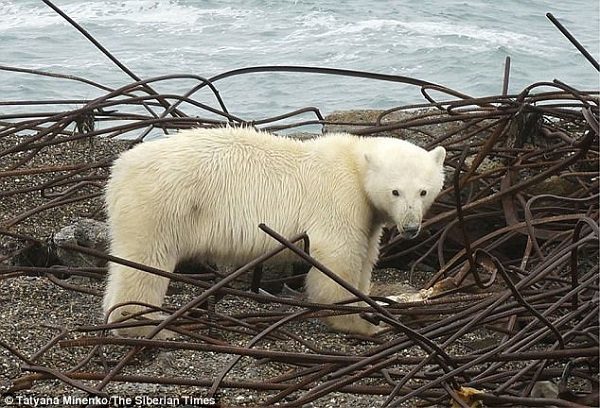
Aggressive polar bears are holding locals from the Russian village of Ryrkaypiy hostage after forcing hundreds of frightened local walruses to jump off 125ft cliffs to their deaths
Aggressive polar bears are holding locals in a Russian village hostage after being drawn to a nearby walrus rookery, leaving residents unable to venture outdoors.
The one tonne predators are thought to have forced hundreds of frightened walruses to jump off 125ft cliffs to their deaths before feasting on the carcasses.
Around 20 of the fearsome bears have surrounded the coastal area of Ryrkaypiy, population of 601, with one cub even trying to enter a house through the window.
The polar bears were attracted by a walrus rookery in a special protection zone in the Russian far eastern region of Chukotka.
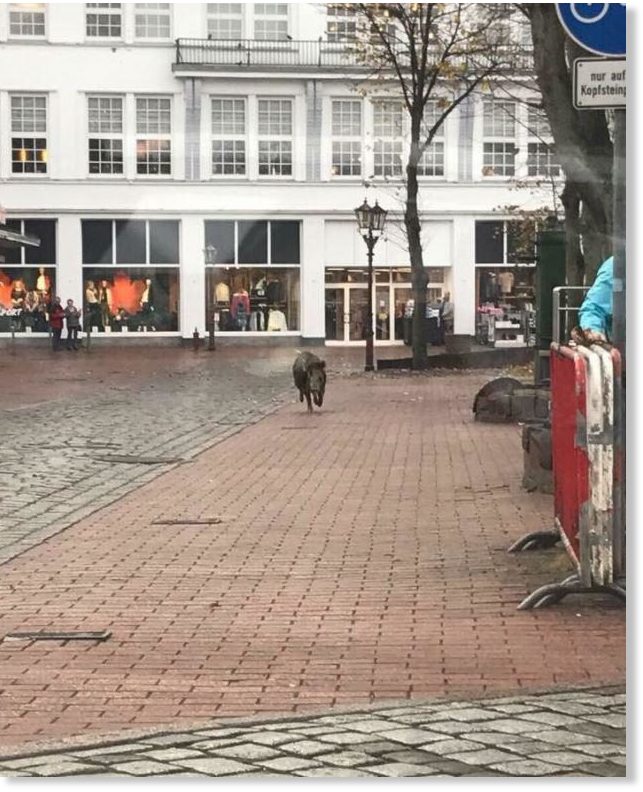
Four people have reportedly been left injured in Germany after two wild boars went on the rampage
Four people were injured after squealing boars descended on the small city of Heide in the northern German state of Schleswig-Holstein on Friday morning.
Two fully-grown, "aggressive" wild boars - a male and a female - stormed into the city center shortly after 9 a.m. according to local police statements.
The male then entered the building of a local bank and began attacking people inside before a local hunter was able to shoot and kill the animal. The second boar managed to escape amid the commotion.
Before the shot was fired, emergency services had used ladders to evacuate people from the building's upper-story windows.
Earlier in the day, the male boar had injured a woman after entering an optician's. Christina Norden, a local journalist, shared on Twitter a video of the boar roaming the shop.
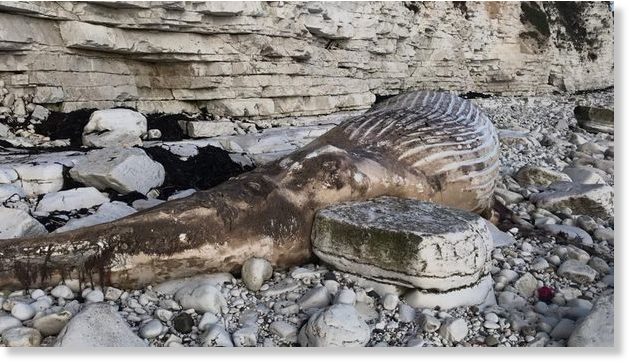
The whale was washed up on a beach close to Flamborough on October 20, 2017
Walkers were left shocked after discovering a whale washed up on a beach close to Flamborough.
The carcass of 25-foot animal, possibly a minke whale, was discovered by a member of the public who alerted the Flamborough RNLI who, in turn, notified Bridlington Coastguard.
The marine creature was discovered at Truckway, between South Landing and the lighthouse, shortly after noon on Friday.
While still intact, the animal was already dead prior to washing up on the beach and is already in a state of decomposition.
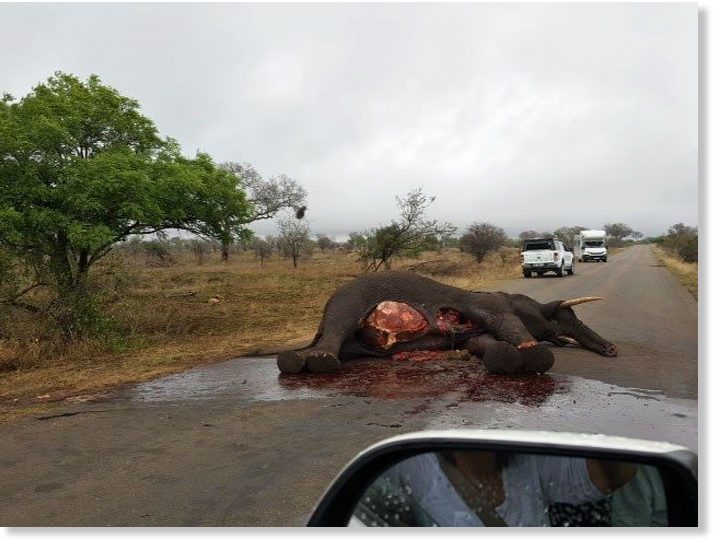
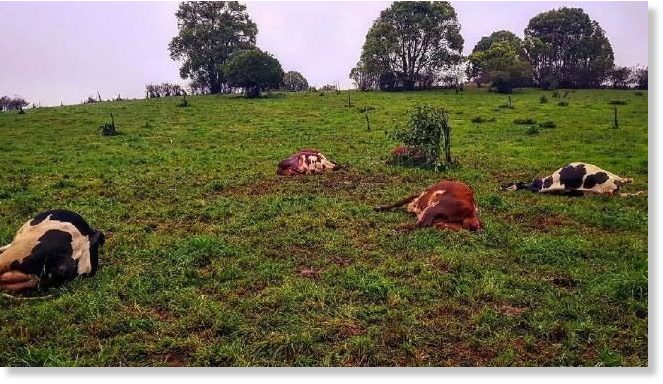
South Africa has been hit by some unusually violent weather of late. Recent storms surged through the country claiming at least 16 lives and leaving in their wake a trail of flooded homes and damaged infrastructure. But while Durban residents battled the deluge, further north, in the Kruger National Park, the stormy weather proved fatal for one of the reserve's tusked inhabitants.
Tourists out on a morning game drive earlier this month were met with the grim sight of a mutilated elephant carcass lumped in the middle of the road near Satara rest camp. While many speculated that the animal had been killed by poachers, evidence suggested otherwise. "It is suspected that the animal was hit by lighting," Reynold Thakuli, general manager for media, public relations and stakeholder relations of South African National Parks (SANParks) told us via email. "On inspection nothing more was picked up suggesting another cause of death. This follows a violent storm the previous night."
Wildlife officials were quick to arrive on the scene and the massive carcass was hoisted onto a truck and hauled away for further investigation. "The tusks were removed, registered and stored according to the SANParks Standard Operating Procedure," explained Thakhuli.
Why have so many whales stranded in Brazil in 2017?
Whale Institute Jubarte explains that the increase of the population of the species generates more deaths by natural causes, but the influence of human action is also an ongoing factor.
The Jubarte whale season on the Brazilian coast - between July and October - is coming to an end this year with a sad record: never before have so many animals of this species died stranded on Brazilian beaches this year.
There were 103 strandings across the country - 41 in Bahia alone - and a disturbing question: what is behind this number?
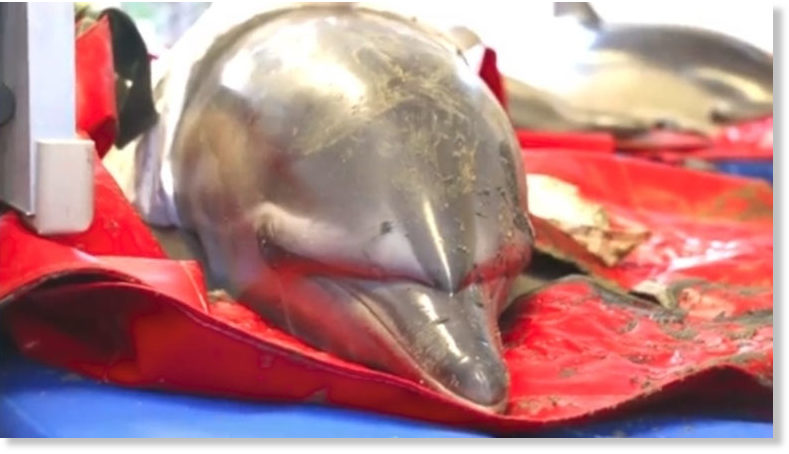
Rescuers work to save a dozen dolphins stranded in Wellfleet
The International Fund for Animal Welfare responded to a major dolphin stranding Wednesday in Wellfleet, rushing to aid 14 of the mammals in the Herring River Gut area.
A spokesperson for IFAW said two of the dolphins died before they could be rescued. The other 12 were transported to Herring Cove Beach in Provincetown for possible release.
Late Wednesday night, four had been guided back into the water and eight others were undergoing health assessments before release.
This is the biggest cetacean stranding year in the history of IFAW.
As of this week, the Yarmouth Port-based organization has responded to 113 live whale and dolphin strandings.
A staggering 64,000 dogs are feared to have died over the last year after being attacked by rival pets, a shock survey reveals today.
Another 44,375 dogs are said to have suffered life-changing injuries over the same time frame, leaving owners spending a collective £458 million to treat wounded animals.
Among the appalling catalogue of injuries witnessed by vets treating dog-on-dog attack victims were:
- A dog attacked so viciously its intestines were ripped out
- A dog's tail being ripped off
- A dog left with a cracked ribcage after being thrown by a larger animal
Charlie Moore Daily Mail Thu, 19 Oct 2017 13:09 UTC
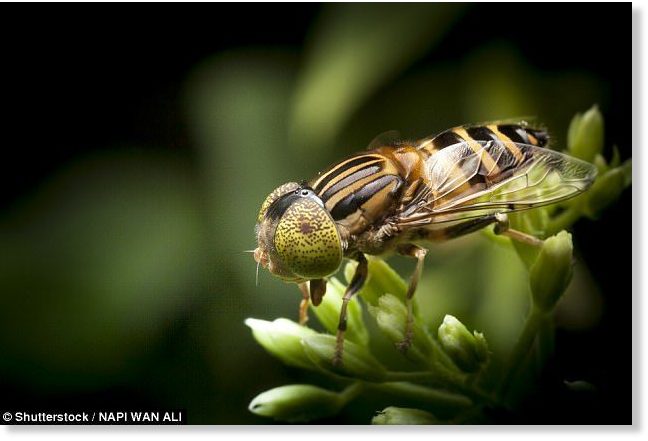
Scientists are warning of 'ecological Armageddon' after discovering the number of flying insects has fallen by three-quarters over the past 27 years. Pictured is a hoverfly, one of the insects whose numbers have declined dramatically
Scientists are warning of 'ecological Armageddon' after discovering the number of flying insects has fallen by three-quarters over the past 27 years.
Researchers in Germany have documented a steep decline at dozens of nature reserves.
Their findings have sparked fears the foodchain will collapse because insects are important pollinators and serve as meals for birds and other small creatures.
It is thought the decline may be caused by agricultural pesticides used to stop insects eating crops.
It comes after drivers across the UK have been reporting noticing fewer flies, gnats, wasps and moths than usual on their vehicles.
The quelea is a sparrow-sized bird, common in huge flocks in many areas of Africa.
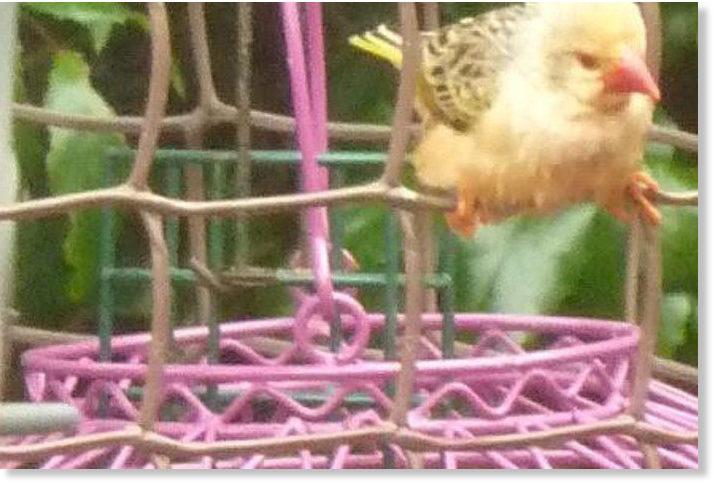
Leader reader Dennis Collie sent us this photograph of a rare bird, spotted in Stonehaven during the recent windy weather.
Dennis told the Leader: "Was it coincidence that we spotted a red-billed quelea at our bird table the day after we had winds blowing in from the Sahara?
"Such a bird found in Scotland would normally have escaped from captivity, but is it possible that on this occasion it was carried all the way from Africa by the high winds?
"Spotting the bird I quickly reached for my camera, only to find the battery dead, but managed to find another poorer quality one and get a couple of shots before the quelea, fed, flew off.
Mystery creates wonder, and wonder is the basis for man's desire to understand. Who knows what mysteries will be solved in our lifetime, and what new riddles will become the challenge of the new generations.
- John Keel
”
Recent Comments
As long as the US keeps sending the dollars and the weapons, yes they can keep killing their way out of every crisis. Plus, they define "crisis".