Comets


Comet 2

New Comet: C/2014 E2 (JACQUES)

Cbet nr. 3828, issued on 2014, March 14, announces the discovery of a comet on CCD images taken by C. Jacques, E. Pimentel and J. Barros using a 0.45-m f/2.9 reflector at the SONEAR Observatory near Oliveira, Brazil. The new comet has been designated C/2014 E2 (JACQUES).

We performed follow-up measurements of this object, while it was still on the neocp. Stacking of 19 unfiltered exposures, 30-sec each, obtained remotely from MPC code Q62 (iTelescope, Siding Spring) on 2014, March 13.6 through a 0.50-m f/6.8 astrograph + CCD, shows that this object is a comet: very bright coma nearly 2 arcmin in diameter elongated in PA 10.

Our confirmation image (click on it for a bigger version).
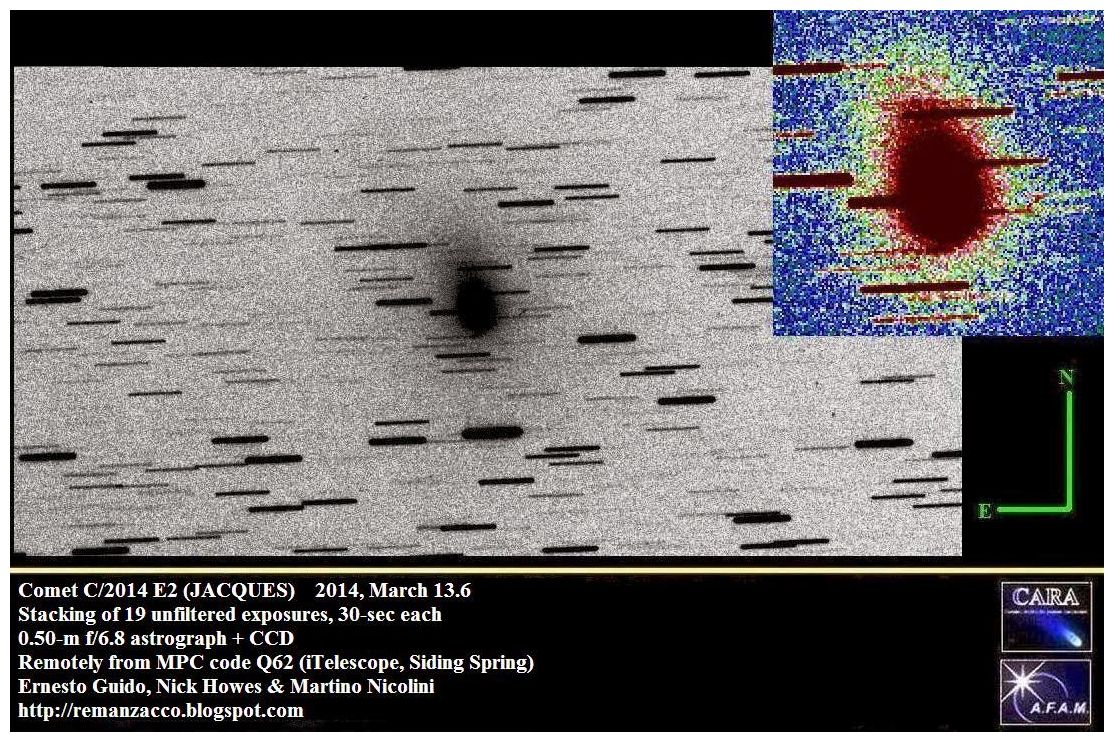
C/2014 E2 (Jacques)
© Remanzacco Observatory
M.P.E.C. 2014-E84 assigns the following very preliminary parabolic orbital elements to comet C/2014 E2: 2014 June 29.52; e= 1.0; Peri. = 349.10; q = 0.60; Incl.= 157.19

Big Congrats to our friend Cristovao Jacques and all the SONEAR team for the discovery of their second comet! Click here to find more info about their first comet.
Comet 2

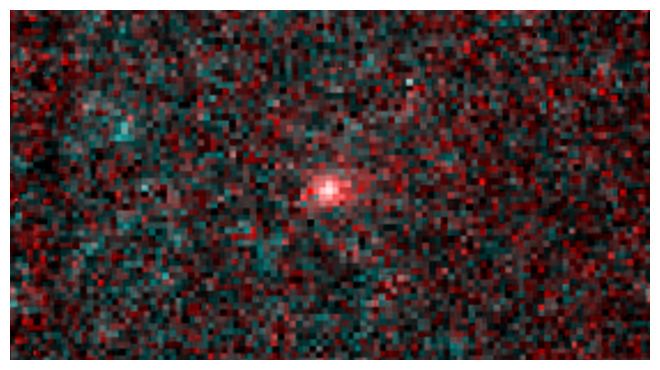
NEOWISE spies its first comet, C/2014 C3 (NEOWISE)

Comet C2014 C3 (NEOWISE)
© JPL NASAComet NEOWISE was first observed by NASA's Near-Earth Object Wide-field Infrared Survey Explorer (NEOWISE) spacecraft on Valentine's Day, 2014.
NASA's Near-Earth Object Wide-field Infrared Survey Explorer (NEOWISE) spacecraft has spotted a never-before-seen comet -- its first such discovery since coming out of hibernation late last year.

"We are so pleased to have discovered this frozen visitor from the outermost reaches of our solar system," said Amy Mainzer, the mission's principal investigator from NASA's Jet Propulsion Laboratory in Pasadena, Calif. "This comet is a weirdo - it is in a retrograde orbit, meaning that it orbits the sun in the opposite sense from Earth and the other planets."

Officially named "C/2014 C3 (NEOWISE)", the first comet discovery of the renewed mission came on Feb. 14 when the comet was about 143 million miles (230 million kilometers) from Earth. Although the comet's orbit is still a bit uncertain, it appears to have arrived from its most distant point in the region of the outer planets. The mission's sophisticated software picked out the moving object against a background of stationary stars. As NEOWISE circled Earth, scanning the sky, it observed the comet six times over half a day before the object moved out of its view.

Comet 2

Comet ISON hosted a rare kind of nitrogen, hinting at reservoirs in young Solar System

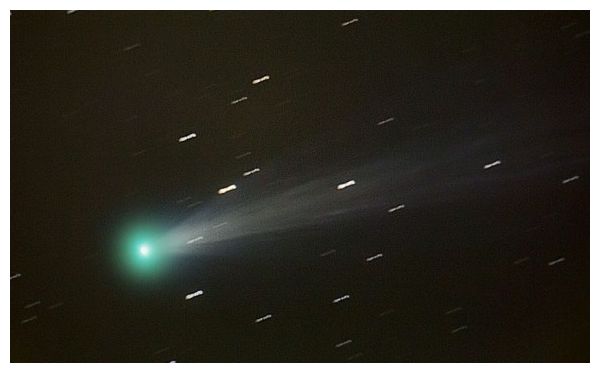
Comet ISON
© Scott MacNeillPhoto of Comet ISON taken Nov. 15 from Charleston, Rhode Island.
Comet ISON - that bright comet last year that broke up around Thanksgiving weekend - included two forms of nitrogen in its icy body, according to newly released observations from the Subaru Telescope.

Of the two types found, the discovery of isotope 15NH2 was the first time it's ever been seen in a comet. Further, the observations from the Japanese team of astronomers show "there were two distinct reservoirs of nitrogen [in] the massive, dense cloud ... from which our Solar System may have formed and evolved," stated the National Astronomical Observatory of Japan.

Alarm Clock

SOTT Focus: Behind the Headlines: Terror Masters, Kenya mall terror attack, Navy Yard shooting, Mind Control, Electrophonic Meteors

Image
Al-Shabab terrorists, aka CIA/Mossad/MI6/DGSE dupes, terrorise people in Nairobi Kenya on behalf of their corporate sponsors
In the following SOTT Talk Radio show from September 2013, the SOTT Editors discussed the bloody terror attack at a mall in Nairobi, Kenya, the mass shooting at the Navy Yard in Washington, DC (the 16th mass shooting of Obama's reign), secret government Mind Control, the 'strange sky sounds' and 'electrophonic meteors'.

Running Time: 01:59:00

Download: MP3


Comet

Potentially Hazardous Asteroid 2000 EM26 zipping by Earth on February 17, 2014

Image
Representation only – There are uncountable numbers of these orbiting rocks that pose an imminent danger to space travel
On February 17th a near-Earth asteroid (NEA), 2000 EM26, with an estimated diameter of three football fields (270 meters) and traveling at approximately 27,000 mph (12.37 km/s), will come racing by Earth on its close approach.

This is a subtle reminder of the dangers of asteroid impacts just one year after two historic events took place on February 15, 2013. Slooh will cover NEA 2000 EM26, a potentially hazardous asteroid (PHA), as it makes its closest approach on Monday, February 17th, starting at 6 pm PST / 9 pm EST / 02:00 UTC (2/18) live from the Canary Islands. Viewers can watch free on Slooh.com or by downloading the Slooh iPad app.

The live image stream will be accompanied by discussions led by Slooh host and astronomer Bob Berman, Slooh technical director Paul Cox, and special guest Dr. Mark Boslough, an expert on planetary impacts and global catastrophes and frequent participant on many science TV documentaries. Viewers can ask questions during the show by using hashtag #asteroid.

Comet

New comet discovered: C/2014 C2 (STEREO)

Discovery Date: February 1, 2014

Magnitude: 7.0 mag

Discoverer: Alan Watson (STEREO-A satellite)

C/2014 C2
© Aerith Net

The orbital elements are published on M.P.E.C. 2014-C25.

Comet 2

New Comet: P/2014 C1 (TOTAS)

Discovery Date: February 1, 2014

Magnitude: 19.3 mag

Discoverer: Teide Observatory Tenerife Asteroid Survey (TOTAS)

P/2014 C1
© Aerith NetMagnitudes Graph
The orbital elements are published on M.P.E.C. 2014-C11.

Comet

New Comet: 2014 BF63

Discovery Date: January 29, 2014

Magnitude: 19 mag

Discoverer: Wide Field Infrared Survey Explorer (NASA)

2014 BF63
© Aerith NetMagnitudes Graph
The orbital elements are published on M.P.E.C. 2014-C18.

Question

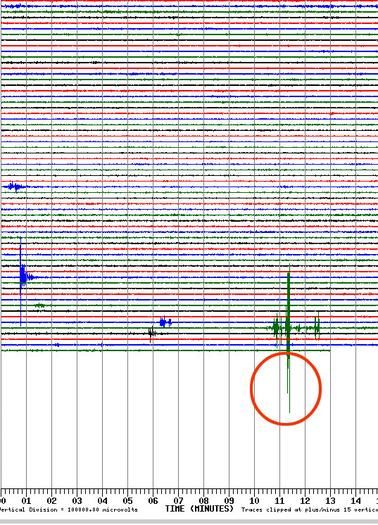
Earthquake ruled out after tremors and loud boom reported in Ocean City, Maryland

Image
Snapshot from Maryland Geological Survey (Maryland Geological Survey / February 6, 2014)
Tremors that Ocean City residents reported feeling around midday Thursday did not come from an earthquake, seismologists said, but may have come from supersonic flights from Patuxent Naval Air Station.

"The data is very inconsistent with any kind of earthquake activity," Maryland Geological Survey Director Richard Ortt said. That was because the timing of the tremor's detection by various sensors did not match the time it would be expected to take for a seismic event to ripple through the Earth's crust, he said.

The source of the tremors remains unknown, Ortt said. Sometimes sonic booms, explosions or other blasts can be confused with earthquakes, he said.

Air station spokeswoman Connie Hempel said the Navy conducted two supersonic flights off the coast Thursday, though she did not know what time they were scheduled for.

Residents of the beach resort town reported hearing a loud boom and feeling earthquake-like tremors shortly before noon.

"We have had reports that people felt tremors," said an Ocean City police spokeswoman, who estimated that the department had fielded more than a dozen calls as of noon.

Comet

Greenland: Once a Viking paradise

temperature variations
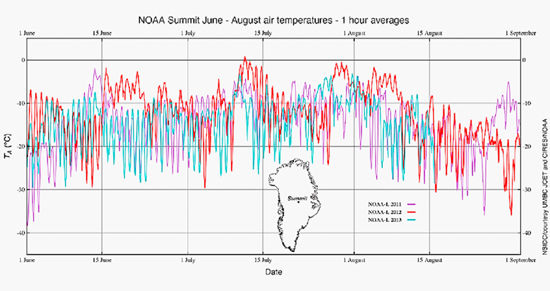
© NOAAGreenland’s temperature variations: comparing 2011, 2012 and 2013.
The "Little Ice Age" impact on Europe was sudden and ferocious.

Using its weapons of plague, famine and (perhaps controversially) earthquake, the so-called "Little Ice age" reduced the population of Europe by around 30 to 50 percent. The virulence and death toll of the 1348 AD plague is totally unmatched by modern examples. Further, the world mega-famine of 1315 AD, due to both weather and pestilence, was catastrophic. The relentless temperature drops combined with erratic weather are nearly impossible to explain, but mankind had no hand in its inception. What forces of nature caused this catastrophic scenario? Greenland is a classic example of death and abandonment. Let's travel back in time and see what happened.

Although the Little Ice Age is a scientific reconstruction, it covers a period when there was a significant and chaotic down-turn in climate, compared to the present era. It is classified into four periods from around 1280 AD to 1850 AD. These erratic cold periods are referred to as the Wolf, Sporer, Maunder and Dalton weather minima. Those dramatic climatic deteriorations were not only cooler, wetter and windier on average, but also vastly more chaotic in their fluctuations, creating the prime ingredients for famine and (curiously) plague.

The Little Ice Age followed a period known as the "Medieval Maximum" that is dated to between 900 AD - 1280 AD, which copious records reveal was much warmer than modern times. For instance, grapevines grew in the area of today's shivering Wales! This was generally a period of prosperity for civilizations. There was a large increase in world population and an era of colonial expansion. During the years 800 AD - 1200 AD, Greenland and Iceland were settled by the Vikings. The "Medieval Warm Period" allowed this great migration to flourish. Drift ice at later dates posed the greatest hazard to sailors but reports of drift ice in old records do not appear until the thirteenth century.