Comets


Fireball 2

Massive meteor fireball explodes over North America - Boom heard from Pennsylvania to Canada

Fireball
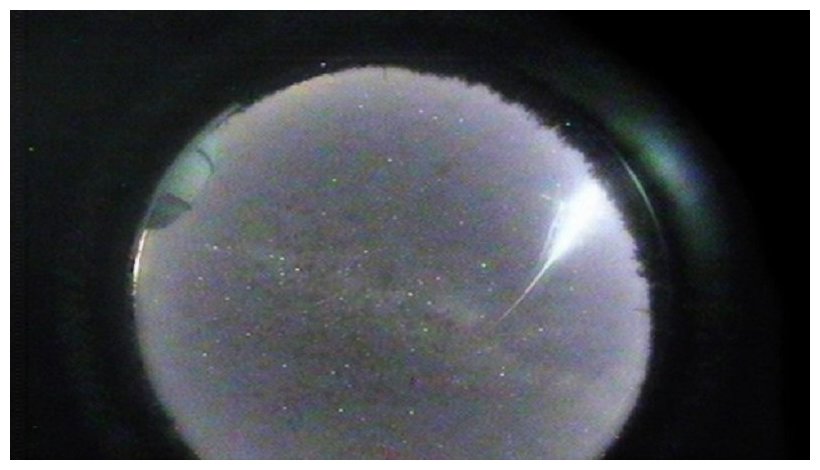
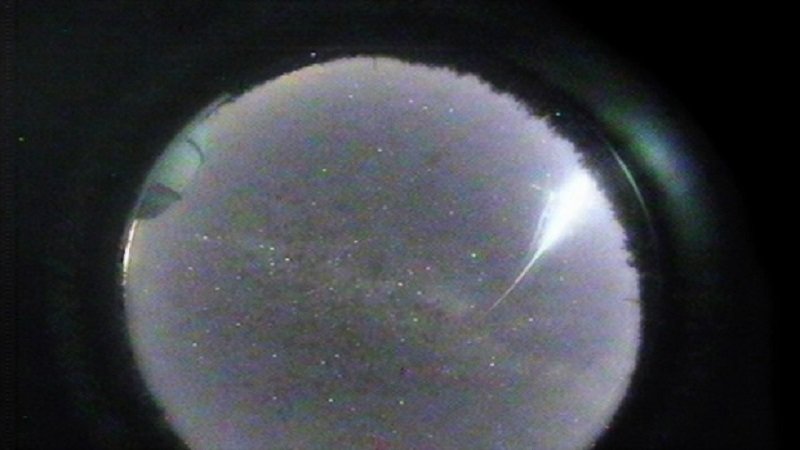
© University of Toronto Scarborough Observatory/via TwitterA time-lapse video caught the fireball streaking across the sky. According to social media, it was seen in the Northeast and in some Mid-Atlantic states, including Pennsylvania and New Jersey.
An apparent meteor lit up skies in the Northeast and Mid-Atlantic on Tuesday night, according to reports on social media.

It was spotted by skywatchers in Philadelphia, the northwest suburbs and in South Jersey, social media posts indicated.

A camera at the University of Toronto Scarborough Observatory captured the fireball on video. It released a time-lapse video on Twitter.


Comment: The American Meteor Society (AMS) received over 700 reports about a fireball seen over MI, PA, NY, OH, MD, Ontario, NJ, DC, WV, DE, MA, VA, Québec, CT, IN and VT on Wednesday, October 5th 2016 around 02:34 UT.

The fireball sightings could be one of the "top 10 events of the year" in terms of the number of received reports, according to Mike Hankey, operations manager for the AMS. "What struck me is that people from Canada to Southern Maryland saw it," Hankey added. "That means it was pretty bright."

AMS map evert 3737
© AMS

Reports here of people hearing the accompanying shockwave.


Fireball 3

Meteor fireball image captured over Ottawa

Fireball over Ottawa
© Scott SmithsonIn this video captured by Scott Smithson, a fireball is seen streaking across the skies over Ottawa on Monday, Oct. 3, 2016.
A university student captured an image of an unusual object in the skies over an Ottawa suburb.

Carleton University student Scott Smithson was walking on a trail in Kanata, Ontario, on Monday evening, when he caught a glimpse of what appeared to be a meteor streaking through the sky.

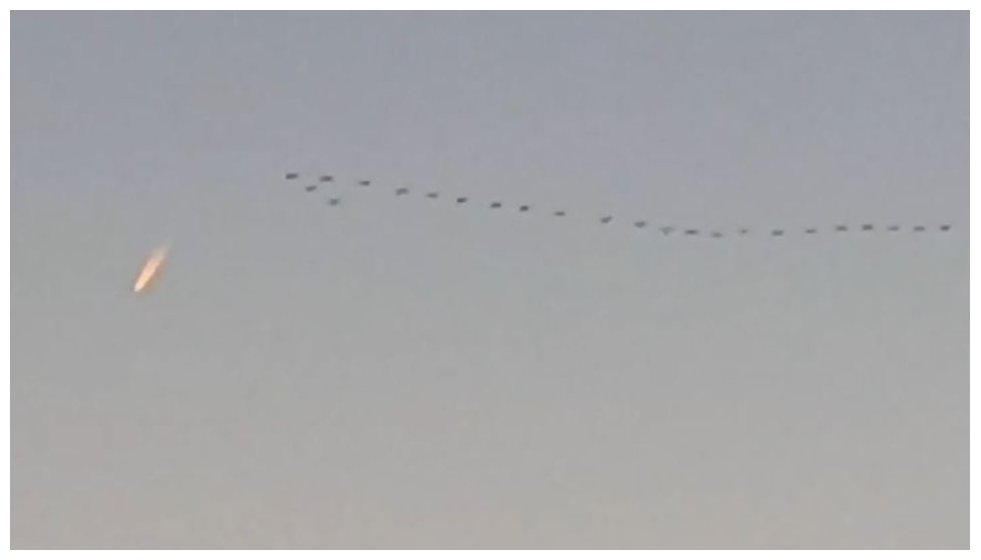
Smithson managed to take a picture of the flying fireball. While it appeared to have the characteristics of a meteor, it's possible it was something else.

A bright fireball that soared through the skies over Britain Monday night, was at first thought to be a meteor, but a U.K. meteor network said that it was moving too slowly, and might in fact be debris from a satellite.


Info

Scotland's asteroid strike

Scotland Meteor Strike
© Society for Interdisciplinary Studies
This one is geology rather than catastrophism as a geologist is at the heart of the discovery. Channel 4 Had a TV programme about it last week which you can see if you missed it at here ...(and see also here.)

Gary Gilligan is more interested in the Torridon sandstone (which subsequently filled the projected crater) as sand is a subject close to his heart (and wherever sand pops up we have to wonder about its origin). For example, sandstones occur on top of chalk geology in southern England (sometimes known as sarsen) and these too were laid down during an upheaval of some kind (during or at the end of the Palaeogene). In the Torridons we have sandstone laid down during or shortly after an asteroid strike. Thank you for the link Gary.

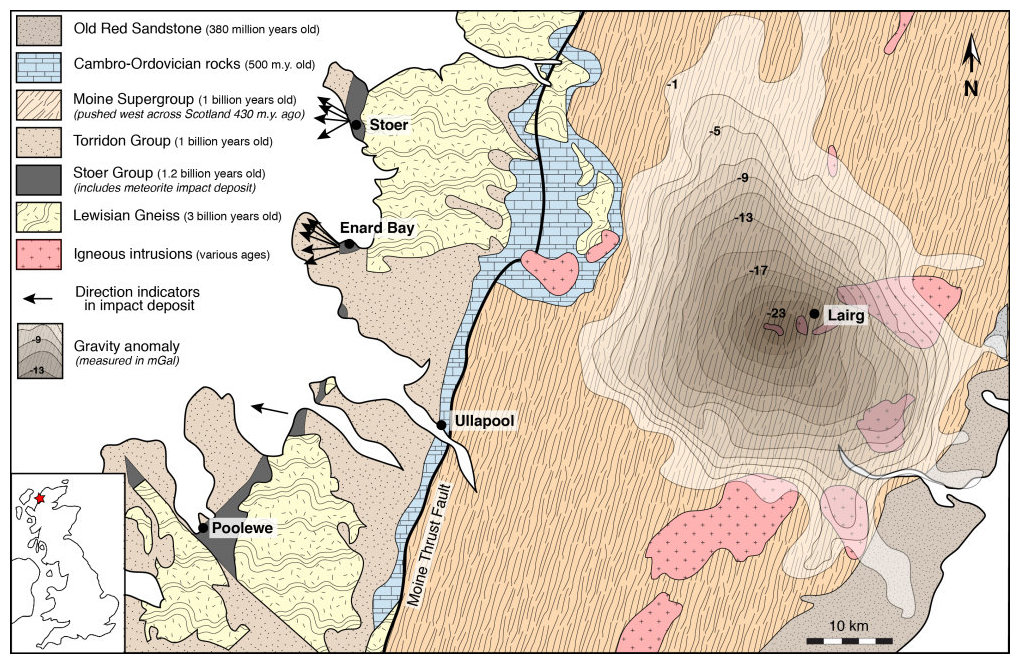
The projected crater site was already classified as an unconformity - it did not fit the usual pattern. There was a gravity anomaly.

This meant a closer look and now it is thought a crater exists beneath sedimentary layers such as sandstone, arkose and shale. For an insight into what these might be, see Torridonian ... Arkose ... and Shale.

Shales are composed of mud and clay particles, Arkose is a sandstone containing 25 per cent feldspar (Arkosian sand is sand rich in feldspar) and the Torridonian formation (from the Torridon Mountains) is a name for a group of sedimentary rocks in NW Scotland, such as red and brown sandstone, shales and arkoses.

The strike site is also associated with shocked quartz and by sandstone flecked with tiny fragments of green glass. The glass represents melted rock - and the heat generated was hot enough to force the glass, or melted rock, to seep into sand grains and become rock in itself, folding them in a dramatic fashion. The shale, in turn, is thought to derive from a volcanic like mud flow - induced by the strike creating a tectonic backlash or simply by the violence of the strike itself creating the mud flow. The inference is that an object hit the ground where sand and mud was a common ingredient (quite unlike the modern landscape of the region). Of course, one could conjecture the sand came out of the bowels of the earth as a result of the strike (along with the mud flow) or arrived with the asteroid (or comet).

It is interesting to see how mainstream takes onboard such catastrophic events but continues to interpret some of the geology in purely uniformitarian terms.

Fireball 5

Meteor over Srinagar mistaken for missile attack

Meteorite in Srinagar
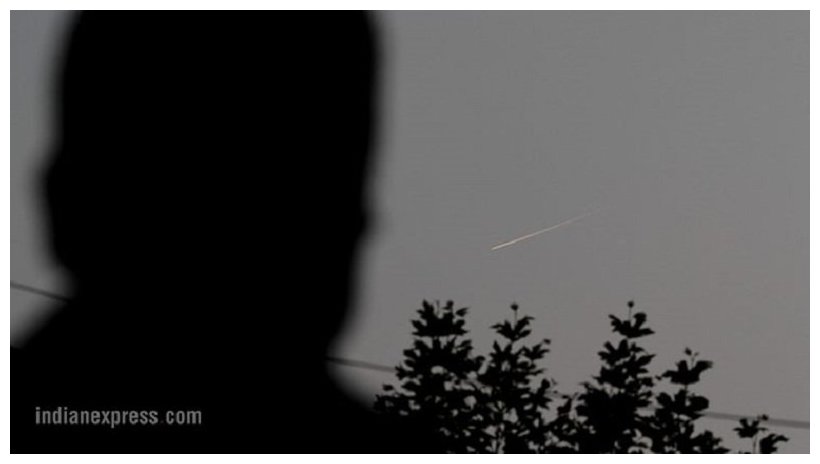
© Express Photo by Shuaib MasoodiThe falling meteorite in Srinagar on Thursday.
Panic struck the people of Srinagar as a falling meteorite was confused for a missile, hours after India confirmed conducting surgical strikes along the border in Pakistan. Onlookers in the Jammu and Kashmir capital took the 'missile' as a retaliation in the aftermath of the border tension.

The Indian Army on Thursday organised surgical strikes targeting seven terror launch pads across the LoC overnight in which heliborne and ground forces were used. Addressing a press conference, DGMO Lt Gen Ranbir Singh said India inflicted "significant casualties" on terrorists and those who are trying to support them.

This is latest in the string of offensives India has launched against Pakistan since four attackers killed 19 soldiers in Jammu and Kashmir's Uri when they targetted the rear office of an Indian Army infantry installation on September 18. India has resorted to several diplomatic measures and vowed to internationally isolate Pakistan ever since.

Comet 2

'Lost' comet of 1915 may have been rediscovered

C/2016 R3 Borisov
© YouTube/Planetary AstronomyC/2016 R3 Borisov.
Scientists working with the Slooh observatories were able to take an image of Comet C/2016 R3, which was discovered by Russian astronomer Gennady Borisov on September 11, 2016. Since then, the comet has been too close to the sun to observe well, but Borisov and his peers think the celestial body might be one that was misplaced a century ago.

Comet C/2016 R3 was discovered by Gennady Borisov, an employee at Sternberg Astronomical Institute in Moscow, on September 11 this year. Earlier, Borisov spotted and catalogued four comets and one asteroid. He is working with observers using the Slooh global robotic observatory network.

Borisov together with Slooh member Bernd Luetkenhoener and Slooh astronomer Paul Cox have demonstrated that Comet C/2016 R3 is moving towards the sun and will reach its perihelion on October 12.

Telescope

China launches world's largest FAST radio telescope: 500 meters in diameter

China 500 metre space telescope
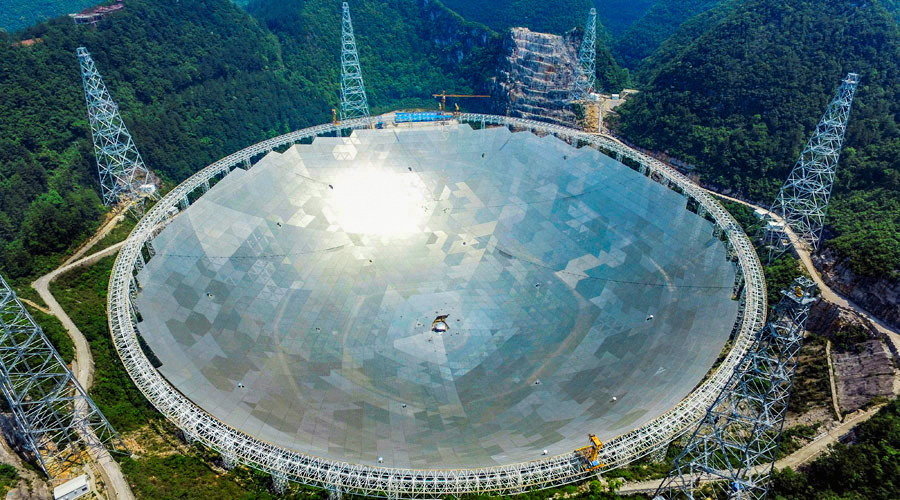
© Stringer / ReutersA 500-metre (1,640-ft.) aperture spherical telescope (FAST) is seen at the final stage of construction, among the mountains in Pingtang county, Guizhou province, China
The biggest radio telescope located in China's Guizhou Province is now operational. Featuring a reflector the size of 30 football pitches, it took five years and $180 million to construct. Called the Five-hundred-meter Aperture Spherical Telescope's (FAST), the telescope is located in a karst valley in Pingtang County, a mountainous area in southwest China.

Some 8,000 local residents were relocated to ensure a 5km radio silence zone around the facility. About $269 million were allocated to pay compensations to the villagers. The name FAST referrers to the main structure of the gigantic instrument, which has 4,450 triangular 11-meter panels and measures 500 meters in diameter. For comparison, the Arecibo Observatory in Puerto Rico, which held the title of world's largest radio telescope before FAST, has a 305-meter dish.

Comment: It would take a full 40 minutes for the average person to walk around the telescope.
See also:


Fireball 2

Meteor fireball shoots across Eastern Canada and US night sky

Meteor by AMS
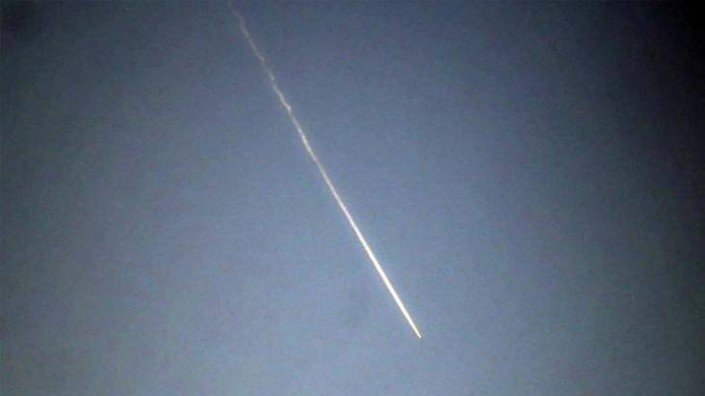
© Facebook/Mont-Mégantic provincial parkThis meteor was seen as far west as Toronto and as far east as Edmundston, N.B., according to the American Meteor Society.
Skywatchers across Eastern Canada and the U.S. spotted an unexpected treat last night, as a meteor streaked across the sky.

The phenomenon was captured by a camera atop Quebec's Mont-Mégantic provincial park, about 80 kilometres east of Sherbrooke, Que., around 9:40 p.m. Wednesday.

Sébastien Giguère, scientific co-ordinator at the Mont-Mégantic Astrolab, confirmed Thursday morning that the fireball was indeed a meteor.

A meteor, also called a shooting star, is the light emitted from a meteoroid or an asteroid as it enters the atmosphere.

Meteors like ones seen during Perseid meteor showers are caused by particles that are the same size as a grain of sand or rice, Giguère explained. The bigger the particle, the bigger the meteor.

Last night's meteor was probably caused by something the size of a big rock, Giguère said.

"Hundreds of tonnes of meteorites fall through the sky every day," he said on Radio-Canada's C'est pas trop tôt. "But yesterday, it was nice out and [the meteor] was centred on southern Quebec. That happens once every one or two years, so it's not totally rare, but it doesn't happen every day."

Vicky Boldo, a resident of Sainte-Catherine-de-Hatley Que., said she saw the "spectacular sight" while sitting in her hot tub last night.

"It passed directly over us and lit the yard up like a football field — it seemed to be just up over our heads beyond the trees," she said in an email.


Info

5 new 'Neptune trojans' discovered

 Neptune Trojans
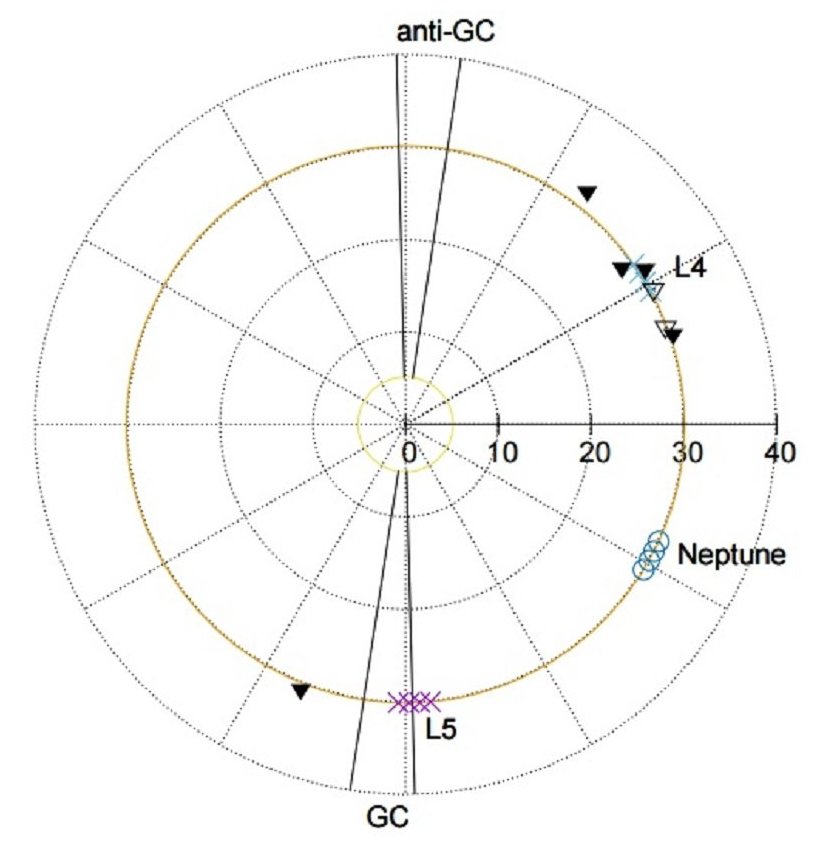
© Lin et al., 2016The spatial distribution of all PS1 detected Trojans. The solid triangles are the newly discovered Neptune Trojans, and open triangles are the known ones detected by PS1. The positions of Neptune Trojans correspond to their first detections of PS1. The blue circles show the locations of Neptune from 2010 to 2013, and the crosses show the corresponding Lagrange points. Notice that the Galactic Center (GC) overlapped with L5 during 2010 to 2012.
An international team of astronomers led by Hsing-Wen Lin of the National Central University in Taiwan has detected five new so-called "Neptune trojans" - minor bodies sharing the same orbit as the planet Neptune. The discovery was made by the Pan-STARRS 1 (PS1) survey and is described in a paper published Sept. 15 on arXiv.org.

The PS1 survey, which utilizes the first Pan-STARRS (Panoramic Survey Telescope and Rapid Response System) telescope in Hawaii, designated PS1, is one of the best tools to search for Neptune trojans. The survey, lasting from May 2010 to May 2014, has made a strong contribution to knowledge of the solar system's minor bodies due to its very wide survey area and its optimized cadence for searching moving objects.

"PS1 survey has a very wide survey area that is deep enough to cover a large part of the Neptune trojan cloud. PS1 currently is the only one with the capability to detect several Neptune trojans in a single survey," Lin told Phys.org.

The researchers found four new L4 trojans, meaning that they orbit Neptune's L4 Lagrangian point 60 degrees ahead of Neptune; they also found one L5 trojan - orbiting the L5 region 60 degrees behind the planet. The newly detected objects have sizes ranging from 100 to 200 kilometers in diameter.

What drew the attention of the astronomers is the fact that the new L5 trojan is dynamically more unstable than the other four, indicating that it could be temporarily captured into the Neptune trojan cloud.

Fireball 2

30 tonne meteorite discovered in Argentina

30 Tonne Meteorite
© Compacto Nea
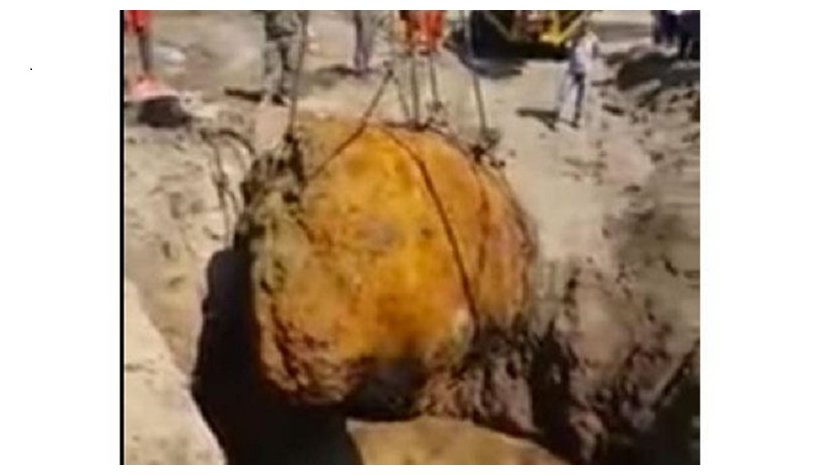
Scientists have discovered a meteorite weighing over 30 tonnes in northern Argentina. The meteorite was found in the town of Gancedo, 1,085 km north of capital Buenos Aires, Mario Vesconi, president of the Astronomy Association of Chaco, said on Monday.

"While we hoped for weights above what had been registered, we did not expect it to exceed 30 tons," Vesconi said, adding that "the size and weight surprised us", Xinhua news agency reported.

"It was in Campo del Cielo, where a shower of metallic meteorites fell around 4,000 years ago," Vesconi added.

The meteorite will be weighed again to ensure an accurate measurement.

The largest meteorite ever found is called Hoba, weighing 66 tonnes in Namibia, Africa.


Fireball 4

Meteor sighting reported across Virginia

météore
Richmond — Numerous viewers reached out to WTVR CBS 6 after reporting seeing something strange in the sky Thursday evening.

David Livingston said he was stopped at an intersection in the West End around 6 p.m. when he saw a bright light in the southwest sky.

"It was very bright and green and possibly made it all the way to the ground," Livingston said.

Rhonda Sams from Cartersville also saw something she believed was a meteor or possibly space debris.

"My husband, son, and I were looking south toward Cumberland County and Route 60. It could have actually fell in Amelia County," Sams wrote. "Don't know what it was but it was bright and burning."

K. Learning said she was driving on I-95 south near the Doswell exit around 6 p.m. when she saw something bright in the sky.

"There was what looked like a ball of fire seen going at a rapid speed," Learning said. "The direction it was seen going was southwest."

Christy Dalton was driving on Route 288 when she reported seeing something "fall out of the sky."

‎Brian Hobbs‎ also reported seeing the bright light.

"There was a long smoke trail left behind that dissipated very slowly," Hobbs‎ wrote. "Really a neat thing to see."