Comets


Info

Southern hemisphere recovered quicker from devastating asteroid strike

Asteroid Strike
© Pic about Space
Researchers from the US and Argentina have analysed fossilised leaves and presented a new theory as to why the southern hemisphere recovered faster following the asteroid strike that killed the dinosaurs 66 million years ago.

Ecosystems in North America took 9 million years to recover from the asteroid, whilst in South America, insect life bounced back only after about 4 million years. This is the conclusion of the join US-Argentine research team that has published the results of its study in the journal Nature Ecology & Evolution.

Previous evidence had suggested that the asteroid strike - which killed all non-avian dinosaurs and a large number of other species - had a less severe impact on the southern hemisphere and one theory had argued that this was because it provided a sort of refuge for species. However, this new research points to a different explanation, being that ecosystems recovered much more quickly than in the north.

'This extinction is very important - it is one of the major extinctions in the history of the Earth,' commented lead researcher Michael Donovan of Pennsylvania State University. 'The biodiversity patterns we see today, where things are living, may be related to what survived - so it is important to learn about what was happening around the world at this time.'

Fireball

Comets & asteroids summary for October 2016

NEA's Discovered
© Remanzacco Blogspot
During the months of October 2016, 3 new comets were discovered. "Current comet magnitudes" & "Daily updated asteroid flybys" pages are available at the top of this blog (or just click on the underline text here).

The dates below refer to the date of issuance of CBET (Central Bureau Electronic Telegram) which reported the official news & designations.

Comet Discoveries


Oct 11 Discovery of C/2016 T1 (MATHENY)
Oct 13 Discovery of C/2016 T2 (MATHENY)
Oct 18 Discovery of C/2016 T3 (PANSTARRS)

Other news

Oct 14 Klim Ivanovich Churyumov (1937 - 2016), astronomer and co-discoverer (with Svetlana Gerasimenko) of comet #67P passed away on October 14, 2016

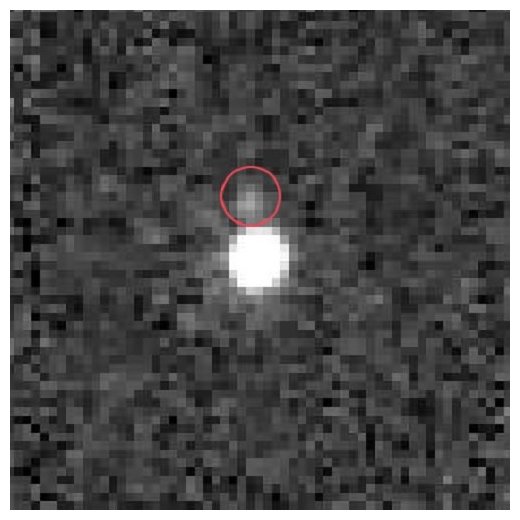
Oct 17 The third-largest object known beyond Neptune, 2007 OR10, has a moon. The discovery was reported in a poster by Gábor Marton, Csaba Kiss, and Thomas Mueller presented at the joint meeting of the European Planetary Science Congress and the Division for Planetary Sciences of the American Astronomical Society (DPS/EPSC) in Pasadena, California. The Hubble Space Telescope took the photo below of 2007 OR10 on September 18, 2010. Later analysis of the images revealed the presence of a moon (red circle).
2007 OR10 with Moon
© NASA/STScI/Wesley Fraser/Gábor Marton et al.

Fireball 3

Fireball spotted in the sky over Nova Scotia

Fireball
© CTV News, CanadaCorinne Reid saw something quite spectacular in the evening sky yesterday! What was it?
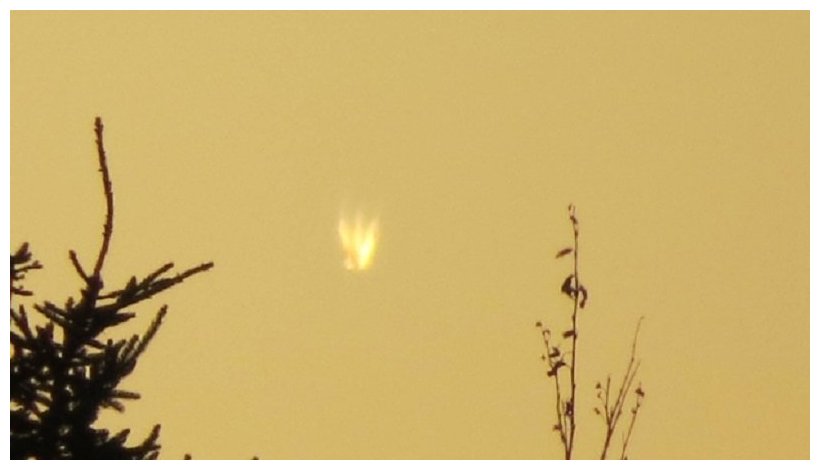
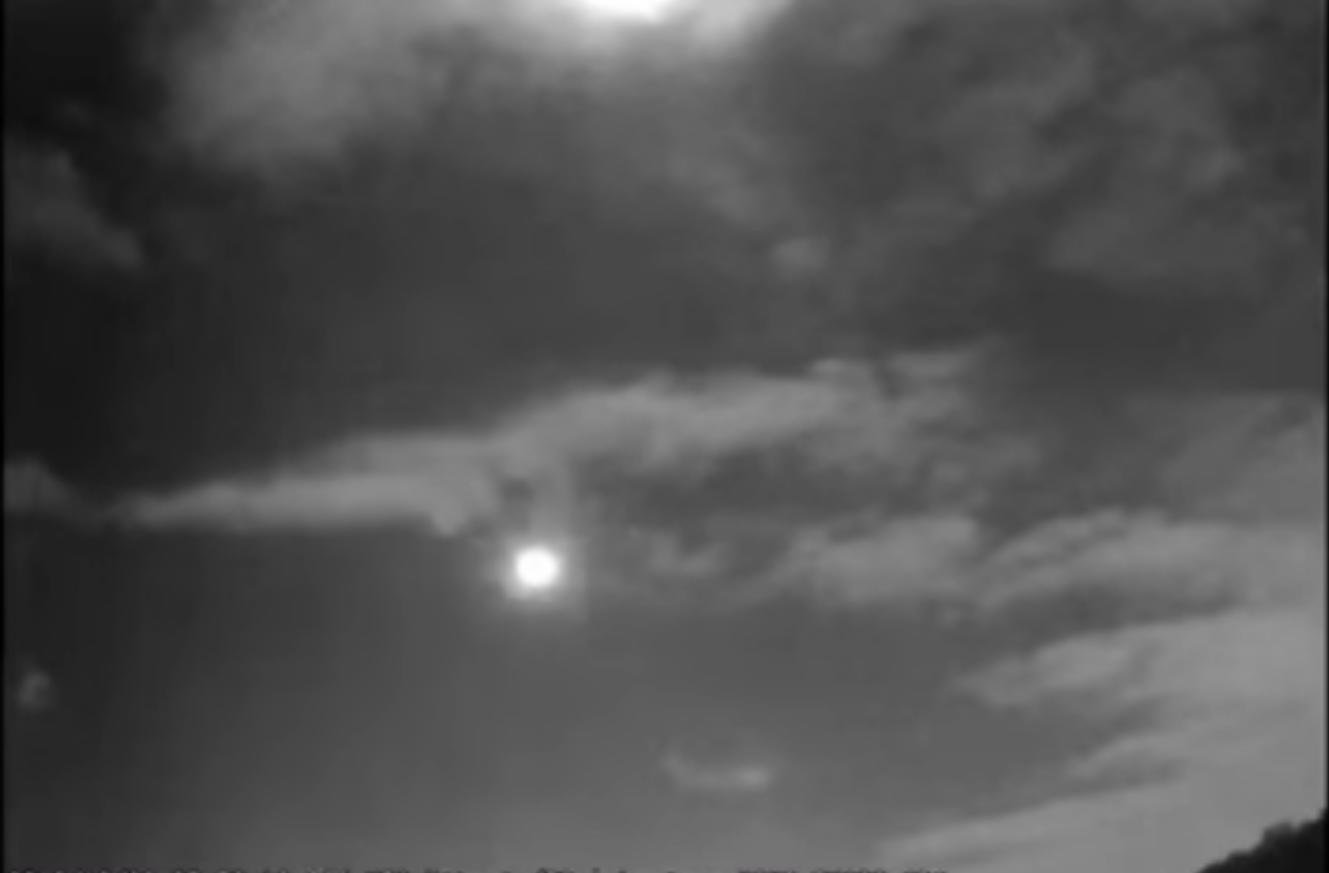
Yesterday, at precisely 4:40pm, flames raced towards earth over Dominion Cape Breton. Luckily for us, Corinne Reid had a camera handy and snapped some amazing photos. She posted them on my Facebook page.

At first glance, I thought it might be a fireball; after all, this is the time for the annual Taurid Meteor shower; the peak occurs this Friday. And to add to the intrigues, a viewer reported a bright light streaming across the sky near Port Felix, at the same time the day the before!

Over the next little while, more information trickled in. Corinne tells us that the "event" lasted about 10 minutes; time enough for her to get her camera. She zoomed in with the 200X digital zoom on her camera.

The post and photos got some very interesting comments from experts in various fields. A member of an Observatory club in Toronto said it was an aircraft.

Locally, Jeff Dalton weighed in and added that it could very well have been space junk, entering our atmosphere.

Michael Boschat at the Halifax Centre of the Royal Astronomical Society Canada says " 100% definitely a short aircraft contrail image. " He says that even seasoned observers occasionally have a difficult time differentiating them from fireballs.

That does make sense: we're seeing a ball of fire because the jet is moving away from the observer. It's all about the angle of the jet in in sky in relation to the photographer.

Jeff Dalton made a good point and it's something I say a lot too: "Whatever it may be, or was, it is a neat sight. I keep telling people to keep an eye on the sky because there are all kinds of things to see above, day and night! This is yet another example".

Fireball

This 1492 Ensisheim 'thunderstone' impact was interpreted as an omen from god

Thunderstone of Ensisheim
© Schedel, Hartmann/Wolgemut, Michael/Pleydenwurff, Wilhelm: Liber chronicarum, NürnbergIllustration depicting the “thunderstone” at Ensisheim.
Only a few weeks after Christopher Columbus reached the New World in October 1492, another foreign explorer—this time an errant space rock—touched down on firm ground following its own protracted journey across an inhospitable expanse.

This extraterrestrial visitor came to be known the Ensisheim meteorite, named for the Alsatian town adjacent to the wheat field where it impacted on the morning of November 7, 1492 (according to the Julian calendar). It is the oldest meteorite impact with a confirmed date on record, and has become famous for its dramatic fall from the heavens, an event that was witnessed by onlookers and recorded for posterity by writers like the Italian priest Sigismondo Tizio.

"At this point there has to be mention of the immense portent which was seen this year in Germany: for on the seventh day of November [1492], near the city of Ensisheim and the village of Bauenheim above Basel, a great stone fell out of the sky, triangular in shape, charred, the color of metallic ore, and accompanied by crashing thunder and lightning," Tizio said in his History of the Sienese. "When it had fallen to earth it split into several pieces, for it had traveled at an oblique angle; to the amazement of all, indeed, it flattened the earth when it struck."

A young boy is said to have found the impact site first, attracting a crowd of awed spectators. In an age when comets, shooting stars, and other celestial phenomenon remained unexplained, the appearance of the meteorite was quickly attributed to divine intervention.

Naturally, everyone wanted a chunk of the rock that God had deemed fit to chuck at Earth. Any superstitious reservations they might have had about the "thunderstone" or "firestone" as some took to calling it, did not prevent them from breaking off pieces to take home as souvenirs. Some slices were also saved to be sent to dignitaries, like Cardinal Piccolomini, who later became Pope Pius III.

Fireball 2

Meteor fireball seen over Perth, Western Australia

Fireball
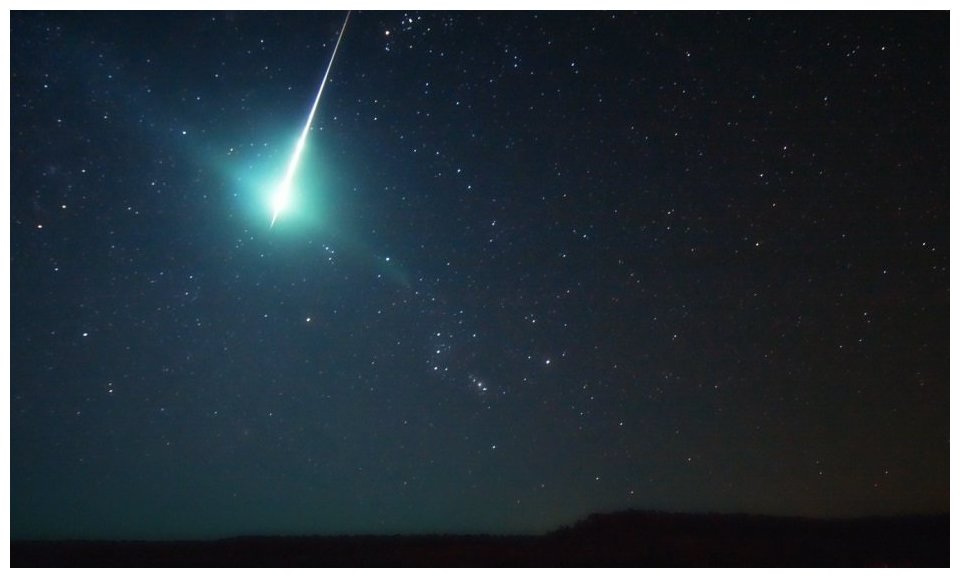
© So PerthGreen fireball, somewhat similar to what was described over Perth tonight, over South American nations Argentina, Brazil and Uruguay in 2015.
A huge ball of fire was seen streaking over Perth. People across Perth have seen a huge ball of fireball over the city tonight. Some people even said they heard explosions like fireworks in the moments afterward.

Perthites took to social media to report seeing the huge fireball streak across the sky, just after 7pm Wednesday evening.

At the time a crescent moon could be seem to the west-south-west and the first evening stars were visible, just after the sun sank.

People quickly reported on Twitter and Facebook that they had seen a fireball, that lasted around 30-seconds, and even heard explosions in the moments afterward.

JBE on Twitter wrote, "Gorgeous streaking green light in Swanbourne!"

"It was spectacular - bright green. I thought it was a flare at first," Katjo said.

People from Mandurah, Mt Pleasant, Perth's coastal suburbs all said they said the bright lights. Others said they heard loud booms around that time.

"I thought I heard like 3 fireworks going off," said Rob.

It's possible the fireball was connected to the South Taurid meteor shower, which peaks every year around late October and early November.

The award winning Perth Fireballs in the Sky app is the place to go to report sightings.

Fireball 2

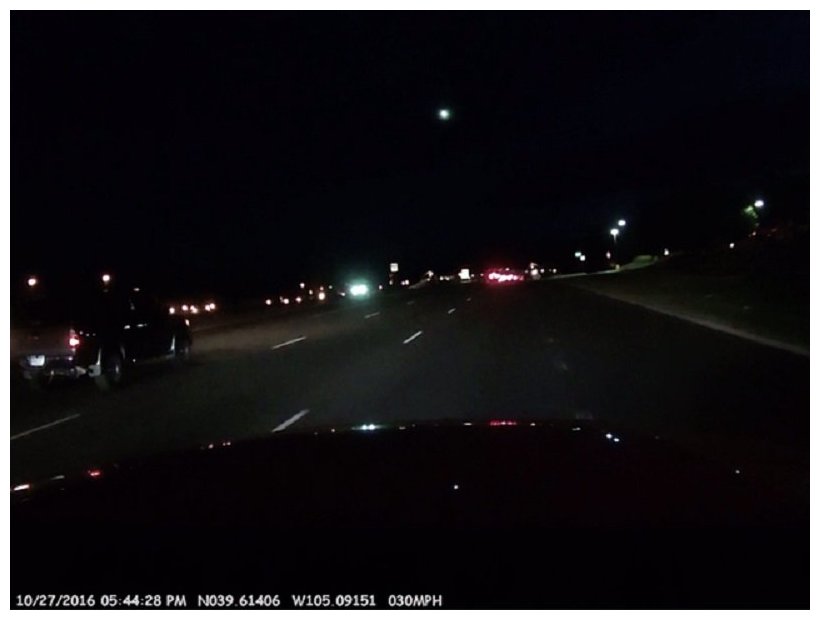
Meteor fireball captured on dash cam over Colorado (VIDEO)

Meteor Over Colorado
© Scripps Media, Inc.
Denver -- It's a sight not many people are fortunate enough to see, but one that a Colorado resident was fortunate enough to capture. Denver7 started getting calls about a meteor falling from the sky at around 6:50 p.m.

One viewer who did not wish to be identified told Denver7 he was at Holly and 120th Avenue when he spotted the falling rock going down in what he said appeared to be an area near Sports Authority Field. He said it happened at around 6:45 p.m.

At around 8:30 p.m., a Denver viewer from Littleton emailed the newsroom and said he caught the meteor on his dash cam on his way home Thursday evening. "It was traveling to the south," the viewer told Denver7.

He said he was driving near the area of Bowles and Wadsworth in Littleton when the sighting took place.


Meteor

Bright meteor fireball recorded over Espirito Santo, Brazil (VIDEO)

Bright Meteor Fireball recorded over Espirito Santo Brazil Thursday 20th October 2016
The meteor fireball was recorded by a monitoring station
A bright meteor fireball was recorded on Thursday 20th October 2016 by a monitoring station over northern Espirito Santo, Brazil, at 03:56AM.

Info

New study: Extraterrestrial impact preceded ancient global warming event

Microtektites
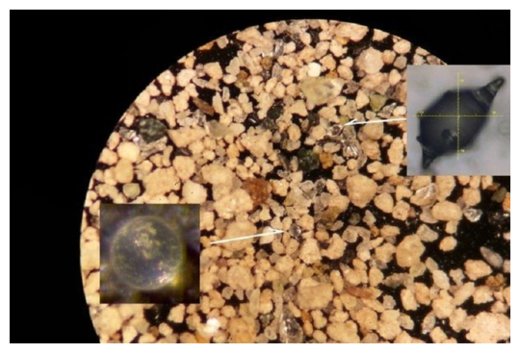
© Rensselaer Polytechnic InstituteMicrotektites as first seen in a sediment sample from the onset of the Paeocene-Eocene Thermal Maximum.
A comet strike may have triggered the Paleocene-Eocene Thermal Maximum (PETM), a rapid warming of the Earth caused by an accumulation of atmospheric carbon dioxide 56 million years ago, which offers analogs to global warming today. Sorting through samples of sediment from the time period, researchers at Rensselaer Polytechnic Institute discovered evidence of the strike in the form of microtektites - tiny dark glassy spheres typically formed by extraterrestrial impacts. The research will be published tomorrow in the journal Science.

"This tells us that there was an extraterrestrial impact at the time this sediment was deposited - a space rock hit the planet," said Morgan Schaller, an assistant professor of earth and environmental sciences at Rensselaer, and corresponding author of the paper.

"The coincidence of an impact with a major climate change is nothing short of remarkable." Schaller is joined in the research by Rensselaer professor Miriam Katz and graduate student Megan Fung, James Wright of Rutgers University, and Dennis Kent of Columbia University.

Schaller was searching for fossilized remains of Foraminifera, a tiny organism that produces a shell, when he first noticed a microtektite in the sediment he was examining. Although it is common for researchers to search for fossilized remains in PETM sediments, microtektites have not been previously detected. Schaller and his team theorize this is because microtektites are typically dark in color, and do not stand out on the black sorting tray researchers use to search for light-colored fossilized remains. Once Schaller noticed the first microtektite, the researchers switched to a white sorting tray, and began to find more.

At peak abundance, the research team found as many as three microtektites per gram of sediment examined. Microtektites are typically spherical, or tear-drop shaped, and are formed by an impact powerful enough to melt and vaporize the target area, casting molten ejecta into the atmosphere. Some microtektites from the samples contained "shocked quartz," definitive evidence of their impact origin, and exhibited microcraters or were sintered together, evidence of the speed at which they were traveling as they solidified and hit the ground.

Fireball 3

Increasing number of meteorite impacts recorded on the Moon

Lunar Crater
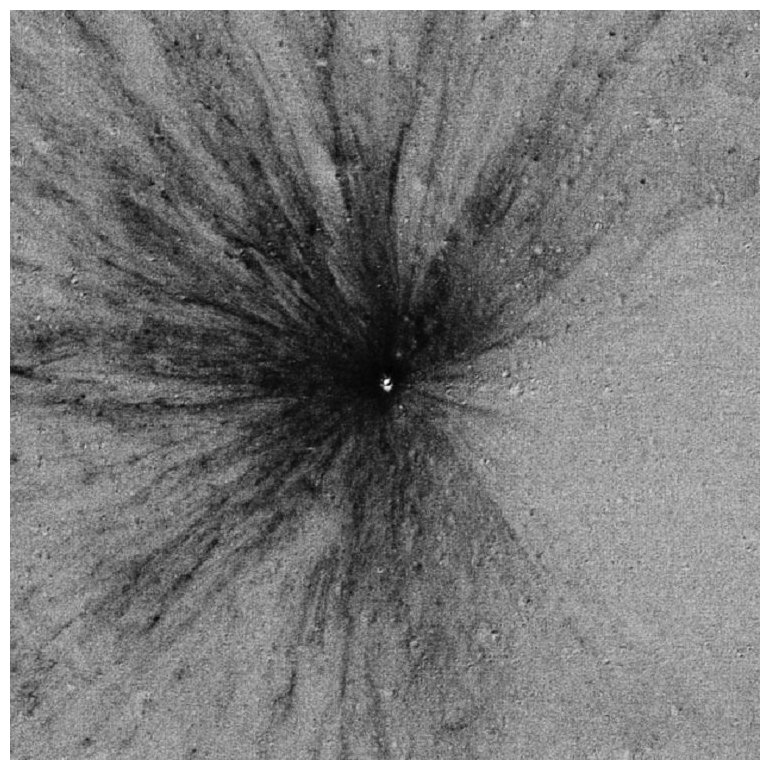
© NASA/GSFC/Arizona State UniversityA new lunar crater, formed about three years ago.
Meteorites have punched at least 222 impact craters into the Moon's surface in the past 7 years. That's 33% more than researchers expected, and suggests that future lunar astronauts may need to hunker down against incoming space rocks.

"It's just something that's happening all the time," says Emerson Speyerer, an engineer at Arizona State University in Tempe and author of a 12 October paper in Nature1.

Planetary geologists will also need to rethink their understanding of the age of the lunar surface, which depends on counting craters and estimating how long the terrain has been pummelled by impacts.

Although most of the craters dotting the Moon's surface formed millions of years ago, space rocks and debris continue to create fresh pockmarks. In 2011, a team led by Ingrid Daubar of NASA's Jet Propulsion Laboratory in Pasadena, California, compared some of the first pictures taken by NASA's Lunar Reconnaissance Orbiter (LRO), which launched in 2009, with decades-old images taken by the Apollo astronauts.

The scientists spotted five fresh impact craters in the LRO images. Then, on two separate occasions in 2013, other astronomers using telescopes on Earth spotted bright flashes on the Moon; LRO later flew over those locations and photographed the freshly formed craters2, 3.

Fireball

Meteor fireball sighted over Cyprus

Meteor over Cyprus
© Cyprus Mail
Eyewitnesses said on Monday they saw a meteorite early in the morning, which did not appear to have crashed on the island.

An eyewitness from Nicosia said he had seen a "very bright meteorite" at 6.30am, which was travelling from east to west.

Ioannis Fakas, the honorary chairman of the Cyprus astronomical society, told the Cyprus Mail later that he had accounts from two eyewitnesses who also saw the phenomenon while driving on the highway - near Stavrovouni, in the Larnaca district, and Petra tou Romiou, near Paphos.

According to the description provided by the witnesses, the meteorite was smaller than a football and it travelled at an altitude of around one kilometre.

There were no reports of it crashing on the island.

Early last month, residents of the mountain villages of Fasoula, Avdimou and Ayios Theodoros Agros called the police reporting a bright light and loud bangs believed to have been caused by a meteorite.

Police said they received reports of explosions from the higher regions but could not find anything despite their investigations.

Parts of the meteorite were thought to have fallen into the sea north of Cyprus.