Strange Skies
S


Bizarro Earth

Rare weather event fills Grand Canyon with fog

Grand Canyon Fog
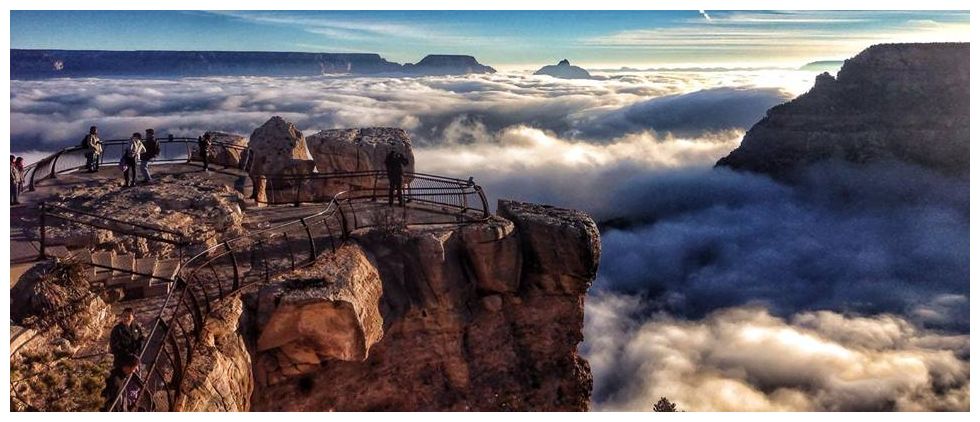
© National Park Service photo by Erin WhittakerThe Grand Canyon, filled with fog, in a rare weather event called a temperature inversion.
Usually the Grand Canyon offers stunning views stretching for miles, deep into valleys etched by the Colorado River. But that vista has changed over the past few days, as a rare weather event has filled the canyon with fog, offering an even more stunning view than is typical.

The weather event is known as a temperature inversion, and it only happens every few years, according to the National Park Service, who wrote about the event and posted photos of it on its Facebook page.

Temperature inversions typically happen in the winter when there are long nights, and as the name implies, an inversion takes place when a layer of cool air gets trapped underneath warmer air, according to the National Weather Service (NWS). This is the reverse of the usual pattern, with temperature generally decreasing with increasing altitude.

Sun

More evidence of comet dust loading in the atmosphere? 'Triple suns' appear in Mongolia

Chinese residents rushed out of doors to marvel a rare astronomical illusion of "triple suns" in the sky over Chifeng, in north China's Inner Mongolia Autonomous Region Friday morning.

The sun accompanied by two smaller twins suddenly popped up in the sky at around 09:00, and the triple appeared surrounded by an arched rainbow-like halos.

The astronomical illusion hang across over Chifeng for around two hours, and many residents took pictures or videos to record the magical moment out on the streets.

Some could even see five suns shining in some area of the city.

"I've got a lot of phone calls coming in from home and my friends when working in that building. They told me to go out and see the triple suns. So I rushed out to have a glimpse of them," said Zhou Lu, who was taking pictures of the suns along the roadside.

Comment: We at SOTT think that this "triple suns" is a 'mirage' effect of some sort whereby the sun is being refracted by the changed atmosphere. That is, a combination of possible comet dust loading and changes in the layers of the atmosphere is producing all sorts of anomalous phenomena. See the following articles for additional examples:

Spectacular Russian rocket launch - more evidence of comet dust loading our atmosphere
Strange Phenomenon: Sun rises two days early in Greenland, sparks fear
Two Suns in Russia?


Bizarro Earth

Unusual cloud formations over New Zealand

Unusual Clouds
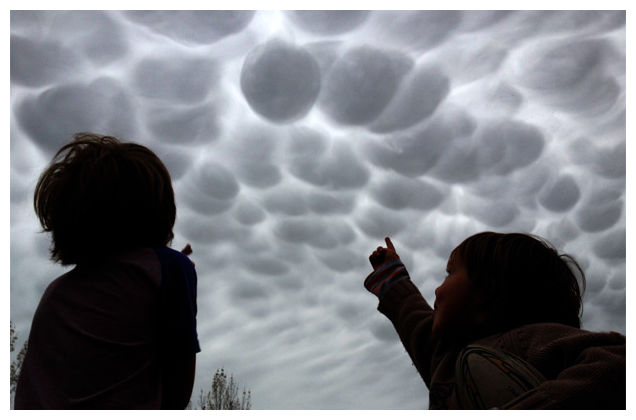
© Piers Fuller/Fairfax NZUnusual Sight: Japhy and Enzo Fuller look at the strange clouds over Masterton.

"Freaky" clouds in Wairarapa yesterday evening were caused by warm air "ski-jumping" off the Tararua Range into a rainy front, according to Metservice.

Wairarapa News journalist Piers Fuller was on the lawn outside his home east of Masterton at about 6pm last night, videoing an impromptu rugby game between his sons Japhy, 6, Enzo, 5 and daughter Juno, 2, when he noticed the sky looked "weird".

"I stopped and said, hey, look at these freaky clouds."

Commenters on the Wairarapa News Facebook page thought the clouds were Mammatus clouds, also known as "mammary clouds".

Metservice meteorologist Daniel Corbett agreed, saying mammatus normally form as a result of sinking air, hence their downward udder-like appearance, and often occur in the base of the anvil of a cumulonimbus, or thunderstorm, cloud.

However in this particular case the explanation was a warm north-west wind lifting up over the Tararua Range then falling into the leading edge of a rainy front creeping over the lower North Island last night, he said.

"When [the north-wester] comes over the Tararuas it's almost like a ski slope, it lifts the clouds then pushes them down... that downward motion can help create that type of formation."

Source: The Dominion Post

Telescope

Astronomer captures incredible footage of noctilucent clouds and Northern Lights together in Scottish night sky

  • Maciej Winiarczyk, 41, captured the images in Caithness, Scotland
  • Noctilucent, or 'night-shining', clouds are normally too faint to be seen
  • Half way through the video the clouds are joined by a spectacular aurora
A stunning time-lapse video of a rare celestial show has been captured dancing across a night sky.

The recording gives a rare glimpse of rolling noctilucent clouds and dancing aurora glimmering across the horizon.

The astronomer witnessed the famous Northern Lights and 'night clouds' earlier this month, over a single night above Caithness, Scotland.

It is unusual to see either phenomena, and incredibly rare to see both simultaneously.


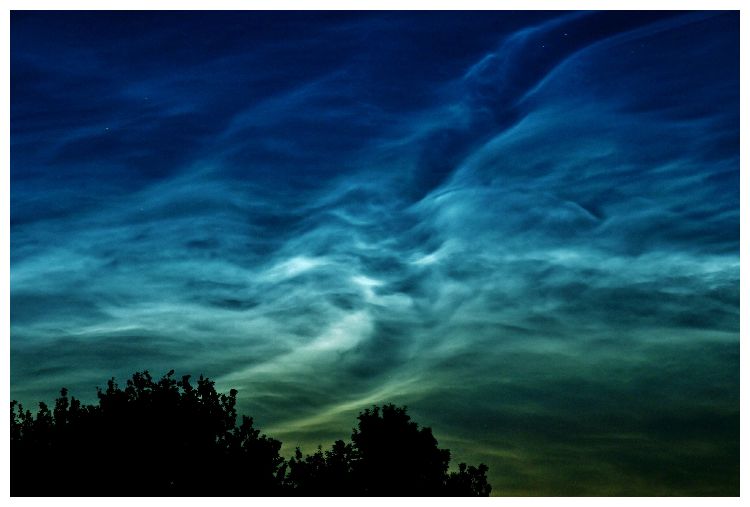
Noctilucent - or 'night-shining' - clouds are made of sunlight-reflecting ice crystals and are normally too faint to be seen from the ground.

The clouds are the highest in atmosphere at around 50 miles above the Earth's surface.

They are often photographed from aircraft in flight, from the International Space Station.

Comment: While it was once rare to see noctilucent clouds, it's becoming quite common these days due to increased comet dust in the upper atmosphere:

Global dust veil: Dust belt from the overhead cometary explosion in Russia raced around the world in just four days


Comet

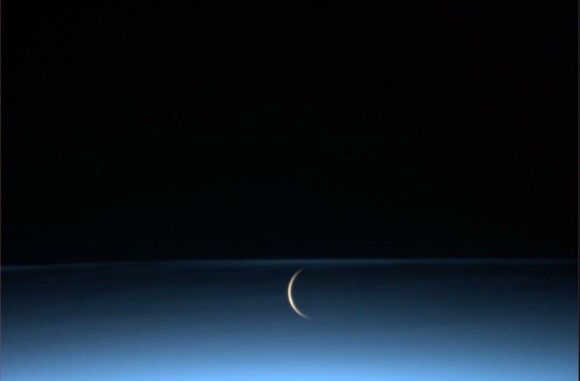
Comet dust veil: Stunning image of crescent Moon appearing through noctilucent clouds

Image
© NASA/ASI/ESA. Via Luca Parmitano on TwitterThe Moon rises surrounded by noctilucent clouds, as seen from the International Space Station.

Recently, Italian astronaut Luca Parmitano spent a "night flight" in the Cupola of the International Space Station in hopes of capturing night-time images of his home country from space. But he saw so much more, including this incredible image of the crescent Moon rising among bright blue noctilucent clouds. These wispy and mysterious clouds appear in Earth's mesosphere - a region extending from 30 to 53 miles (48-85 km) high in the atmosphere - at twilight, usually in early summer. They can be seen from Earth's northern hemisphere and, obviously, are visible from space too.

You can read about Parmitano's night flight and see more of the images he took at his Volare blog. At the close of his image-taking night flight he says, "It's late, and tomorrow will be a long day. With those lights still filling my eyes, I slowly close the seven windows and cross the Station to return to my sleeping pod. Not even dreams could replace the beautiful reality that revolves, oblivious, beneath us."

Find out more about the science of noctilucent clouds here in our recent article by Bob King.

Bizarro Earth

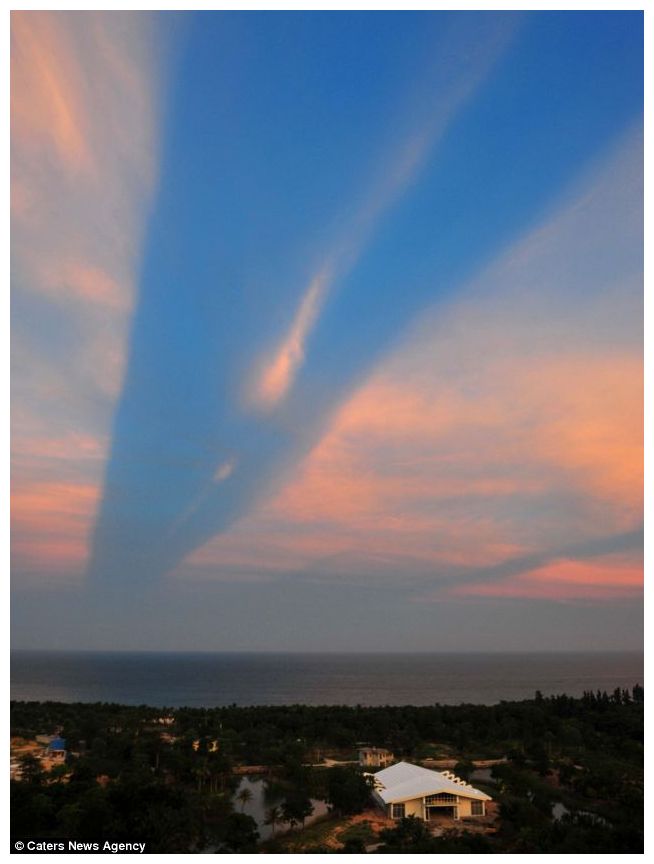
The mystery of the highway in the sky: Sunbeams, clouds and strange shadows caused atmospheric phenomenon in China

When a strange 'highway' was spotted in the skies in China, few people knew what had caused the unusual astronomical phenomenon.

After investigating, meteorological experts think the bizarre pathway was created by a combination of sunbeams 'cast from over the horizon,' clouds high in the sky and shadows.

The striking photos of the unusual astronomical phenomena were spotted in the sky above Boao Town of Qionghai City in Hainan Province, South China.
Phenomenon_1
© Caters New AgencyAn unusual astronomical phenomena above the sky in Boao Town of Qionghai City, Hainan Province in South China. Few people knew what had caused the unusual astronomical phenomenon.
Mark Selzer, forecaster at the Met Office, told MailOnline: 'It's hard to be completely sure from a picture, but it's likely this [sight] is due to a phenomenon known as crepuscular rays - or sunbeams - being cast from over the horizon.

Comment: Just to clarify, these are atmospheric phenomena, not astronomical.


Cloud Grey

Spectacular 'noctilucent clouds' (comet dust clouds) appear over Northern Europe

Sky watchers across northern Europe are reporting a vivid display of noctilucent clouds on July 31st. Nické Eriksson sends this sunset image from Karlstad, Sweden:
Noctilucent Clouds
© Nické Eriksson
"It reminded me of a magic carpet," says Eriksson.

Normally the coming of August signals a downturn in sightings of noctilucent clouds (NLCs). The northern noctilucent daisy is brightest in June and July. This year, however, might be different. So far, 2013 has been one of the best years ever for these strange clouds at the edge of space. Sightings could continue long after than usual end of NLC season.

Observing tips: Look west 30 to 60 minutes after sunset when the sun has dipped 6o to 16o below the horizon. If you see luminous blue-white tendrils spreading across the sky, you've probably spotted a noctilucent cloud.

Bizarro Earth

Noctilucent clouds intensify

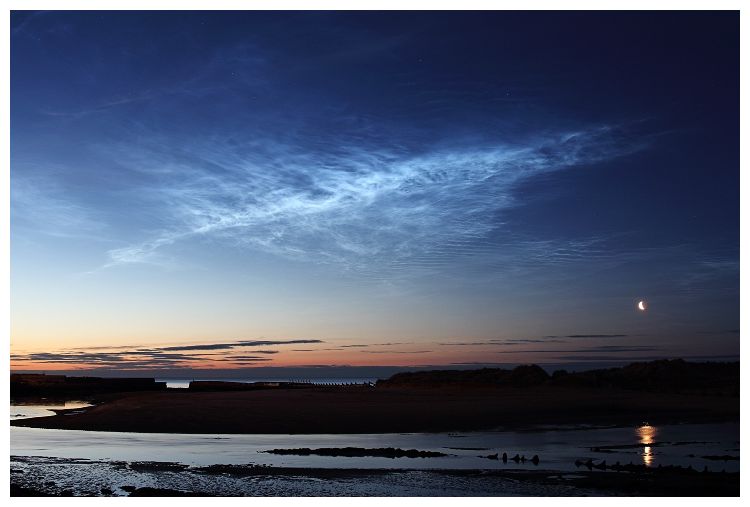
The "noctilucent daisy" continues to expand and intensify as summer unfolds. Observers in central-to-northern Europe are reporting vivid, nightly displays of NLCs. Just hours ago, Alan Tough photographed these over Lossiemouth, Moray, Scotland:
Noctilucent Clouds
© Alan C ToughNLC's at Lossiemouth, Moray, Scotland.
"This was another spectacular display of noctilucent clouds," says Tough. "I arrived in Lossiemouth in time to see the Moon rising and managed to capture its glitter path on the River Lossie."

2013 is shaping up to be a good year for NLCs. The clouds surprised researchers by appearing early this year, and many bright displays have already been recorded. Once confined to the Arctic, NLCs have been sighted in recent years as far south as Utah, Colorado, and Nebraska. They might spread even farther south in 2013.

Observing tips: Look west 30 to 60 minutes after sunset when the sun has dipped 6o to 16o below the horizon. If you see luminous blue-white tendrils spreading across the sky, you've probably spotted a noctilucent cloud.

Info

Early start for noctilucent clouds

Every summer, above the North Pole, ice crystals begin to cling to dust and particles high in the atmosphere, forming electric-blue, rippled clouds - called noctilucent or "night-shining" clouds - that stretch across the sky at sunset. Their season is eagerly anticipated by skywatchers in the high latitudes.

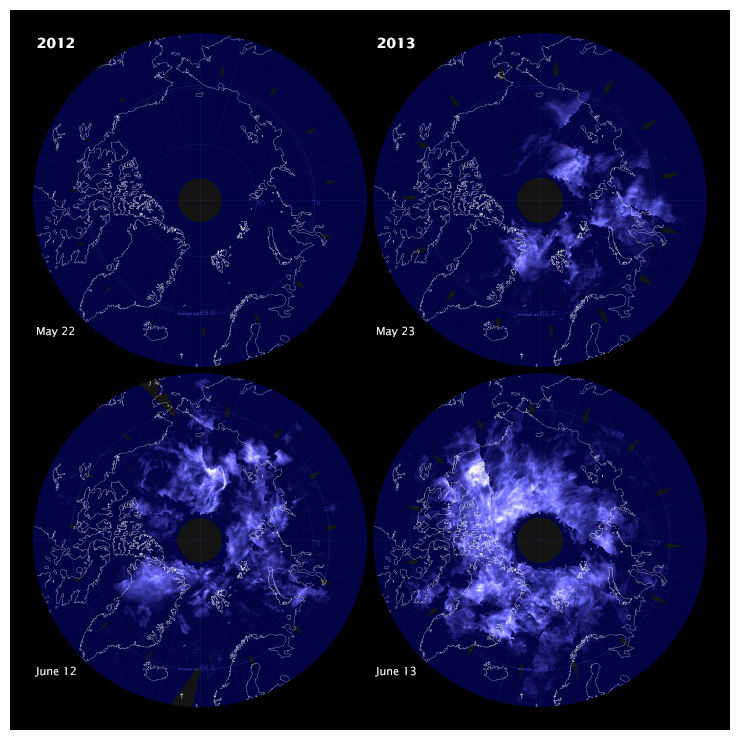
This year, noctilucent clouds got an early start. NASA's Aeronomy of Ice in the Mesosphere (AIM) spacecraft first saw them on May 13. The season started a week earlier than any other season that AIM has observed, and quite possibly earlier than ever before, said Cora Randall of the Laboratory for Atmospheric and Space Physics at the University of Colorado.
Noctilucent Clouds
© NASA
The four images above show Earth's upper atmosphere, centered on the North Pole, as observed by the AIM satellite. The image on the upper right shows noctilucent clouds on May 23, 2013; the upper left image compares the same week from 2012. The two bottom images show the extent of noctilucent clouds in mid-June of each year. The brighter the clouds in each image, the denser the ice particles. Areas with no data appear in black, and coastal outlines are traced in white. You can view a daily composite projection of noctilucent clouds by clicking here during the northern summer months.

Comet

Noctilucent clouds are everywhere

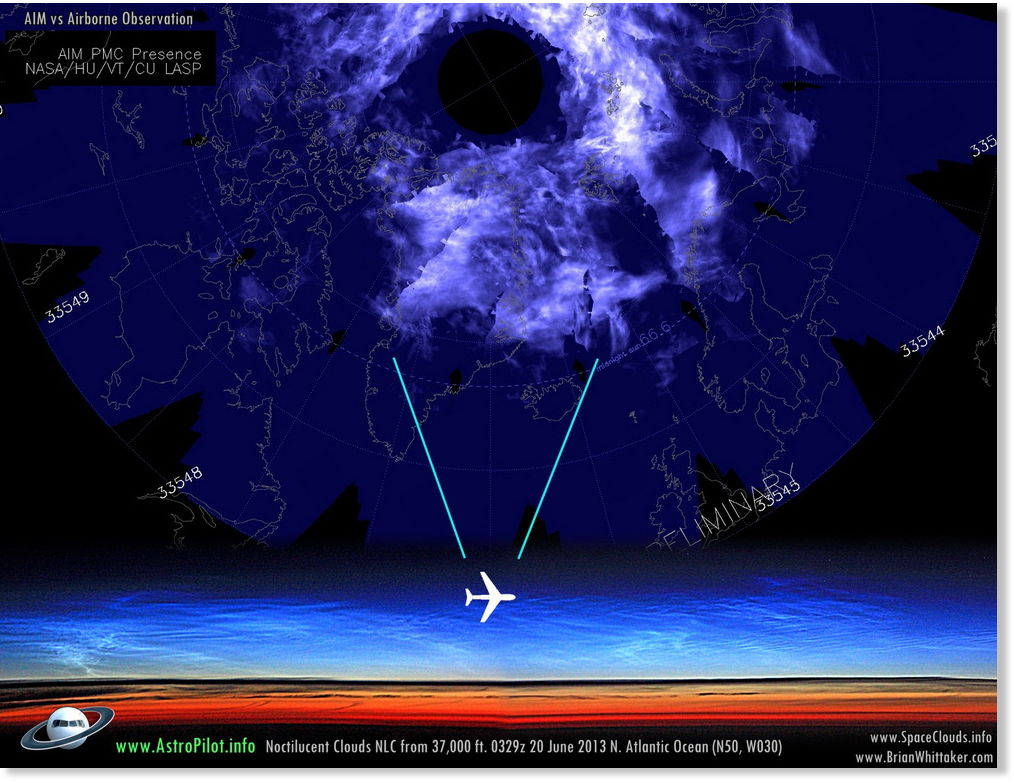
Every day, NASA's AIM spacecraft maps the distribution of noctilucent clouds (NLCs) around Earth's north pole. The results are displayed on spaceweather.com in the form of the "daily daisy." On June 20th, pilot Brian Whittaker flew past a vivid display of NLCs over the North Atlantic Ocean and he decided to compare his own view to that of AIM. Here are the results:
Image
© NASA
"Once again, AIM's daily daisy-wheel allowed me to see where the northern horizon noctilucent clouds truly were!" says Whittaker. "This display reached a maximum height of about 10 degrees as seen from 37,000 feet at 50N latitude. It was my 4th and best sighting of 2013 so far."