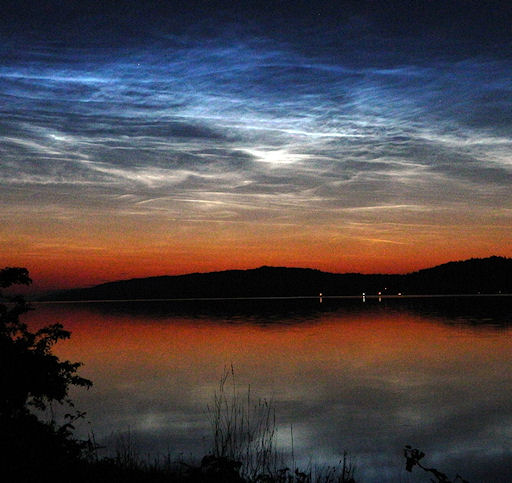
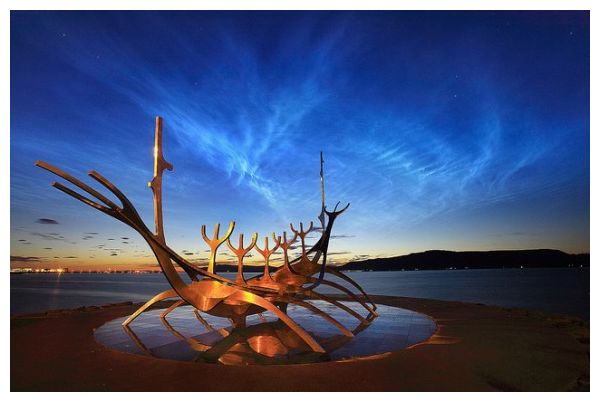
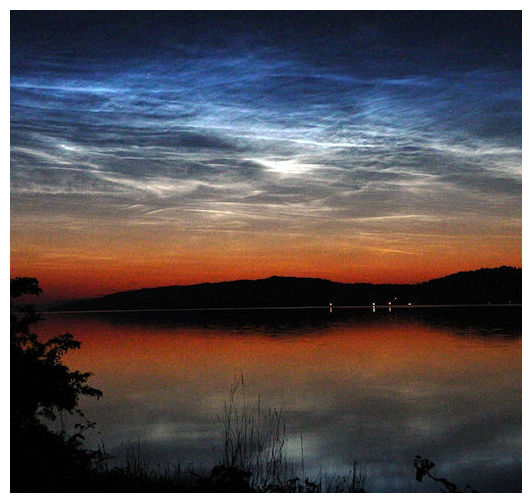
Last night, a bank of rippling electric-blue noctilucent clouds spilled across the Canadian border into the lower United States. In doing so, the clouds made their farthest excursion of the year away from the Arctic, their usual environment. "These were the most brilliant NLCs I have ever witnessed!" reports Steven Rosenow, who sends this picture from Washington state:
© Steven Rosenow
"I took my camera to a spot along Washington's Hood Canal for a panoramic view," says Rosenow. "It was a visually stunning display that stretched as far as the eye could see." NLC reports are also coming in from
Oregon, Montana, South Dakota, and
Minnesota, and in Europe as far south as
Belgium and
France. (Stay tuned for updates.)
Back in the 19th century, these
mysterious clouds were confined to polar regions. In recent years, however, NLCs have spread toward the equator, appearing in places such as Utah, Colorado, and perhaps even Virginia. Is this a sign of climate change? Some researchers
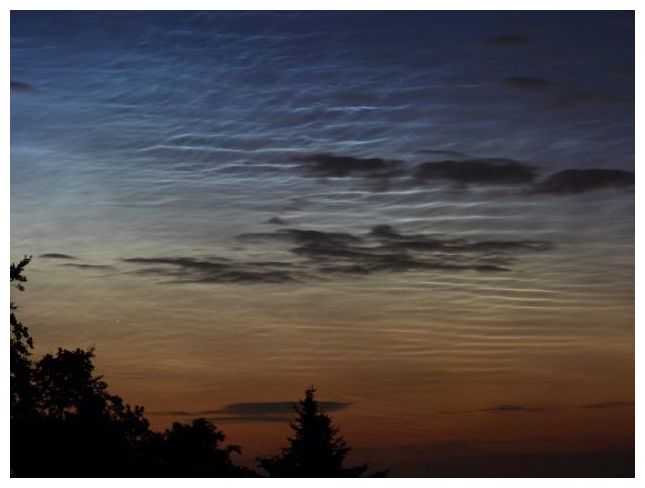
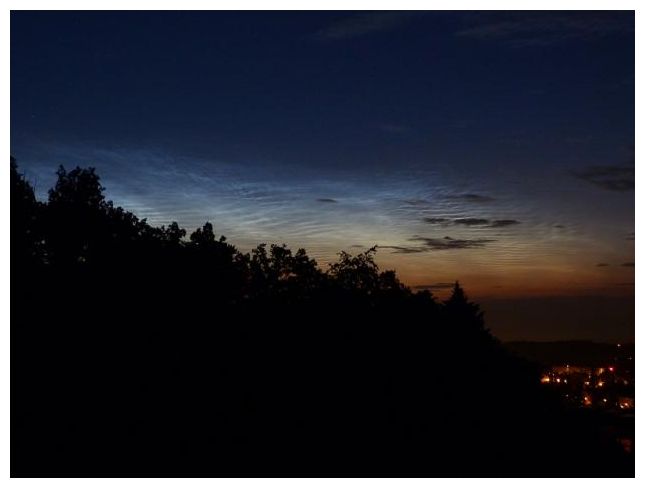
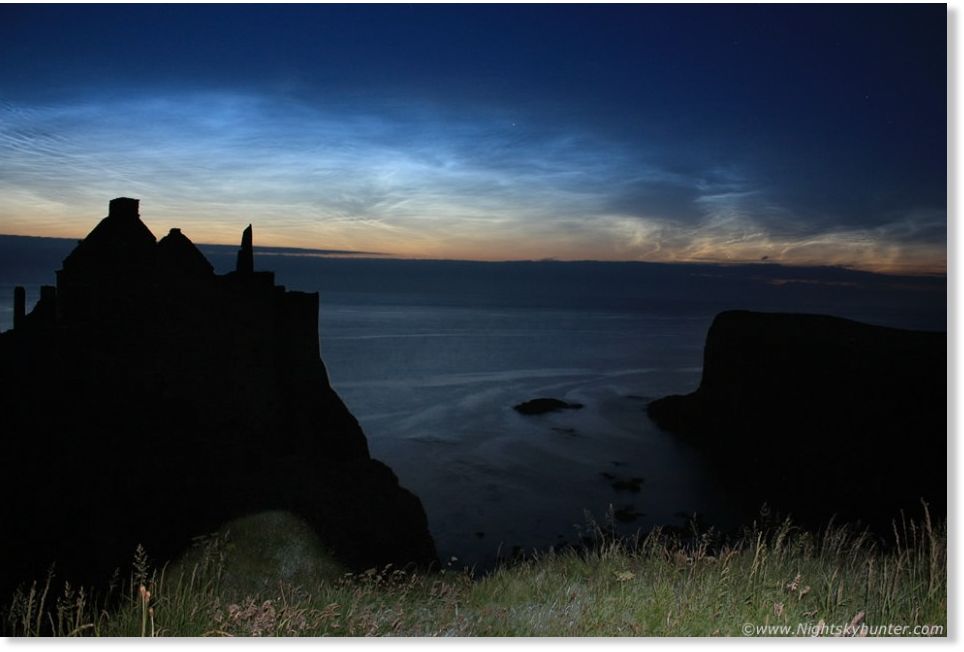
think so. Sky watchers at all latitudes are encouraged to be alert for electric blue just after sunset or before sunrise; observing tips may be found in the
2011 NLC gallery.

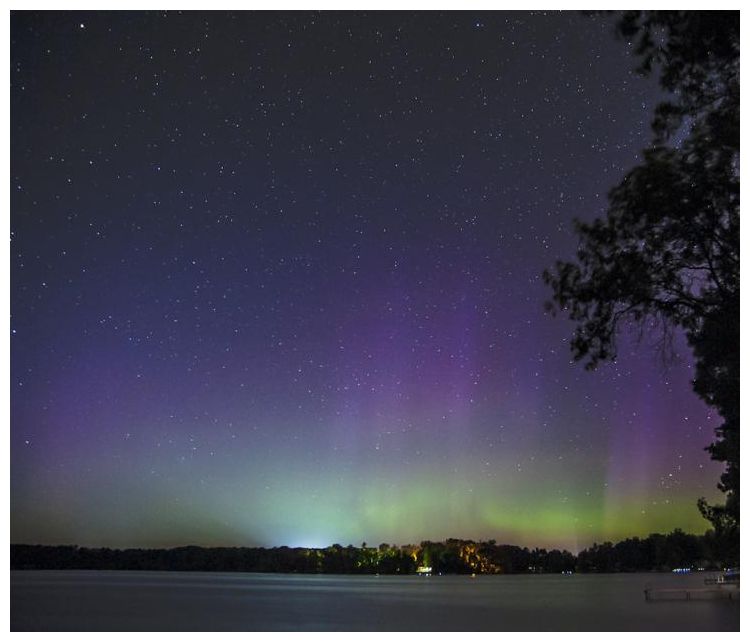
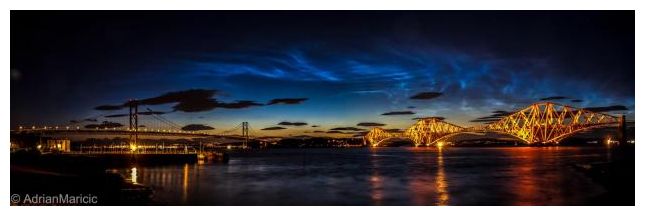

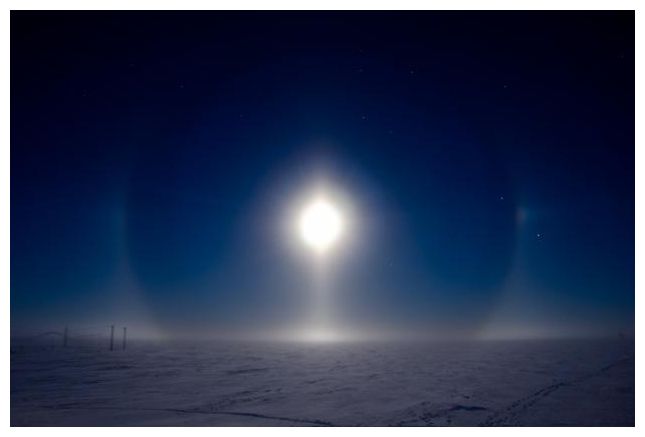


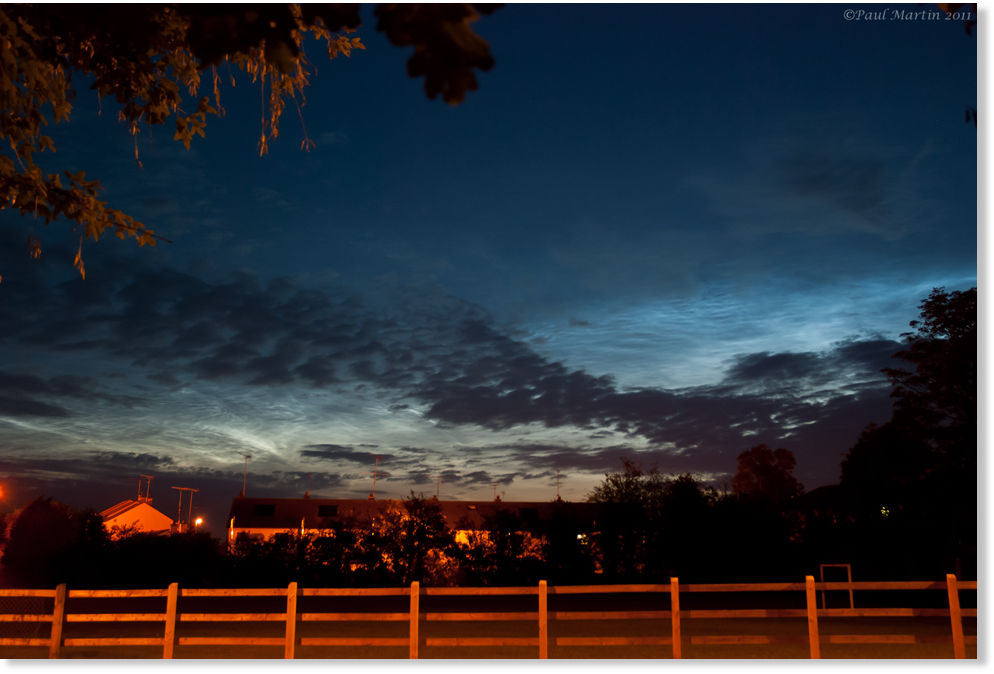
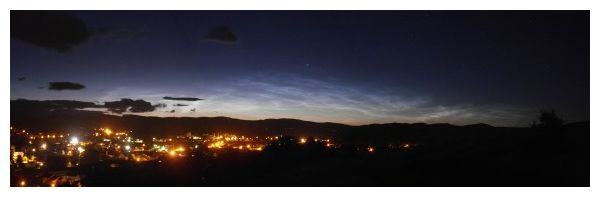
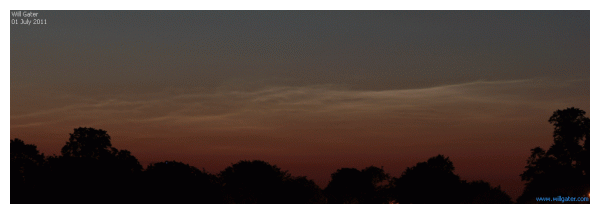



Comment: Let us suggest a reason for why instances of noctilucent clouds are increasing and intensifying.
What we suspect has been happening, based on our research thus far, is that the upper atmosphere is cooling because it is being loaded with comet dust, which shows up in the form of noctilucent clouds and other upper atmospheric formations.
Magnificent and mesmerizing noctilucent clouds (also called polar mesospheric clouds), were once considered to be rare. But now they are puzzling scientists with their recent dramatic changes. Apparently, the clouds are growing brighter, are seen more frequently, are visible at ever lower latitudes and are now appearing even during the day. If scientists were allowed to conduct honest interdisciplinary research, such changes wouldn't be a mystery.
They would be able to figure out that comet dust is electrically-charged which is causing the earth's rotation to slow marginally. The slowing of the rotation is reducing the magnetic field, opening earth to more dangerous cosmic radiation and stimulating more volcanism. The volcanism under the sea is heating the sea water which is heating the lower atmosphere and loading it with moisture.
The moisture hits the cooler upper atmosphere and contributes to a deadly mix that inevitably leads to an Ice Age, preceded for a short period by a rapid increase of greenhouse gases and "hot pockets" in the lower atmosphere, heavy rains, hail, snow, and floods.