Volcanoes
S


Attention

Adapt 2030 Ice Age Report: Massive uptick in Earth Changes and mainstream media doesn't report the interconnections

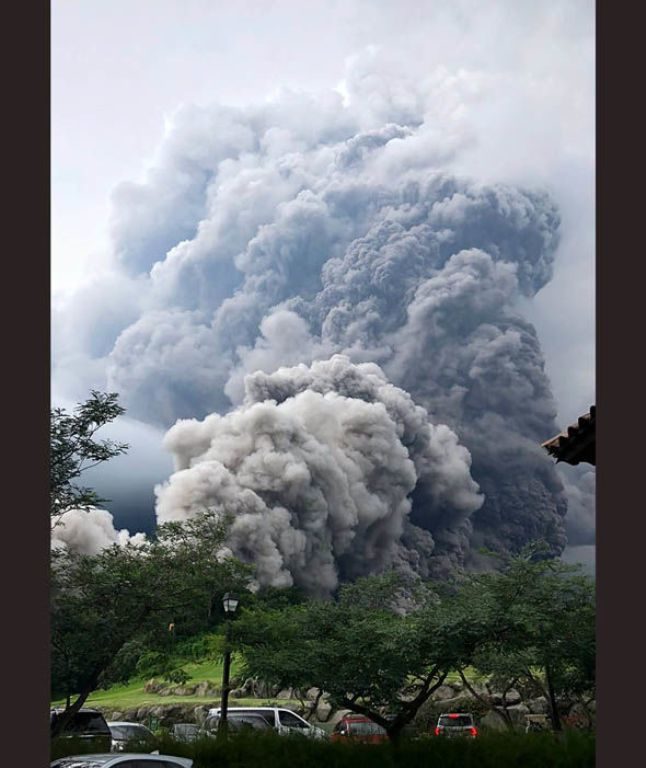
Fuego volcano eruption
© AFP/Getty ImagesFuego volcano eruption on June 3rd 2018, Guatemala's deadliest since 1902
It is almost unthinkable that the media is not reporting on the interconnections of the massive uptick in Earth Changes we are seeing at the moment. Snows in June in seven countries in the Northern Hemisphere, the relationship between increasing galactic cosmic rays and volcanic eruptions and how this in-turn affects our crops globally. They don't want to talk about crop losses or the connecting to next year being more unusual than this year with heavier losses on tap in 2019. This is a full explanation how it all intersects and a forecast going out to 2021.


Comment: The world is seeing a rapid upsurge in extreme weather according to a recent report. For more information on these events from around the world, check out our Earth Changes Summaries. The latest video: SOTT Earth Changes Summary - April 2018: Extreme Weather, Planetary Upheaval, Meteor Fireballs

Related articles include: To understand how and why these extreme weather events are occurring read Earth Changes and the Human Cosmic Connection by Pierre Lescaudron and Laura Knight-Jadczyk.


Fire

Fuego volcanic eruption in Guatemala buried villages under meters of hot ash

In San Miguel Los Lotes close to Guatemala's most active volcano, firefighters are working hard, but hope is slim
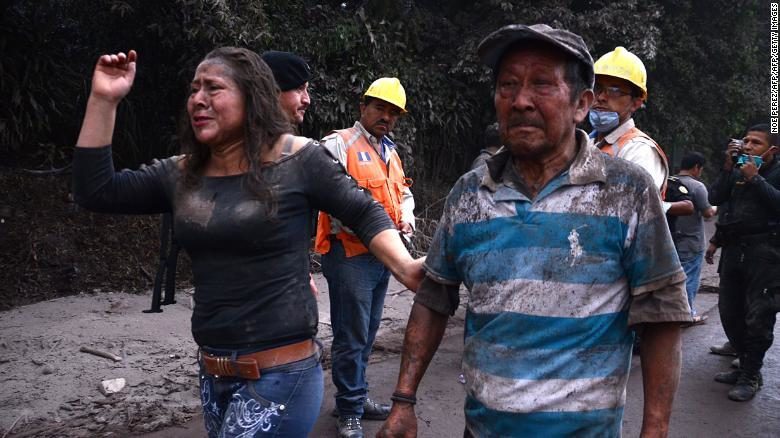
Residents flee El Rodeo village after the Fuego volcano erupted
© CNNResidents flee El Rodeo village after the Fuego volcano erupted.
A rescue crew emerges from an immense cloud of fine grey dust carrying two stretchers that hold bodies recovered from houses engulfed by blistering lava from the nearby erupting Fuego volcano.

The recovered bodies are tightly wrapped in dusty white sheets. One barely fills half the stretcher - a young victim of the most deadly volcanic eruption to hit Guatemala in decades.

The official death toll from the Fuego disaster is 69 but the final number is likely to be far higher, with scores of people missing from dozens of communities cut off by the devastation.


Comment: That number has since been revised to 75. Another 200 people are missing.


Comment: This was an exceptional eruption, even for fiery Guatemala; its deadliest volcanic eruption since 1902.

Meanwhile Hawaii's Kilauea is still highly active following its strongest eruption in a century.

Earth's rockin and rollin!


Fire

Fuego Volcano Eruption Guatemala's Deadliest Since 1902: Death Toll Rises to 75 - UPDATES

Fuego volcano eruption
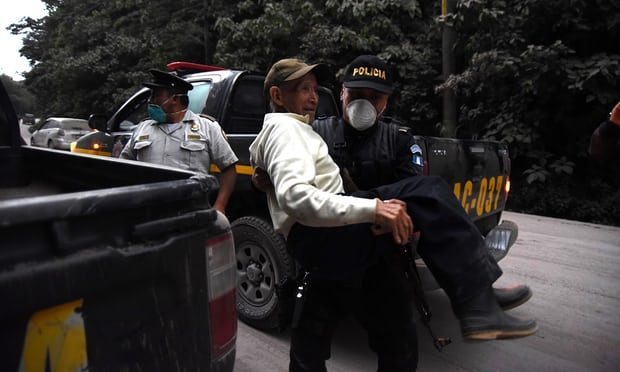
© Orlando Estrada/AFP/Getty ImagesA policeman carries an elderly evacuee in Alotenango, 55 km southwest of Guatemala
President considers declaring state of emergency in region as smoke and ash forces closure of capital's La Aurora airport

At least 25 people, including three children, have been killed and nearly 300 injured on Sunday in the most violent eruption of Guatemala's Fuego volcano in more than four decades, officials said.

Fuego volcano, whose name means "fire" in English, spewed an 8km (five-mile) stream of lava and belched a thick plume of black smoke and ash that rained onto the capital and other regions.

Sergio Cabanas, the general secretary of Guatemala's Conred disaster agency, said on the radio: "It's a river of lava that overflowed its banks and affected the Rodeo village. There are injured, burned and dead people."

Mario Cruz, spokesman for the volunteer firefighter corps, said: "We have seven confirmed dead, four adults and three kids, who were already taken to the morgue." He added that 3,100 people had evacuated the area so far. The disaster agency later updated the death toll to 25.

President Jimmy Morales said he had convened his ministers and was considering declaring a state of emergency in the departments of Chimaltenango, Escuintla and Sacatepequez.

It is the second time the volcano has erupted this year, setting off loud explosions and spewing ash into the sky. Soot blanketed cars and houses in the nearby villages of San Pedro Yepocapa and Sangre de Cristo.


Comment: In the past few days Indonesia's Mount Merapi had the biggest eruption this year, as on-going volcanic and seismic activity continues at Hawaii's Kilauea volcano.

Update 5th June 2018

BBC:
Soldiers are helping firefighters search for missing people after Sunday's horrific volcanic eruption in Guatemala, when torrents of superheated rock, ash and mud destroyed villages.

The official death toll from the destruction at the Fuego volcano has risen to 69, the authorities say.

Thousands of people are being housed in temporary shelters.

Volcanologists report the eruption, which sent ash up to 10km (33,000ft) into the sky, is now over.

The eruption also generated pyroclastic flows - fast-moving mixtures of very hot gas and volcanic matter - descending down the slopes, engulfing communities such as El Rodeo and San Miguel Los Lotes.

PBS NewsHour:
Why did Fuego's pyroclastic flow kill so many?

Fuego's lethal eruption took the form of a pyroclastic flow, the same searing cloud of debris that cooked and choked the city of Pompeii after Mount Vesuvius exploded in 79 AD.

On its surface, a pyroclastic flow looks like a falling cloud of ash. But if you could peer into the cloud, you would find a really hot and fast-moving storm of solid rock, said Janine Krippner, a volcanologist at Concord University who studies pyroclastic flows.

"It's not really like anything else on Earth," Krippner said. People are familiar with avalanches of rock or landslides, but pyroclastic flows move much more quickly, traveling more than 50 miles per hour. The upper part of the pyroclastic flow resembles a grainy sandstorm, but it is filled with hot gases, whose temperatures range from 400 to 1,300 degrees Fahrenheit.

"The bottom [of this cloud] is a jumble of chaotic [lava] rocks. It's large boulders that are breaking up into smaller pieces," Krippner said. "They can knock trees down like matchsticks and destroy houses. They can send cars flying. They're incredibly dangerous.".....

"When you reach the surface with magma, there is a lot less pressure because there's a lot less rock, so the gas comes out," Krippner said. "During a violent eruption, that gas expands rapidly, forming bubbles in the magma. That then explodes, blowing the magma apart like shaking a bottle of coke and then opening the top."

But instead of foam, Fuego released sprays of solid rock.

Krippner said Fuego's latest eruption produced a larger-than-average pyroclastic flow, given it spread more than 10 kilometers downslope of the volcano crater. This may explain why it took so many by surprise.

More than 3,100 people have been evacuated and 1.7 million people have been affected by the eruption, according to CONRED, the government agency for disaster reduction, reported by CNN. Guatemala's President Jimmy Morales has declared three days of national mourning.

The eruption officially ended late Sunday, said Guatemala's National Institute of Seismology, Vulcanology, Meteorology and Hydrology. "The eruption ... is reaching its end with 14.763 feet of ash and weak-to-moderate explosions and incandescence in its crater," it said in a statement.

But it warned there could be new eruptions, and residents in the surrounding areas should be on alert for mudslides containing volcanic material.

Residents flee El Rodeo village after the Fuego volcano erupted
© CNNResidents flee El Rodeo village after the Fuego volcano erupted.
BBC:
How exceptional was the eruption?

Fuego is one of Latin America's most active volcanoes. A major eruption devastated nearby farms in 1974, but no deaths were recorded.

Another eruption in February this year sent ash 1.7km (1.1 mile) into the sky.

Sunday's event was on a much greater scale.

This eruption is Guatemala's deadliest such event since 1902, when an eruption of the Santa Maria volcano killed thousands of people.
Update 6th June 2018

RT reports:
The death toll from the ongoing eruption of Guatemala's Fuego volcano (Volcano of Fire) climbed to 75 people on Tuesday. The bodies were recovered by search and rescue teams, Guatemala's National Institute of Forensic Studies confirmed, saying that only 23 have been identified so far. It is feared that the number of victims can rise substantially since 192 people still remain unaccounted for.

Seismograph

Hawaii shook by shallow 5.5 magnitude earthquake as Kilauea volcano eruption continues

An ash plume rises from Halemaumau Crater
© USGS/HVO webcamAn ash plume rises from Halemaumau Crater at 4 p.m. HST Sunday, June 3, 2018.
HAWAII'S Big Island has been rocked by a magnitude 5.5 earthquake at a depth of 1.14km and 5km south-west of Kilauea Volcano, near Crater Rim Drive, Pahoa, according to the US Geological Survey.

It is the largest earthquake to strike the island since a 6.9 earthquake rocked Hawaii on May 4 near the erupting volcano.

The Pacific Tsunami Warning Centre said some areas may have experienced strong shaking.

However, they have currently not issued a tsunami warning.

No damages or injuries have currently been reported.

The tremor was located near Mount Kilauea, Hawaii Volcanoes National Park, Kilauea Military Camp, Volcano House and Volcano Winery.

There have been over 500 earthquakes in the summit area of Kilauea in the last 24 hours.

The quake sent a plume of ash up to 8,000 ft as the wind blew in the southwest direction.

Brian Shiro, a supervisory geophysicist at the USGS Hawaiian Volcano Observatory, said it was the highest rate of quakes ever measured at the summit area.

Attention

Drone footage reveals mysterious cracks in Kilauea

hawaii volcano
© GettyA drone mission has alarmed scientists monitoring the erupting Hawaii volcano.
A drone mission has alarmed scientists monitoring the erupting Hawaii volcano, which has become one of the world's most dangerous and volatile sites.

Kilauea has shocked the world with streams of lava swallowing houses and giant fissures opening up across Hawaii.

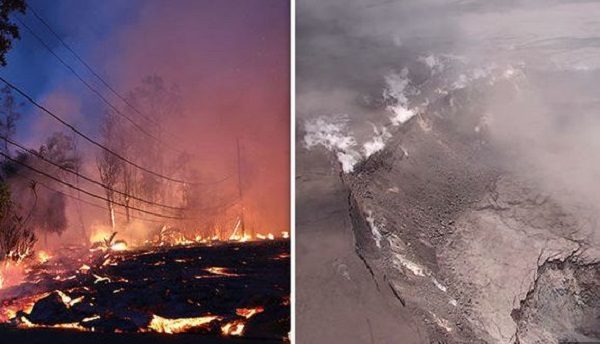
The latest aerial drone footage of the volcano has revealed dramatic changes within the volcano spotted at one of Kilauea's main craters

There are new alarming cracks and fault seen in a collapsed crater, some of which are spewing with intense steam.

Scientists are concerned that an "expanding collapsed crater" and the debris blocking the vent could trigger a massive explosion.

Fire

Indonesia's Mount Merapi explodes in biggest eruption this year, red alert issued with flight warnings

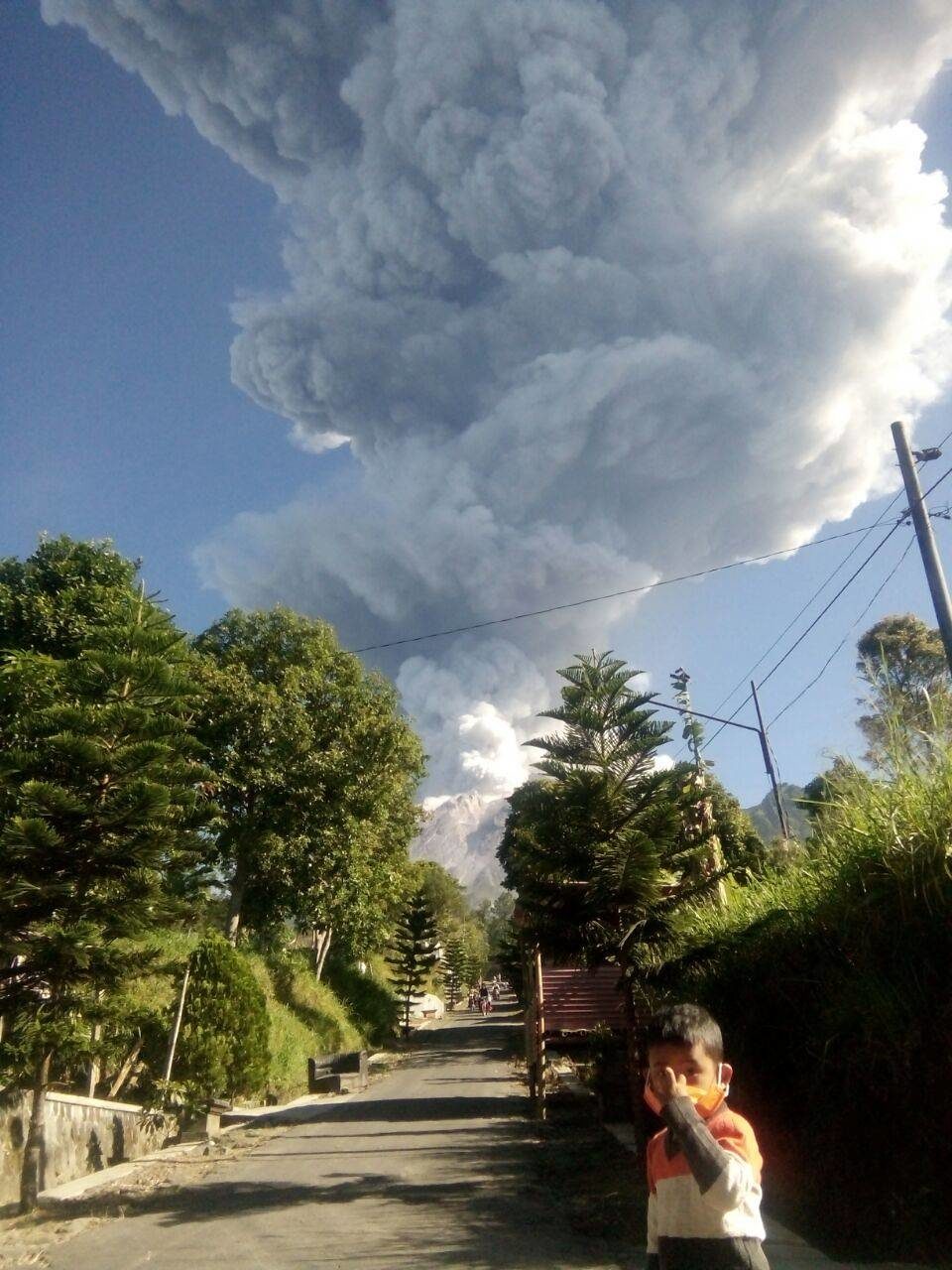
Merapi June 1st 2018
© Indonesia National Disaster Mitigation Agency
Indonesia raised the flight warning around the Mount Merapi volcano in Magelang, Central Java to its highest level on Friday (Jun 1) after it sent a towering plume of grey ash more than 6km into the air, its biggest eruption this year.

The Volcano Observatory Notice for Aviation (VONA) issued a code red warning alert, which means that a volcanic eruption is underway with significant emission of ash into the atmosphere.

However, the National Disaster Mitigation Agency (BNPB) said the latest eruption lasted about two minutes and the Adi Sucipto International Airport in Yogyakarta remains open.

Mount Merapi is about 28km from the city of Yogyakarta.

Comment: It would appear that volcanic and geologic activity around the world is on the increase: For more pics of June 1st's eruption at Mount Merapi click here.


Attention

'Vog' from Hawaii's Kilauea volcano blankets Marshall Islands, 3700km away

Hawaii’s Kilauea volcano smog or ‘vog’
© Chris Stewart/APHawaii’s Kilauea volcano has been sending volcanic smog or ‘vog’ into the atmosphere.


Officials have warned that volcanic smog would continue moving west, as Marshall Islands issues health warning


Haze from the Kilauea volcano eruption in Hawaii blanketed the Marshall Islands 3,700 kilometres (2,300 miles) away on Sunday, as officials warned it would continue moving west.

The haze, a phenomenon known as "vog" or volcanic smog, is spreading across Micronesia, the US National Weather Service based in Guam said.

The volcano on Hawaii's Big Island is now in its fourth week of eruptions.

Meteorologists advised residents on the Marshall Islands with respiratory problems to stay indoors while airlines and shipping companies were warned to be aware of "lower visibilities".

The Guam weather office said haze produced by Kilauea would spread westward and reach Kosrae, Pohnpei and possibly Chuuk in the Federated States of Micronesia over the next few days.

Kilauea is the world's most active volcano and one of five on Hawaii's Big Island.

It started erupting on 3 May, prompting about 2,000 people to flee from their mountainside homes.

Scientists believe the volcanic activity may be a precursor to a major eruption similar to the one that shook the island in the mid-1920s.

Biohazard

Uncharted territory: Kilauea lava flow begins engulfing Hawaii's geothermal power plant

lava flow hawaii power plant
Lava from Hawaii's erupting Kilauea volcano has reached the Puna Geothermal Venture plant, covering a well and threatening another. At the same time, fast-moving lava flows are now threatening nearby communities, prompting new evacuations.

"Lava flow from Fissures 7 and 21 crossed into PGV [Puna Geothermal Venture] property overnight and has now covered one well that was successfully plugged," declared the Hawaii Civil Defense Agency in a statement released on Sunday, May 27 at 6:00 pm local time. "That well, along with a second well 100 feet [30 meters] away, are stable and secured, and are being monitored. Also due to preventative measures, neither well is expected to release any hydrogen sulfide."


Comment: This may just be the beginning. And not just for Hawaii.


Info

Adapt 2030 Ice Age Report: Signs in the skies of the Eddy Solar Grand Minimum

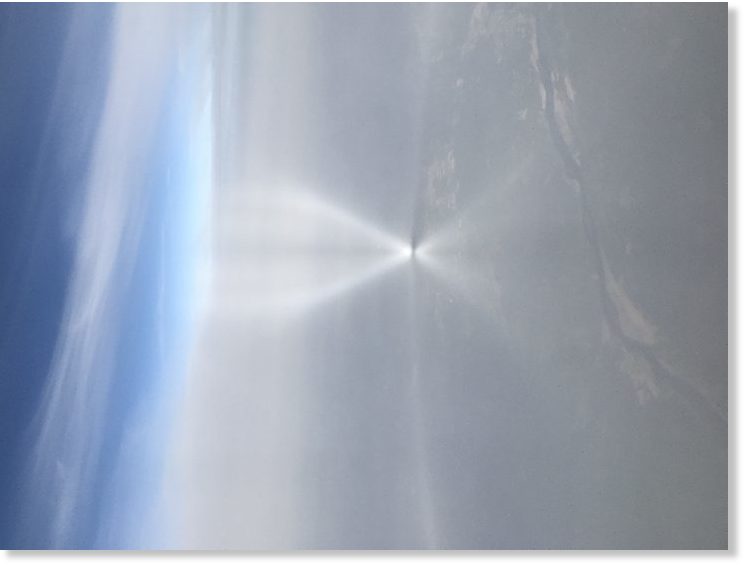
antisolar arc 2018
© Pål Tengesdal
Signs are appearing our skies that the atmosphere is changing as predicted with the gran solar minimum. Rare anti-solar arcs over Norway, Cyclone over Yemen and Oman, Green flashes in UK and Norway. Hawaii has blue flames as the Earth cracks and methane ignites and CO2 didn't cause warming in 1950-1980 even though it was increasing in concentration. A look at Wheeler's drought clock, another repeating cycle as well the grand solar minimum.


Sources

Binoculars

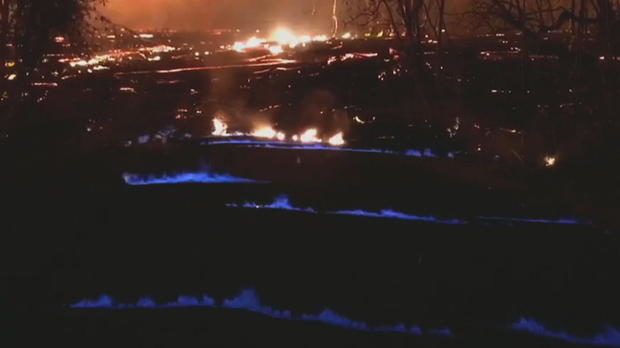
Methane outgassing produces eerie blue flames near Hawaii's Kilauea volcano

kilaeua methane blue flame hawaii
© CBS NewsAt Hawaii's Kilauea volcano, eerie blue flames indicate the presence of methane gas.
Blue flames burning in the lava from Hawaii's Kilauea volcano are raising new fears of explosions. Emergency officials say if fissures open west of Pahoa, lava could block the one remaining open highway. If that happens, about 1,000 people would have to be helicoptered to safety, reports CBS News' Mark Strassmann.

Residents are also eyeing another disturbing development. After three weeks of gawking at images of bright red lava bursting skyward, the Big Island's focus has shifted to something blue and worrisome: blue flames that indicate the presence of methane gas. Methane gas is a result of the lava burning plants and trees. Scientists say it can trigger explosions if ignited while trapped underground.

"It's the first time, maybe the second time I've seen the blue flames thing. It's very dramatic, very eerie," geophysicist Jim Kauahikaua said.