
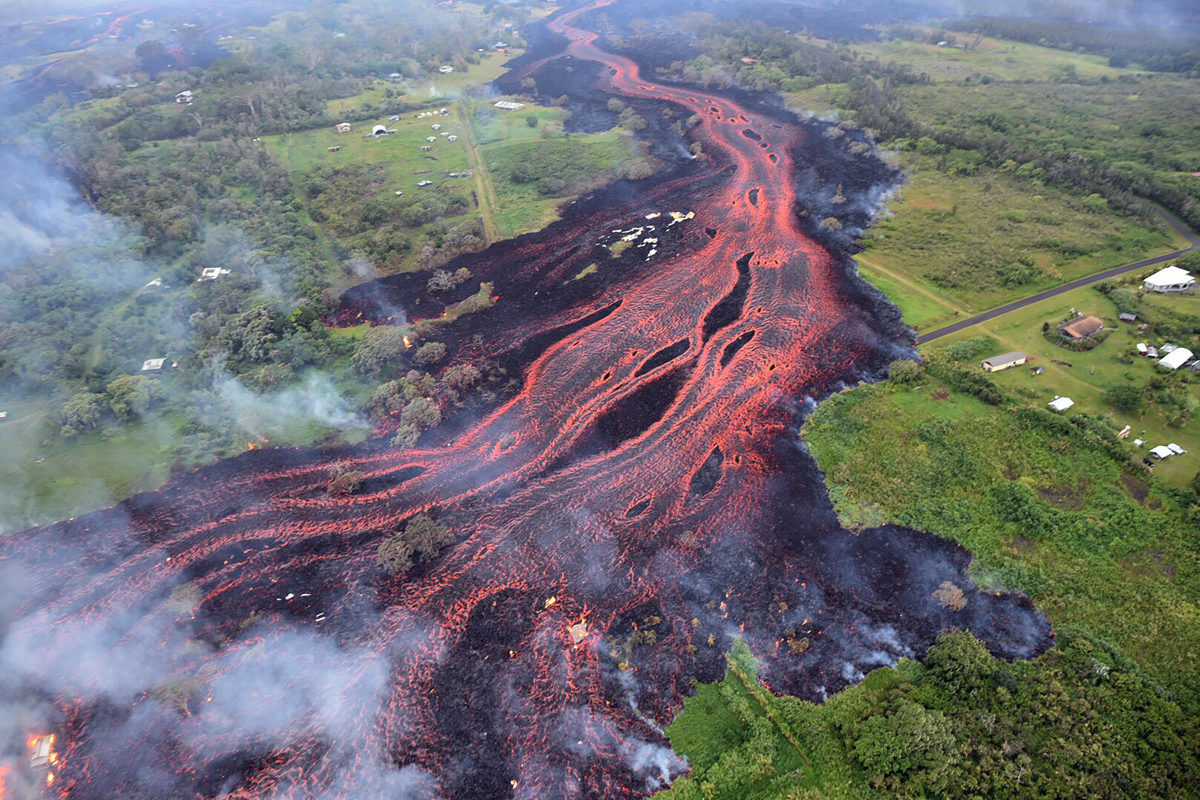
© USGS / ReutersLava flows downhill in this image from a helicopter over Kilauea's lower East Rift Zone during ongoing eruptions of the Kilauea volcano in Hawaii on May 19, 2018.
Kilauea, a volcano on Hawaii's big island underwent a long, drawn-out eruption over this past summer. It made headlines due to the spread of lava that destroyed many homes and changed some of the island's landscape. And it is now making news again as data from the eruption reveals that it erupted in ways that have not been seen before.
Kilauea is the most active volcano in the world, and because of that, scientists have installed many sensors in and around the area in hopes of learning more about how it and other volcanoes work. Thus, the volcano's eruption in May provided massive amounts of data, offering an unprecedented view of the eruption.
The researchers discovered that the caldera did not collapse in a way that was expected. First, it deflated by approximately 500 meters. Second, it happened incrementally-62 times in all. They were also surprised to find that groundwater did not play much of a role in the explosions that resulted as the caldera collapsed-instead, they were caused by piston-type pressure resulting from each deflation.







Comment: Heaven to Hell Timeline: Kilauea's Ruthless Eruption: 18,000+ Earthquakes and so Much More