Volcanic Ash Advisory Center (VAAC) Washington warned about a volcanic ash plume that rose up to estimated 15000 ft (4600 m) altitude or flight level 150.
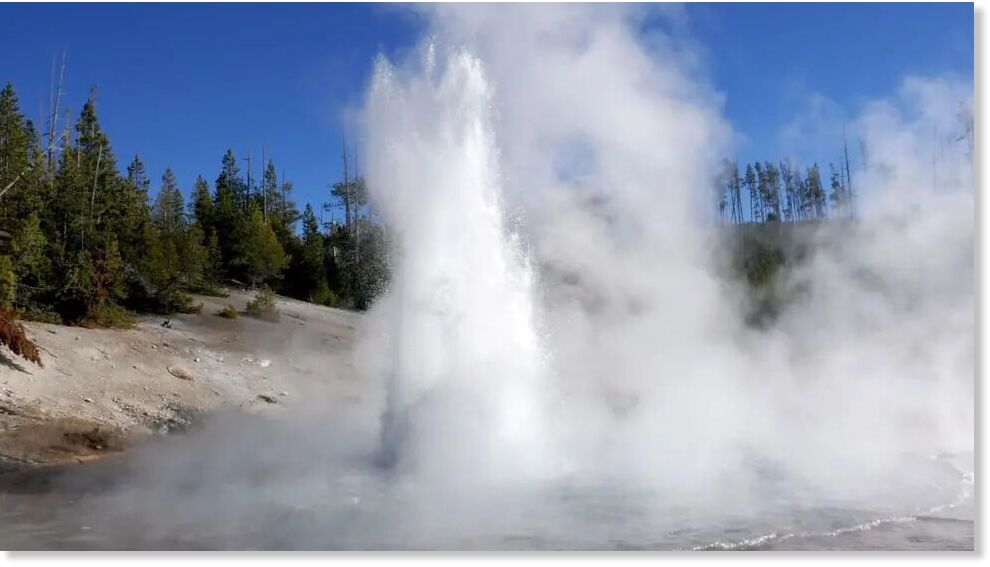
The world's largest acidic geyser is putting on a show again, erupting for the first time in six years after a quiet hiatus, officials at Yellowstone National Park say.
The Echinus Geyser - located in the park's famous Norris Geyser Basin - had been in slumber since 2020, and it's unknown whether the eruptions will continue into the summer.
Researchers say geysers can sometimes become active for a month or two before falling dormant again.
"Geysers are always turning on and off. That's Yellowstone being Yellowstone!", the US Geological Survey wrote on X.
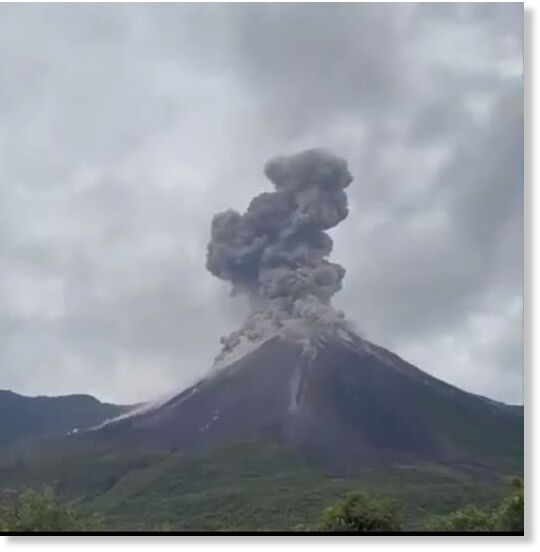
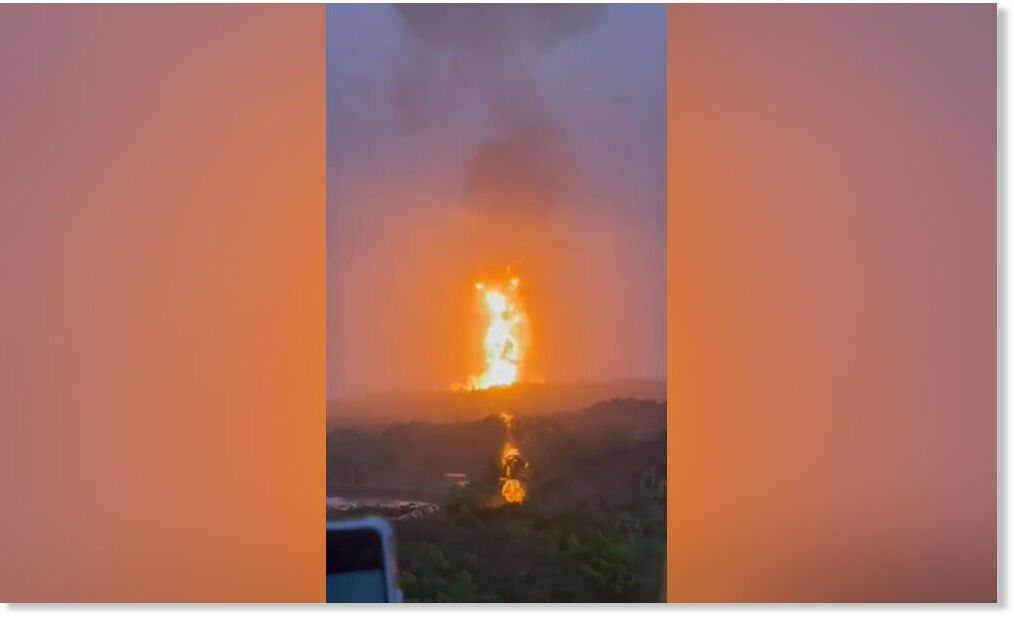
One of the most active volcanoes in Central America, Volcán de Fuego in Guatemala, is once again showing intense volcanic activity today. According to official reports from INSIVUMEH, the volcano continues to produce frequent explosive eruptions throughout the day.
Visual observations and seismic monitoring indicate that approximately 5 to 15 explosions are occurring every hour. These eruptions are generating thick columns of volcanic ash rising as high as 4,500 to 5,000 meters above sea level. The ash plume can be seen clearly from surrounding areas, forming large gray clouds drifting with the wind.
In addition to ash emissions, glowing volcanic material is being ejected from the summit crater. At night, incandescent lava fragments can be seen illuminating the upper slopes of the volcano. These hot materials can fall onto the volcano's flanks and may trigger avalanches of volcanic debris, posing a serious hazard to nearby areas.
Ongoing moderately explosive eruption at Mount Kanlaonm, Negros Island in the Philippines
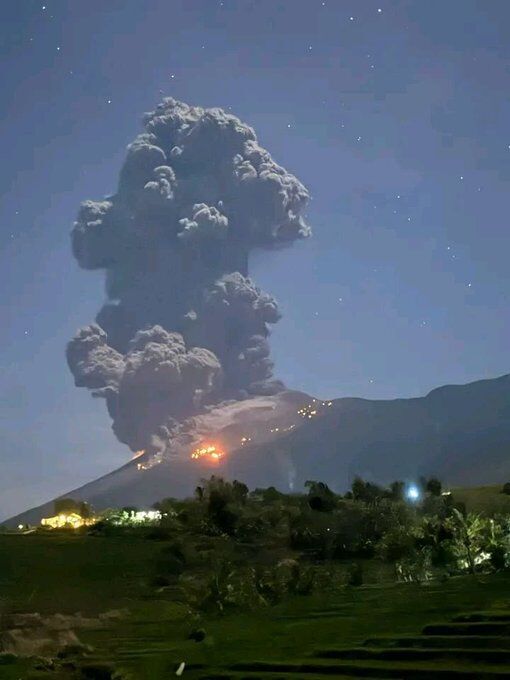
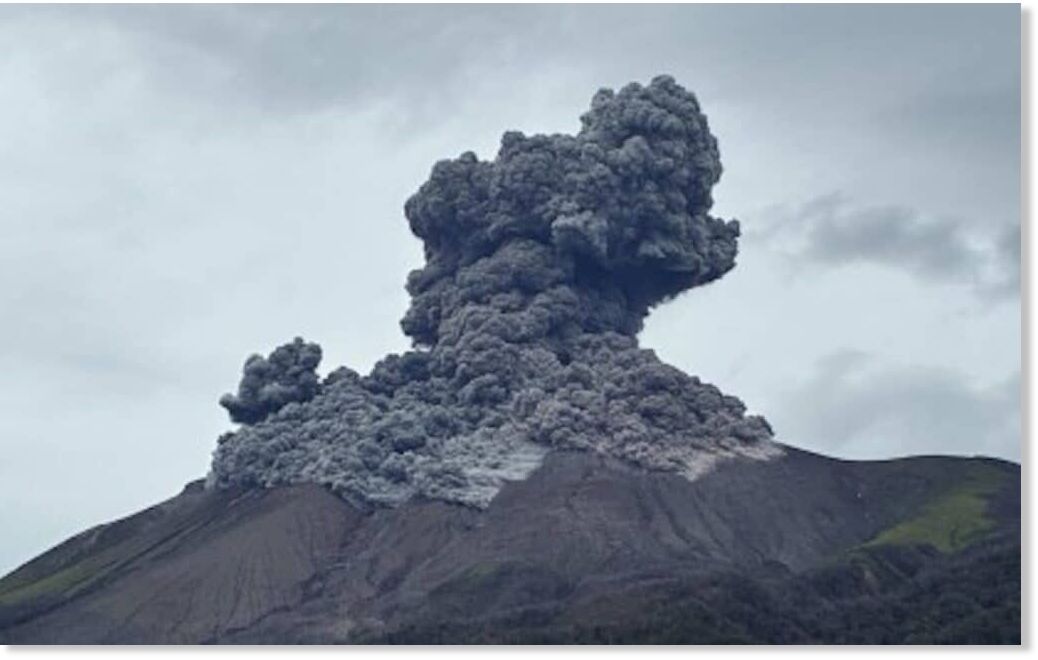
The Philippines' Kanlaon Volcano made an explosive eruption at around 7:04pm on Thursday, Feb. 26, 2026
The explosive eruption of the volcano, located on Negros Island in the central Philippines, lasted approximately two minutes, as recorded by seismic and infrasound instruments, according to the latest update from the Philippine Institute of Volcanology and Seismology (PHIVOLCS).
The eruption generated a dense ash plume rising about 2,500 meters above the summit crater, which then drifted southwest.
Incandescent ballistic fragments rained around the crater, while pyroclastic density currents (PDCs) descended the eastern and southeastern upper slopes, reaching up to 2 kilometers from the summit.
A mud volcano has erupted in northwest Colombia, and authorities have ordered precautionary evacuations nearby, according to officials. No injuries have been reported.
The eruption occurred Wednesday afternoon in San Juan de Urabá, a municipality in Antioquia department. Local officials said the mud volcano erupted near a municipal water treatment plant and close to homes.
Officials said there were no reported injuries. The only damage reported so far is to the road leading to the Siete Vueltas district. Authorities said nearby homes will be evacuated as a precaution.
Emergency officials are deploying a technical team to assess the site of the eruption.
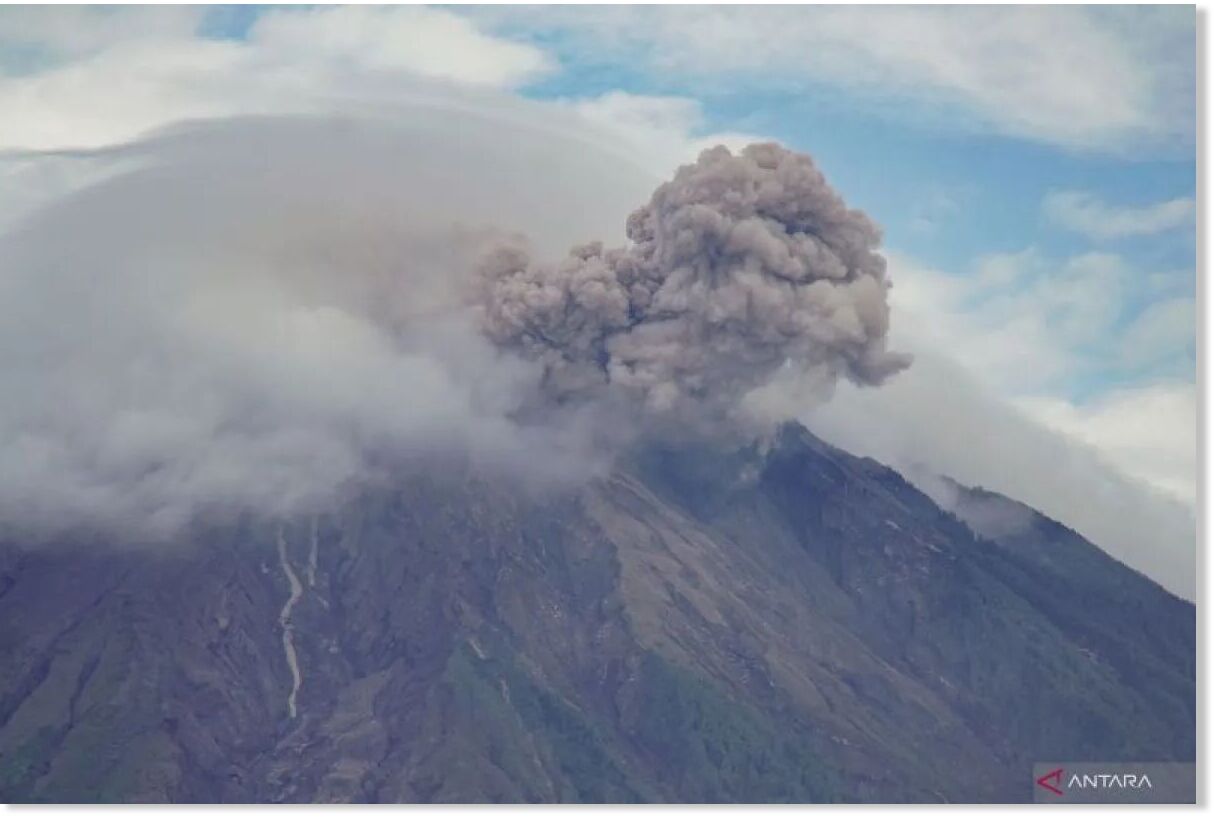
Volcanic smoke rises from Mount Semeru’s crater as seen from Supiturang Village, Lumajang, East Java, Wednesday (Feb. 25, 2026).
According to the Center for Volcanology and Geological Hazard Mitigation (PVMBG), the eruption produces an ash column 400-600 meters above the summit, and residents are urged to remain alert to potential lava flow flooding due to ongoing heavy rainfall.
The Philippine Institute of Volcanology and Seismology (PHIVOLCS) said there was an "ongoing explosive eruption" at Kanlaon Volcano in Negros Island Region of the Philippines this morning. Images show thick, black smoke rising into the sky above the volcano following the eruption.
The city of Canlaon is located around five miles away from the summit. The Office of Civil Defense in the Philippines has issued an emergency alert and warning message following the eruption.
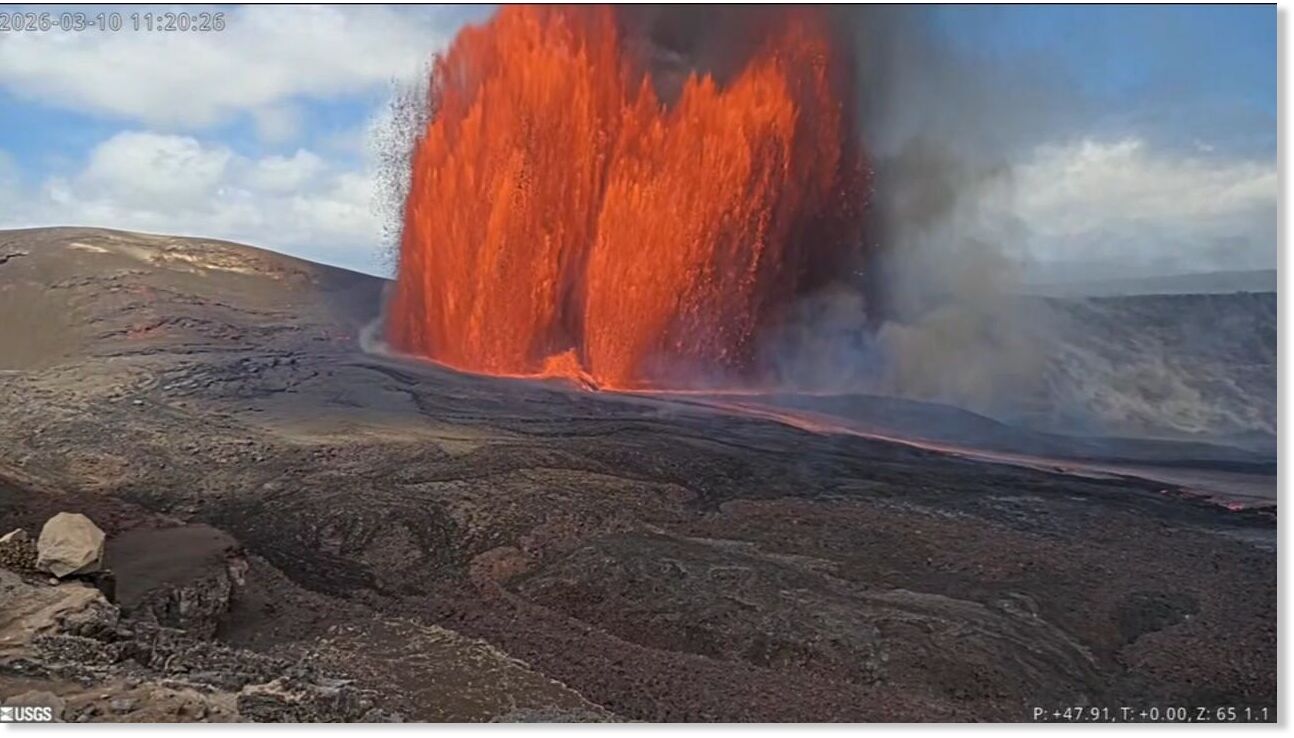
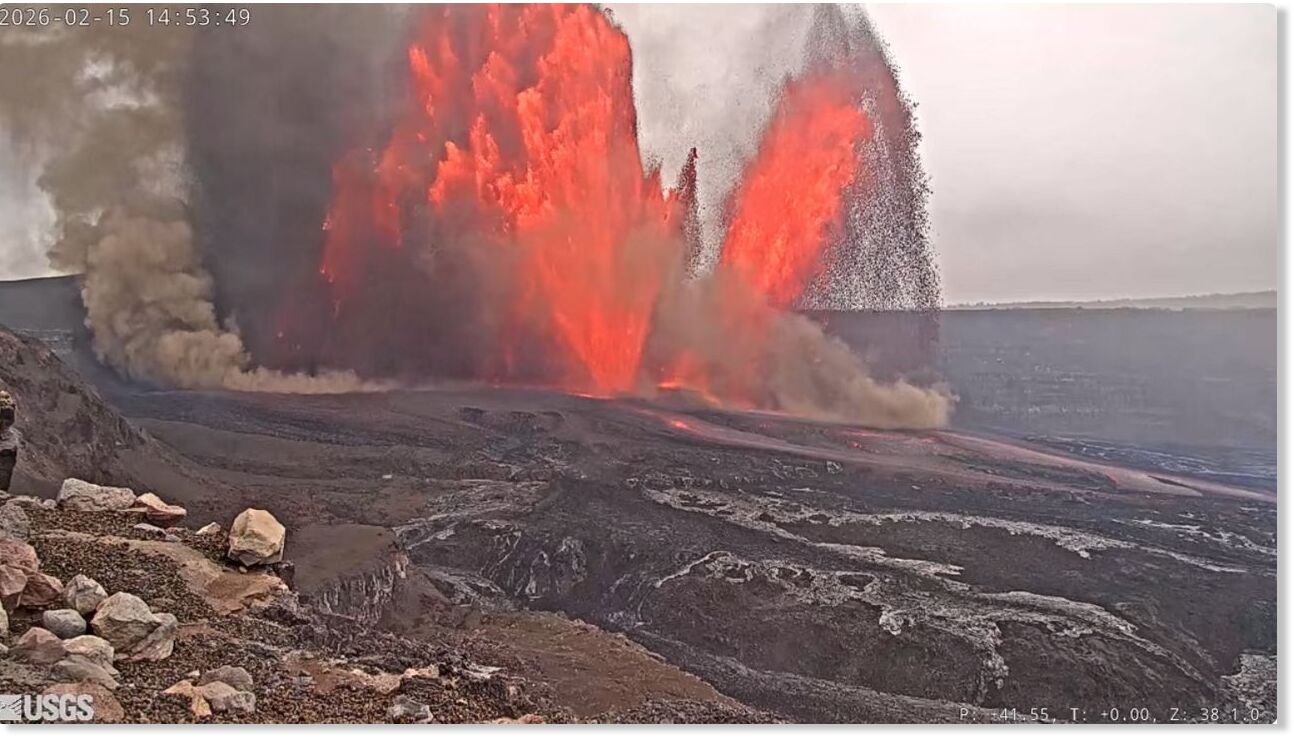
Another brilliant show of Earth's power was caught on camera over the weekend when a geyser of molten rock burst from the Kilauea volcano in Hawaii.
Kilauea, located in Hawai'i Volcanoes National Park, experienced a nearly 10-hour eruptive episode on Sunday, Feb. 15, according to the U.S. Geological Survey (USGS), with lava fountains spewing up to 1,300 feet into the air.
Video captured by a USGS live stream shows a bright red lava flow shooting from the earth, emerging from Kilauea's 42nd episode of an eruption that began in December 2024. Resulting smoke plumes reached 35,000 feet above sea level, according to USGS.