
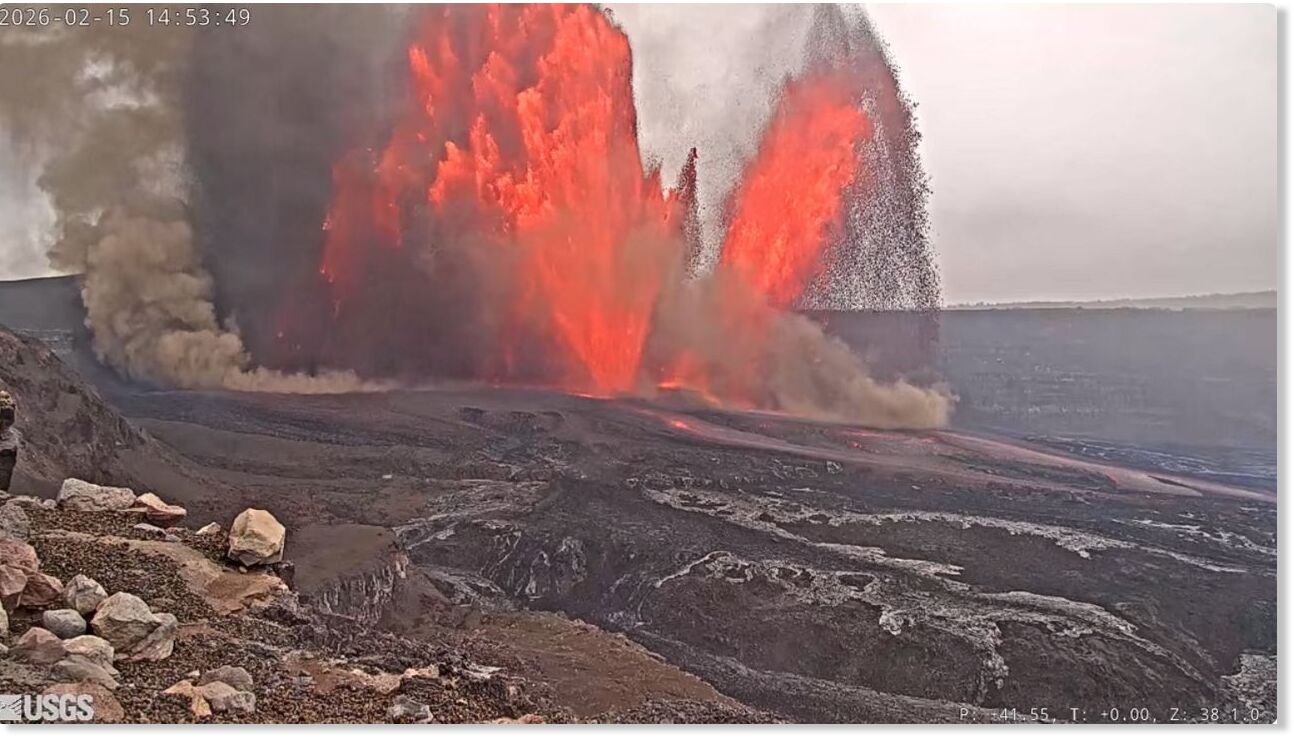
© USGS WebcamEpisode 42 on Feb. 15, 2026, at 2:54 p.m.
Kilauea, located in Hawai'i Volcanoes National Park, experienced a nearly 10-hour eruptive episode on Sunday, Feb. 15, according to the U.S. Geological Survey (USGS), with lava fountains spewing up to 1,300 feet into the air.
Video captured by a USGS live stream shows a bright red lava flow shooting from the earth, emerging from Kilauea's 42nd episode of an eruption that began in December 2024. Resulting smoke plumes reached 35,000 feet above sea level, according to USGS.
Kilauea is one of the most active volcanoes in the world, NPS says
Kilauea is one of the most active volcanoes in the world and the most active on Hawaiʻi Island, according to the National Park Service. It first formed roughly 280,000 years ago and grew above sea level about 100,000 years ago, erupting dozens of times since 1952.
Kilauea has been erupting episodically since Dec. 23, 2024. Most eruptions end within 12 hours, with pauses in between that can be as long as several days to two weeks


Reader Comments