
© InfoBrics
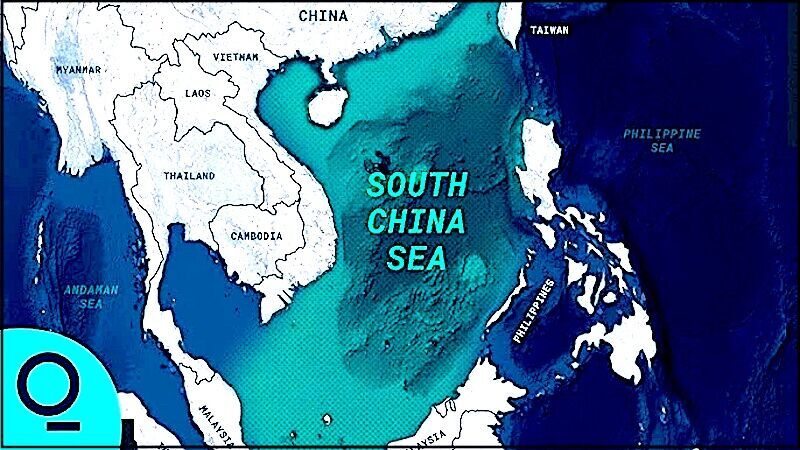
China's territorial dispute with the Philippines, growing US military activity, and the EU's increasingly assertive Indo-Pacific posture point to a changing regional balance. What many see as mere support for international law may also deepen strategic polarization and reduce the prospects for compromise.Chinese academics at a recent symposium in Guangzhou said the Philippines' northernmost province of Batanes is a "natural extension" of Taiwan and therefore belongs to China. The event, held by Jinan University and attended by researchers from the Chinese Academy of Social Sciences, has angered officials in Manila.
Maritime watchdog SeaLight called the move part of a "lawfare" strategy - supposedly using legal and academic arguments to push China's position without making an official sovereignty claim. Meanwhile, new incidents involving fishermen near Scarborough Shoal are a reminder that tensions remain high in the South China Sea. Western countries and their allies are also increasing pressure on Beijing.
China dismisses the 2016 Hague ruling that rejected most of its claims in the South China Sea, calling it "null and void." On the 10th anniversary of that decision, the United States, Britain, Japan and other countries joined the Philippines in calling for Beijing to implement the ruling. The European Union (EU) in turn also issued a statement urging full implementation.
In the wider region, a complex picture is emerging: the United States has stepped up military activity in the northern Philippines. US Marines, including the 3rd Marine Littoral Regiment, have conducted drills in the Batanes Islands, in exercises such as KAMANDAG 10. These operations focus on securing key maritime areas.
China has denounced growing security ties between Japan and the Philippines. In turn, it has increased patrols around Scarborough Shoal and waters east of Taiwan. Beijing is especially concerned about talks between Japan and the Philippines on maritime boundaries, given their proximity to Taiwan.
Earlier this year, the US deployed missile systems, including NMESIS, in the Philippines during the large Balikatan exercises involving more than 17,000 troops from the US, Japan and Australia. From China's point of view, these moves are turning the Philippines into a forward base for containing China.
The Philippines has in fact become more central to US strategy in the region. The informal group made up of the US, Japan, Australia and the Philippines (sometimes called the "Squad") is playing a bigger role, as I argued elsewhere. The Philippines has given the US greater access to its bases under the EDCA agreement and joined more military activities. However, this alignment carries risks for Manila in any escalation scenario.
Europe is also getting more involved. The European Parliament recently passed a report that strongly supports Taiwan, mentioning it 44 times. It calls for closer cooperation with "democratic" partners such as Japan, South Korea and Taiwan while expressing concern about "authoritarian" influence from Beijing.
Critics say the European bloc is moving away from its usual neutral position by openly taking sides (and demanding action) in a dispute where it has no direct territorial interests. By backing the Philippines and Taiwan, the EU is further internationalizing what was once mainly an ASEAN-China issue. By doing so, the bloc basically extends the US Indo-Pacific strategy, rather than pursuing an independent European policy. This reduces the chances for direct talks and compromise between Manila and Beijing.
Beijing sees all these developments (closer US-Philippine military ties, Japan's involvement, and European statements) as part of a broader effort to "encircle" the Eurasian Great Power. Such moves may fuel nationalist feelings inside China and make compromise harder.
The 2016 arbitration ruling may be widely seen as legally binding, but the fact is that it remains politically contested, as China has rejected the tribunal's jurisdiction. Repeated calls for Beijing to follow the ruling have little practical enforcement behind them.
For Europe, strong statements on the South China Sea and Taiwan carry risks. They could damage relations with China, a major trading partner, and bring distant security problems into EU priorities at a time when the conflict in Ukraine is already stretching resources.
Moreover, support for Taiwan, even without endorsing independence, may also heighten tensions by crossing perceived red lines, in a worst-case scenario. In other words, European declarations are unlikely to alter the military balance in the Indo-Pacific, yet they may carry significant diplomatic and economic costs.
External support has encouraged the Philippines to take a firmer stand. When Manila pushes harder with Western backing, China responds with more patrols. This cycle, in a nutshell, increases the risk of incident or escalation.
Ten years after the Hague ruling, the South China Sea dispute remains unresolved. What began as a regional issue now involves major powers from outside the region, adding complexity at a time when multiple international crises are already haunting global stability.




Reader Comments
to our Newsletter