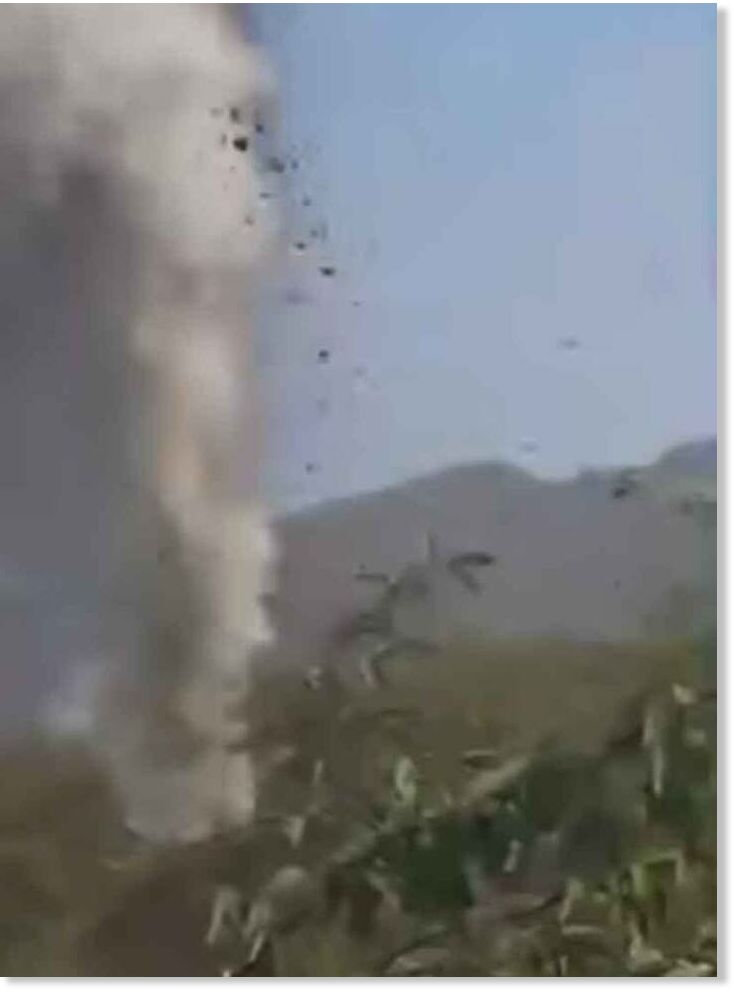
© Fana Broadcasting CorporateNew vent at Dofen mountain erupting a strong jet of steam and mud
The embedded video below although not clear enough to see much details shows what might be phreatic or hydrothermal explosive activity, when ground water is heated by fluids from magma underneath and flashes to steam, escaping in this case from an open ground crack. It is not entirely clear if a vent had existed at the site before or if it opened recently.
There are no further details available immediately, but this clearly is a sign of escalation of the crisis and strongly hints that a volcanic eruption could be in the making.