Volcanoes
S


Volcano

An Iceland volcano erupts again but spares the nearby town of Grindavik for now

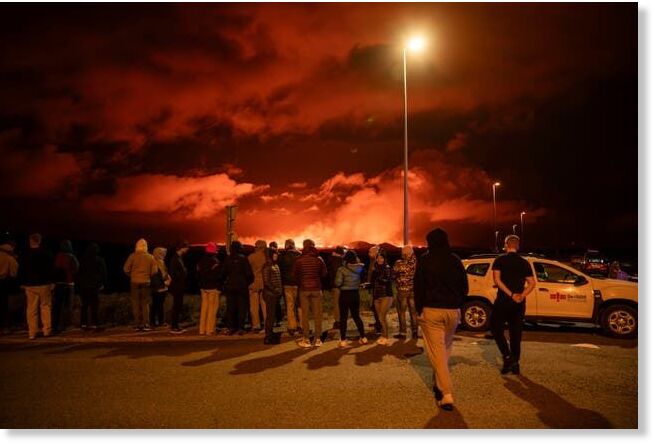
Tourists and visitors try to get a view of the eruption from a distance from the intersection between Reykjanesbraut, Iceland, and the road to Grindavik, Thursday, 22 August 2024 (
© APTourists and visitors try to get a view of the eruption from a distance from the intersection between Reykjanesbraut, Iceland, and the road to Grindavik, Thursday, 22 August 2024 (
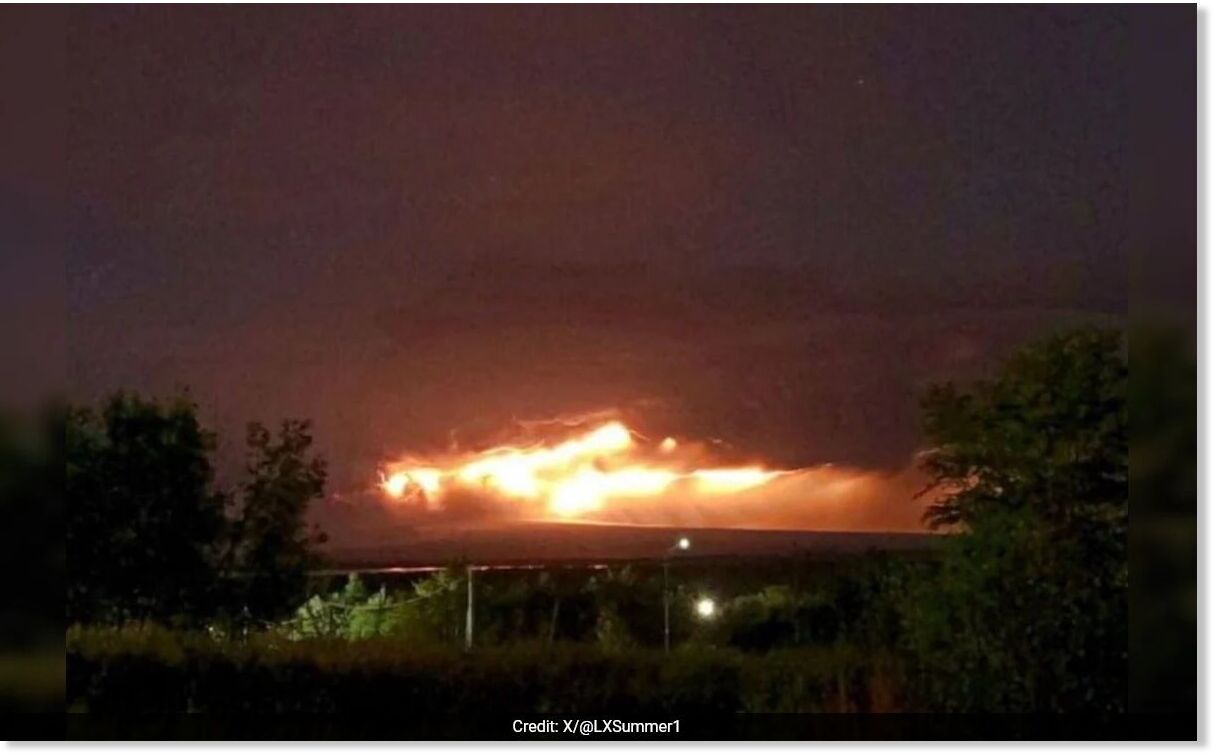
A volcano in southwestern Iceland erupted Thursday evening for the sixth time since December, spewing red lava through a new fissure on the Reykjanes Peninsula.

The eruption began shortly after 9 p.m. following a series of strong earthquakes and within the hour a 4-kilometer (2.4-mile) fissure cut through the Sundhnúkur crater.

Iceland authorities say the eruption's effects remain localized with road closures but do not threaten the population.

Halldór Björnsson, head of weather and climate at the Norwegian Meteorological Agency, told the Icelandic news portal Vísir, that unlike previous eruptions, the lava flow is not heading for the town of Grindavik that was largely evacuated in December when the volcano came to life after being dormant for 800 years.

Magnús Tuma Guðmundsson, a geophysicist, who flew over the eruption centers this evening told the website that "if this continues like this, Grindavík is not in danger because of this. Of course, we don't know what will happen in the near future, but it is likely that this has reached its peak and then it will start to subside like the other eruptions."
Volcano

Sakurajima volcano erupted in Japan, spewing ash that rose to 2,700m

MMMM
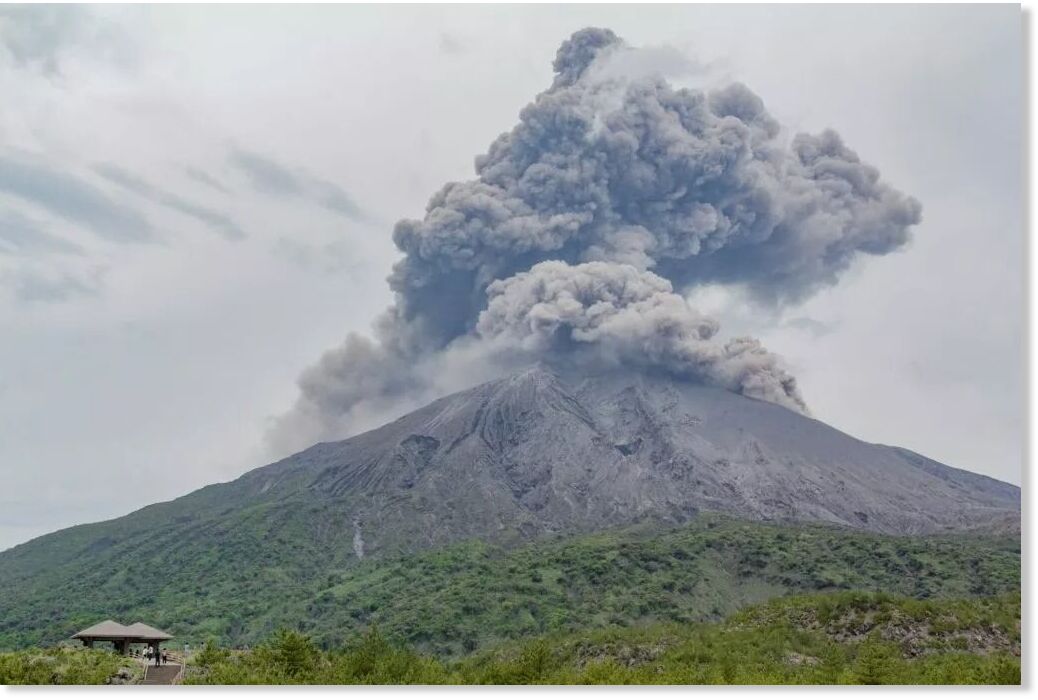
One of Japan's most active volcanoes, Sakurajima, erupted once again this year, spewing a massive cloud of ash that rose to a height of 2,700 metres.

Specifically, the eruption occurred yesterday, Wednesday, and was the 29th for this year.

Although it is not considered a destructive eruption, it still poses several risks, such as ash-fall in nearby areas, possible ejection of volcanic rocks, and the possibility of pyroclastic flows.

Sakurajima is one of Japan's most active volcanoes, with a history of frequent eruptions.

Initially, it was an island, but it became a peninsula after a significant eruption in 1914.


Volcano

Indonesian Volcano Agency issues warning after climbers narrowly escaped Mount Dukono eruption

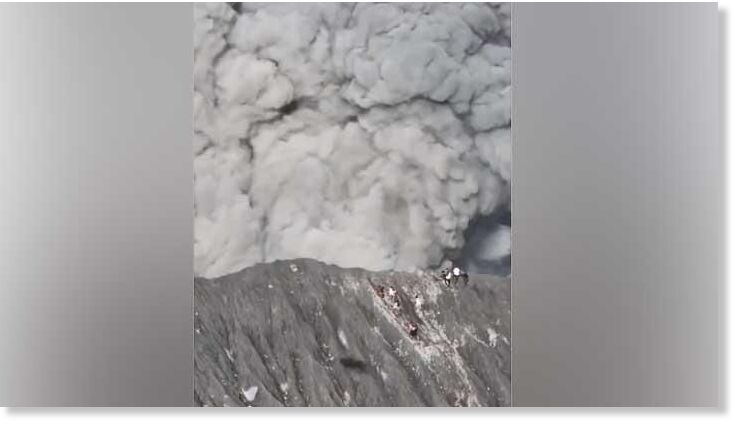
Dozens of climbers near the crater of Mount Dukono volcano near were seen running for their lives when the mountain suddenly erupted in Halmahera Regency, North Maluku, Indonesia.
The Center for Volcanology and Geological Disaster Mitigation (PVMBG) of the Energy and Mineral Resources Ministry's Geological Agency warned against climbing Mount Dukono. The warning came after reports that dozens of climbers narrowly escaped the volcano's eruption.

"The general public is advised not to climb or visit Mount Dukono as volcanic activity is still high at the moment," Priatin Hadi Wijaya, head of the PVMBG, said in a statement on Monday, August 19, 2024.

X user @Heraloebss posted a video showing dozens of climbers scrambling and running to avoid the volcano's eruption. "They rushed to climb down as the mountain in Halmahera Regency erupted," the account wrote on Aug. 17.


Volcano

Shiveluch Volcano erupts in Russia after 7.0 magnitude earthquake

The report said the ash column has risen as high as 8 kilometres above the sea level.
Russia's Shiveluch volcano in the Kamchatka region erupted after a 7.0 magnitude earthquake that struck off the eastern coast of the country, local media reported on Sunday.

The volcano has started to "spew ash and lava", the state-owned TASS news agency reported, citing the Institute of Volcanology and Seismology of the Far Eastern Branch of the Russian Academy of Sciences.

"The eruption of the Shiveluch volcano has begun... According to visual evaluations, the ash column is rising as high as 8 kilometres above the sea level," the report quoted scientists as saying.

Earlier on Saturday night (local time), a 7.0-magnitude earthquake jolted a sea area off the east coast of Kamchatka.


Comment: Magnitude 7.0 earthquake strikes off Russian Far East


Volcano

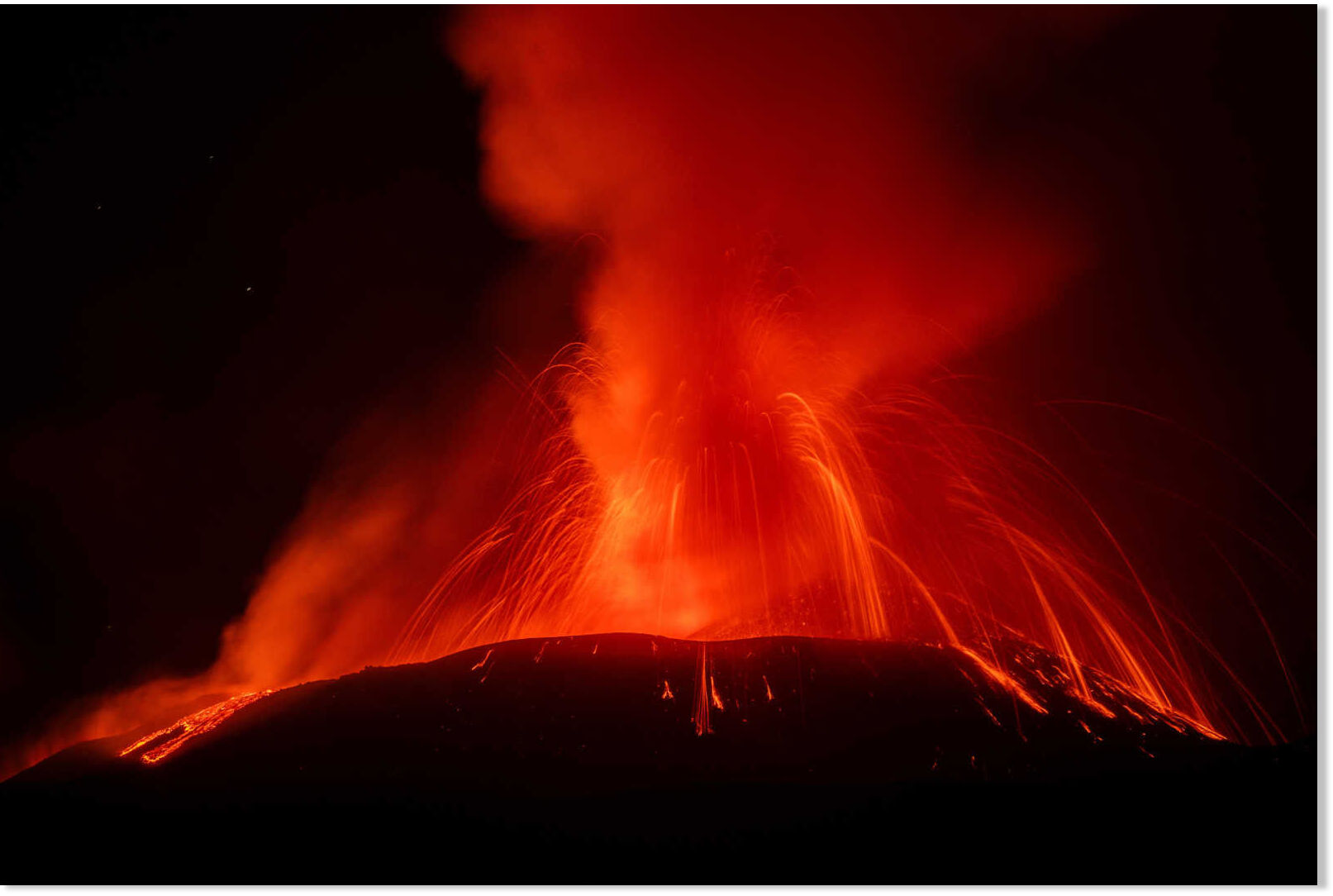
Yet another Mount Etna volcanic eruption shuts down Catania international airport

Lava rises from Mount Etna in Italy on Aug. 14.
© Marco RestivoLava rises from Mount Etna in Italy on Aug. 14.
All flights have been cancelled or diverted to other airports in Sicily on Italy's busy Ferragosto public holiday.

Travel to and from the Italian island of Sicily is currently disrupted due to a volcanic eruption that happened overnight.

Catania international airport remains closed on Thursday 15 August, with all arrivals and departures suspended after Mount Etna billowed smoke into the air. The volcanic ash affects visibility for pilots.

It is estimated that operations will resume at around 6pm but passengers have been advised to check their flight status before leaving home.

The disruption comes on one of the busiest days for travel as Italy celebrates its biggest national public holiday, Ferragosto.


Better Earth

Increased volcanic activity significantly reduced wine production at various times in last millennia, new study finds

volcanoes wine
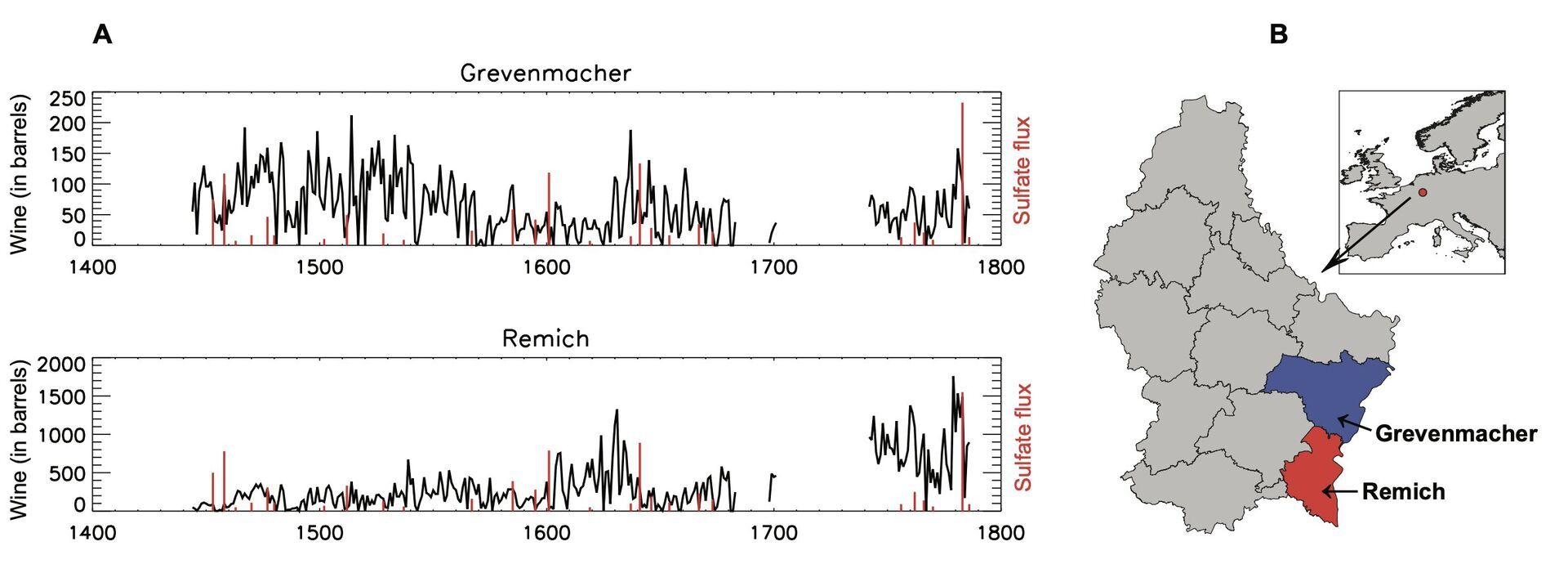
Climate has an important role to play in viticulture (wine production) due to the impacts on grape harvest from variability in parameters such as temperature, precipitation and aridity. Warmer and drier climates with long growing seasons benefit grapevine growth, although beyond a tipping point, it can be damaging in climates akin to the Mediterranean. The Moselle Valley, spanning north-eastern France, south-western Germany, and eastern Luxembourg, has historically been and continues to be a major source of wine production in climatically-sensitive central and southern Europe.

New research, published in Climate of the Past, has investigated the impact volcanic eruptions have had on viticulture due to climate cooling. Such colder temperatures result from the aerosols released in the eruption reflecting incoming solar radiation, as well as acting as condensation nuclei for cloud formation to further this process, therefore reducing the temperature of Earth's surface and triggering a negative feedback loop.

Comment: Whilst this study focused on grapes, one can presume that a great many other crops, and cattle, will have been effected, too. And with the seeming increase in volcanic activity in our own time, this may provide insight into the kinds of issues we'll encounter - although judging by the increase in extreme weather events, erratic seasons, crop failures, and shortages, already being reported across the planet, there are signs that we're already in the midst of it: Volcanoes, Earthquakes And The 3,600 Year Comet Cycle


Volcano

Whakaari White Island volcano eruption, New Zealand

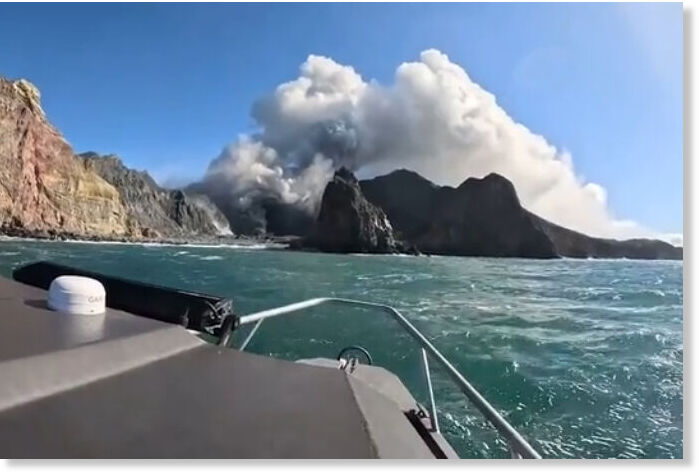
The Volcanic Alert Level has been raised to Level 3 at White Island following minor eruptions on Friday and Sunday.
The main vent maintains a continuous and vigorous discharge of ash. Remnants of the crater lake persist with upwelling and boiling mud present. The island's alert level has been raised to level 3, and it remains strictly prohibited to access.

Video footage captured from a boat located at significant distance from the island to maintain safety. Drone footage is courtesy of Geoff Mackley.


Bizarro Earth

Gargantuan waves in Earth's mantle may make continents rise, new study finds

Dramatic cliffs and high plateaus are caused by the same wave triggered in Earth's middle layer when continents pull apart, a new study finds.
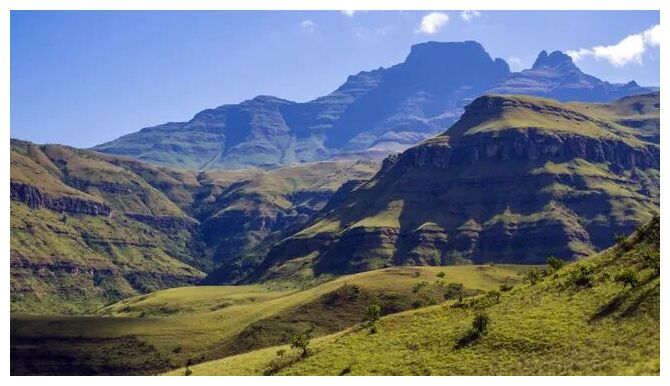
Monks Cowl in the Great Escarpment of South Africa
© Leisa Tyler via Getty ImagesMonks Cowl in the Great Escarpment of South Africa. This dramatic formation arose during the breakup of Gondwana, a new study shows.
High plateaus rise in the interior of continents thanks to churning deep inside Earth hundreds of miles from where they eventually spring up, new research suggests.

As continents break up, massive cliff walls may rise near the boundaries where the crust is pulling apart. That breakup sets off a wave in Earth's middle layer, the mantle, that slowly rolls inward over tens of millions of years, fueling the rise of plateaus, the new study found.

Scientists have long known that continental rifts triggered the rise of massive escarpments, like the cliff walls that separate the East African Rift Valley from the Ethiopian plateau, said lead author Thomas Gernon, a geoscientist at the University of Southampton in the U.K. And these steep cliffs sometimes fringe inland plateaus that rise from the strong, stable cores of continents, known as cratons.

But because these two landscape features usually form tens of millions to up to 100 million years apart, many scientists thought the different formations were driven by different processes, Gernon told Live Science in an email.

Volcano

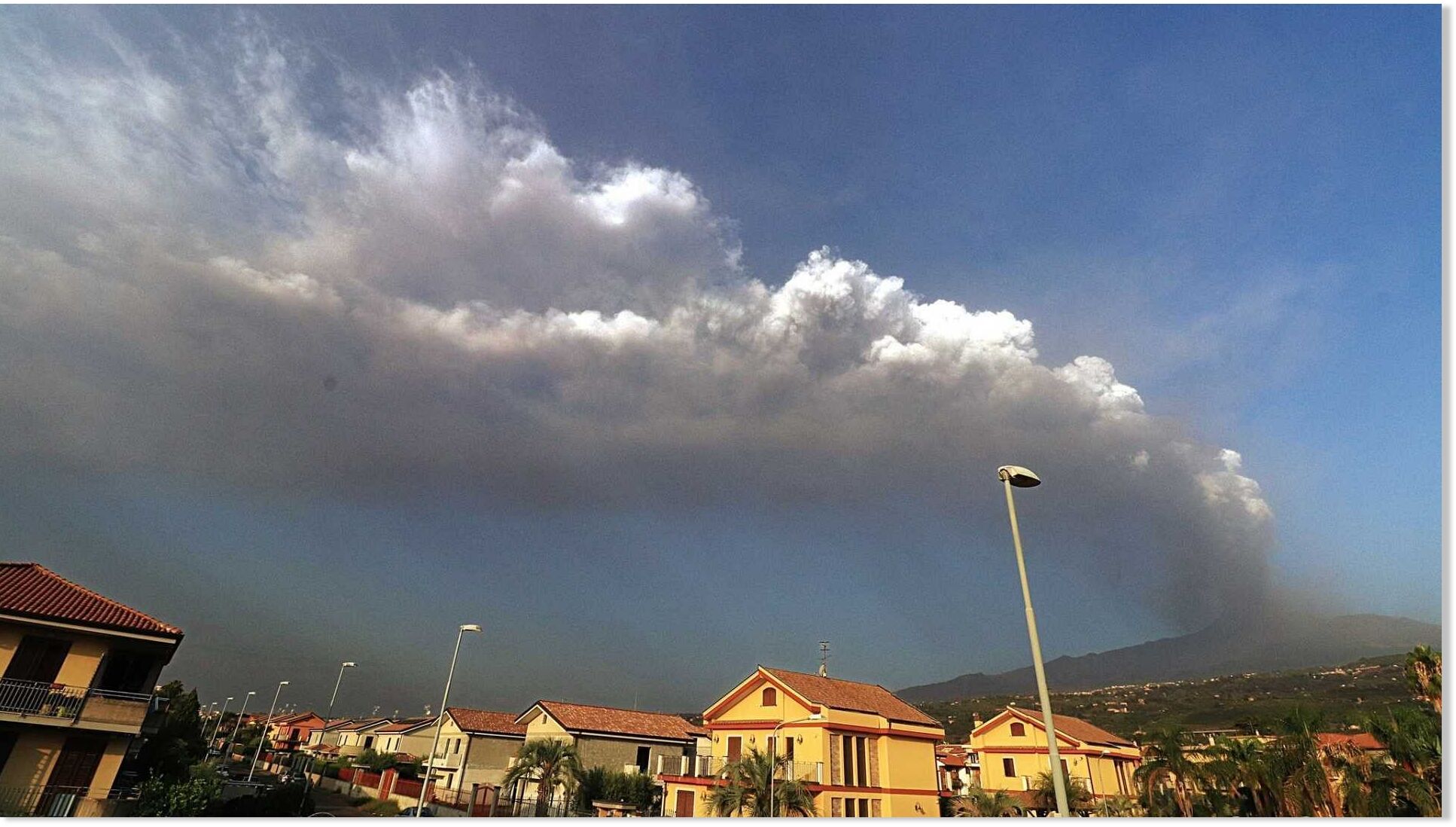
Mount Etna volcanic eruption disrupts flights at Catania international airport

MMMMMMM
© Piero Bertino
Travel to and from the Italian island of Sicily is currently disrupted due to a volcanic eruption.

Catania international airport has delayed flights due to an eruption from Mount Etna billowing smoke into the air. The smoke affects visibility for pilots.

Nearby towns have also been covered in black volcanic ash after the Voragine crater began erupting last night.

Arrivals are currently limited to six per hour at Catania, which is on the east coast of Sicily and at the foot of Mount Etna, Europe's most active volcano.


Volcano

New underwater mountain range of 3 volcanoes discovered north of the Canary Islands

mmmmmm
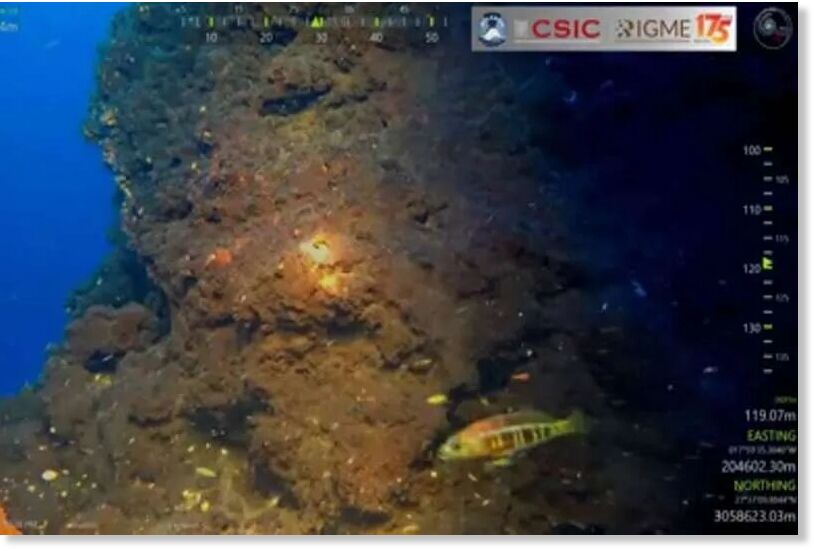
A significant geological discovery has been made north of the Canary Islands by researchers from the Geological and Mining Institute of Spain (IGME) and the Spanish National Research Council (CSIC). The newly discovered underwater mountain range, named "Los Atlantes," consists of three volcanoes and was found through the Atlantis research project aboard the oceanographic vessel Sarmiento de Gamboa.

The three volcanoes that comprise Los Atlantes are located to the east of Lanzarote. Some of these volcanoes may be connected to the historic Timanfaya eruptions, while others are believed to have been islands during the Eocene epoch, approximately 34 to 56 million years ago.