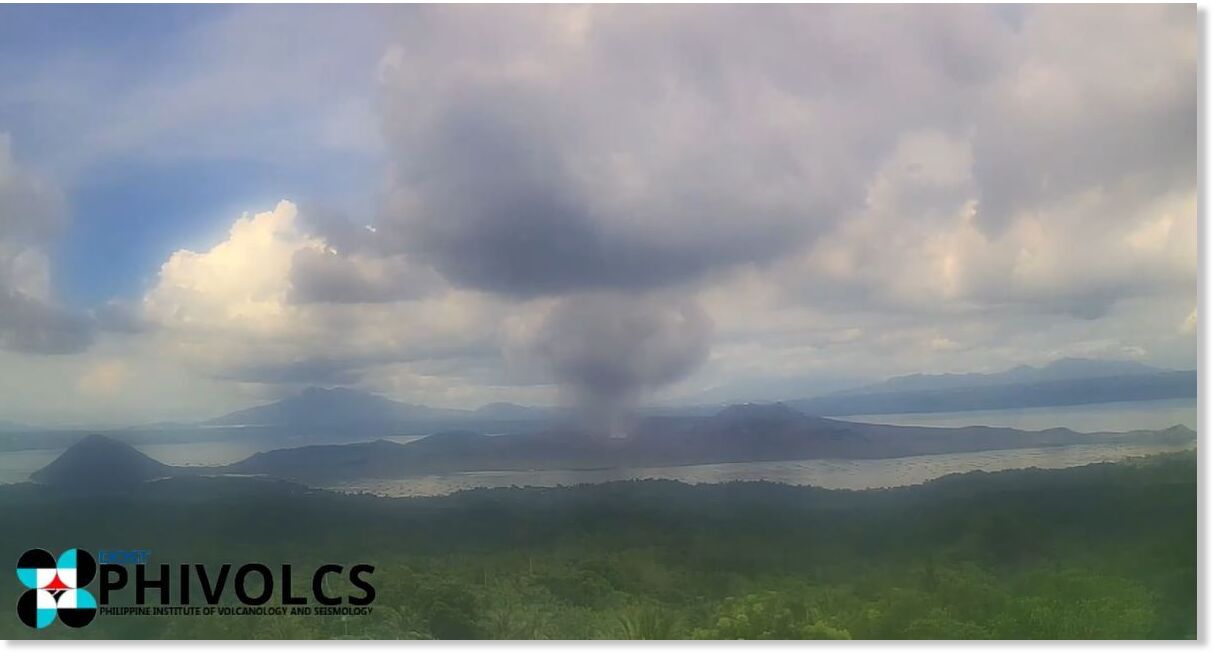
The Philippine Institute of Volcanology and Seismology recorded two weak phreatic events at the Taal Volcano on Saturday.
According to an advisory, the steam-driven events, which occurred at 2:31 p.m. and 2:39 p.m., caused 800-meter plumes.
The phreatic events lasted a minute each.
Meanwhile, the average sulfur dioxide (SO2) emission of 6,571 tonnes per day on Friday was lower than the average of 7,895 tonnes per day since January.
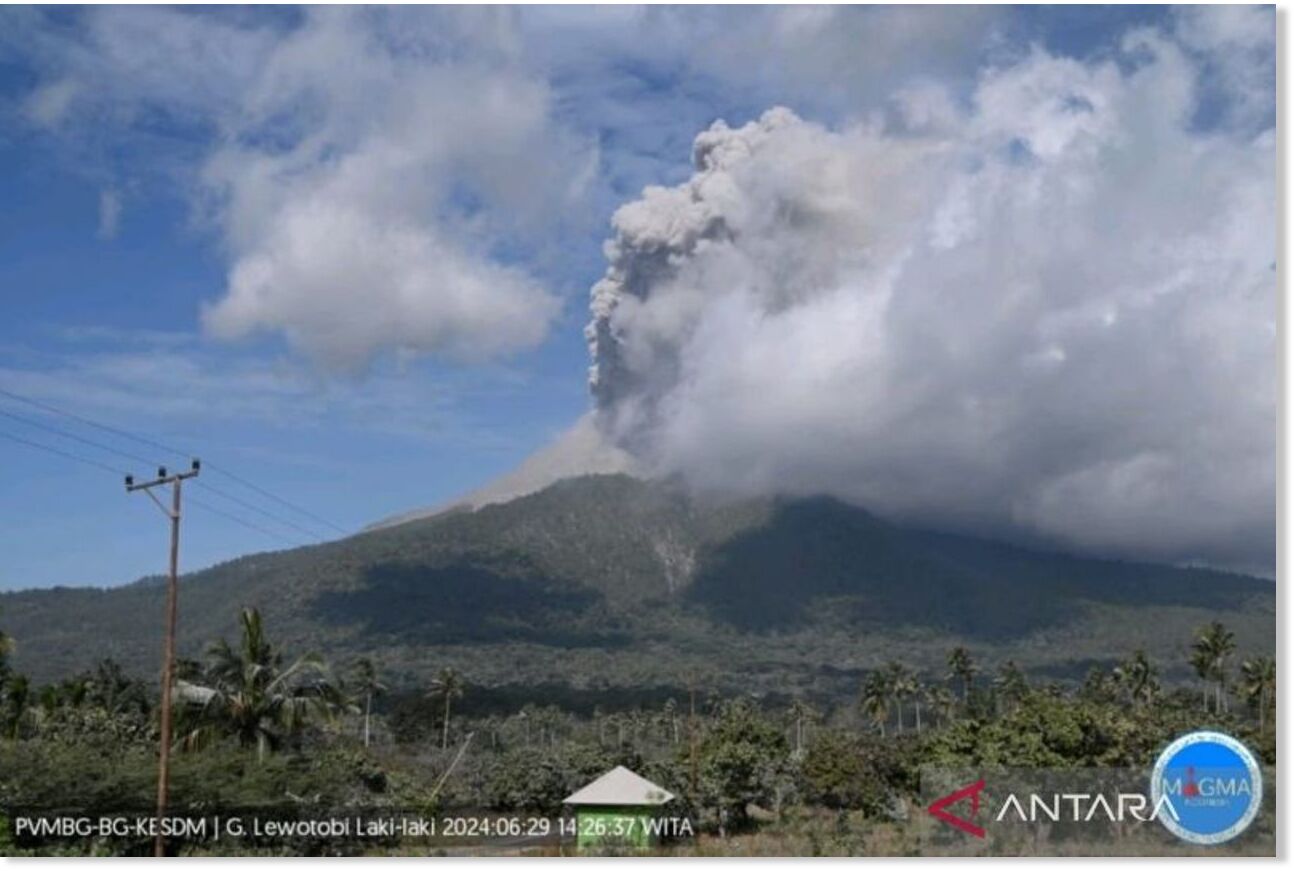
Mount Lewotobi Laki-Laki in Eastern Indonesia erupted twice today, volcanology authorities said, sending thick, dark clouds into the air.
The first eruption took place at 11.04am local time and lasted nearly 11 minutes, according to a statement from the Indonesian volcanology agency.
The second was at 2.41pm and lasted a little over 10 minutes, spewing volcanic material 900m above the crater.
"Residents and visitors around Mount Lewotobi Laki Laki are prohibited from conducting any activity within the 3km radius from the centre of eruption," the agency said.
Luisa Cabato Inquirer.net Sat, 22 Jun 2024 12:16 UTC
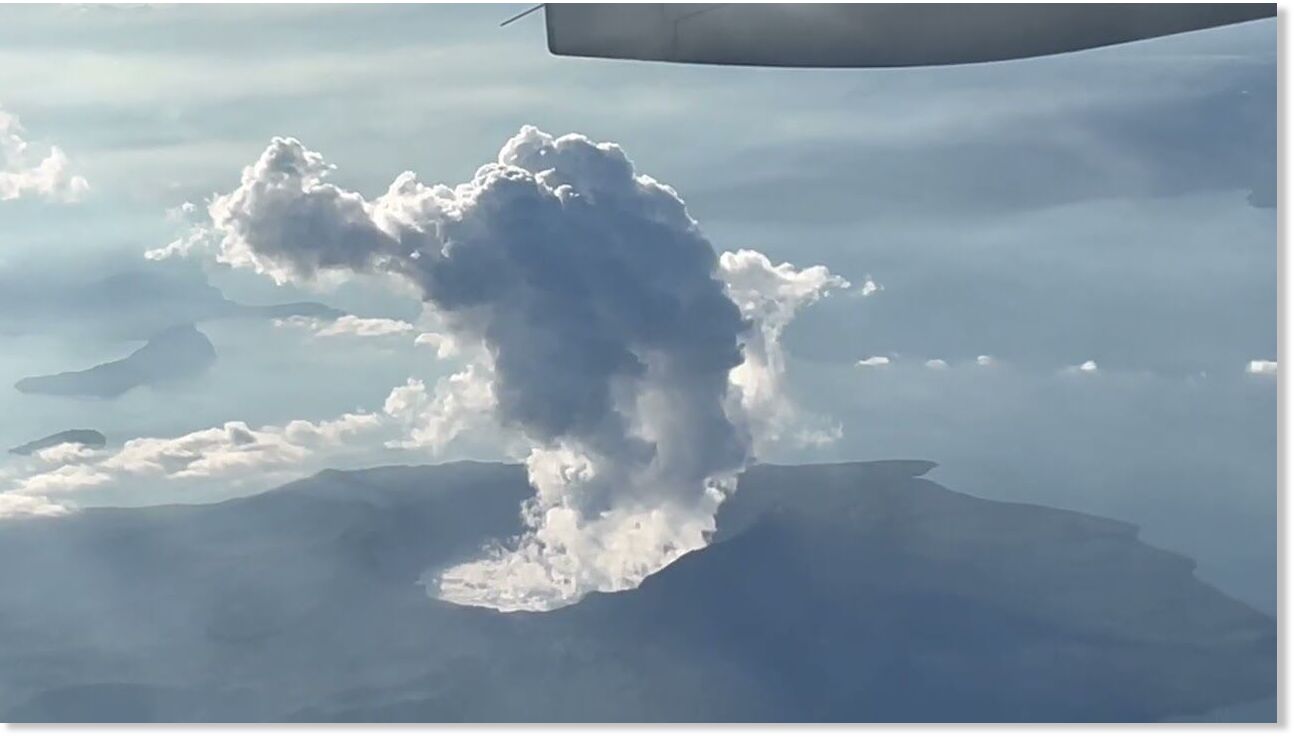
Taal Volcano had a degassing activity at its main crater early morning on Saturday, the Philippine Institute of Volcanology and Seismology (Phivolcs) said.
Based on Phivolcs' visual monitor of the Agoncillo Observation Station, the degassing activity happened from 1:30 a.m. to 7:55 a.m. and produced thick plumes that rose 2,400 meters high before drifting northwestward.
Philvolcs noted that Taal has been degassing "significant volumes" of volcanic gas since March 2021.
Saturday's advisory likewise indicated that the volcano released 4,641 tons (4, 210 metric tons) of sulfur dioxide last Thursday, June 20.
Phivolcs added that Alert Level 1 remains in effect over the volcano.
The state seismologist repeated its reminder that entering its island, especially the Main Crater and Daang Kastila fissures, as well as occupancy and boating on Taal Lake, and flying any aircraft close to the volcano are still prohibited.
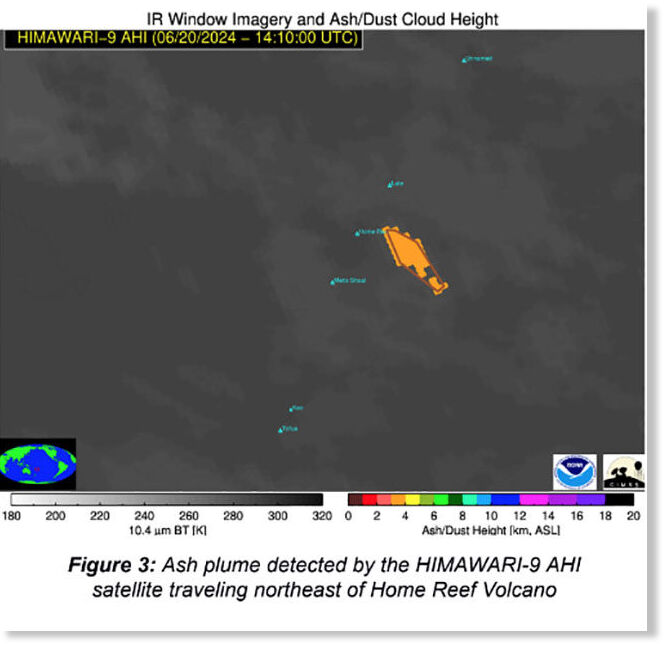
An ash plume drifting northeast of Home Reef around ~1:30 AM today June 21, was detected by the HIMAWARI-9 AHI satellite, Tonga Geological Services reported.
This Volcano Watch Team monitoring the volcanic activities at Home Reef Volcano, issued Public Notice No.7 at 9:00 this morning.
"Home Reef Volcano continues to be closely monitored due to ongoing volcanic activity. Over the past 16 hours since the last Public Notice, VOLCAT has detected a total of five (5) thermal anomalies. The most recent anomaly was observed at 4:56 AM this morning (refer to Figure 1). Recent MODIS-MIROVA satellite imagery indicates a slight decrease in Volcanic Radiative Power (VRP), represented by qualitative changes in Figure 2. Additionally, the HIMAWARI-9 AHI satellite detected an ash plume drifting northeast of Home Reef around ~1:30 AM (refer to Figure 3)."
Olivia Vazquez Herrera infobae.com Mon, 10 Jun 2024 11:33 UTC
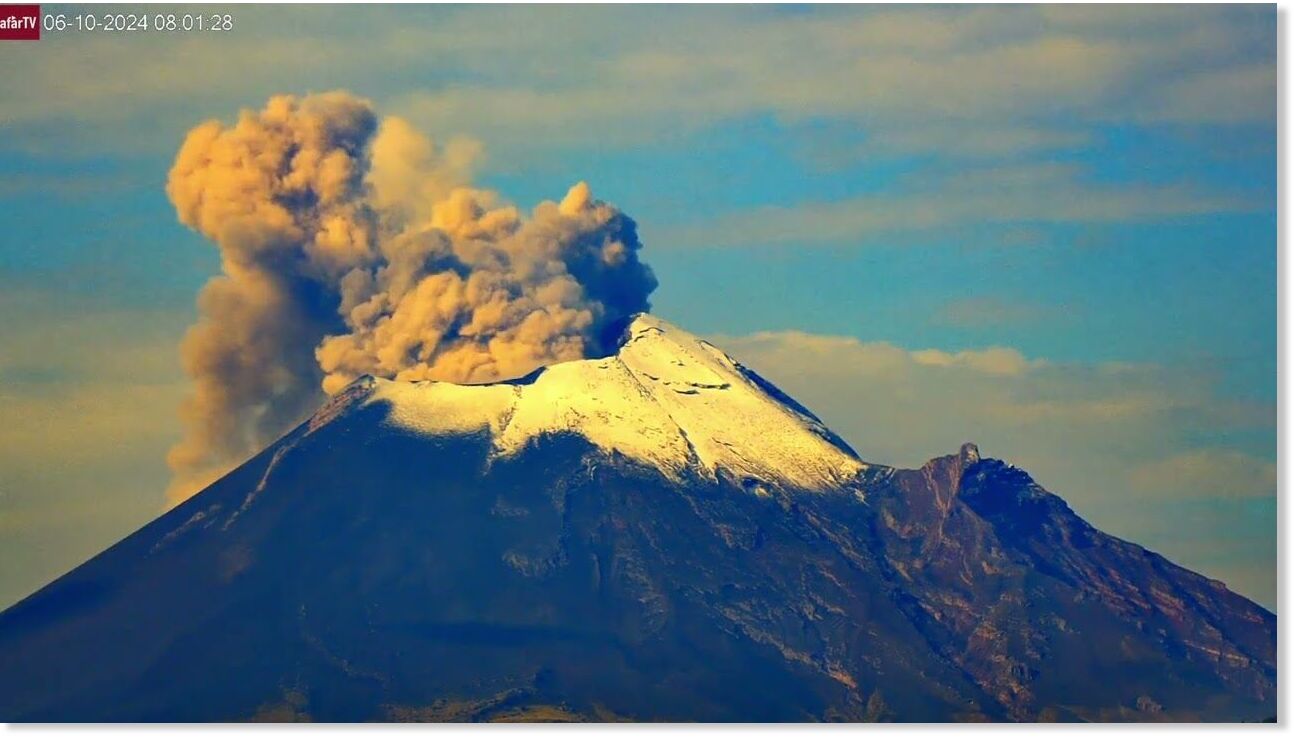
The National Center for Disaster Prevention ( Cenapred ) announced this Monday, June 10, that in the last 24 hours the Popocatépetl volcano has released 26 emissions accompanied by water vapor, gases, and ash , in addition to 209 minutes of tremor (movement of magma inside the crater), according to its most recent report together with the Institute of Geophysics of the National Autonomous University of Mexico ( UNAM ).
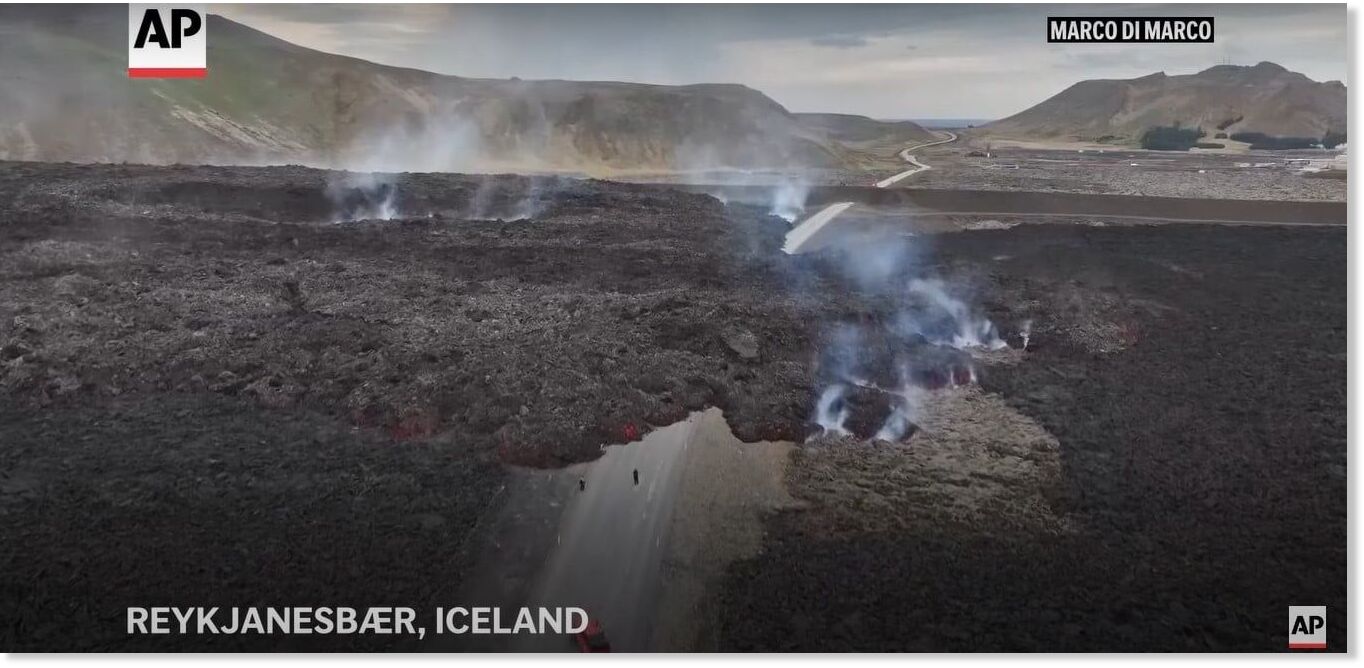
The lava flow from an active volcano in Iceland again engulfed a road leading to the coastal town of Grindavik and the popular Blue Lagoon geothermal spa on Saturday 8 June, with officials closely monitoring its path.
Drone footage captured on the Reykjanes Peninsula shows the steadily advancing flow.
The volcano had stabilised since a 29 May eruption, the fifth and most powerful since the volcanic system reawakened in December after 800 years.
Authorities monitoring the lava flow said it was advancing significantly slower than during the previous two eruptions.
The same section of road, several kilometres (miles) from the town, was previously engulfed in February and March this year.
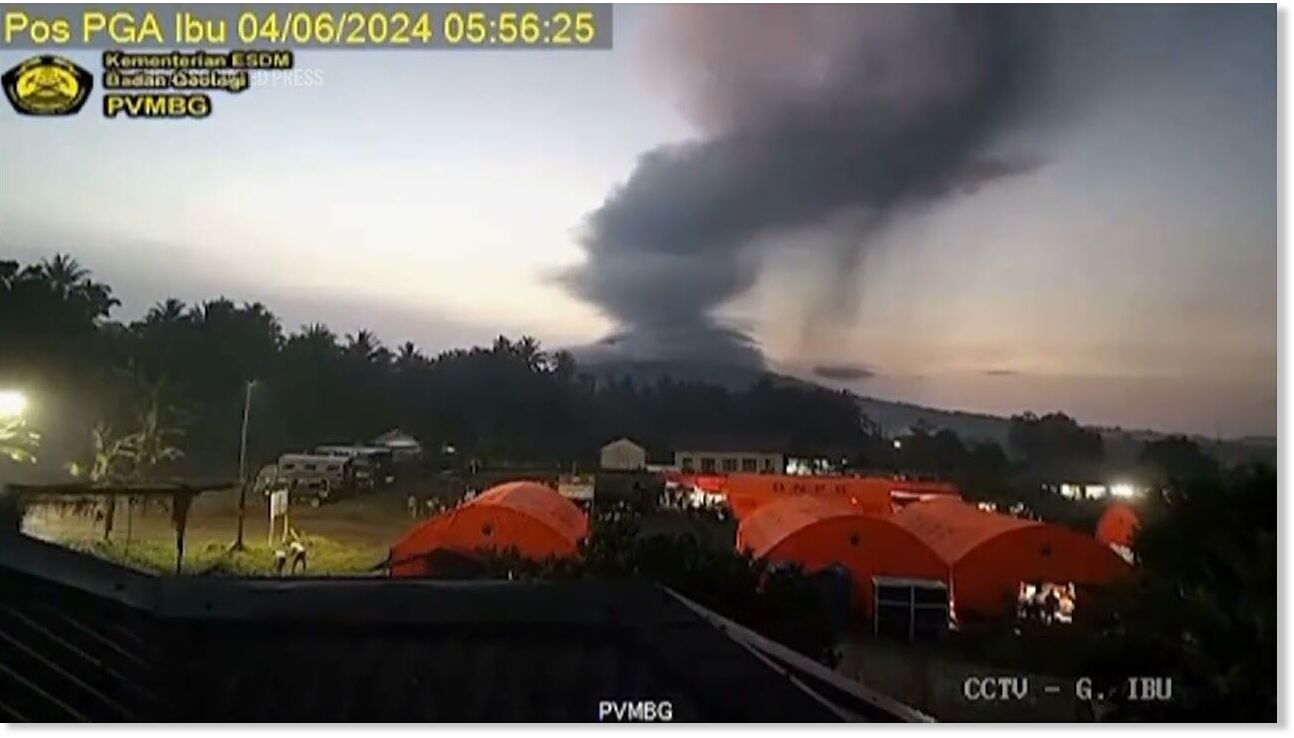
Mount Ibu erupted Tuesday morning and blew ash clouds more than three miles into the sky, according to the Indonesian Center for Volcanology and Geological Disaster Mitigation. The volcano has erupted multiple times since early May.
Several other Indonesian volcanoes have erupted in recent months, including the Marapi Volcano and Mount Ruang.
How have officials responded to the eruptions? The volcanology agency on May 16 raised the eruption alert level for Mount Ibu to the highest possible level and urged residents to stay at least 4.4 miles away from the volcano. The alert has remained in place. Officials evacuated seven nearby villages on May 19.
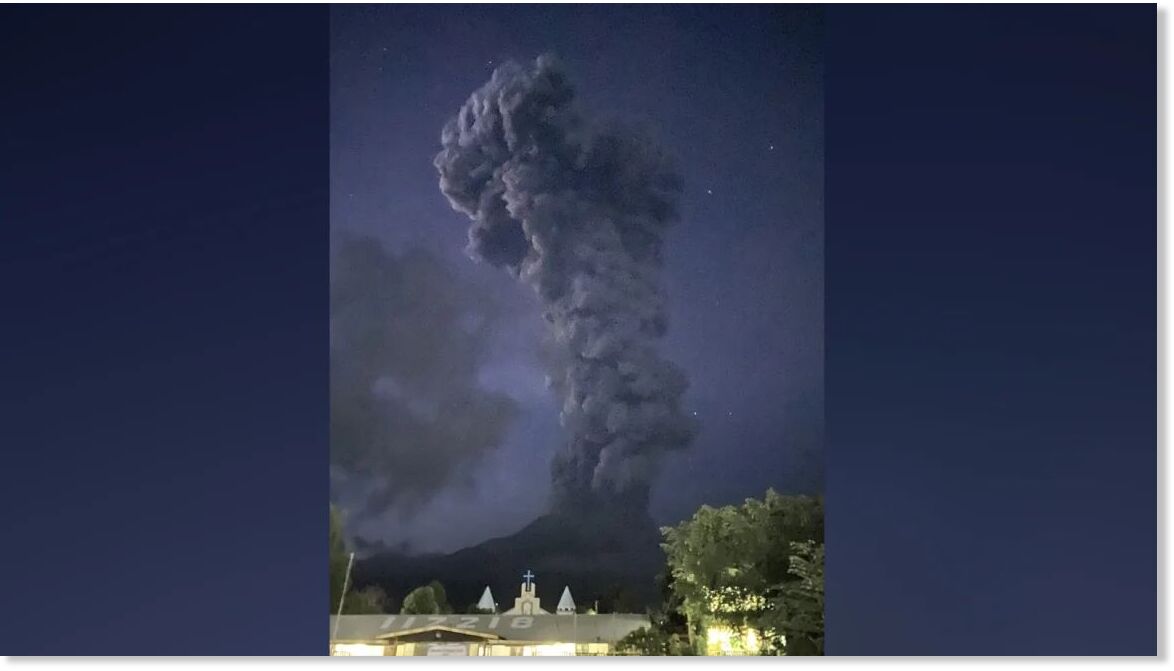
Hundreds of residents living near Mount Kanlaon in the Philippines were ordered to evacuate Tuesday after the volcano erupted, sending a three-mile tall (five-kilometer) ash column into the sky that caused dozens of flights to be canceled.
The Philippine Institute of Volcanology and Seismology (Phivolcs) said Mount Kanlaon erupted for six minutes on Monday evening, causing a "strong earthquake," as the agency warned that ash fall and sulphuric odor would affect surrounding villages.
Forty-three volcanic earthquakes had been recorded in the 24 hours to midnight Monday, according to the agency's volcano summary.
Images on social media showed an ash cloud shooting into the starry night sky. Others showed a thick blanket of ash covering surrounding villages.
Over 60 flights from three domestic carriers were canceled overnight, impacting over 5,000 passengers, according to the Civil Aviation Authority of the Philippines.
The Bacolod-Silay Airport resumed operations by 11 a.m. on Tuesday but passengers are expected to face delays.
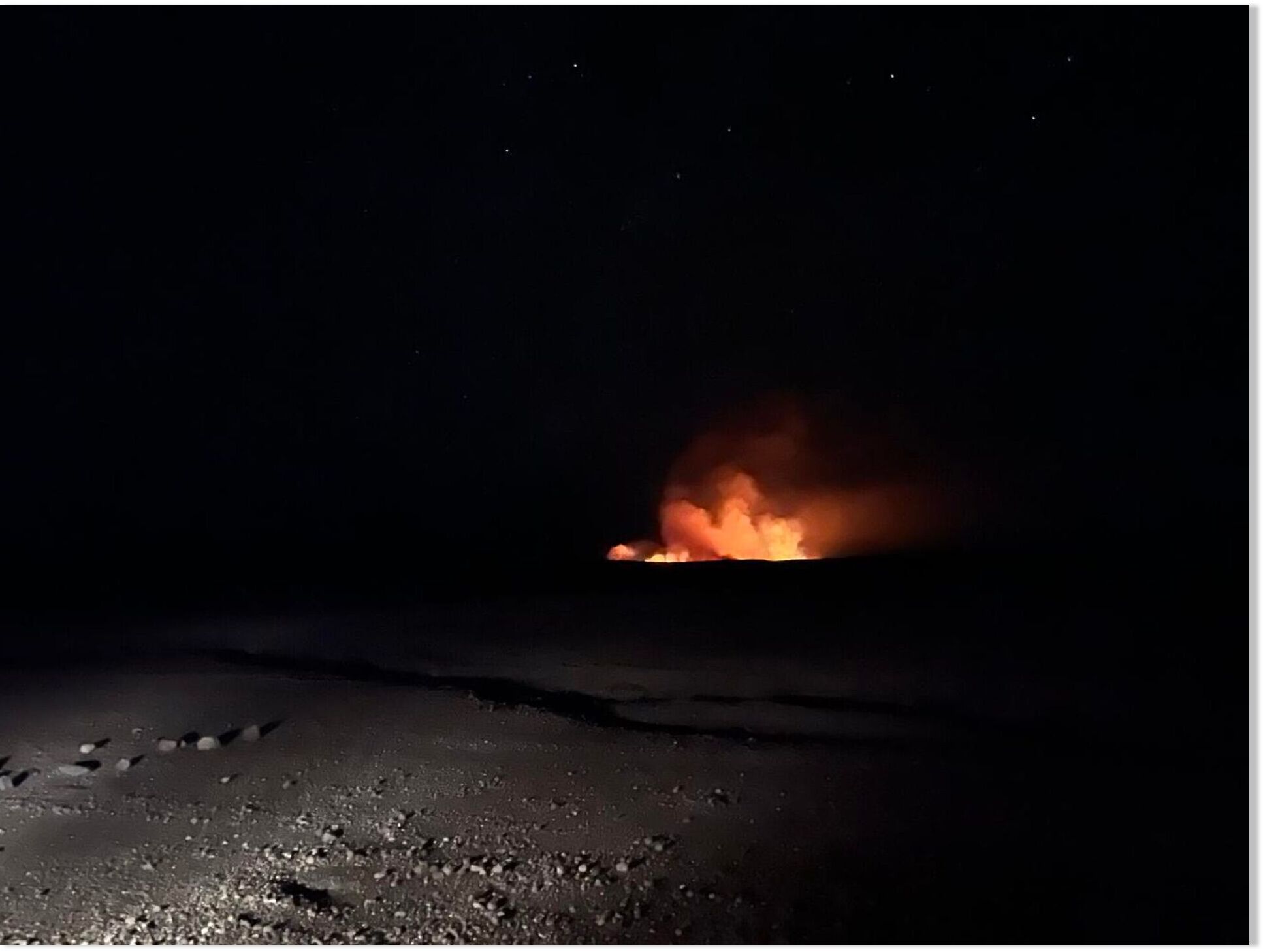
The Kilauea volcano on Hawaii's Big Island erupted on Monday following hours of seismic activity below the volcano's summit, the U.S. Geological Survey said.
Kilauea, one of the world's most active volcanoes, began erupting at approximately 12:30 a.m. local time, about a mile south of Kilauea caldera within Hawaii Volcanoes National Park, a popular tourist destination that draws more than 1 million visitors per year. Webcam footage showed lava spewing from fissures in the summit, the USGS said.
Katie Mulliken, a geologist with the USGS Hawaiian Volcano Observatory, told USA TODAY the eruption poses no immediate danger to residents as it, so far, has been contained to a remote part of the summit, which is inaccessible by car or trails.
"There are really no threats to any communities," Mulliken said, adding that the USGS will continue to closely monitor the volcanic activity.
It was the first eruption in this region of the volcano in almost 50 years. The last one, in December 1974, lasted about six hours.