The Global Climate Observing System (GCOS) is one of the most important
climate monitoring networks in the world. It is co-sponsored by the World Meteorological Organisation (WMO) and numerous UN, EU and scientific bodies and its collects information that is used for scientific research within the
Intergovernmental Panel on Climate Change. Ultimately, it
forms the basis for promoting and implementing global Net Zero plans. Given its importance and the need to keep to the highest standards of scientific reporting, it is a surprise that the UK Met Office seems to take its temperature reporting duties
rather lightly. It provides information from eight sites, four of which are rated junk class 4 with international 'uncertainties' of 2°C. Barely beyond belief, another site is based
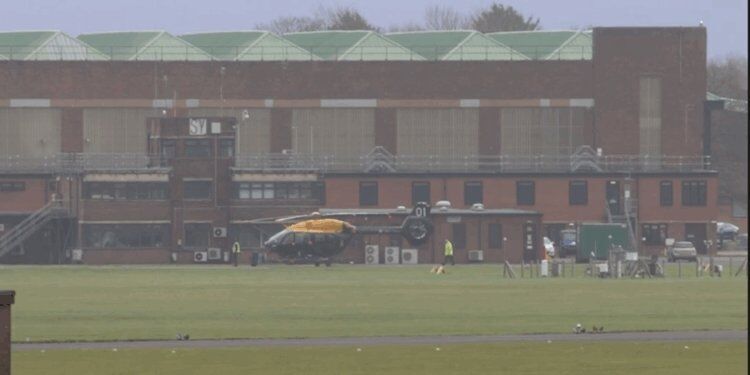
slap bang in the middle of RAF Shawbury, where pilots in military helicopters make frequently low fly-pasts at all hours of the day and night.
The picture above is taken at the air base, the main RAF helicopter training centre, and it shows a helicopter next to the white Stevenson box containing the measuring device. Other clips - you couldn't make it up - show helicopters hovering over the screen.
Comment: If one so happened to have ever set up field weather stations, a very rudimentary location selection criteria looks something like this.
Note, that this example is not a full-on Stevenson Screen type of weather station:
HOBO Weather Station
Site Selection
Use the following guidelines to help you choose an appropriate site for setting up the Station and protecting against field hazards.
- When possible, select a location away from trees and buildings, particularly if you will be using the rain gauge or wind speed sensors. Place the rain bucket at a distance away from obstructions that is equal to at least three times the height of the nearest tree, building, or other obstruction, and the wind speed sensor at a distance away from obstructions that is equal to at least five times the height of the obstruction.
There are 13 more location criteria listed, including electromagnetic interference - like radar. The location list never said anything about a helicopter hovering and its downwash effects (see wind speed sensor), wherein they create longlasting vortex patters. They never said, simply because who in their right mind sets up a critical IPCC end-use weather station under conditions like this?
Unbelievable: Weather records are a state secret in the UK







Comment: If one so happened to have ever set up field weather stations, a very rudimentary location selection criteria looks something like this.
Note, that this example is not a full-on Stevenson Screen type of weather station:
HOBO Weather Station