Earthquakes
S


Bizarro Earth

North American tectonic plate peeling off

Earth's Mantle
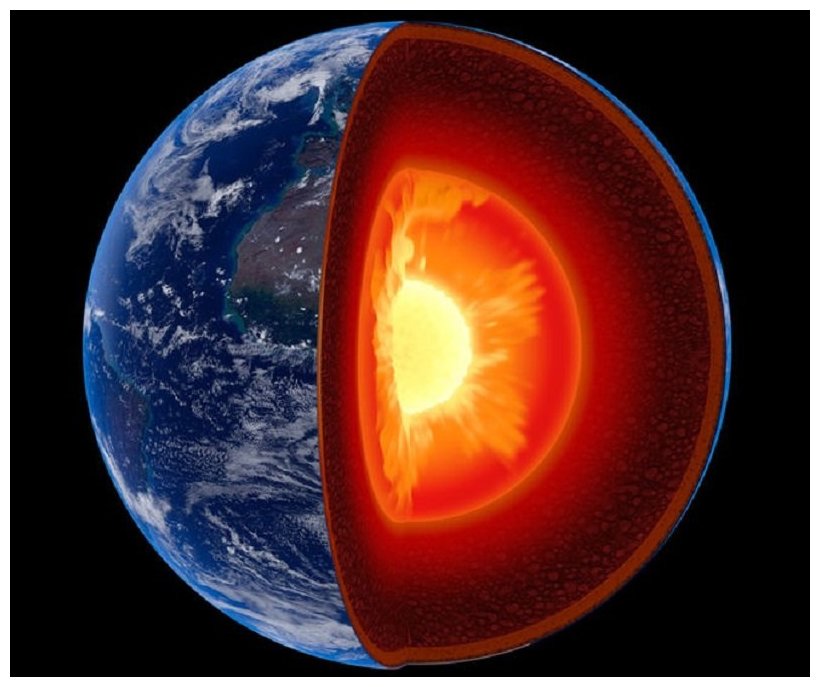
© Johan Swanepoel/ShutterstockScientists suspect that chunks from the bottom of the North American tectonic plate, which is the upper portion of the mantle, are peeling off and sinking. Replacing the resulting void is gooey material from the asthenosphere.
An odd phenomenon may explain why the Southeastern United States has experienced recent earthquakes, even though the region sits snugly in the middle of a tectonic plate and not at the edges, where all the ground-shaking action usually happens.

This seismicity — or relatively frequent earthquakes — may be the result of areas along the bottom of the North American tectonic plate peeling off, the researchers said. And this peeling motion is likely to continue, leading to more earthquakes in the future, like the 2011 magnitude-5.8 temblor that shook the nation's capital.

To figure out the cause of these earthquakes, Berk Biryol, a seismologist at UNC Chapel Hill, and colleagues created 3D images of the uppermost part of Earth's mantle, which is just below the crust and comprises the bottom of a tectonic plate. These tectonic plates scoot around atop a layer of warm, viscous fluid called the asthenosphere.

The resulting X-ray images revealed that the plate's thickness in the southeast United States was uneven, with thick regions of dense, old rock combined with thinner areas composed of younger rocks that were also less dense.

Alarm Clock

USGS: Volcano 'recharging' as earthquake swarm strikes Mount St. Helens, Washington

Mount St. Helens 2004
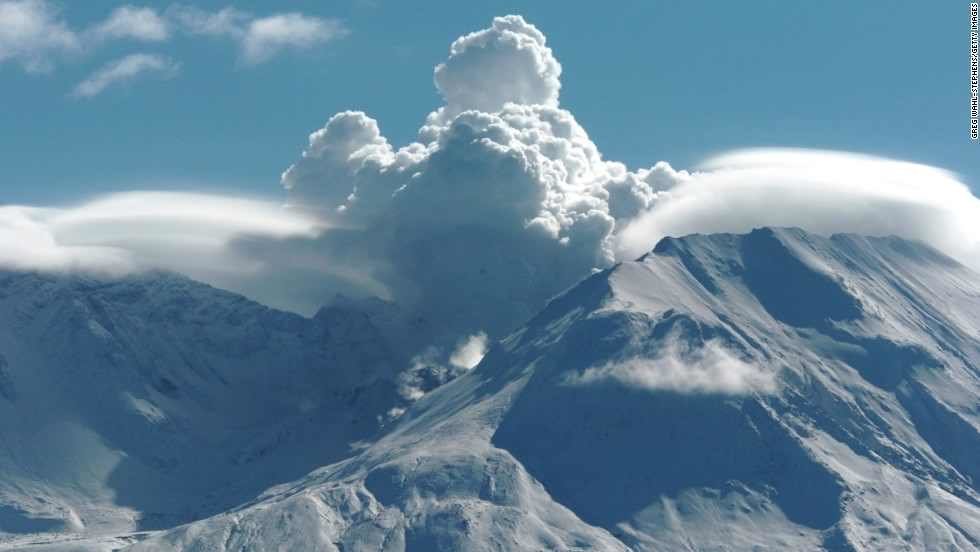
Mount St. Helens is a volcano in the state of Washington, seen here in 2004. It has recently been hit with a wave of small earthquakes.

In the past eight weeks, more than 130 small earthquakes have trembled beneath the surface of Mount St. Helens
. At this point, "there is absolutely no sign that it will erupt anytime soon, but the data we collect tells us that the volcano is still very much alive," the U.S. Geological Survey said.

Seismologists reported that there are no anomalous gases,and no signs that the collection of magma, which is the molten rock beneath the surface of the Earth, is getting inflated in the recent swarm of earthquakes at the volcano. Although there are no signs of an imminent eruption, the volcano is recharging, scientists say.

Mount St. Helens is in Washington state, 95 miles south of Seattle and about 55 miles northeast of Portland, OR. The earthquakes have been measured at a magnitude of 0.5 or less and the largest was at 1.3. They've been measured about 1.2 to four miles underneath the surface. With such small magnitudes and such depths, you wouldn't be able to feel the earthquakes on the surface.

But it's not the magnitude that has gotten scientists attention -- it's the frequency.

They've become increasingly common since March 14, "reaching nearly 40 located earthquakes per week," according to the USGS.

Bizarro Earth

Silent slow-slip seismic events can rupture shallow faults resulting in large, tsunami-generating earthquakes

seismic zones new zealand
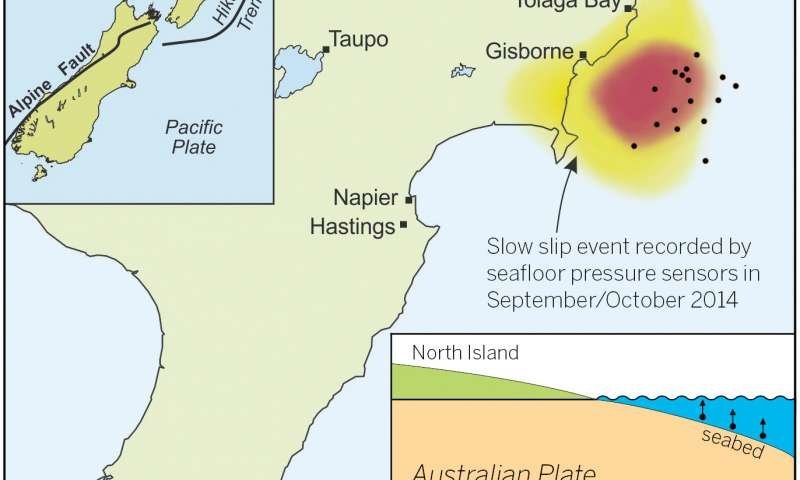
© GNS Science/Laura Martin A graphic illustrating seismic zones and activity in New Zealand. The figure on the bottom right shows the horizontal and vertical movement caused by a slow slip event
Research published in the May 6 edition of Science indicates that slow-motion earthquakes or "slow-slip events" can rupture the shallow portion of a fault that also moves in large, tsunami-generating earthquakes. The finding has important implications for assessing tsunami hazards. The discovery was made by conducting the first-ever detailed investigation of centimeter-level seafloor movement at an offshore subduction zone.

"These data have revealed the true extent of slow-motion earthquakes at an offshore subduction zone for the first time," said Laura Wallace, a research scientist at The University of Texas at Austin's Institute for Geophysics who led the study.

An international team of researchers from the U.S., Japan and New Zealand collaborated on the research. The Institute for Geophysics is a research unit of The University of Texas Jackson School of Geosciences.

The world's most devastating tsunamis are generated by earthquakes that occur near the trenches of subduction zones, places where one tectonic plate begins to dive or "subduct" beneath another. Using a network of highly sensitive seafloor pressure recorders, the team detected a slow-slip event in September 2014 off the east coast of New Zealand. The study was undertaken at the Hikurangi subduction zone, where the Pacific Plate subducts beneath New Zealand's North Island.

Bizarro Earth

Researchers believe earthquakes in SE US caused by chunks of Earth's mantle breaking off and sinking into the Earth

SE USA earthquakes
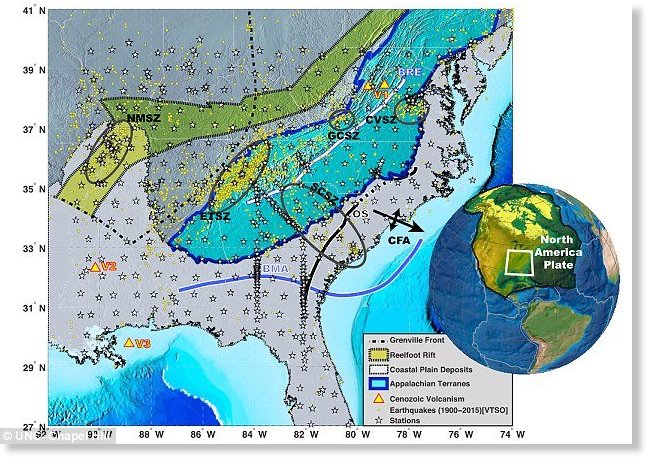
Researchers believe the quakes could be caused by pieces of the Earth's mantle breaking off and sinking into the planet in the affected area (shown here). They say pieces of the mantle have most likely been breaking off from underneath the plate since at least 65 million years ago. This map shows the study area in detail.
The southeastern United States has been hit by a series of strange unexplained quakes - most recently, the 2011 magnitude-5.8 earthquake near Mineral, Virginia that shook the nation's capital.

Researchers have been baffled, believing the areas should be relatively quiet in terms of seismic activity, as it is located in the interior of the North American Plate, far away from plate boundaries where earthquakes usually occur.

Now, they believe the quakes could be caused by pieces of the Earth's mantle breaking off and sinking into the planet.

A new study found pieces of the mantle under this region have been periodically breaking off and sinking down into the Earth. This thins and weakens the remaining plate, making it more prone to slipping that causes earthquakes.

The study authors conclude this process is ongoing and likely to produce more earthquakes in the future.

Bizarro Earth

6.1 magnitude earthquake strikes western Indonesia

Indonesia earthquake map

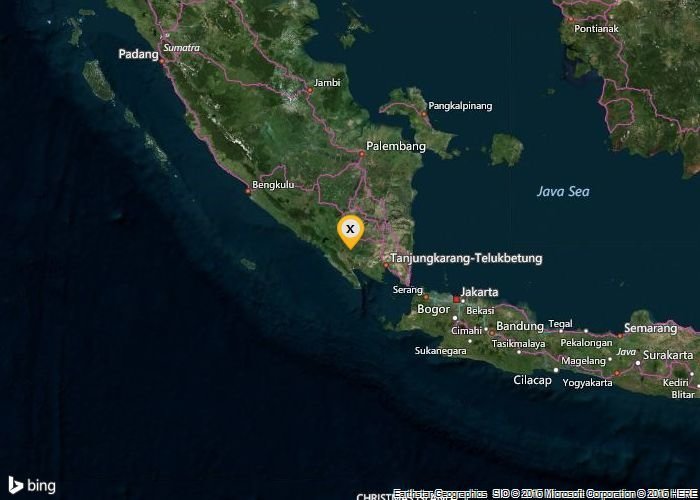
An earthquake measuring 6.1 on the Richter scale hit Lampung province of Sumatra Island on Monday, the meteorology and geophysics agency said here.

No immediate casualties were reported as of now, an official of the agency said.

The epicentre of the quake was determined at 23 km southwest Tanggamus town, Xinhua news agency quoted the official as saying.

Indonesia is prone to quake as it lies on a vulnerable quake-hit zone so called "the Pacific Ring of Fire".

Source: IANS

Blue Planet

3.5 magnitude earthquake rattles La Center, Kentucky

la center ky earthquake
The U.S. Geological Survey reports a small earthquake in western Kentucky.

The USGS says a preliminary magnitude 3.5 quake was recorded at 2:12 a.m. Sunday about 9 miles north-northwest of La Center — and about 39 miles west-northwest of Paducah.

Comment: New Madrid fault zone alive and active


Attention

6.0-magnitude earthquake strikes off Vanuatu

 quake
© El Comercio/AP
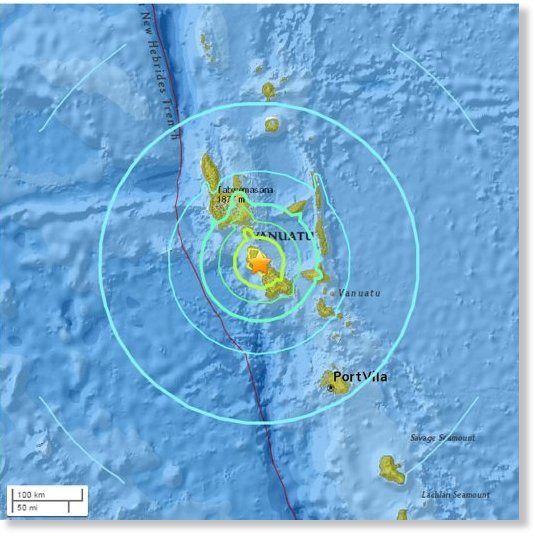
A 6.0-magnitude earthquake hit off the South Pacific island of Vanuatu Saturday, the United States Geological Survey (USGS) said.

No tsunami warning was issued and there were no immediate reports of damage.

The quake struck at a depth of 4.8 kilometres (3 miles), some 85 kilometres (52.8 miles) south of the port city Luganville - known locally as Santo - USGS said.

Vanuatu is part of the "Ring of Fire", a zone of tectonic activity around the Pacific that is subject to frequent earthquakes and volcanic eruptions.

This month has seen a series of tremors reported, including a powerful 7.0-magnitude quake on Friday which hit 209 kilometres from the capital Port Vila.

That powerful earthquake briefly prompted a tsunami warning that was cancelled after locals reported no significant damage.

A 6.9-magnitude tremor also hit the country at the beginning of April but no tsunami alerts were issued and there were also no reports of damage.

An image provided by the United States Geological Survey (USGS) shows a map of the location and epicentre of the 7.0 magnitude earthquake registered in Vanuatu on 29 April 2016. A tsunami warning for the region has been issued, but so far no damage report
© EPA/USGS An image provided by the United States Geological Survey (USGS) shows a map of the location and epicentre of the 7.0 magnitude earthquake registered in Vanuatu on 29 April 2016. A tsunami warning for the region has been issued, but so far no damage reported.
Source: AFP

Attention

5.6 magnitude earthquake strikes in waters off Taiwan

 quake
© El Comercio/AP
A 5.6-magnitude earthquake occurred in the waters off Hualien County, Taiwan, at 11:17 p.m. Wednesday (Beijing Time), according to China Earthquake Networks Center (CENC).

The epicenter was located at 24.22 degrees north latitude and 121.71 degrees east longitude. It was measured at a depth of 8 km, according to the center.

Xinhua reporters in Taipei said they felt the tremor and saw buildings shaking.

Just 10 minutes later, another earthquake measuring 4.9 was reported by the CENC at roughly the same site.

Local authorities said four aftershocks had been monitored in the past hour. There have been no casualties reported.

Source: Xinhua

Comment: See also: 2 more oarfish appear off Taiwan during seismic activity


Attention

2 more oarfish appear off Taiwan during seismic activity

Fishermen were stunned after discovering the fish
Two rare earthquake fish were thrown out of the water after a ' mud volcano ' erupted off the coast of Taiwan.

The volcano erupted early Thursday morning in the city of Pingtung following a 5.6-magnitude earthquake .


Fishermen were delighted to find the oarfish, also known as earthquake fish, both measuring 4.4 metres - twice as long as beanpole footballer Peter Crouch - and weighing a whopping seven stone.

Four eruption mouths were spotted in a paddy field in Wandan Town and the hot slurry almost destroyed the whole field.


The huge fish both measure more than 4 metres in length
© CENThe huge fish both measure more than 4 metres in length

Comment: See also this earlier report from about a week ago about the appearance of another 'earthquake fish' in the same part of the world: Giant oarfish emerges after being woken by earthquake off Taiwan

5.6 magnitude earthquake strikes in waters off Taiwan


Bizarro Earth

Strong earthquake hits East Pacific Rise

Pacific Rise Earthquake
© USGS
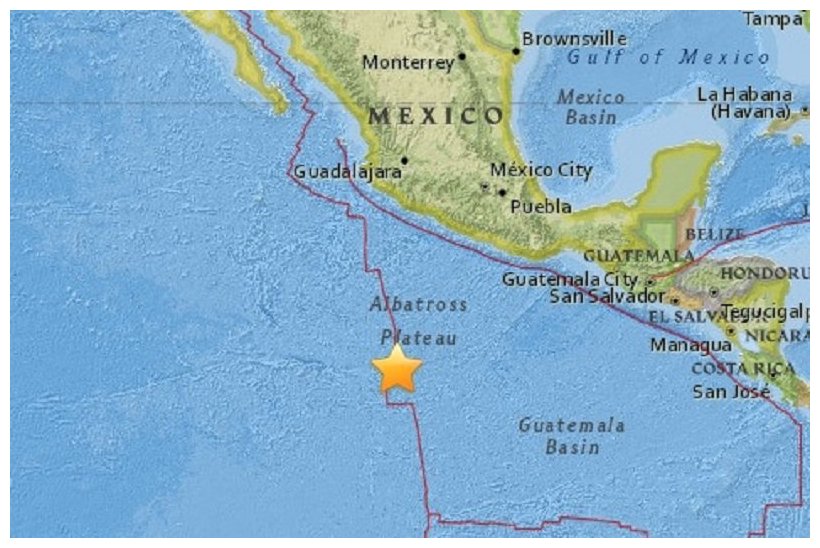
A strong earthquake with a preliminary magnitude of 6.8 has struck the northern East Pacific Rise in the Pacific Ocean, centered far southwest of Mexico, seismologists say. There is no threat of a tsunami.

The earthquake, which struck at 8:33 p.m. CT on Thursday, was centered about 597 kilometers (371 miles) east of France's Clipperton Island, or 842 kilometers (523 miles) southwest of Acapulco de Juarez in Mexico.

The United States Geological Survey put the earthquake's preliminary magnitude at 6.8 and said it struck at a shallow depth of just 10 kilometers (6.2 miles).

The Pacific Tsunami Warning Center said there was no threat of a tsunami to Pacific coastlines of Mexico, Central America and South America, while the U.S. National Tsunami Warning Center added that there also isn't any threat along the western coastlines of the United States and Canada.

Because the earthquake was centered far from land, there should be no damage or casualties.