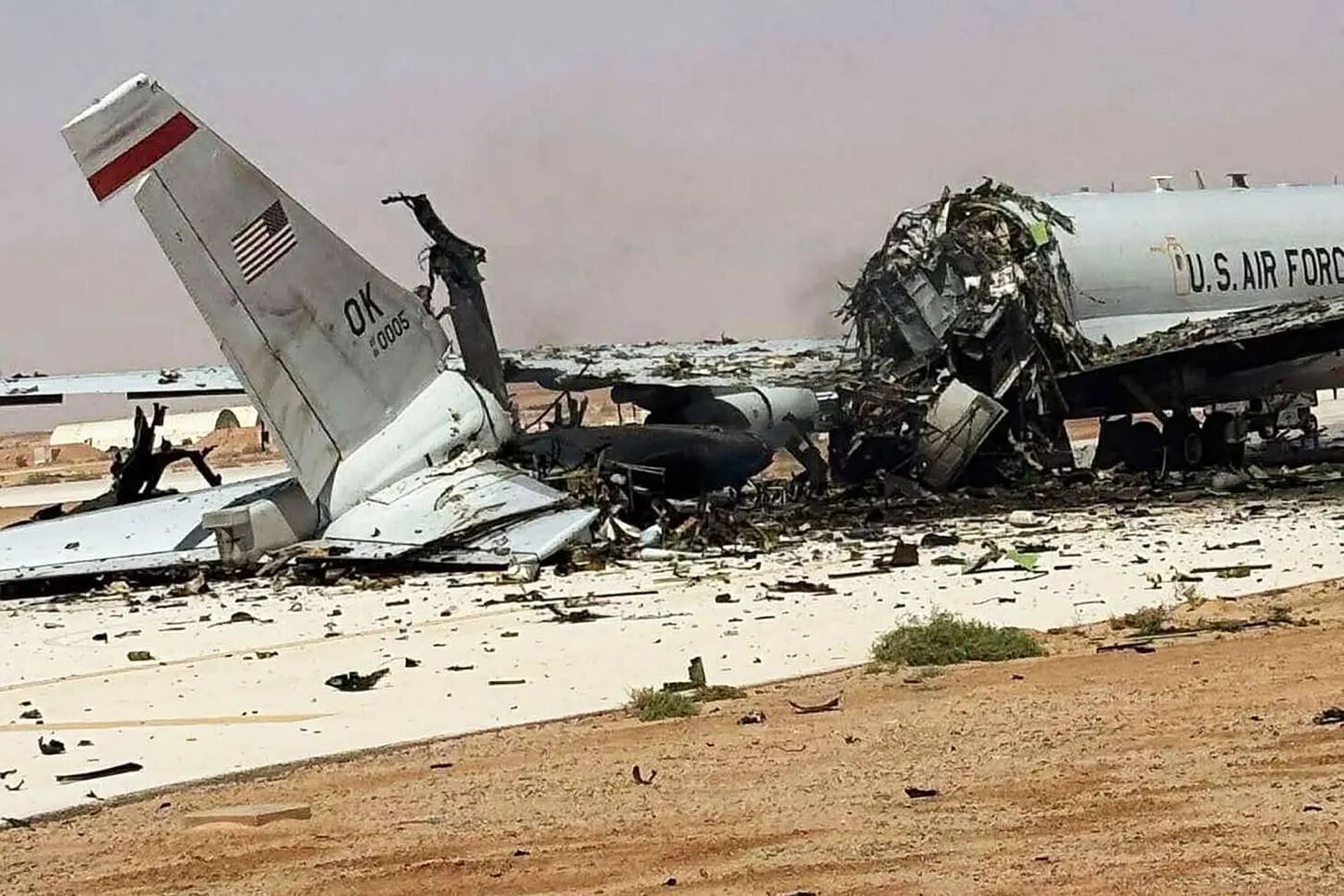
Over the past few days, the US/Israeli/GCC ("US Axis" from here on) war against Iran has reached a pace not seen since the opening hours of the conflict. Waves of Iranian missiles and drones have been striking targets across the region, with an apparent shift in target selection concentrating unprecedented amounts of Iranian firepower against Kuwait and Jordan.
The war between the US Axis and Iran can be arbitrarily divided into several theaters. There's the war for control over the Strait of Hormuz, countervalue strikes against infrastructure, Iran's campaign against Kurdish proxies staging for ground operations on its western flank, and so on. Today we'll be focusing on a narrow slice of the conflict: the air war, with IRGC missile and drone forces (IRGCASF) on one side and the USAF, IAF, and GCC air forces on the other. As we'll see, this theater of the war has profound implications that cut across all other areas of the conflict.
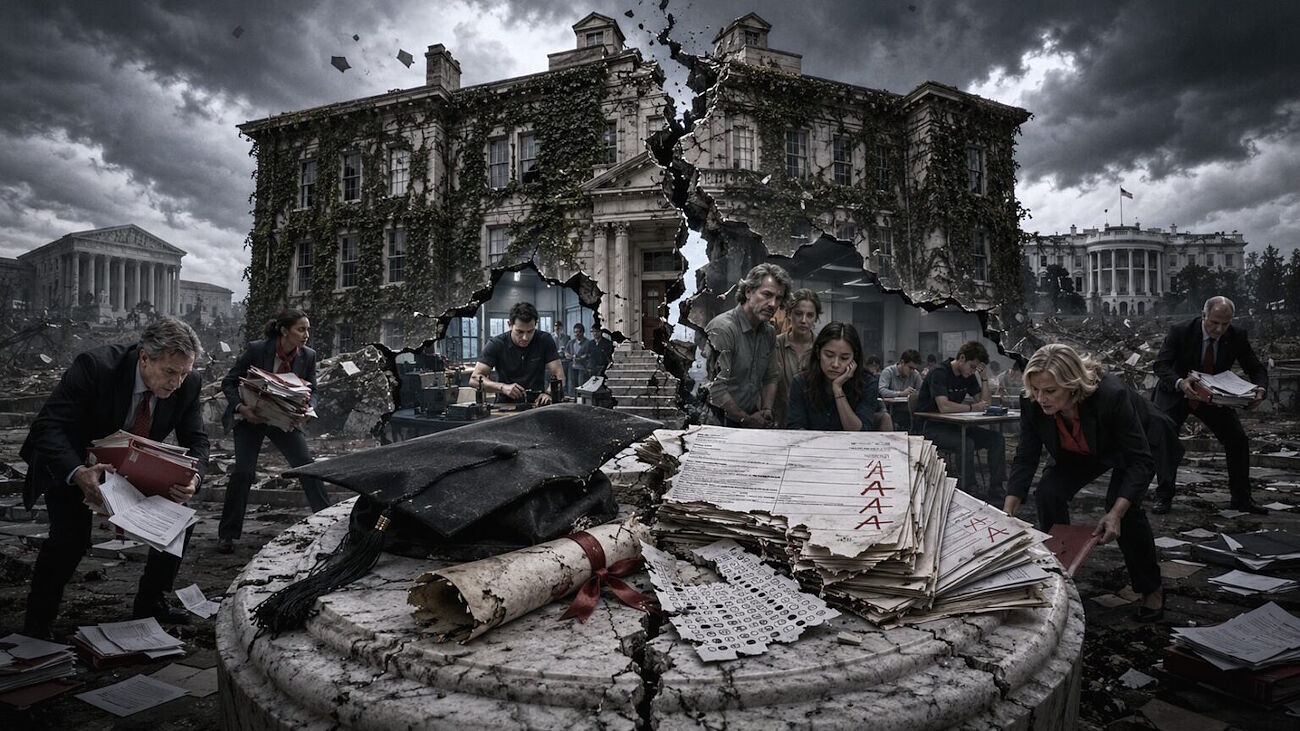
Today is dot-connecting day again! Something profound is happening in American higher education, and you'd never know how profound. Over a two-month period, a series of seemingly disconnected events — the return of standardized testing, the sudden panic over grade inflation, plunging business trust, and a relentless crackdown by the Trump administration — are, in fact, tightly connected. They represent the Great Unwinding of a core ideological project that systematically dismantled academic standards to achieve woke demographic outcomes. Three days ago, the Chronicle of Higher Education reported, "Janet Napolitano Helped Kill the SAT. She's Reconsidering."
If her name sounds familiar, it's probably because Janet Napolitano was Obama's DHS Secretary from 2009 to 2013, during which tenure she implemented DACA and the Transportation Safety Administration (TSA). After leaving DHS, she immediately became president of one of the nation's largest progressive public university systems — the University of California.
Back in May 2020, the UC Board of Regents — then strongly backed by Napolitano as UC's president — voted unanimously to stop using SAT and ACT scores in admissions, a move that killed the tests in one of the country's most influential university systems. Unsurprisingly, this terrible idea grew like cocaine-fueled kudzu all over the Ivory Tower.
Nobody declared martial law — yet America began looking like it anyway
Editor's Note:
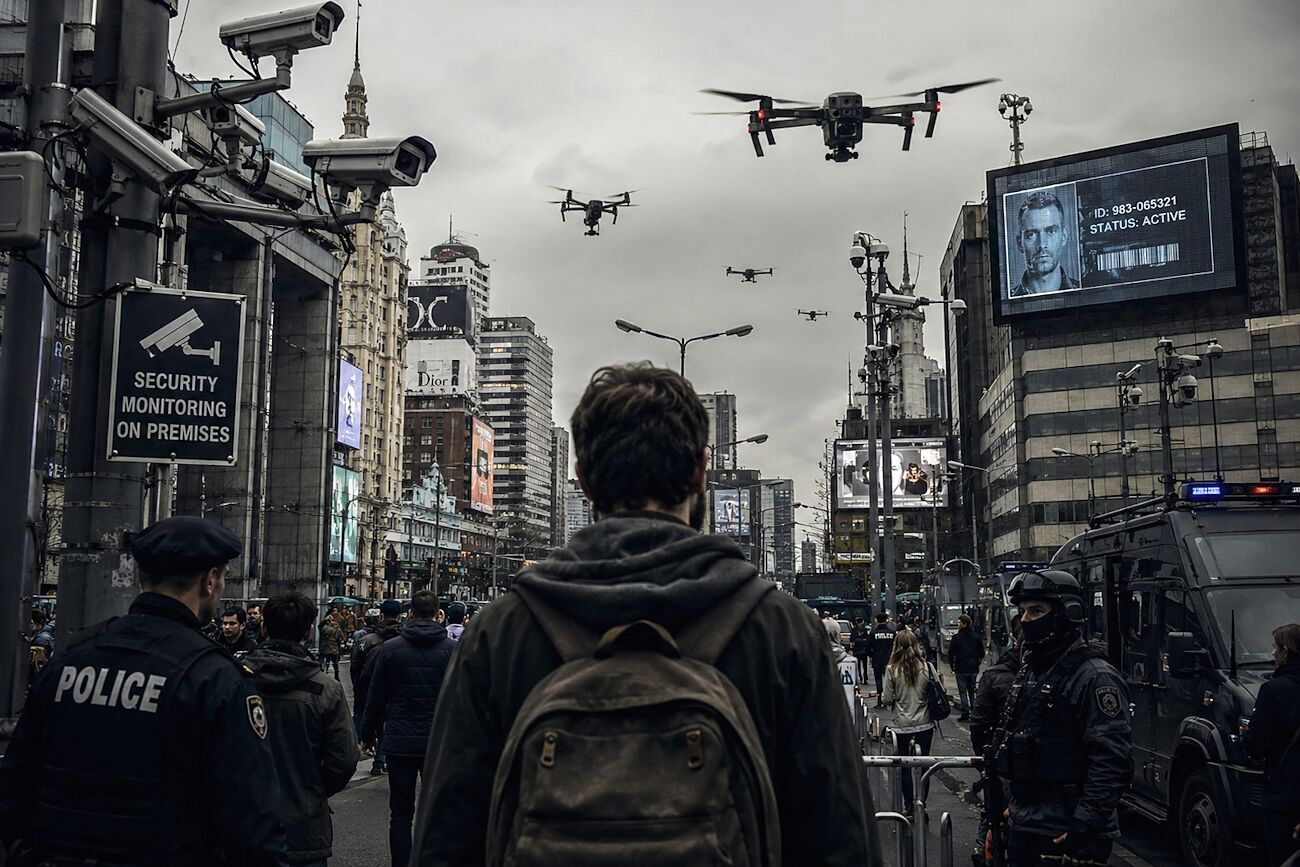
There are stories that announce themselves with explosions, riots, or breaking-news headlines, and then there are stories so subtle that they quietly rewrite an entire society before anyone realizes what has happened. This is one of those stories. During the preparation of this investigation, several retired police officers, private security professionals, emergency responders, and ordinary citizens described nearly identical experiences despite living hundreds or even thousands of miles apart. None believed they were witnessing anything extraordinary at first. It was only when they looked backward — sometimes over a decade — that a disturbing pattern became impossible to ignore. Streets had not become military checkpoints overnight. Neighborhoods had not suddenly filled with surveillance towers. Instead, the changes arrived one camera, one drone, one security contract, and one "temporary" emergency measure at a time until extraordinary security became indistinguishable from ordinary life. What follows is not an argument against public safety, nor an attempt to romanticize a past that was hardly free from crime or violence. It is an examination of a transformation that has occurred quietly enough for most people to stop seeing it altogether.
___________
There is an old saying among investigators that people rarely notice change while it is happening. They notice it only when they compare today's reality with memories that have remained frozen in time. Memory preserves snapshots, while history moves continuously. That disconnect explains why so many citizens insist that nothing fundamental has changed even as the physical landscape around them becomes increasingly populated by surveillance cameras, armed guards, automated license plate readers, biometric scanners, drones, and predictive security technologies. No single installation appears revolutionary. No single policy seems capable of altering the character of a society. Yet history rarely advances through dramatic leaps. More often, it advances through thousands of small decisions that seem perfectly reasonable when viewed independently but become historically significant when examined collectively.
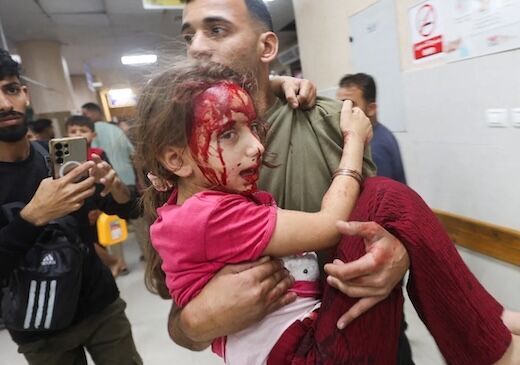
In October 2023, Israel found an excuse to breathe new life into an old story of slaughter and expulsion. The chief differences this time have been of scale and duration
The truth slowly comes to light: Israel's genocide in Gaza was planned decades ago.
Listen to the testimonies of four Israeli soldiers who served in Gaza.
Soldier 1: "Human lives didn't matter. You could kill, there was no law. No one would say a word to you. But it's not a good feeling. It mainly kills your humanity."
Soldier 2: "At first I wasn't willing to execute Arabs who weren't resisting [that is, civilians]. Then we came to the conclusion that we had to kill. We went through the process of ceasing to see them as human beings."
Soldier 3: "We caught guys, lined them up and eliminated them. In retrospect, it looks like murder."
Soldier 4: "We would roam through refugee camps in Gaza and carry out purges... Every soldier who was there created a 'concentration camp', and they didn't hesitate to kill people who caused a slight disturbance."
No, these testimonies are not new. The whistleblowers did not serve in Gaza during the current, ongoing genocide there. These accounts are nearly 60 years old, published last week by the Israeli newspaper Haaretz under the headline "We were ordered to kill".
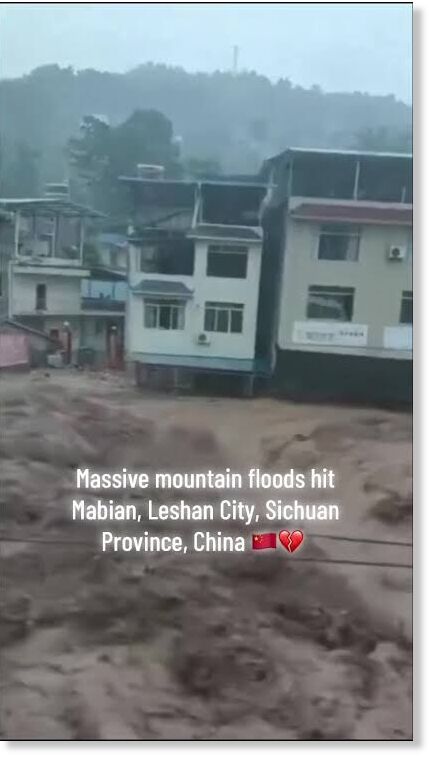
Severe flash floods have inundated the streets of Sichuan, China.
Torrential rainfall has transformed urban roadways into rushing rivers, carrying enough force to sweep away multiple vehicles and threaten local infrastructure.
There was a time when the arms dealer waited in the corridor. He financed the campaign, endowed the think tank, took the general to dinner, and hoped the man inside the office would remember him when the contract came up. The wall between the money and the decision was thin, often corrupt, but it was there. Someone held the public trust, and someone else tried to buy it, and you could at least tell the two apart.
That wall is gone. The financier no longer waits in the corridor. He holds the office. He signs the checks. He is the buyer and the seller, the regulator and the regulated, the public interest and the private portfolio, fused into a single man in a single suit, and the arrangement is entirely legal, which is the whole problem.
One of these men may already be familiar from a previous article. His name is Friedrich Merz.
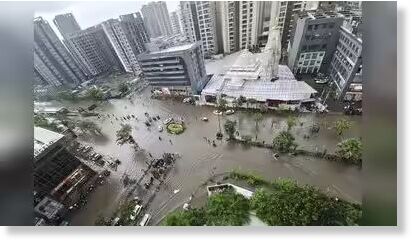
At least nine people have died in Surat over the past two days in monsoon-related incidents as intense rain triggered widespread flooding across the city.
Five weather systems active simultaneously over Gujarat have intensified the monsoon, pushing South Gujarat and parts of Saurashtra into a severe flood situation. Heavy rainfall has been forecast at isolated places in Surat, Tapi, Narmada, Chhota Udepur, Dahod, Amreli and Bhavnagar.
The impact of the active weather systems was visible across the state on Wednesday morning. Between 6 am and 10 am on July 8, rainfall was recorded in 59 talukas, with Kaprada in Valsad district receiving the highest 1.26 inches, followed by Nanapondha with 1.14 inches.
Even as rainfall eased in some areas, the threat shifted from the skies to overflowing rivers and reservoirs. Continuous heavy rain in Valsad district triggered a sharp rise in inflows into the Madhuban Dam. Authorities have appealed to people living downstream to remain alert.
The monsoon's intensity over the past 24 hours has been unprecedented. Rainfall was recorded in 195 talukas across Gujarat, while six talukas received more than 10 inches.
The Surat district emerged as the epicentre of the deluge, with Palsana recording a staggering 18 inches of rainfall, followed by Kamrej with 17 inches. Navsari received 15 inches, Surat city 14 inches, Kaprada 13 inches and Jalalpore 11 inches, highlighting the extraordinary scale of the downpour.
As floodwaters receded across Surat on Thursday, they revealed the human tragedy left in the wake of 24 hours of torrential rain. Thirteen more bodies were recovered from different parts of the city, taking the death toll to 26, as families waited for missing relatives and authorities continued search operations.
Officials said all the victims were men and had died due to drowning. "Most of them were trying to return home when they were caught in the sudden surge of floodwaters," a senior civic official said.
Four bodies were recovered from Bhestan, including one that is yet to be identified. Three bodies, including those of a 17-year-old boy and a 25-year-old contractual employee of Surat Municipal Corporation, were found in Limbayat. An elderly resident of Sachin GIDC was found dead near his shop, while two bodies were recovered by Laskana police.
The body of a 27-year-old mechanic, who had gone missing after being swept away near Valak Patiya, was recovered from the Tapi river beneath the Amroli bridge on Thursday evening. Two more drowning victims were found in Saroli and Puna.
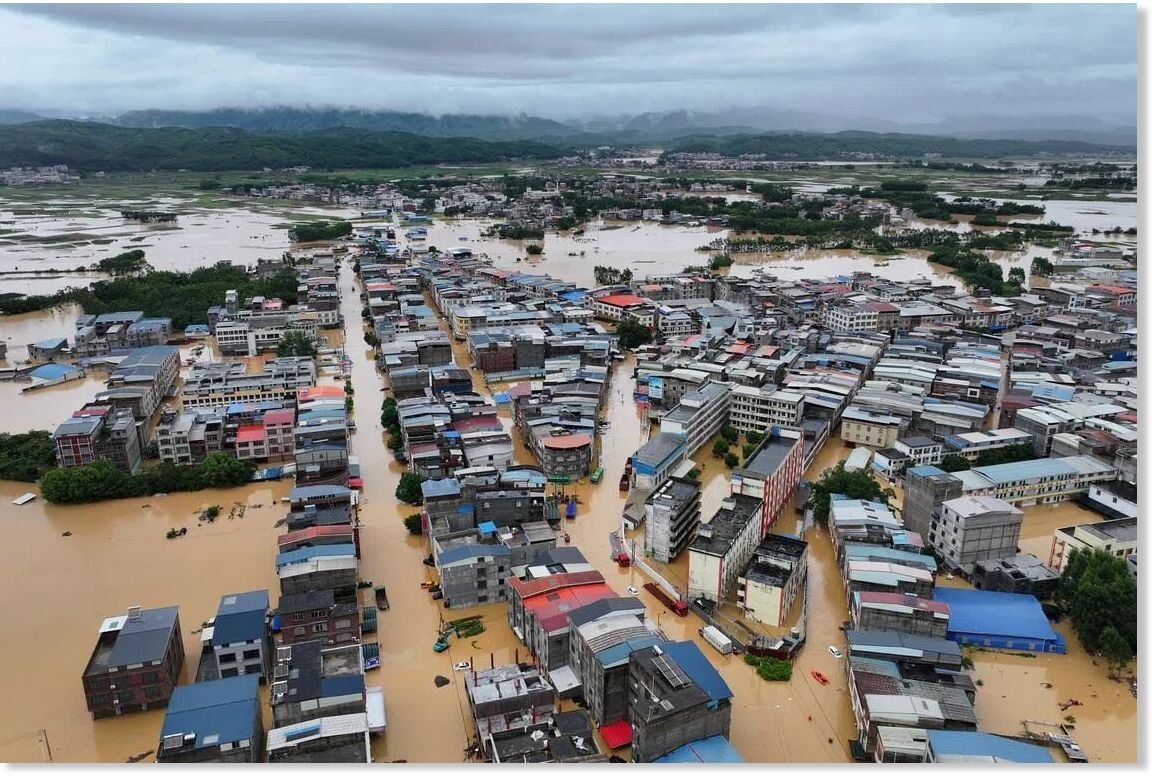
Nanning, the capital of China's south-western Guangxi region, raised its flood-control response to the highest level as rivers and reservoirs swelled with the passage of Typhoon Maysak, Chinese state media said on July 6.
Now a slower-moving tropical storm, Maysak no longer has winds of more than 80.5kmh that lashed Vietnam and China's southern island province of Hainan over the weekend.
But as the storm heads inland and weakens, it will dump the water it sucked up on its way across the South China Sea, triggering catastrophic flooding, Chinese meteorologists say.
The authorities in Nanning, a city of nearly nine million people, raised the flood-control emergency response level to I from III due to "extremely heavy rain", China Central Television reported.
Flooding from Tropical Storm Maysak kills 39 in southern China
About 130,000 people have been evacuated from the Guangxi region while thousands of rescuers have been deployed.
Flooding from Tropical Storm Maysak has killed 39 people in southern China, most of them after a dam breach inundated the city of Nanning.
Ding Wei, the city's vice mayor, announced the toll at a news briefing on Thursday, up sharply from a previous count of six, after record rainfall breached reservoirs and sent torrents of water through towns and cities in the Guangxi region.
The dam breach in Nanning killed 26 people, Ding said.
About 130,000 people have been evacuated from the region, and drones and thousands of boats have been used in a huge relief and rescue operation to reach people trapped by the waters.
Lloyd's bank has been accused of debanking a left-wing news outlet, which has left the publication with “barely any funds”.
First they came for Muslim activists. Then they came for Nigel Farage. Now, they're coming for independent media outlets.
UK-based readers may recall the moment almost exactly three years ago when the word "debanking" entered the mainstream British English lexicon. The prestigious London-based private bank Coutts had just decided to close Nigel Farage's bank account due to his unsavoury political views and alleged Russian connections. That decision turned out to be very costly.
Almost immediately, Farage did what Farage does best: he whipped up a massive media frenzy. In next to no time two senior banking scalps had been claimed: those of Dame Alison Rose, the CEO of Coutts' parent bank and "Big Four" lender, Natwest (formerly known as the Royal Bank of Scotland) and Coutts' chief executive Peter Flavel.
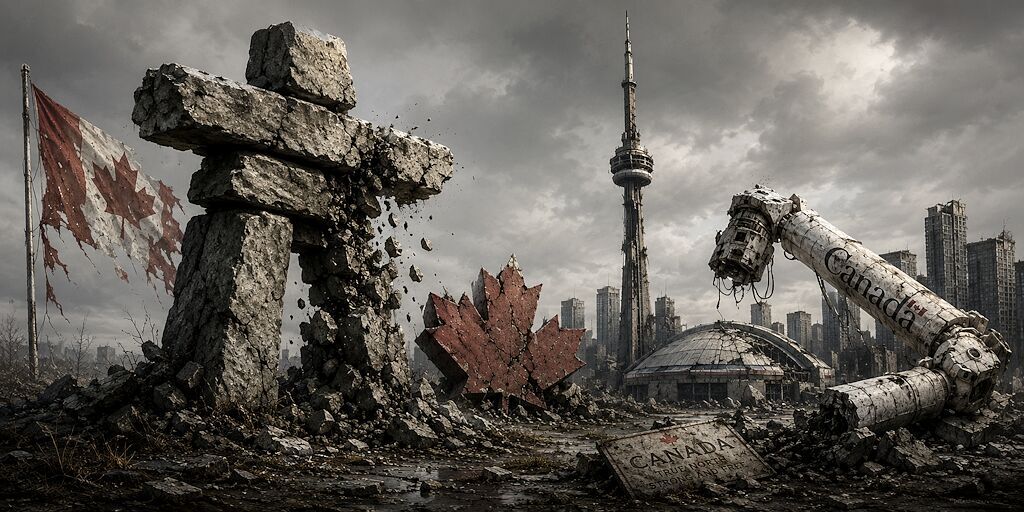
This was a country that used to punch above its weight across all key metrics and in a large part, did so espousing classical liberal values.
Multiculturalism here was both uncontroversial and functional. People came from everywhere, integrated, and got on with building lives, businesses and contributing to that overall ethos Canadian culture.
Minority rights and gender equality stopped being fights and became defaults.
Ontario, the most populous province, ran one of the cleanest grids on the continent for half a century on the back of CANDU, a reactor we designed ourselves. Peaceful, homegrown, zero-carbon, clean energy, and nobody lost any sleep over it. In fact, most people probably weren't even aware of that.
By every classical liberal measure that actually mattered, Canada was a success story that inspired the rest of the world.













Comment: Update July 10
The Times of India reports: