OF THE
TIMES
The reality constructed by QAnon has ultimately unfolded much like a fictitious spy novel, one that details a "secret" counter-coup by the Trump administration against the so-called "Deep State" that Trump - in reality - has dutifully served ever since winning the 2016 election. Despite QAnon's having been proven wrong repeatedly, its following remains large and the phenomenon itself remains influential.
Robert Martin, a documentary filmmaker whose series A Very Heavy Agenda delves into the nefarious political influence of the neoconservatives, told MintPress that QAnon is the "perfect wish-fulfillment conspiracy snowball" aimed at conservatives, adding that it has worked to "rehabilitate some of the most tarnished and scary neocons to all of a sudden be heroic figures."
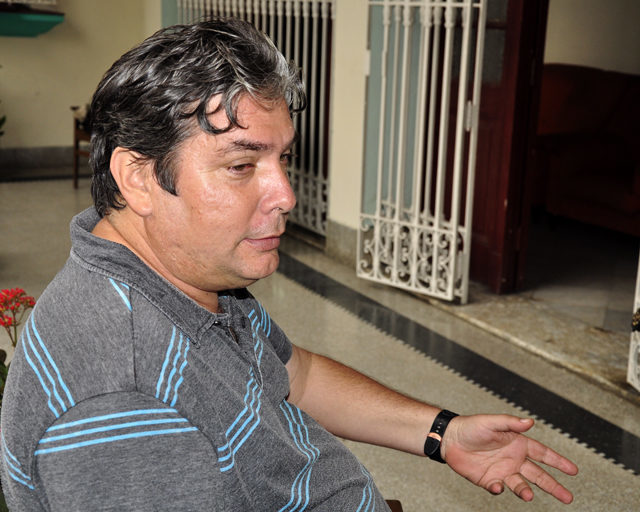
Raúl Capote is a Cuban. But not just any Cuban. In his youth, he was caught up by the US Central Intelligence Agency (CIA). They offered him an infinite amount of money to conspire in Cuba. But then something unexpected for the US happened. Capote, in reality, was working for Cuban national security. From then on, he served as a double agent. Learn his story, by way of an exclusive interview with Chávez Vive, which he gave in Havana:
Q. What was the process by which you were caught up?
It started with a process of many years, several years of preparation and capture. I was leader of a Cuban student movement which, at that time, gave rise to an organization, the Saiz Brothers Cultural Association, a group of young creators, painters, writers, artists. I worked in a city in southern-central Cuba, Cienfuegos, which had characteristics of great interest to the enemy, because it was a city in which an important industrial pole was being built at the time. They were building an electrical centre, the only one in Cuba, and there were a lot of young people working on it. For that reason, it was also a city that had a lot of young engineers graduated in the Soviet Union. We're talking of the last years of the 1980s, when there was that process called Perestroika. And many Cuban engineers, who arrived in Cuba at that time, graduated from there, were considered people who had arrived with that idea of Perestroika. For that reason, it was an interesting territory, where there were a lot of young people. And the fact that I was a youth leader of a cultural organization, which dealt with an important sector of the engineers who were interested in the arts, became of interest to the North Americans, and they began to frequent the meetings we attended. They never identified themselves as enemies, or as officials of the CIA.
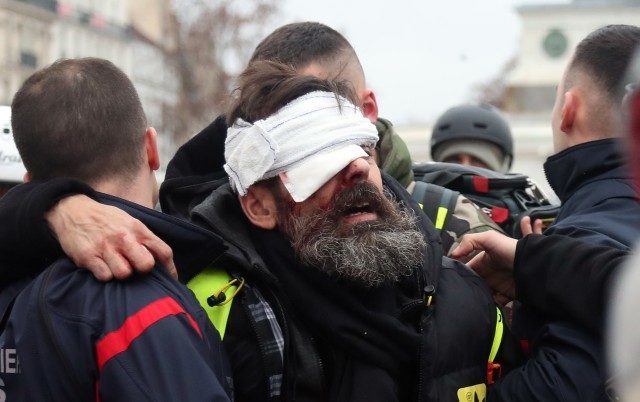
Comment: Christophe Dettinger, the boxer who landed a couple of punches against riot police attacking women, just today received two years' imprisonment. Many less high-profile cases than his have seen people sent down for up to a year for posting messages on social media about organizing rallies.
This is one revolution that certainly is not being televised.