OF THE
TIMES
"The pharmaceutical companies are an amoral bunch. They're not a benevolent association. So they are highly unlikely to donate large amounts of money without strings attached. Once one is dancing with the devil, you don't always get to call the steps of the dance."—A psychiatrist, quoted in the Boston Globe, 2002.
American citizens expect chemicals in commerce to be safe, but they know that, far too often, this is not the case. Congress has neglected the problem of dangerous chemicals in consumer products for decades, to the great benefit of chemical industry profits. American families have waited far too long for a strong regulatory program that aggressively protects their children's health and safety from toxic chemicals. According to the Environmental Protection Agency, at least 1000 toxic chemicals deserve immediate attention. And we need assurance that the most dangerous chemicals will be regulated or banned in a timely manner. We commend the House for its focus on the need to overhaul chemical policy, but this piece of legislation will not do the job. It tips much too far in favor of an industry in serious need of regulation.

Yummy.French authorities are looking into how a lamb genetically modified with jellyfish protein was sold as meat to an unknown customer, a judicial source told AFP on Tuesday.
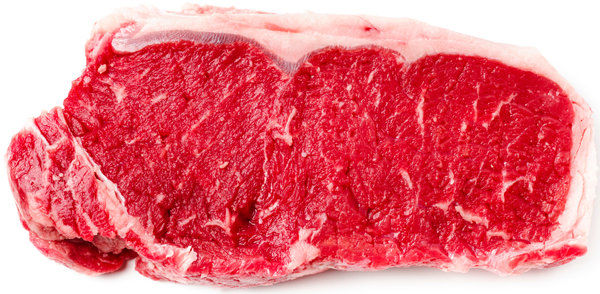
The jellyfish-lamb, called "Rubis", was sent to an abattoir from the National Institute for Agricultural Research in Paris late last year and somehow ended up on a butcher's slab.
Don't worry my fellow Americans, that is France, something like this could never happen here."A female lamb born to a sheep that was genetically modified as part of a medical research program was sold to a person in the Parisian region in October 2014," said the National Institute for Agricultural Research in a statement, confirming a story first reported by Le Parisien newspaper.
The case has been taken up by a public health court in Paris, a judicial source told AFP.
Rubis "found itself on a plate! Who ate it? No one knows," exclaimed Le Parisien on Tuesday.
France remains one of the staunchest opponents of GM research, ever since environmental protesters pressured the government into banning GM crops in the 2000s.
The European Union authorised the import and sale of 19 GM crops in April, but is likely to pass legislation allowing individual countries to block their use - in part thanks to demands from France.
Comment: One has to wonder why the American Council on Science and Health would publish an article discussing the active avoidance by the media in discussing the over-hyped dangers of second-hand smoking on the one hand, yet on the other hand call for "continued, strong anti-smoking measures." Perhaps they should do a little more research themselves on the benefits of smoking, its continued demonization in the scientific community and then think twice about joining the chorus of anti-smoking cries: