Health & WellnessS


Hourglass

Getting in shape, a critical part of preparedness

Image
Okay, so you've taken the time to research and assemble your bug out bag and the gear you'll want to take with you when the time comes. You've figured out your escape route, complete with two-three alternate routes. You've got enough food and water for 72 hours, the length of time you've estimated it will take to reach your bug out destination.

But less than two hours into your journey, you're feeling wiped out. The heat (or cold) is sapping your strength. You're pausing more than you're walking. You're drinking more water than you planned on drinking. The weight of your bag seems too much. You ache; your feet are already hurting.

Comment: More info:
  • When disaster strikes are you prepared?


Bandaid

First aide 101: Heal a wound naturally

Image
As a fairly active and very clumsy person, I am no stranger to bumps, bruises, and cuts. I often get scratches on my skin, whether they are from working in the garden, hiking on the trail, or cooking in the kitchen.

Fortunately for accident-prone people like me, there is a wide selection of natural products that can help heal wounds. If you want to know how to heal a cut fast, look to things like honey, zinc, chamomile, and more.

Comment: Read more about Foods and herbs that help guard against infection


Bacon n Eggs

Great-tasting, healthy food at school = Happier, smarter kids

heathy foods kids school
© Conscious Kitchen
The first-in-the-nation 100% organic, non-GMO school lunch program began in Sausalito Marin City School District in 2013. It has been a blazing success in its first two years of operation. Teachers and admininstrators report:
  • increased leadership qualities exhibited by students;
  • improved academic performance;
  • 67% decrease in disciplinary cases;
  • increased attendance.
Teachers have also observed students treating one another with respect, improved manners, and more open communication.

Steve Van Zant, Superintendent of Sausalito Marin City School District, is clearly pleased with the result. "Food service is one of those things as a superintendent, you say, 'I can't lose money on this.'" But after talking to Conscious Kitchen founder, Judi Shils, Van Zant was convinced he had an opportunity to do something special. As it turned out, the results were not only positive for the budget, it created a whole new school culture.

Comment: Given the results of the program, why a school district do anything else? But then, squeezing education budgets, making sweetheart deals with purveyors of cheap, factory-farmed pseudo-food producing an ignorant, compliant workforce, it makes a kind of horrible sense. Kudos to this school district for bucking the trend.


Nuke

Nuclear power kills! Nuclear Regulatory Commission cancelled its nuclear site cancer study

Image
© modernsurvivalblog.com
The US's Nuclear Regulatory Commission just cancelled its study into cancer near nuclear plants citing the 'excessive cost' of $8 million, writes Chris Busby. Of course that's rubbish - similar studies in the UK have been carried out for as little as £600 per site, and in any case $8 million is small change for the NRC. The real reason is to suppress the unavoidable conclusion: nuclear power kills.

After spending some $1.5 million and more than five years on developing strategies to answer the question of increases of cancer near nuclear facilities, the US Nuclear Regulatory Commission (NRC) last week reported that they would not continue with the process. They would knock it on the head [1].

Comment: 'So despite the truly enormous amount of information that has emerged about the adverse health effects of releases of radioactivity since 1990, no official investigation will be carried out.' And if there is any official investigation the NRC will claim that radiation is good for you!


Pills

BigPharma win: College students report frequent use of prescription pain medications, sedatives and stimulants

prescription drugs
Prescription drug use for non-medical reasons is a fairly common practice among college students, according to the 2015 College Prescription Drug Study (CPDS).

"Overall, one in four undergraduates reported that they used prescription pain medications, sedatives or stimulants for non-medical reasons in their lifetimes," said Anne McDaniel, Ph.D., author of the study and associate director of research and data management at Ohio State University's Center for the Study of Student Life.

Stimulant use was the most common, with seven out of 10 college students reporting that it is somewhat or very easy to obtain controlled stimulants without a prescription. About 18 percent of undergraduates reported misusing prescription stimulants such as Adderall. The great majority (83 percent) received them from friends and most said they used the drug to help them study or improve their grades.

Comment: Prescription drug use is one of the most significant health dangers facing Americans of all ages today. The number of overdose deaths from opioid painkillers alone more than tripled from 1999 to 2006, to 13,800 deaths that year. In the past, most overdoses were due to illegal narcotics, such as heroin, with most deaths in big cities. But prescription painkillers have now surpassed both heroin and cocaine as the leading cause of fatal overdoses.


Clock

New study shows hunter-gatherer tribes get less shut-eye

Image
© Finbarr O'Reilly / Reuters
Hunter-gatherers in African and South American tribes appear to only clock up an average of 6.4 hours of sleep per night, a new study reveals. Scientists say the industrial world people can finally relax about sleeping less than eight hours a night.

A group of researchers have recorded sleeping habits of three hunter-gatherer societies in three different environments in Africa and South America: the Hazda tribe in Tanzania, the San in Namibia and the Tsimane in Bolivia. Their findings have been published in Current Biology magazine this Thursday reveals.

Comment: Seven hours of sleep is the optimum - and more than eight is 'hazardous' to health'


Bullseye

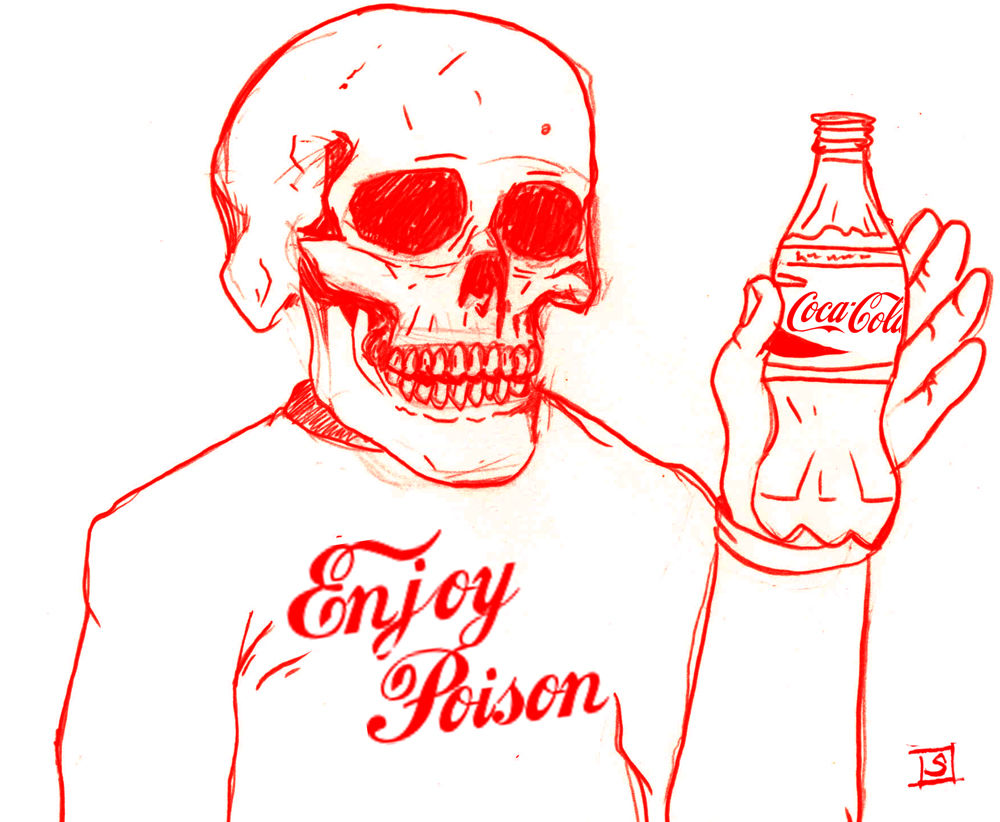
Coca-Cola is poison & food companies lie

Image
© sedanidraws.wordpress.com
In an unexpected move, celebrity football star Tom Brady recently joined the ranks of countless health experts and activists by denouncing the popular soft drink Coca-Cola, calling it "poison."

In an interview with Boston sports radio station WEEI, Brady said,
"You'll probably go out and drink Coca-Cola and think, 'oh yeah, that's no problem.' Why? Because they pay lots of money for advertisements to think that you should drink Coca-Cola for a living? No, I totally disagree with that."

Comment: Study finds: Food, drink industries undermine health policy
Writing in The Lancet medical journal, the researchers cited industry documents they said revealed how companies seek to shape health legislation and avoid regulation.

This is done by "building financial and institutional relations" with health professionals, non-governmental organizations and health agencies, distorting research findings, and lobbying politicians to oppose health reforms, they said.

They cited analysis of published research which found systematic bias from industry funding: articles sponsored exclusively by food and drinks companies were between four and eight times more likely to have conclusions that favored the companies than those not sponsored by them.


Info

The truth about genetic risk

Genes
© cosmin4000/iStockphotoThe epigenome can turn genes in DNA on or off.
No gene is a death sentence. No gene is even a foregone conclusion. And our statistics about risks are exposed for the fear-mongering tool they are.

Because it takes 17 years for basic science research, and paradigm-shifting data to trickle into our doctor's offices, medicine today is still operating on a one gene-one ill-one pill model. A model that should have been blown out of the water by the massive anti-climax that was sequencing the human genome.

It's Above the Genome

The vast and awe-inspiring realm of epigenetics encompasses all of the variables of evolutionary mismatch - all of the ways in which we are living in discord with what our genes have evolved to expect over several million years. Stress, sedentariness, lack of contact with nature, minimal sleep, processed and adulterated food, pharmaceuticals, industrial chemicals. It turns out that these are the reasons that our genes are malexpressed when they are.

Because of this, no gene is a death sentence. No gene is even a foregone conclusion. And our statistics about risks are exposed for the fear-mongering tool they are. Instead of inborn genetic problems and even calculable infectious disease susceptibility, might be really looking at reversible nutrient deficiencies?

Sounds crazy, right?

Comment: Lifestyle changes can indeed protect against developing cancers and other serious diseases. Following a healthy diet that is low in carbohydrates and containing sufficient amounts of saturated fats is a good place to start. It's also important to improve detoxification and to manage stress levels.


Attention

Addiction to smart phones: Children as young as seven are becoming hunch backs

Image
Dr Carter revealed he had seen an 'alarming increase' in the number of patients with the condition over the past few years and said 50 per cent of them are school-age teenagers.
Shocking X-rays show teenagers and children as young as seven developing hunchbacks and abnormally curved spines because of an addiction to smartphones.

A leading Australian chiropractor has warned that 'text neck' - a condition often brought on by bending over phones and tablets for several hours at a time - is becoming an epidemic.

Dr James Carter, based in Niagara Park, on the NSW Central Coast, said the relatively new condition can lead to anxiety and ­depression as well as spinal damage.

He revealed he had seen an 'alarming increase' in the number of patients with the condition over the past few years and said 50 per cent of them are school-age teenagers.

Comment: More important information on Compulsive texting: What it's doing to teenagers


Rose

Study reveals "killer germs" obliterated by Medicinal smoke

Image
The ritualistic use of plant smoke stretches back to the prehistorical era and is still used, the world over, as a way of 'cleansing' the spirit. Now modern scientific research reveals that the practice may actually have life-saving implications by purifying the air of harmful bacteria.

The burning of herbs and plant resins for medicinal and spiritual purposes - so-called 'smudging' - is an ancient practice among indigenous people around the world; one increasingly adopted by Westerners. Smudging is a technology believed to unlock the 'spirits' of various plant allies to restore balance and ease to the individual or group. Some liken it to taking a 'spiritual shower,' enabling you to wash away emotional and spiritual negativity that accumulates in your body and the spaces you live.

That said, skeptics believe attributing health benefits to the burning of sage and incense reflects 'magical thinking.' The practice has even been accused of being a New Age form of cultural imperialism where 'plastic' or 'white' shamans mimic and co-opt the traditions of indigenous people their predecessors essentially conquered.

Comment: More on healing with herbs:
  • Better than big pharma: 5 herbs you can't do without