Health & WellnessS


Alarm Clock

Flashback Morning people are actually happier than night owls

insomnia
© Sleep problems photo via Shutterstock
Night owls often wake up for work or school with a scowl on their faces and wishing for an IV drip of coffee, while morning people come skipping in 15 minutes early. However, morning people aren't chipper just as the sun is coming up; they are happier and more satisfied with life overall, a new study suggests.

Teenagers' night owl tendencies fade as they age, and the study says this switch to a morning-focused schedule could be why older adults are happier than younger ones.

"Past research has suggested that morning-type people report feeling happier than evening-type people, and this research was only on young adults," study researcher Renee Biss, a graduate student at the University of Toronto, told LiveScience.

Comment: For more information, see:


Bell

Procrastinators beware: Insomnia linked with putting things off

Insomnia
© Dreamstime
People who procrastinate may be more likely to have insomnia, according to a new study.

In the study of nearly 600 people, researchers found that those who tended to put things off also had more trouble sleeping, compared with people who did not tend to procrastinate.

Although it isn't clear how the link may work, the researchers said that it seemed to be explained by people worrying about things that they wanted to get done before going to bed, the researchers said. At bedtime, "people who procrastinate are ruminating about the things they need to do and haven't done," and that makes it difficult to go to sleep, said study author Ilana S. Hairston, a sleep researcher at Academic College of Tel Aviv in Israel.

Comment: If you have problems with procrastination, try the above and adjust your body clock to being a morning person. You can also check out our Health and Wellness show on the subject of willpower for more tips and ideas.


Alarm Clock

Mechanism through which sleep improves memory uncovered

woman sleeping
© unknownThe study is the first to show that autonomic nervous system activity during REM sleep is linked to memory consolidation.
Sleep researchers agree that sleep plays an important role in moving information from short- to long-term memory; however, attempts to uncover the underlying processes have yielded conflicting results. Now, for the first time, new research reveals that autonomic nervous system activity during rapid eye movement sleep appears to play a key role in memory consolidation.

Such was the finding of a study from the University of California-Riverside (UCR), published in the Proceedings of the National Academy of Sciences.

The study shows that increase in activity of the autonomic nervous system (ANS) during sleep is strongly linked to memory improvement.

Comment: A good night's sleep is essential for a healthy mind and body. Sleep is the body's 'repair time' and repair is best achieved if we leave a four hour gap between eating and going to bed, and by sleeping in a completely dark room.

For more information, check out our recent Health and Wellness show on the topic of Sleep, Light and Circadian Rhythms and this Connecting the Dots episode also contains essential information on a good night's sleep.


Pills

Low vitamin levels may be linked with migraines in kids

boy headache
© SergiyN/Shutterstock.com
Kids who frequently get migraines may have lower levels of certain vitamins and antioxidants in their blood, a new study suggests.

Researchers found that, of the children and teens in the study who visited a headache clinic for migraine pain, relatively high percentages had mild deficiencies of vitamin D, riboflavin (a B vitamin) and coenzyme Q10 (CoQ10) — a vitamin-like substance that is made in the body and is used to produce energy within cells — compared with kids in the general population.

For example, the study found that 42 percent of kids with migraines had riboflavin levels that were at or below the level at which supplementation is recommended. It also showed that 71 percent of kids with migraines had levels of CoQ10 that were at or below the levels at which a supplement is advised, and 91 percent had vitamin D levels that were below that threshold.

Comment: See also:


Syringe

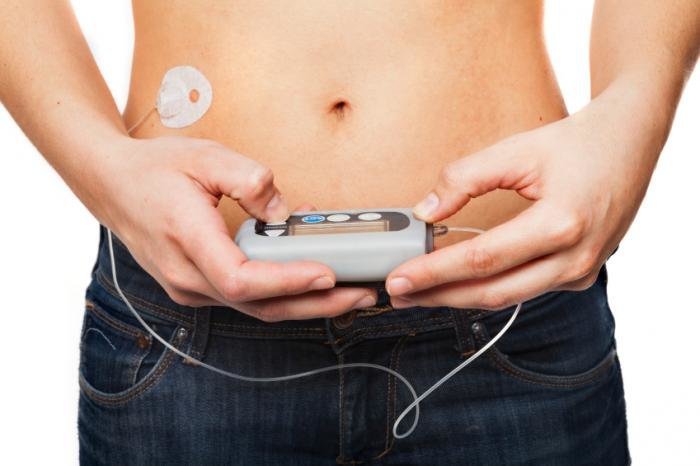
All you need to know about insulin sensitivity factor

Insulin pump
© UnknownPeople with type 1 diabetes need to take insulin every day to control their blood sugar levels.
Insulin is a hormone that plays and important role in the body's metabolism by controlling blood sugar levels and other processes.

It is produced by beta cells in the pancreas and released it into the bloodstream after we eat to enable some body cells, such as muscle, fat, and heart cells, to absorb the sugar from the food we eat.

Insulin also helps store glucose in the liver as glycogen when it is not needed, so it can be released it when blood sugar levels are low or when more energy is needed.

Therefore, insulin is essential for regulating blood sugar, ensuring that levels remain within certain limits and do not climb too high or fall too low.


Comment: Switching to a lower carbohydrate or even ketogenic diet is the best way to keep insulin levels in check and increase the insulin sensitivity of the body's cells.


Comment: Further reading:


Candle

New York holistic doctor thought to have died naturally was poisoned by her close employee

 Dr. Mary Yoder
Dr. Mary Yoder
It is with heavy heart today that I share the following breaking news; Dr. Mary Yoder, a holistic doctor in NY, was actually poisoned and did not die naturally as we thought back in July of 2015.

Comment: See also: Prominent NY holistic doctor found dead of questionable suicide


Magnify

Invisible microparticles in food can deliver drugs & vaccines

microparticles
Thanks to researcher Mary Baker for showing me an explosive patent application and its implications.

Before getting to the details, the overview is this: a technology exists to embed tiny invisible particles in food products, and these particles can deliver nutrients and drugs and vaccines. Apparently, the technology has existed for at least 10 years. Yet, as Baker states, when have you seen a food label that mentions such particles?

Are we to assume the technology hasn't yet been applied? Is it operating at a stealth level? I'll try to answer these questions in a minute. But first:
US Patent application 'US20080044481 A1'. "Microparticles for oral delivery." May 27, 2005. The inventor and assignee is listed as Mordechai Harel, who was associated with Advanced BioNutrition Corporation of Columbia, Maryland. Here are a group of quotes from the patent application. The statements leave no doubt about the wide, wide application of the technology.

Candle

Prominent NY holistic doctor found dead of questionable suicide

Dr Alex Shvartsman
Dr Alex Shvartsman
It is with a heavy heart that break this tragic news of another doctor death. This time it is a prominent holistic doctor who practiced in Long Island, New York. His website video actually calls him a "leading physician of the world" and his patients are posting on my Facebook page (and sending emails) that they don't believe it was suicide.

Dr Alex Shvartsman, was a well known holistic dentist AND an ND (a Naturopathic Doctor). He was found dead this past weekend at his home and allegedly took his own life.

It's not unusual for many in this sad, unintended series to have multiple degrees as a doctor. This well loved doctor was a dentist and an ND, while others were MDs and PhDs or DCs with PhDs, and so on.

Comment: Our sincere condolences to the family and friends of Dr Alex Shvartsman.
See also: Holistic doctor/ Professor found stabbed to death in her home, no motive to be found


Attention

Sunscreen: Toxic death cream?

sunscreen
Summer is here, and now is the time we see massive amounts of people lather themselves up with sunscreen, alongside corporate marketing campaigns that stress the need of protection from the sun. Sure, we do indeed need protection to prevent sunburns, but you don't want to block out all of the sun. It's rich in vitamin D, and provides a number of other health benefits, which includes fighting cancer. It almost seems as if we've been made to fear the sun, and, as a result, adults and children are being drenched in a bath of toxic hormone-disrupting chemicals.

Why is this a concern? Well, it's a concern because science has long shown that it doesn't take long for whatever you put on your skin to enter into your bloodstream. For example, a fairly recent study published in Environmental Health Perspectives shows a very significant drop in hormone-disrupting chemicals that are commonly found in personal care products, after switching to 'cleaner' products. These chemicals include oxybenzone, triclosan, parabens, phthalates, and more. The significant drop was seen after urine samples were conducted. You can read more about that and access the study here. All of these ingredients are found within most poplar sunscreens.

Comment: Learn more about how Avoiding the sun is deadlier than basking in it:


Monkey Wrench

GMO Golden Rice is a 'dud', despite 24 years of research and breeding

golden rice
GM golden rice falls short on promises
As the GMO industry seeks to expand its grip over the global food system, it has targeted developing countries and the problems they face in in crop production. Drought and pest damage are two issues that Monsanto and its cohorts see as opportunities for unleashing their patented, genetically modified (GM) crops.

Nutrient deficiency is another problem in developing countries that GMO corporations insist should be addressed with their products. One high-profile example is vitamin A deficiency, which especially affects the Global South, increasing risks of infection, disease and other ailments such as blindness.

Golden Rice was supposed to be the GMO industry's great solution.

In 2000, Time magazine trumpeted Golden Rice—a genetically modified crop commercially licensed by Syngenta—as a way to save the lives of millions of people in the Third World. The Bill and Melinda Gates Foundation, which strongly advocates for GM crops everywhere, has long supported Golden Rice by funding the International Rice Research Institute.

However, after 24 years of promises and propaganda campaigns against GMO critics, Golden Rice is turning out to be a dud. It is nowhere close to field introduction and is likely to fall short of its purported health benefits, according to a new study from Washington University in St. Louis.

Comment: Golden Rice has been called a 'Trojan horse', that will not only fail to stop malnutrition, but will expand the very destitution, poverty, and helplessness that causes malnutrition in the first place. Introducing this GE crop threatens biological diversity, puts corporate profits over food sovereignty, and would result in loss of livelihoods for small-scale farmers. Proponents of Golden Rice suggest rice farmers replace their profitable crops with genetically modified rice that will treat only one of many vitamin and mineral deficiencies they may or may not potentially suffer from, deficiencies that could be easily solved through other methods.