Health & WellnessS


Light Sabers

HPV vaccine harms: Prestigious Cochrane challenges the European Medicines Agency Assessment report

Prestigious Cochrane
The Cochrane Nordic Center's Director, Peter C Gotzsche, MD, MSc, filed a formal Complaint with the European Medicines Agency (EMA) May 26, 2016 regarding the EMA's 40-page Assessment Report (Nov. 11, 2015) about the safety of the HPV vaccines, which are "supposed to decrease deaths from cervical cancer."

The Cochrane complaint cited ten serious concerns about EMA's handling of information in its report; however, I will discuss only those which I find relatively intriguing:
  1. Whether the EMA has been open and accountable to citizens and has respected citizens' rights to know uncertainties related to the safety of the HPV vaccines.
  2. Whether the extreme secrecy, with lifelong confidentiality agreements, which the EMA imposed upon its working group members and scientific experts, is needed; is legitimate; is in the public interest; and guarantees that the administration enjoys legitimacy.
  3. Whether the redactions the EMA imposed on documents it delivered to the citizens according to Freedom of Information requests were needed; were legitimate; are in the public interest; and guarantees that the administration enjoys legitimacy.
  4. Whether the EMA behaves in a manner that guarantees that the administration enjoys legitimacy when the agency uses experts with financial ties to the manufacturers, in particular considering that it is always possible to find experts without such conflicts.


Comment: More Gardasil (HPV) controversy: Is the public being given all the facts?


Ambulance

The CDC covered up mishaps at high security biosafety labs containing Ebola and smallpox

biohazard
How safe are the government's BSL-4 labs containing some of the world's most deadly pathogens?

Turns out, not anywhere near as safe as you'd hope.

In fact, there is more reason than ever to think that things could play out like the plot of an unsettling pandemic movie - where, say, a virus escapes from a government lab and spreads rapidly throughout the population.

And unfortunately for all of us, the dense cities and sprawling suburbs of modern development are all-too-vulnerable to the rapid, viral spread of a contagion, as numerous flawed laboratories seem ready to fail and unleash something unspeakable.

Comment: We entrust our health to these bungling idiots?


Alarm Clock

Aging is a state of mind: Ways to defy the hands of time

aging, exercise elderly
Age is largely a state of mind, and you're really only as old or as young as you feel. While your doctor may fill you in on all of the health changes associated with "old age," these are only approximations.

Many of you likely know someone firsthand who has seemingly defied the hands of time, looking, thinking and acting the age of someone decades younger. Your lifestyle — healthy diet, exercise, avoidance of pollutants, etc. — certainly plays a role in how well you fare as you get older, but so too does your attitude.

The research is quite clear, and intriguing, that a positive attitude about your age can help you to stay happy and healthy well into your golden years.

Your Thoughts About Aging May Become a 'Self-Fulfilling Prophecy'

The way you view old age may have a very real effect on your physical health. In a study by researchers from the University of Exeter, 29 people between the ages of 66 and 98 were asked about their experience of aging and frailty, as well as their beliefs about attitude's importance in health.1

While most of the people believed they were in good physical shape (even those who weren't), two people identified themselves as old and frail. The negative outlook led to a "cycle of decline," including stopping participation in social activities and exercise.

The researchers described the negative state of mind as a "self-fulfilling prophecy," in which a person's beliefs lead them to live a reduced quality of life. On the flipside, believing you're strong and healthy increases the changes that you'll act that way.

Comment: In addition to a positive mental outlook, reducing stress, exercising and maintaining a healthy diet can improve well-being at any stage of life.


Health

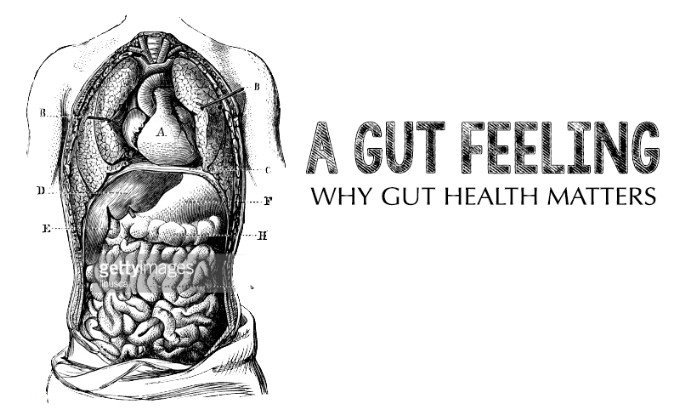
Balancing our internal ecosystem: Antibiotics & intestinal health

gut health
© sweatandglitter.com
The discovery of penicillin in 1928 is considered one of the most important developments in the history of modern medicine. Since their inception antibiotics have without a doubt saved many lives by helping people to overcome serious infections. However, today according to health authorities they are being overprescribed, with estimates ranging from 20% to 50% being deemed as inappropriate. This is a worrying trend because the overuse of antibiotics for non-life threatening conditions, and their use as growth promoters for conventionally farmed livestock, has contributed greatly to gut dysbiosis (microbial imbalance that detrimentally impacts on normal bodily function), pathogen colonization of the gut, pathogen evolution, and the downward spiral of general human health in ways that are as yet not fully understood.

A recent study published in the journal Cell Host and Microbe (Rivera-Chávez et al., 2016) however, sheds new light on some of the processes going on in the dark recesses of the 300 - 400 m2 area of the human gastrointestinal (GI) tract when we are exposed to antibiotics. The study, led by Andreas Bäumler, professor of medical immunology and microbiology at UC Davis Health System, sought to uncover the mechanisms by which antibiotic treatment effect changes in the gut that allow the proliferation of pathogenic bacteria. While the healthy human GI tract houses a microbial community that prevents pathogen dominance through largely unknown mechanisms, antibiotic treatment is known to increase susceptibility to enteric (gut) pathogens. The question Bäumler and his team asked was, "how?"

Comment: To learn more about the importance of good intestinal health and how diet can effect gut flora composition read the following articles:


Health

New study explains how depression could be inherited from your mother

depressione
The 'corticolimbic system' plays an important role in mood disorders, such as depression.

The brain system governing the emotional response is most heritable from mother to daughter, but less so from mother to son, a new study finds.

Fathers, though, are less likely to pass on their emotional brain circuitry to either boys or girls.

The 'corticolimbic system' plays an important role in mood disorders, such as depression.

The corticolimbic system is made up of the amydala, hippocampus, anterior cingulate cortex and ventromedial prefrontal cortex.

The research could explain why depression is strongly heritable from mother to daughter.

Comment: Other studies have found that learned information about traumatic or stressful experiences can be passed on to subsequent generations via DNA changes which can contribute to the risk of neuropsychiatric disorders. However, it is not just our genes and DNA which determines our health, but also environmental factors such as diet, stresses, and lifestyle choices. We can potentially affect our epigenetics by living a healthy lifestyle and providing our body with the necessary building blocks to counter these epigenetic markers.


Arrow Up

Memory-boosting trick: Exercise after learning

woman memory
© ra2studio/Shutterstock.com

To increase your chances of remembering new information, you may want to exercise 4 hours after learning it, a new study suggests.

Researchers found that people who did a high-intensity workout on a spinning bike 4 hours after completing a memory task had better recall when they were retested two days later than men and women who pedalled the bike immediately after the task, and those who didn't exercise after the task at all, according to the findings published today (June 16) in the journal Current Biology.

The study showed that delaying exercise by 4 hours after learning has a "moderate" effect on memory, said Dr. Guillen Fernandez, a professor of cognitive neuroscience at The Donders Institute for Brain, Cognition and Behavior at the Radboud University Medical Center in the Netherlands. The findings showed that exercise improves memory performance and changes the way memories are stored in the brain, said Fernandez, who conducted the research with Eelco van Dongen, a postdoctoral student at the institute, and other colleagues.


Comment: See also:


Life Preserver

Apple's new app: Can deep breathing lower stress?

apple watch
© AppleA new app for the Apple Watch, called Breathe, coaches you through breathing exercises.
A new app from Apple coaches you through breathing exercises, but do these exercises really help reduce stress?

This week, Apple announced a number of new features for the Apple Watch, including an app due out this fall called Breathe, which will "encourage users to take a moment in their day to do deep breathing exercises for relaxation and stress reduction," the company said in a statement.

The app will guide users though a timed breathing session, lasting 1 to 5 minutes. The watch can track a user's heart rate, and so at the end of a session, users will see a summary of their heart rate data, Apple said.


Comment: Certain breathing techniques are scientifically proven to lower stress by switching the body from 'fight or flight' mode into 'relax and repair' mode.

Here at SOTT, we have developed a breathing and meditation programme called Eiriu Eolas (Breath of Life), which takes the practitioner through a series of breathing exercises, ending with a relaxing meditation.

The full programme can be found for free at www.eiriu-eolas.org.


Comment: Visit our reviews page to read the testimonials of people who have benefited from the Eiriu Eolas programme.


Syringe

Excitotoxin alert: Monosodium Glutamate used as a stabilizer in vaccines

MSG in vaccines
© rocwellness.com
When you think of monosodium glutamate (MSG), what is the first thing that comes to mind? More than likely it is Chinese cuisine, however, this same ingredient is also found in several other food products we use everyday. Almost all processed foods on the grocery store shelves ranging from soups to crackers to meats contain MSG to enhance their flavor.

MSG is also an ingredient in vaccines.

To be able to make fully informed decisions regarding vaccination for you or your child, it is essential to evaluate what is and is not known about vaccine ingredients and their short and long term effects on the human body.

Alarm Clock

Environmental Working Group landmark study shows our bodies are rife with cancer-causing chemicals

chemicals
The first inventory of its kind has found that hundreds of cancer-causing chemicals are building up in the bodies of Americans.

The analysis from Environmental Working Group (EWG), based on more than 1,000 biomonitoring studies—which measure the burden of certain chemicals present in the human body—and other research by government agencies and independent scientists, found that up to 420 chemicals known or likely to cause cancer have been detected in blood, urine, hair, and other human samples.

Comment: 'The report details the astounding number of carcinogens we are exposed to in almost every part of life.' The 'landmark' report by the EWG is yet another confirmation of the toxic environment that has become the reality of everyday life. While the conclusions are not really surprising, nothing will be done to change the current situation! Big corporations are not in the business of protecting people from indiscriminate chemical poisoning!
2016 marks the 40th anniversary of the Toxic Substances Control Act. But there is little to celebrate. Signed into law by President Gerald Ford in 1976, the TSCA has been sharply criticized for failing at what it was meant to do: protect public health and the environment from the tens of thousands of chemicals that saturate the marketplace, and the hundreds of new ones that are introduced every year.

Adding to the concern is the fact that the law hasn't been significantly updated since it was enacted, during which time some 22,000 new chemicals have entered American commerce, with around 700 new ones rolled out each year. Many of these chemicals — most of which did not previously exist in nature — have been widely dispersed throughout the environment, into the air, soil and water where some will persist for decades, or even centuries.

The figures are staggering. Every year, around 4 billion pounds of toxic chemicals are released by American industries. In 2011 alone, 16 new chemicals accounted for nearly 1 million pounds. There is far too little testing of these substances: Only a fraction of the nearly 3,000 high-production-volume (HPV) chemicals — chemicals that have an annual production run of at least one million pounds — have been studied for their potential toxicity. According to the EPA, the agency has "only been able to require testing on a little more than 200 existing chemicals" out of the 62,000 that have been introduced since the TSCA's enactment. The EPA has banned just five.


Cell Phone

Information overload: Bombardment of electronic alerts could be contributing to deaths by medical error

Hospital
© iStock
Some people receive constant reminders on their smartphones: birthdays, anniversaries, doctor's appointments, social engagements. At work, their computers prompt them to meet deadlines, attend meetings and have lunch with the boss. Prodding here and pinging there, these pop-up interruptions can turn into noise to be ignored instead of helpful nudges.

Something similar is happening to doctors, nurses and pharmacists. And when they're hit with too much information, the result can be a health hazard. The electronic patient records that the federal government has been pushing — in an effort to coordinate health care and reduce mistakes — come with a host of bells and whistles that may be doing the opposite in some cases.

What's the problem? It's called alert fatigue.

Electronic health records increasingly include automated alert systems pegged to patients' health information.

One alert might signal that a drug being prescribed could interact badly with other medications. Another might advise the pharmacist about a patient's drug allergy.

But they also could simply note each time that a patient is prescribed painkillers — useful to detect addiction, but irrelevant if, say, someone had a major surgery and is expected to need such meds. Or they may highlight a potential health consequence relevant to an elderly woman, although the patient at hand is a 20-something man.

The number of these pop-up messages has become unmanageable, doctors and IT experts say, because of reflecting what many experts call excessive caution, and now they are overwhelming practitioners.

Clinicians ignore safety notifications between 49 percent and 96 percent of the time, said Shobha Phansalkar, an assistant professor of medicine at Harvard Medical School.

Comment: