Health & WellnessS


Health

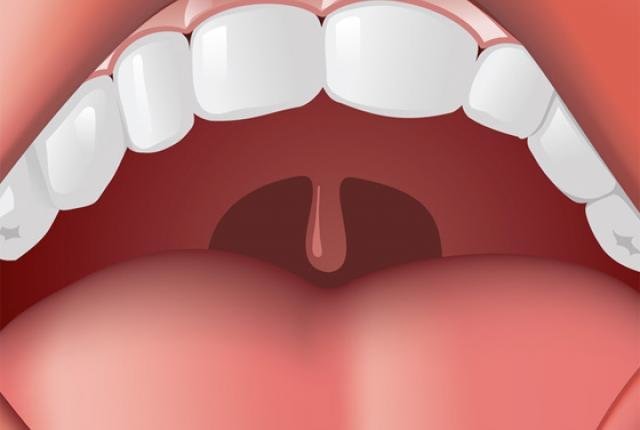
What's that dangly thing in the back of your throat?

uvula
© shutterstock
Your uvula is the dangly bit of flesh that hangs at the back of your throat, a body part that has prompted many to wonder, "Why is that even there?" Fittingly, the word uvula comes from the Latin word "uvola," which means "small bunch of grapes."1

In ancient times, the uvula was believed to play a role in speech and immunology. It was also somewhat feared and regarded as a potentially hazardous organ that could cause apnea and death.2,3

Writing in the journal Otolaryngology Head and Neck Surgery, researchers suggested in the 1990s that the most important function of the uvula may be due to the muscularis uvula, which is the muscle that moves the uvula up and down.

"Its function could be related to drinking while bending over," they stated, citing a previous assumption that the uvula may be leftover from mammals that drink while bending their neck downward.4

However, when they studied the soft palate (the soft tissue at the back of the roof of the mouth) of eight different mammals, "a small underdeveloped uvula" was found in only two baboons. In other words, it seems most other mammals do not have uvulas, which pretty much debunked the drinking while bending over theory.

Clipboard

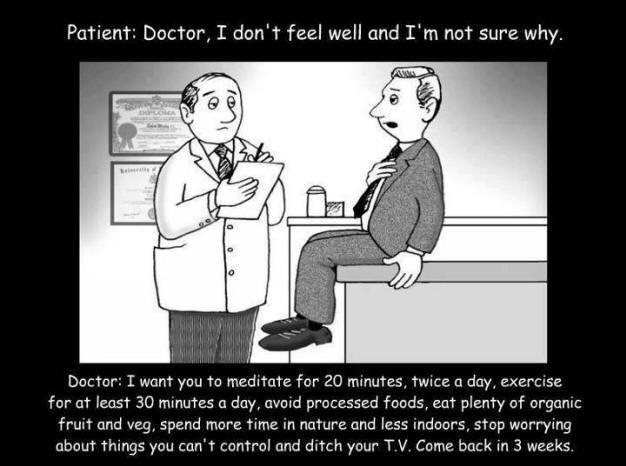
Physicians are prescribing time in nature, fruits and vegetables for patients instead of Big Pharma drugs

nature prescription
© nutribob.wordpress.com
In an age where pharmaceutical drug use is off the charts, a thoughtful group of physicians are using a novel approach and advising their patients to "take a hike" — literally. Park prescriptions have been around since 2008, but the idea is now spreading more widely throughout the U.S. — and around the world — as obesity and mental health disorders have continued to climb. In a similar vein, doctors are also writing prescriptions for fruits, vegetables and other wholesome food, which patients can "fill" at their local market. The result of these unconventional interventions is nothing short of inspiring.

The Healing Power of Nature

A whole new spin on writing prescriptions for patients has people moving — through green spaces, parks and forests, in lieu of popping pharmaceutical meds for what ails them. And it works.

San Francisco physician Daphne Miller is known for writing out "park prescriptions" like this:
Drug: Exercise in Glen Canyon Park

Dose: 45 minutes of walking or running

Directions: Monday, Wednesday, Friday and Saturday at 7am

Refills: Unlimited
Dr. Miller feels it's easier to maintain an exercise program when we're outdoors, possibly because of the changing scenery, fresh air or, what she refers to as, "the camaraderie of the trail." She's written hundreds of park prescriptions for her patients — which have had great success in curbing a variety of health complaints. And she's not alone in her unusual prescriptions. Many physicians — particularly pediatricians — are dispensing thousands of these prescriptions to not only get some exercise, but to do it out in nature.

Comment: Read more about the healing powers of nature:
Since ancient times, humans have assigned healing and transformational properties to water. In early Rome, baths were an important part of cultural life, a place where citizens went to find relaxation and to connect with others in a calming setting. In ayurveda, the ancient Indian medicinal wisdom, and traditional Chinese medicine, the water element is crucial to balancing the body and creating physical harmony. Rivers have long been seen as sacred places, and in a number of different spiritual contexts, water has symbolized rebirth, spiritual cleansing and salvation.

Today, we still turn to water for a sense of calm and clarity. We spend our vacations on the beach or at the lake; get exercise and enjoyment from water sports like surfing, scuba diving, sailing, and swimming; refresh ourselves with long showers and soothing baths, and often build our lives and homes around being near the water...

"We are beginning to learn that our brains are hardwired to react positively to water and that being near it can calm and connect us, increase innovation and insight, and even heal what's broken," Nichols writes in Blue Mind: The Surprising Science That Shows How Being Near, In, On, or Under Water Can Make You Happier, Healthier, More Connected, and Better at What You Do, published in July. "We have a 'blue mind' -- and it's perfectly tailored to make us happy in all sorts of ways that go way beyond relaxing in the surf, listening to the murmur of a stream, or floating quietly in a pool."


2 + 2 = 4

ADHD: Fake disease treated with real drugs

frustrated boy
According to Neurologist Richard Saul who has written a book called "ADHD Does Not Exist: The Truth About Attention Deficit and Hyperactivity Disorder", the amount of people who are suffering from Attention Deficit and Hyperactivity Disorder is zero.

Richard Saul is a neurologist who has had a long career in examining patients who have been having trouble with short attention spans and inability to focus. From his first hand experience, he feels that ADHD is nothing more than a fake disorder that is really only an umbrella of symptoms and not actually a disease. He strongly feels that it should not be listed as a separate disorder in the American Psychiatric Association's Diagnostic & Statistical Manual, all detailed in his book which is set to release in February 2014.

As it stands, ADHD is defined as a psychiatric disorder that is neurodevelopmental. In order for diagnosis, significant issues with attention and/or hyperactivity and acting impulsively that are not appropriate for a person's age must be present. The number of ADHD diagnoses has increased greatly in recent years due to the fact that doctors are using the disorder as a simple means to not only explain lack of focus or attention but also to allow the use of medication which can mean direct benefit for the doctor. Saul feels that many parents these days are looking for any way to get their kids to sit down and remain quiet and ADHD, and the medications that go along with it, can be the quick fix they are looking for. Currently, 1 in 9 children are labelled as ADHD and of that, two-thirds of them are on some sort of drug.

Comment: Medical professionals' over-diagnosing and treatment ADHD ignores childhood trauma, individual differences and the natural exuberance of youth while profiting off of medicating children.


Pills

Prescription drugs: The unhealthy dynamic between doctors & drug companies

doctors and big pharma
© easyhealthoptions.com
The potential influence of marketing strategies used by drug production companies on the prescribing habits of doctors has been the subject of recent intense debate. Currently, doctors' groups and the manufacturers themselves espouse professional and industry self-regulation in the marketing of drugs or medical equipment to doctors.

The argument is that these voluntary measures, teamed with personal integrity, clinical objectivity and being current with the latest evidence-based therapies are sufficient to guard against any favouritism that company gifts (monetary or otherwise) and sponsorship of professional meetings might engender.

The social science of giving and receiving gifts suggests otherwise. A recent article in the Journal of the American Medical Association (2006;295:429-433) contends that giving even small monetary value items such as office stationery items, desktop toys and drug samples subtly increases the likelihood of a doctor prescribing that company's drugs.

Positive prescribing habits are more pronounced with drug company gifts and sponsorships of a greater value, such as subsidies for medical education including medical conference funding, funds for travel to conferences, speaker bureau fees, ghost writing of drug-related research articles, consultancies and research projects.

Comment: For a more in depth look at the unhealthy dynamic between doctors & drug companies read the following articles:


Health

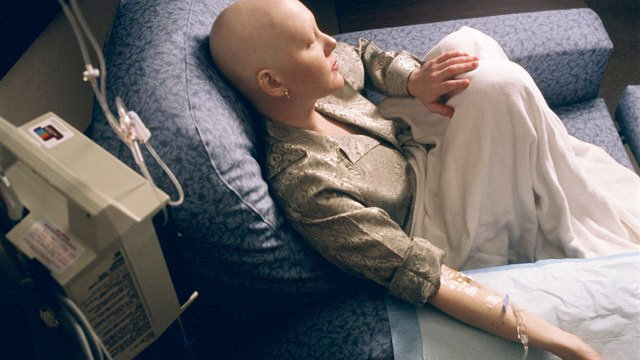
Landmark study shows high death rates from chemotherapy treatment, not the cancer itself

chemotherapy
No matter how much doctors push the treatment, chemotherapy might not be the best option in the fight against cancer, as a new study shows up to 50 percent of patients are killed by the drugs — not the disease, itself.

Researchers from Public Health England and Cancer Research UK performed a groundbreaking study examining for the first time the numbers of cancer patients who died within 30 days of beginning chemotherapy — indicating the treatment, not the cancer, was the cause of death.

Looking at those death rates in hospitals across the U.K., researchers found an alarming mortality rate associated with chemotherapy.

Across "England around 8.4 per cent of patients with lung cancer, and 2.4 per cent of breast cancer patients died within a month," the Telegraph reported.

"But in some hospitals the figure was far higher. In Milton Keynes the death rate for lung cancer treatment was 50.9 per cent, although it was based on a very small number of patients."

Comment: The dangers of chemotherapy are legion:


Mail

Nobel Laureates' letter supporting genetically modified crops is rejected by Latin American Scientists

Nobel Laureate
Prof Andres Carrasco, whose work and life inspired the founding of the scientists' group UCCSN-AL.
GMO supporters "have discarded rigorous science", says the Union of Latin American Scientists Committed to Society and Nature (UCCSN-AL)

The Union of Latin American Scientists Committed to Society and Nature (UCCSN-AL) has issued a statement rejecting the letter signed by Nobel Prize laureates in favour of genetically modified crops and GMO golden rice.

About GM crop science in general, UCCSN-AL says:
[Transgenesis] cannot be considered an advanced science anymore because it is based on fallacious and anachronistic assumptions. Its defenders have oversimplified the scientific rationale behind GMOs to the point that the technology cannot be considered valid anymore: they have discarded rigorous science. The lack of scientific ground that justifies GMOs is also the reason why its promoters deny complex systems of knowledge, such as indigenous peoples' cultures and livelihoods. Transgenic technology is the geopolitical instrument for colonial domination of our time1.

Evil Rays

Electromagnetic fields and their negative effects

EMF health risks
© emfrefugee.blogspot.com
Can you see and feel its effects in the air? Of course you can, but you don't know how to identify it correctly! It's all around us like an ocean of electromagnetic frequencies that we are swimming in, which are pulsed out from many more sources than we can begin to imagine and, more confoundedly, not accept that they are causing damage to all living elements, especially young children who are most vulnerable.

I'm talking about electromagnetic fields (EMFs) or radiofrequencies (RFs), which have become so ubiquitous that we haven't stopped to realize what's been happening to us—especially children exposed to Wi-Fi in schools—and how trees [4] and other plant life are being damaged.

Where do these EMFs come from?

Microwaves that are emitted by cell phone and mast towers, cell phones, AMI smart meters for electric, natural gas and water utilities, microwave ovens, and all 'smart' appliances that contain ZigBee chips, which are two-way radio transmitters operating using microwave technologies.

Many people today are beginning to realize that they function in what they call a 'fog' and can't figure out why. They are run down with no energy and constantly enervated. Does that sound like you or someone you know, especially your children? Then think electromagnetic hypersensitivity (EHS).

Probably nothing is more unfriendly to your personal health and environment than some iPhones [3] and other 'smart' appliances you either wear on your person, e.g., a 'live' cell phone, or have in very constant close proximity, e.g., laptop computer that sits on your lap or legs!

Comment: Read more extensive research about the negative health impacts of EMFs:


Health

Naps help lower your blood pressure

napping
© sheknows.com
If you're searching for lifestyle changes to help lower your blood pressure, one effective strategy may be an old-fashioned siesta. New research from Greece found that systolic blood pressure (the top number) in people who took a midday nap averaged 5 percent lower than that of patients who didn't nap.

The researchers enrolled 200 men and 186 women with hypertension to assess the effect of a daily nap on blood pressure readings. The average age of the patients was 61.4 years. The researchers tested the patients' blood pressure in the office and by utilizing 24-hour ambulatory measurements and assessed their cardiovascular health. They also recorded the amount of napping time the patients reported. After adjusting for other factors that could affect blood pressure - among them age, gender, body mass index, smoking status, salt, alcohol and coffee consumption and exercise - they found that blood pressure was lower among those who took a daytime nap, and that these patients needed fewer drugs to control their blood pressure than those who didn't nap.

Study leader Manolis Kallistratos, a cardiologist, noted that although the blood pressure reductions seen in the study do not seem dramatic, decreases as small as 2 millimeters of mercury in systolic blood pressure can reduce the risk of cardiovascular disease by up to 10 percent.

Comment: More reasons to take a daily nap:


Biohazard

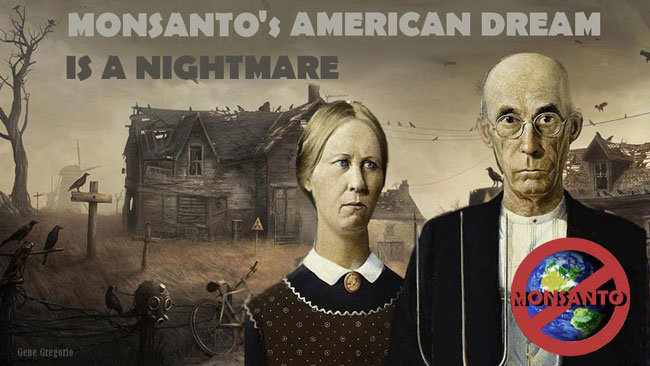
Monsanto promoting worldwide infertility?

Monsanto
Monsanto has a long and infamous history of manufacturing and bringing to market such chemicals as DDT, Agent Orange, aspartame, Roundup and dioxin1 — chemical compounds from which society continues to feel the effects.

In an effort to distance the current corporation from past deeds, Monsanto refers to the company prior to 2002 as "the former Monsanto" in their news releases.2 However, nothing has really changed aside from their PR machine.

While Monsanto has branched into genetic engineering (GE) of plants, the sale of patented GE seeds simply feeds the need for the company's pesticides. Monsanto is STILL primarily a purveyor of toxins, not life.

Monsanto began forging a unique and financially advantageous relationship with the U.S. government starting with the company's involvement in the Manhattan Project that produced the first nuclear weapons during World War II. During the Vietnam War they were the leading producer of Agent Orange.

The specialization in the production and distribution of toxic chemicals continues today.

Their influence over government runs so deep that despite the fact 64 other countries have been labeling genetically engineered (GE) foods for years, the U.S. now has the distinction of being the first country to un-label GE foods at the urging of a company producing mass amounts of GE seeds.

Comment: Check out the informative videos in the following article America's monster: Monsanto
Few corporations in the world are as loathed - and as sinister - as Monsanto. But the threat it poses to people and planet could be reaching new heights, as the World Health Organization has recently upgraded Monsanto's main product as carcinogenic to humans. With protests against the agrochemical giant held in more than 40 countries in May, learn why the global movement against Monsanto is of critical importance to our future. In this episode of The Empire Files, Abby Martin issues a scathing expose on the corporate polluter, chronicling it's rise to power, the collusion of its crimes by the US government and highlighting the serious danger it puts us in today.


Brain

Food for thought: The ketogenic diet improves thinking and behavior

kids school
As school is now back in session for most children, the timing of a recent article from the Netherlands in Epilepsy and Behavior seems most opportune! This study evaluated whether the ketogenic diet improved aspects of behavior, learning, and memory independent of seizures and medication.

This question is a very tough one to answer. Parents often will say that their child with epilepsy is doing better in school and is "calmer" after months of using the ketogenic diet, but is that due to 1) less sedating medications, 2) fewer seizures, or 3) improved EEG? As you can imagine, trying to keep those variables the same when starting the diet can be a challenge in a clinical trial.

But it's important... one study from our center in 2006 found that 90% of families had cognitive improvement as a goal for starting the ketogenic diet. And... if their child did have improvement in learning, it was very highly linked with how long the family stayed on the diet (even more linked than seizure reduction!).

Only limited studies, most notably a study by Pulsifer et al. from 15 years ago, have tried to tackle this question, and they found signs of improvement with ketogenic diet use.

Comment: Learn more!