OF THE
TIMES


On August 18, 2015, the World Health Organization (WHO) issued a press release from Geneva, Switzerland titled "Vaccine hesitancy: A growing challenge for immunization programmes."1 The focus of the release was to highlight views expressed by public health officials in a special edition of the journal Vaccine, which was "guest-edited" and published by the WHO.1
Foremost among the views was the continuing concern by health officials over the number of people around the world who remain unvaccinated despite the availability of vaccines. According to the release, approximately 1 out of 5 children globally do not get vaccinated. The WHO attributes the situation to a phenomenon called "vaccine hesitancy," which the organization describes as a "delay in acceptance or refusal of safe vaccines despite availability of vaccination services."
In October 2014, the WHO's Strategic Advisory Group of Experts (SAGE) published an extensive report on vaccine hesitancy, looking at different approaches to help shape the public's behavior toward vaccination.24 The report specifically explored marketing strategies employed by other organizations such as the International Food and Beverage Alliance (IFBA), which includes companies like Coca Cola Company, Pepsico and McDonalds. According to the SAGE report, "Key industry messages to the Working Group included the following (points particularly relevant to vaccine hesitancy are in italics):"23
- All that really matters is the power of the story.
- Consumers care about benefits, not supporting facts.
- Brand = product + compelling story.
- Reason leads to conclusions, while emotion leads to action (i.e. change comes from feelings, not facts).
- It is important to win the hearts, minds, and now, voice.
- Due to social media, consumers have a mouth piece and a large portion of media consumption is media generated by other consumers.
- The rise of social media has benefits and risks. You can share information on a massive scale at zero cost, but there is less control.
- Consumers believe more in messages from other consumers than from big institutions.
- It is important to find the intersection of brand topics (what the brand wants to talk about) and audience interests (what existing and desired audiences care about).
- Consumer's rationale for decisions may not reflect the true motivation (e.g. give fact-based reasons, but emotional reasons may have in fact driven the behavior).
- It is impossible to please all consumers, and some will not like you.
- One big idea needs to drive the entire communications strategy. Only one or two messages can be communicated—the rest must be sacrificed.
- Communication is increasingly about dialogue back and forth in the context of social media.
- A communication brief includes: competitive content landscape, target consumer, brand opportunity, communication task, core insight, core essence, functional benefit, emotional benefit, meaningful product truth, brand personality, obtainable brand proposition, key performance indicators. Effective communication strategies are not simple.23

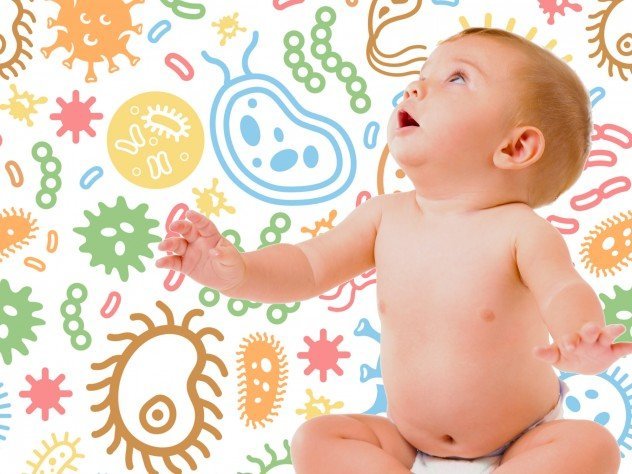
... the gut microbiome takes advantage of the channels our bodies use to send messages between different organs. The bacteria's normal life functions produce byproducts called metabolites that move through the stomach lining, enter the bloodstream and are transported throughout the human body. Depending on the type and number of bacteria in a gut microbiome, different types and numbers of metabolites are delivered to the brain and other parts of the host's body.2
Suzanne Humphries, MD, takes us on a tour in this video series about the design behind the infant immune system - that babies are born into a "clamped-down" immunologic state which breastfeeding serves to template over the first two years. She explores the importance of full cord blood transfer, and the wrong-headedness of provoking adult-like immune responses through vaccines. Medicine has had a way of treating infants and babies like mini-adults. Perhaps awareness of the microbiome development will force us to acknowledge the mother-infant dyad and the uniqueness therein.

Comment: Take the sting out of the insulin price hike by adopting a low carb, high fat, moderate protein ketogenic diet. Type 1 diabetics will see their insulin requirements decrease and Type 2 diabetics may be able for forgo insulin altogether.