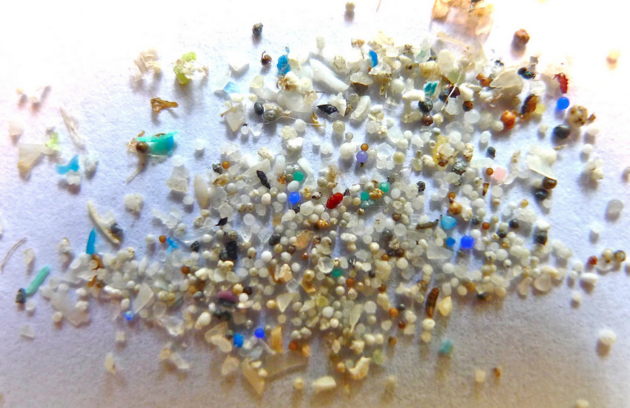
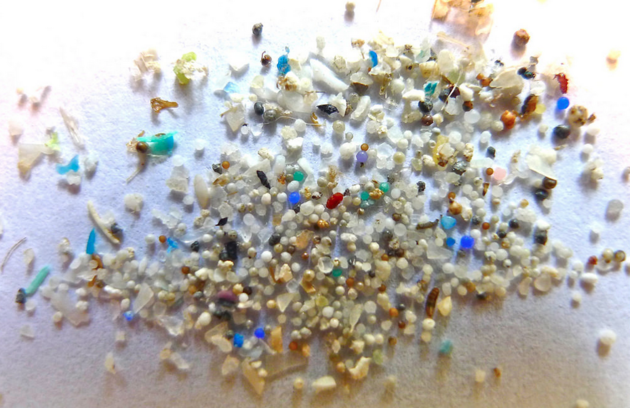
© 5Gyres, courtesy of Oregon State University plastic microbeads
For more than 20 years, microbeads have been in
facial scrubs, face washes, toothpastes and shower gels and sold with the promise of making us feel cleaner and more beautiful.
But when these minuscule plastic balls are washed down the plughole into the oceans, they don't just harm sea life.
The tragic irony is that these abrasive particles may also be damaging our looks. Here, we reveal just how bad they can be for you...
Scratched EyesMicrobeads
can injure the cornea, the eye's clear outer covering.
Consultant eye surgeon Ali Mearza, of London's Imperial College Healthcare NHS Trust, said: 'Occasionally when people wash their faces, microbeads get stuck in the eye. Usually these get blinked away, but sometimes granules can be lodged under the eyelid.
'When the eyelid closes, this can scratch the cornea. This can make the eye very red and sore, so that it can't open. This can require a visit to casualty, where we invert the eyelid and flick the particle out with a cotton bud.' While the cosmetics industry says that the instructions tell consumers to avoid the eye area, more people on internet forums
are reporting corneal scratches. Some in the U.S. have sought legal advice.
Although the cornea heals fast (if scratches don't get infected, most heal in three or four days) the injuries can be very painful.
'The cornea is the most sensitive part of the body,' says Dr Mearza. 'It has 50,000 nerve endings, so even if you get a small scratch, it can feel as if you have a big, rough object in your eye.'
Damaged TeethLaura Percival bought whitening toothpaste, thinking it would guarantee her a bright smile.
After two months, however, the 27-year-old sales manager noticed that she had
lost about 2 mm from the gums surrounding her two lower front teeth.















Comment: See also: Brazil: Zika baby cases defy predicted patterns - is co-infection the culprit?