Health & WellnessS


Attention

Glyphosate herbicide associated with greater risk to ALS

herbicide spraying
Abstract

Amyotrophic Lateral Sclerosis (ALS) is a fatal neurodegenerative disease involving several protein mutations in glycine-rich regions with limited treatment options.

90 - 95% of all cases are non-familial with epidemiological studies showing a significant increased risk in glyphosate-exposed workers.

In this paper, we propose that glyphosate, the active ingredient in Roundup, plays a role in ALS, mainly through mistakenly substituting for glycine during protein synthesis, disruption of mineral homeostasis as well as setting up a state of dysbiosis. Mouse models of ALS reveal a pre-symptomatic profile of gut dysbiosis.

This dysbiotic state initiate a cascade of events initially impairing metabolism in the gut, and, ultimately, through a series of intermediate stages, leading to motor neuron axonal damage seen in ALS. Lipopolysaccharide, a toxic by-product of dysbiosis which contributes to the pathology, is shown to be statistically higher in ALS patients.

In this paper we paint a compelling view of how glyphosate exerts its deleterious effects, including mitochondrial stress and oxidative damage through glycine substitution. Furthermore, its mineral chelation properties disrupt manganese, copper and zinc balance, and it induces glutamate toxicity in the synapse, which results in a die-back phenomenon in axons of motor neurons supplying the damaged skeletal muscles.

Comment: Read more about the glyphosate-glycine connection


Pills

Ecstasy therapy? FDA Approves Trials to Test MDMA as PTSD Treatment

Ecstasy tablets
© Flickr/ Me
What do well-off partiers in major cities and PTSD-afflicted military veterans have in common? They both could be taking ecstasy this weekend as the Food and Drug Administration (FDA) has approved Phase 3 clinical trials using the drug as a PTSD treatment, the last trial necessary before it can be approved and made available for prescription.

The Nebraska Department of Veteran Affairs estimates that Post-Traumatic Stress Disorder (PTSD) afflicts over 5 million Americans, and 30 percent of those who have served in active combat zones. In many cases PTSD is resistant to conventional treatments, such as psychoanalysis and group therapy. But men like Rick Doblin, who heads the Multidisciplinary Association for Psychedelic Studies (MAPS), a nonprofit research organization to raise awareness of the potential health benefits of controlled substances, think that a cure is in sight.

Comment: The use of MDMA in a therapeutic context is quite controversial. But one has to wonder if the side-effects from ecstasy would be as bad as the current arsenal of psychiatric drugs being foisted upon the public. See also:


Health

Not enough vitamin C to quell insulin resistance in kids

vitamin c
© Unknown
Vitamin C supplements may be needed to quell the rising problem of insulin resistance among grade-school aged children.[1]

The advice that fruits and vegetables provide sufficient amounts of vitamin C is being questioned in a newly published study. Diabetes is of growing concern and has its roots in early life. Insulin resistance, where living cells don't adequately utilize insulin to produce cellular energy as they once did, is an early feature of diabetes.

Over 2000 children ages 9-10 years underwent blood tests and food intake surveys to determine their metabolic fitness. The strength of the study was that actual blood concentrations of vitamin C were obtained rather than estimations of vitamin C intake from foods.

Lower blood plasma vitamin C concentrations were associated with higher levels of insulin resistance; vitamin C supplement users achieved blood plasma levels that were more efficacious.

Info

Marijuana use increases among pregnant women in US - report

Pregnant woman
© West Coast Surfer / Global Look Press
Rates of marijuana use among pregnant women and nonpregnant, reproductive-age women increased from 2002 to 2014, according to a new study. Past-month pot use among pregnant women, which may lead to poor offspring health, jumped 62 percent.

From 2002 to 2014, self-reported marijuana use in the past month among pregnant women in the US increased from 2.37 percent to 3.85 percent, according to a new study released by the Journal of the American Medical Association.

Pregnant women aged 18 to 25 years were more likely (7.47 percent) to report past-month pot use in 2014 compared to women aged 26 to 44 years (2.12 percent), while past-year use for all ages was 11.63 percent.

Marijuana use during pregnancy can result in low birth weight or impaired neurodevelopment of an infant, among other health issues, according to the study.

Comment: Is marijuana the new opiate of the masses? Opioid use decreases in US states that legalize medical marijuana to treat pain


Ambulance

National Center for Health Statistics: Fatal drug overdoses have doubled since 2000

drug overdoses
© Yannis Behrakis / Reuters
Drug overdoses in the US increased by 23 percent from 2010 to 2014 and have doubled since 2000, according to a new study released by the National Center for Health Statistics. Heroin accounted for about 25 percent of all overdose deaths in 2014.

In 2014, more than 47,000 people died of drug overdoses in the US - 14.7 deaths per 100,000 people, and nearly 8,400 more such deaths than were recorded in 2010, federal health researchers reported Tuesday. That is double the rate of 15 years earlier, according to the study, which analyzed drug overdose deaths from 2010 to 2014.

For the third straight year, heroin was the drug that led to the most overdose deaths (10,863, or 23.1 percent of all deaths) in 2014, followed by cocaine (5,856), oxycodone (5,417), alprazolam (4,217), and fentanyl (4,200).

Death rates have increased in that time period among all of the top ten overdose drugs in the US, which also include morphine (4,022), methamphetamine (3,728), methadone (3,495), hydrocodone (3,274), and diazepam (1,729).

Comment: The opioid epidemic: What big pharma does not want you to know


Cheeseburger

Black children exposed to 50 percent more junk food ads than their white counterparts

Hamburger, junk food
© Flickr/chichacha
Fast-food chains, soda-makers and snack-vendors are targeting black teens and children 50 percent more than their white counterparts, according to a new study. The striking findings have led to allegations of racial bias in food marketing in the US.

Childhood obesity is a major problem in many parts of the work, but in the US, it is being exacerbated by the producers of junk food having a racial bias in who they target their marketing to.

That's according to the University of Connecticut Rudd Center for Food Policy and Obesity.

"Food advertising exposure increased with age for both black and white youth, but black youth viewed approximately 50 percent or more ads than did white youth of the same age," lead study author Frances Fleming-Milici said.

The study, published last week in the journal 'Pediatric Obesity,' analyzed Nielsen data from 2008 to 2012, to compare the rates at which white and black children watch advertising from fast-food chains, soda-makers and snack vendors.

The research team found that "all children saw more TV and beverage ads in 2012 than in 2008, even though the amount of time kids spend watching TV has basically stayed the same."

However, the study found that there is a significant difference in marketing between the networks and channels that white and black children are more likely to watch.
Compared to their white peers, African-American children spend far more time watching "youth-targeted" and "black-targeted" networks, such as Fuse, Nick-at-Nite, BET and VH1. These are also the same networks that the researchers found air the most junk food advertisements.
Frances Fleming-Milici does not believe it is a coincidence.

Comment: Junk food is incredibly addictive and damaging to your health. Heck, so is television. Best for parents to limit their children's exposure to both, and give them plenty of play time outside and feed them lots of fat.


Health

Red meat vindicated: New study shows red meat has no affect on heart disease risk factors

red meat
Consuming red meat in amounts above what is typically recommended does not affect short-term cardiovascular disease risk factors, such as blood pressure and blood cholesterol, according to a new review of clinical trials from Purdue University.

"During the last 20 years, there have been recommendations to eat less red meat as part of a healthier diet, but our research supports that red meat can be incorporated into a healthier diet," said Wayne Campbell, professor of nutrition science. "Red meat is a nutrient-rich food, not only as a source for protein but also bioavailable iron."

Comment: New study finds wheat and carbs biggest risk for heart disease, red meat and saturated fat has no direct effect


Bug

Unknown virus causing migratory pain, black urine reported in Bahia, Brazil

Lab worker
© 24 Horas News
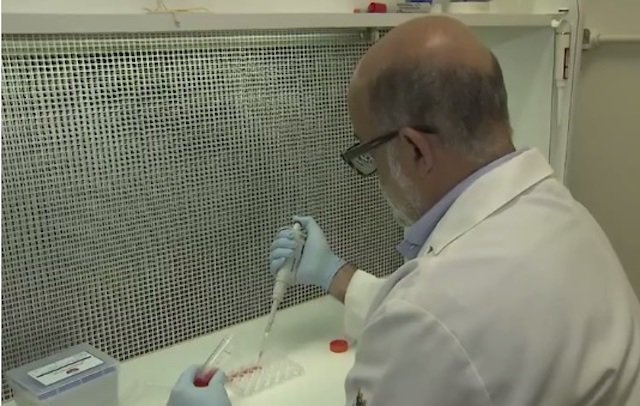
Nine people have been affected by an unknown virus which has caused people to develop muscle pain and discharge a black urine.

This was confirmed by Dr. Gubbio Soares, a researcher at the virology laboratory at the Federal University of Bahia (UFBA). He stated that his research team have been able to determine that the ailment was caused by a virus, but haven't been able to identify what virus it is.

The team will require at least 15 days to figure out the origin of the virus. "We already know that it is a virus that causes the disease, but we have not yet determined which type. "We need about 10 to 15 days to make this identification."

As at the time of this report, only the transmission mode has been identified according to Soares who believes this is done orally. Another symptom of the virus is an increment in the body's CPK enzyme.

Addressing the effect of the enzyme on a patient who had the virus, Soares thinks such a person should admitted at the hospital until the urine returns to normal. "He had a patient with CPK index of 100 thousand units per liter of blood, while the normal one is 200 units per liter,"

"Because of the risk of kidney failure, patients should be hospitalized until the urine returns to normal."

Comment: The latest from Pravda.ru reports the following:
The first cases were reported between December 2 and December 10 in the northern coastal área of the State of Bahia in central Brazil - sudden intense pain in the cervical region, then in the limbs and torso, back, moving down to the legs, and passing black urine. In all cases CPK muscular enzymes suffer significant alterations. Renal deficiency was detected in at least one patient and the first medical reports suggested a vírus which was contracted through contact with droplets of saliva or physical contact...

...The local newspaper Correio24horas reports no less than 18 cases, 16 in the capital, Salvador de Bahia. The other cases were registered in the city of Valença, in the Southern part of the State of Bahia. The cases in Salvador are all linked to the same source - the victims came from three families who ate a moqueca, or stew, made with a Bull's Eye (Olho de Bói, or Arabaiana) bought from fishermen on the beach of Genipabu, in Guarajuba. The fact that there are other cases registered elsewhere may point towards the existence of a vírus.


Ambulance

Uniquely American: BigAg, BigPharma are driving the decline in US life expectancy

life expectancy usa
© Brian Snyder / Reuters Life expectancy in the United States dropped during 2015 for the first time since 1993.
For the first time in two decades, life expectancy has declined in the U.S.1,2,3 Obesity appears to have a major role along with the rising rates of eight leading causes of death, including heart disease, stroke, diabetes and dementia, the latter of which rose by 15.7 percent rise between 2014 and 2015.

The latest data from the National Center for Health Statistics (NCHS) show life expectancy for both men and women in the U.S. dropped between 2014 and 2015, from 76.5 years in 2014 to 76.3 in 2015 for men, and from 81.3 to 81.2 for women.

As noted by BBC News:4 "A decline of 0.1 years in life expectancy means people are dying, on average, a little over a month earlier — or two months earlier for men."

Rises in Preventable Deaths Push Life Expectancy Downward

In all, there were 86,212 more deaths in 2015 compared to 2014, and as of 2015, the U.S. ranks 29th out of 43 countries for life expectancy,5 lagging behind countries like Chile, Costa Rica, Slovenia, Korea and the Czech Republic. In 2014, the U.S. ranked 28th.6

Moreover, according to Dr. Peter Muennig, a professor of health policy and management at Columbia University's Mailman School of Public Health, this decline in life expectancy is a "uniquely American phenomenon." No other developed countries experienced this decline.

Dr. Jiaquan Xu, the report's lead author, noted that the decline in life expectancy is primarily caused by a rise in several categories of preventable deaths,7 again highlighting the failure of the American health care system to properly address the root causes of chronic disease.

Sun

Sunlight boosts immunity independent of vitamin D

woman in the sun
It may well be that the lack of sunshine in the wintertime is the biggest reason we get more colds and flues during that time. It turns out, that sunshine directly charges the immune system - and it has nothing to do with vitamin D!

Sunshine must be the most underutilized and free remedy available to mankind. A recent notable study found that sunshine is the biggest climate element affecting mental health. Workplace sunshine helps increase sleep quality, physical activity and overall quality of life - whereas artificial light is harmful. Sunlight is even shown to help us lose weight.

In 2014, researchers declared that sunshine could reduce the risk of death from all causes. In fact, they said,
We suspect that the benefits to heart health of sunlight will outweigh the risk of skin cancer.

Comment: For more on the benefits of sunlight see: Sunlight for optimal health