
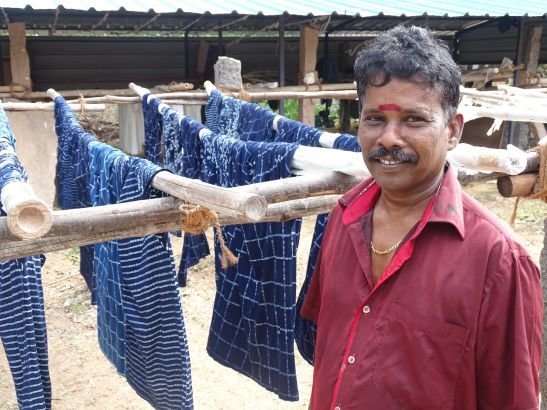
© Esha Chhabra. India, 2016Vijayakumar Varathan has been working at Colours of Nature dye house for 15 years. Here he's seen standing in front of indigo Image by
He's worked here for 15 years. But until his early 30s, Varathan mixed chemicals in a conventional clothing factory in the same region of southern India. There he developed a disease that caused layers of his skin to peel off. Even today, it is discolored. "It was pretty bad," he says, in his fragmented English. "But I didn't have a choice."
Conventional textile manufacturing is tough on both the people who work in it and their land. Issues arise at almost every stage of the process — the ubiquitous genetically modified seeds that strain farmers' budgets, the pesticides used in cotton fields, the harsh chemicals used in dyes, the toxic waste that pollutes rivers, and the chemically treated clothing that ends up in landfills. The problems are exacerbated in the low-price, quick-turnaround segment of the market known as "fast fashion," which encourages cheap production and a throwaway mind-set.
A new crop of small businesses are investing in organic farming, natural dyes and a transparent supply chain that encourages shoppers to think about the effect of their purchases — and they're selling their products online and in a small but growing number of U.S. stores, from small trendy boutiques to Target.





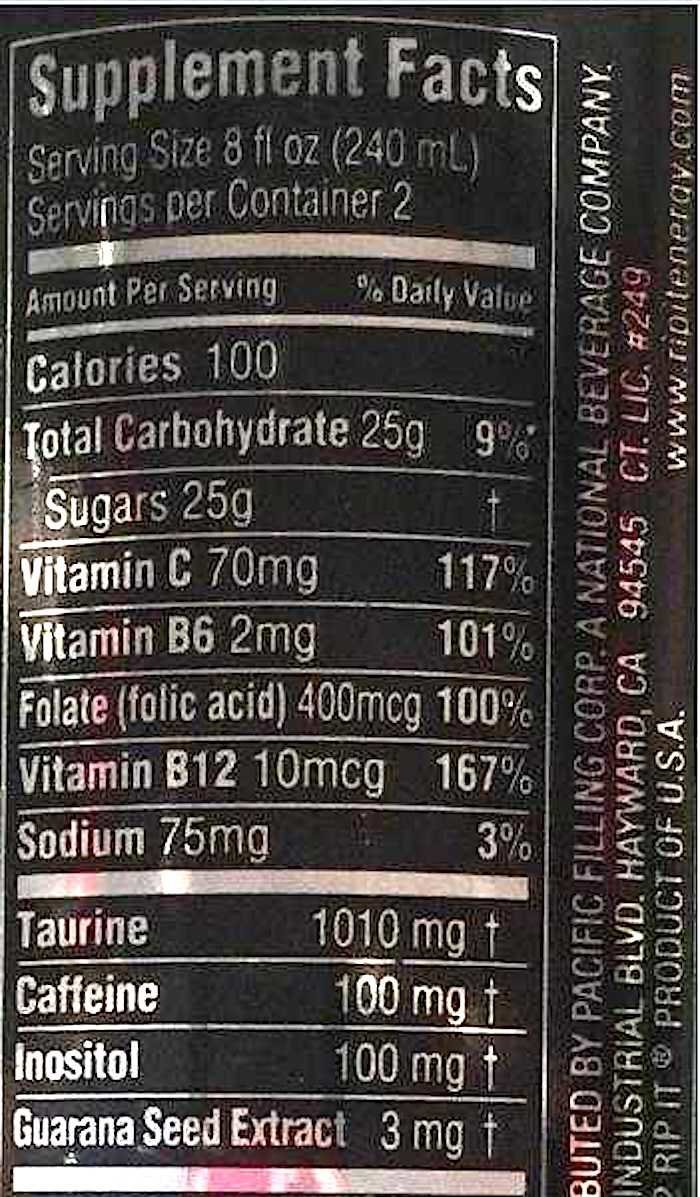












Comment: The booming energy drink business has addicted the military for big profits, compromising both performance and health, keeping soldiers 'healthy and satisfied' (craving and at risk) on taxpayer money.
Side Effects of Rip It Energy Drink