Health & WellnessS


Clipboard

CDC document bombshell reveals list of vaccine excipients

vaccine excipients
Almost no one has any real idea what's found in vaccines. When they allow themselves to be injected with vaccines, they're oblivious to the fact that they are being injected with aborted human fetus cell lines or African Green Monkey kidney pus cells harvested from infected, disease primates. (See proof from the CDC, below.)

Yet, astonishingly, the CDC openly admits to all this (and more). In a PDF posted on the CDC website entitled "Vaccine Excipient & Media Summary," the CDC lists all the excipients currently used in vaccines being injected into adults and children across the United States. The CDC's list, current as of January 6, 2017, was "extracted from manufacturers' package inserts," according to the CDC.

The complete list is found in this CDC document (PDF). In case the CDC removes it — because they've been known to suddenly "memory hole" documents they don't want the public to see — we've also posted a copy at the Natural News servers (PDF).

The WI-38 cell line is widely known to be "derived from lung tissue of an aborted white (caucasian) female fetus," as even the pro-vaccine Wikipedia website admits. As the Coriell Institute for Medical Research explains about the MRC-5 cell line / WI-38:
The MRC-5 cell line was developed in September 1966 from lung tissue taken from a 14 week fetus aborted for psychiatric reason from a 27 year old physically healthy woman. The cell morphology is fibroblast-like. The karyotype is 46,XY; normal diploid male. Cumulative population doublings to senescence is 42-48. G6PD isoenzyme is type B.

Comment: Vaccines' dark inferno: What's not on the insert labels?
The vast majority of scientists, physicians, nurses, and public health educators trust that the ingredients in a vaccine have been individually and synergistically proven safe and ef­fective. The public believes that these vaccines, aside from their specified virus(es), are sterile solutions, free from undesirable contaminants not listed on the manufacturers' package inserts. When the pediatrician injects a vaccine into the muscle of a child, the parents' unquestioning faith is that this is the case. In other words, we want to believe that vaccines have been generated under perfect conditions for the safety of children and ourselves.

Our investigation shows that most people do not know what is actually in a vaccine: the active ingredients listed on product labels, the inert ingredients, and, most important, the hidden ingredients. Even more remote is taking the time to actually study the subject matter, review the scientific literature, and discover the truth for oneself. To our amazement, that truth was easy to find. But it is a truth that will scare the hell out of you...

Roberts's account of conversations between high-level members from the World Health Organization (WHO), federal health agencies, and expert vaccine scientists who determine whether a certain vaccine will be approved, is horrid. Her investigations are based on official meeting documents and her attendance at emergency vaccine meetings, and confirm that our world's vaccine and health experts agree that there is no solution in sight to resolve the potential threats posed by these hidden ingredients.1

The story begins with the vaccine industrial complex's attempt to reduce manufacturing costs by seeking government approval to use cancerous cell lines in the development of vaccines. The industry's rationale is that cancerous cells are "immortal." Current vaccine methodology relies on animal cells, such as fertilized hen embryos and monkey kidneys, that die quickly in culture. Using cancerous cell lines is also much cheaper than relying on the purchase of animals, especially monkeys, that need to be sacrificed for vaccine substrates.


Clock

Lack of sleep can wreak havoc on your body

sleep
Not sleeping is one of the worst feelings in the world. (My editor says she feels nauseated if she doesn't get at least 5 hours.) But not sleeping multiple nights in a row can be downright unhealthy. If you are a person who thinks you only need a couple of hours a night, you are fooling yourself and headed for serious trouble. In fact, just one night of bad sleep can wreak havoc on our bodies.

When we sleep we allow our bodies to relax, recharge, and follow through with millions of intricate and important processes that aid the brain in achieving long-term memory, while cells regenerate and repair tissue damaged throughout the day. Therefore, miss your zzz's and you'll hinder all those processes. But not just that, research has even found that a lack of sleep can result in various life-threatening conditions.

Comment: Simple hacks for a better night's sleep


Syringe

Pushing mandatory vaccination in Australia: Prime Minister and wife tied to Big Pharma

australia
Australia's politicians are deeply tied to pharmaceutical corporations, the British Monarchy, and other corporate and institutional powers which threaten the freedom and prosperity of Australian citizens.

One product of this hegemony is Australia's "No Jab No Pay" law, which strips welfare from citizens who refuse vaccination for themselves or their children.

You could say people should just go without government welfare, and that's a good idea for participants in the philosophy of independence from the system (Voluntaryism or Agorism), but the "system" in Australia has been constructed to make it difficult for anyone who is left out.

They can use this as leverage to cut off other necessities from citizens who refuse vaccination.

Without regard for the world of evidence for why people should not vaccinate, politicians and mainstream media speak of "improving vaccination rates."

Comment: Down Under: More vaccination tyranny
No longer allowing people to register as conscientious objectors would deprive researchers of valuable information about immunisation rates, she said, which would make targeting people much more difficult.

The government is making the changes to boost immunisation rates. It argues parents will still be free to choose not to vaccinate their children but will no longer be supported by the taxpayer.

Associate Professor Leask's views were shared by the Royal Australasian College of Physicians, which argued that although it was a strong advocate of vaccination it did not support "routinely denying children or their family's access to social benefits".

"Denying access to these payments has the potential to entrench a child's disadvantage," the president of the college's paediatrics and child health division, Nicki Murdock, said.

"Linking taxation benefits to to compulsory vaccinations is an ineffective mechanism for increasing vaccination uptake. Of the small proportion of parents who fail to vaccinate their children, few are conscientious objectors. The majority fail to vaccinate their children due to other reasons, primarily difficulty of health care access."


Megaphone

California Judge Kapetan rules against Monsanto, allows Cancer Warning on Roundup

Monsanto
© Ecowatch
California is the first U.S. state to require Monsanto to label its blockbuster weed killer, Roundup, as a possible carcinogen, according to a ruling issued Friday by a California judge.

Fresno County Superior Court Judge Kristi Kapetan previously issued a tentative ruling on Jan. 27 in Monsanto Company v. Office of Environmental Health Hazard Assessment, et al.

Judge Kapetan formalized her ruling Friday against Monsanto, which will allow California to proceed with the process of listing glyphosate, the active ingredient in Roundup, as a chemical "known to the state to cause cancer" in accordance with the Safe Drinking Water and Toxic Enforcement Act of 1986, better known as Proposition 65.

Holly

Is your air freshener making you sick?

car air freshener
I opened the window to the 27 degree NYC air. My driver asked if I wanted him to turn the heat off, and I said, "no it's the air freshener. It's really too much."

"Too much?! You're supposed to like it!" he exclaimed with exasperation in his thick Greek accent.

Thus ensued a discussion about the little known risks to both drivers, passengers, and other unwitting air breathers in today's service industries.

He unclipped his noxious Glade stink bomb and put it in his glove box. He said that I was "sweet" so he would do it for me.

I'm hoping that more drivers will do it for other reasons - the very reasons we are here to uncover today so that we can secure truly fresh air in public spaces...

VOC Nation

We are being exposed to air fresheners more and more in our shared-ride economy. It's almost like we've gotten used to fake coverups and now feel that, no matter what the world looks like, or what a car smells like, we can create an illusion of ok-ness.

Many people are connecting the dots, recognizing that that air "fresheners" give them headaches, itchiness, and coughs. But what exactly are in air fresheners?

Pills

The Big Pharma business model wants people sick

Big Pharma
© Activist Post
Pharma-funded "patient" groups keep drug prices astronomical.

It happens with regularity during citizen open-mike sessions at FDA drug advisory committee hearings. A queue of "patients" materializes out of nowhere to testify, often in tears, about the crucial need for a new drug or new use approval. Some are flown in by Pharma. It can't be a generic drug, the "patients" cry, because they are just not the same. It has to be the $1000-a-month drug or even the $1000-a-pill drug, so that taxpayers and the privately insured prop up Pharma's cred on Wall Street.

More than 80 percent of patient groups are Pharma-funded, the New York Times reported this week, including the National Hemophilia Foundation, the American Diabetes Association and the National Psoriasis Foundation. But the most insidious are the mental health front groups like the National Alliance for Mental Health (NAMI) and Mental Health America.

Not only do psychiatric drugs represent four digit outlays per month per patient, and sometimes much more, patients are kept on them for decades or for life, with few medical attempts to determine if patients still need them or ever needed them. Side effects of the drug cocktails are viewed, thanks to Pharma spin, as confirmation of the "mental illness," not the side effects they almost always are. The use of such drugs in the elderly, despite their links to death in those with dementia, has become epidemic and is an underreported cause of falls.

Health

How fingernail lines can give clues to health

fingernails
When something is amiss, sometimes our bodies will let us know in an obvious way, like a headache or upset stomach. But all too often we forget that our bodies give us more subtle signs, too — like the lines on our fingernails. Read on and take a good look at your nails to find out what the lines say about your health.

Vertical fingernail lines

Vertical lines are fairly common and usually nothing to worry about, according to Mayo Clinic. They tend to become more pronounced with age. You can think of vertical lines as wrinkles on your nails. They have to do with the body's increasing inability to retain moisture as you get older. "There are many reasons for ridged nails but the most common is aging," said Dr. Phoebe Rich to Huffington Post. "As we age, the nail matrix becomes atrophied in areas resulting in longitudinal ridging of nails."

If the lines are evenly spaced, chances are they are harmless. However, on occasion, they can signify a vitamin deficiency or chronic disease, like rheumatoid arthritis. When you look at your nails, be sure to note how many lines there are. If there's one streak, perhaps it's just the result of a mild injury or biting your nails too hard. However, if there's one very pronounced line and you don't recall hitting your nail on anything, it could be a sign that a tumor is growing at the root of the nail, says Dr. Jessica Krant. Yikes! If this is the case, go see your doctor.

Magnify

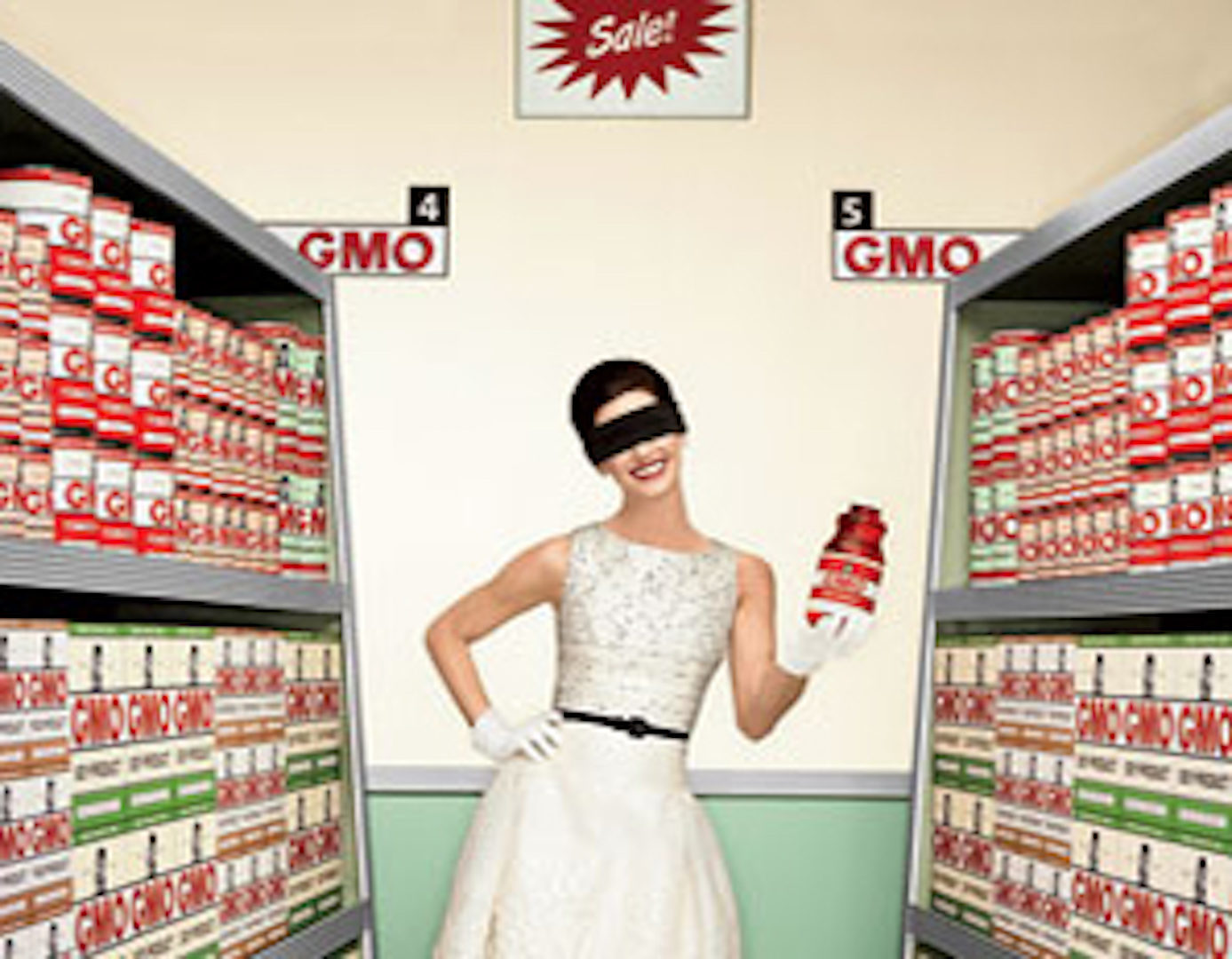
UK Supermarkets: 'Feed me the Truth' about GMOs in our food chain!

GMO food
UK supermarkets led the world in saying 'no!' to GM foods and ingredients, writes Liz O'Neill. But they faltered on GM feeds for pigs, cattle, poultry and fish, with GM soy and corn dominating the UK's non-organic market. Now campaigners are putting the pressure on supermarkets to make their entire supply chains GMO-free for the sake of animal, human and ecological health.

When genetically modified (GM) crops first emerged, campaigners donned decontamination suits and took to the fields.

These days, the most important battleground may actually be the 'contact us' page on the supermarket websites.

Consumer rejection took GM products off the shelves very soon after they first appeared in the UK. But that's only part of the battle.

Showing supermarkets that their customers don't want GM anywhere in the food chain is vitally important to creating a responsible, fair and sustainable food system.

Cow

Companies respond to calls for antibiotic-free meat

crowded chickens
© Bethany HahnIf you lived like this you'd catch the flu too.
Facing pressure from environmentalists and shareholder activists, major US food companies and restaurant chains are moving to limit antibiotics in farm animals raised for meat.

Last month, Tyson Foods announced a "no antibiotics ever" pledge for all Tyson-branded chicken products, building on an earlier promise to restrict drug use on broiler chickens.

Analysts see the latest Tyson announcement as further evidence of a trend of large companies limiting pharmaceuticals that scientists believe increases drug-resistance for treating pneumonia, infections and other illnesses in humans.

The wave started in 2014 with Perdue Chicken and chicken-based fast-food chain Chick-fil-A, followed by McDonald's, Wal-Mart Stores, Pilgrim's Pride and others. The announcements vary in scope, with some companies, for example, still permitting use of ionophores, antibiotics not used in human medicine.

The shift follows warnings about antibiotic resistance from health officials and a September 2016 United Nations General Assembly resolution that pledged coordinated action to address overuse.

"We're seeing a cry from consumers for meat that's responsibly raised," said Lena Brook, a food policy advocate for the Natural Resources Defense Council (NRDC).

Health

Highly drug-resistant candida infections being reported in US hospitals

Candida auris
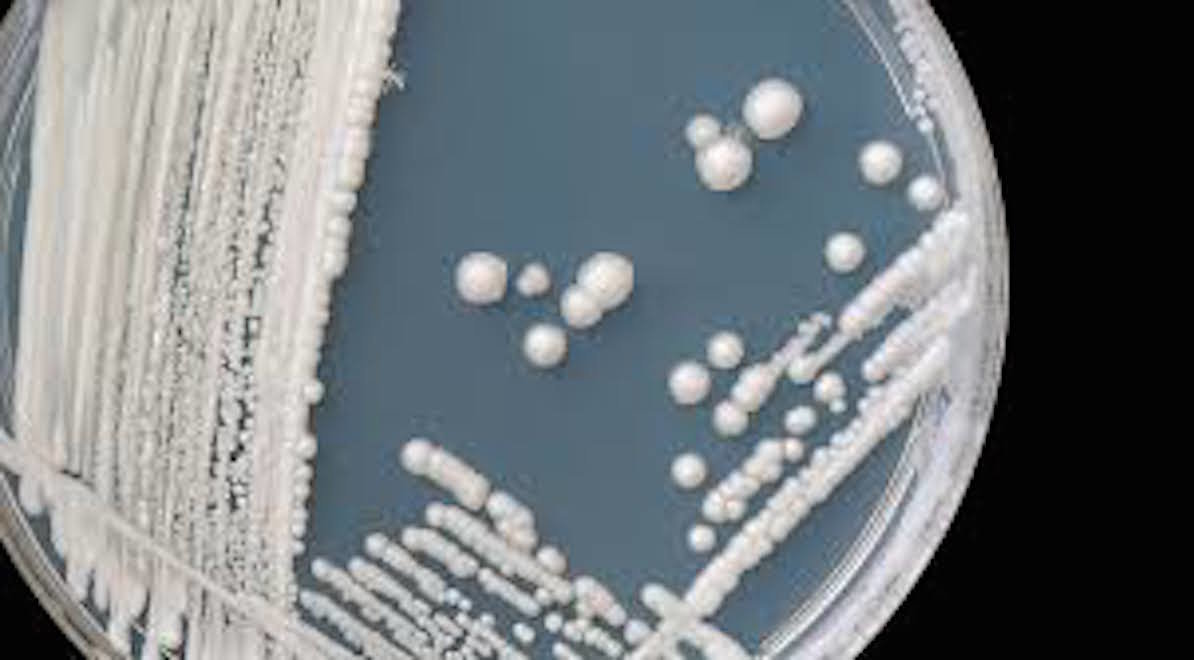
A highly drug-resistant deadly fungal infection, first warned against by U.S. health officials last summer, has been cropping up in hospitals around the country. Over 30 patients have been diagnosed with the emerging pathogen Candida auris since that time, with 28 of the 35 documented U.S. cases located in New York state., according to the CDC.

It is difficult to know just how dangerous the fungus is, since thus far it has mostly infected patients who were already seriously ill, but the majority of people diagnosed with Candida auris have died.

First reported in 2009, the fungus has been linked to invasive infections in nine countries, including the United States. It has caused at least two hospital outbreaks involving more than 30 patients each.

Invasive Infections

In a recent study, microbiologists at Case Western Reserve University School of Medicine provided new details pertaining to C. auris drug resistance and growth patterns. Based on specimens collected from around the globe, the comprehensive study also provides evidence that a new investigational drug (SCY-078) may help to cure these infections.

Comment: Learn more about Candida and what you can do to heal it naturally: