
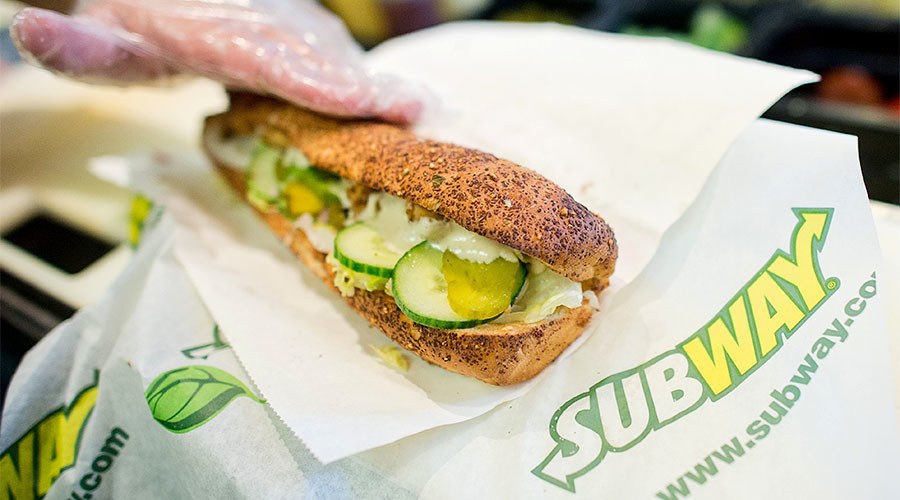
© Julian Stratenschulte / www.globallookpress.com
"Despite our efforts to share the facts with the CBC about the high quality of our chicken and to express our strong objections to their inaccurate claims, they have not issued a retraction, as we requested," Subway said, according to the Toronto Star. "Serving high-quality food to our customers is our top priority, and we are committed to seeing that this factually incorrect report is corrected."
CBC's marketplace, a consumer watchdog program, aired a segment on February 24 called "The Chicken Challenge" and found Subway's oven-roasted chicken contains a mere 53.6 percent chicken, and its chicken strips contain about 42.8 percent, according to DNA tests.
Rival fast-food sandwiches contained far more poultry, CBC reported, citing tests conducted by Trent University in Ontario. Wendy's grilled chicken sandwich scored 88.5 percent, and Tim Horton's chipotle grilled chicken wrap had 86.5 percent, according to the tests. Chicken bought in a grocery store is generally 100 percent actual poultry, according to the report.
















Comment: It's entirely possible that both lab tests are accurate. There could have easily been a lot of chicken which got too much filler and that was the one tested, or the chicken provided to Subway's labs was knowingly of a higher quality than that you get in their stores. A lot of possible explanations, but at the end of the day our readers should know that fast-food is never a good choice for your health.