Health & WellnessS


Stop

Uproar from health advisory organizations as scientist writes new book urging people to eat more salt

salt is good for you
© HeraCould eating more salt really reduce the amount of sugar in our diet and help us lose weight?
In his new book, James DiNicolantonio claims salt could make us healthier. But experts have condemned the advice as potentially dangerous

Public health experts in the UK have spoken out against a new book that claims many of us should be eating more salt, not less - claiming the advice could endanger people's health.

New York scientist James DiNicolantonio says in his book The Salt Fix that the World Health Organization and the US and UK advisory bodies on diet have got it wrong with their advice to cut down on salt.

Salt is necessary and good for us, he says. Eating more salt will reduce the amount of sugar in our diet and help us lose weight, he says. Indeed low-salt diets may be causing brittle bones and memory loss and more salt could fix diabetes, he claims.

Comment: Despite what some say, many others now believe that salt - far from being harmful - is beneficial and actually much needed:

More salt please! The myth of the low-salt diet

Why the war on salt is misguided and dangerous

Study finds higher salt intake is associated with lower blood pressure, contradicting decades of medical advice


Syringe

Western crackdown on vaccine refusal begins; punishment and fines now a reality

mandatory vaccination
As a shift toward authoritarianism in Western governance finds civilians increasingly at the mercy of liberty-robbing laws, punitive (in)justice, and state control, our individual sovereignty as human beings and parents to decide whether or not children should be vaccinated might not be ours to make quite soon.

While both sides of the public vaccine debate maintain intractably obstinate, the governments of Australia and several European nations have come out in support of inoculation mandates - or penalties steep enough to equivocate mandates - to the consternation of parents concerned for the dearth in comprehensive research on the topic.

Pro-vaccine positions contend the safety of vaccines and their track record of nearly annihilating deadly and dreaded diseases; but detractors say the benefits have not been examined in the context of the shots potential interactions with one another, among other seemingly imperative points.

Both sides deem one another child abusers for their positions, and - although Western laws do not yet prohibit refusing inoculation - legislation trends intimate the State has lost patience with parents who refuse to follow the full vaccination schedule, in whole or part, with children enrolled in public education.

Comment: See also:


Bulb

Shining light on the head - Photobiomodulation used to treat brain disorders

low level light therapy
Abstract

Photobiomodulation (PBM) describes the use of red or near-infrared light to stimulate, heal, regenerate, and protect tissue that has either been injured, is degenerating, or else is at risk of dying. One of the organ systems of the human body that is most necessary to life, and whose optimum functioning is most worried about by humankind in general, is the brain.

The brain suffers from many different disorders that can be classified into three broad groupings: traumatic events (stroke, traumatic brain injury, and global ischemia), degenerative diseases (dementia, Alzheimer's and Parkinson's), and psychiatric disorders (depression, anxiety, post traumatic stress disorder).

There is some evidence that all these seemingly diverse conditions can be beneficially affected by applying light to the head. There is even the possibility that PBM could be used for cognitive enhancement in normal healthy people. In this transcranial PBM (tPBM) application, near-infrared (NIR) light is often applied to the forehead because of the better penetration (no hair, longer wavelength). Some workers have used lasers, but recently the introduction of inexpensive light emitting diode (LED) arrays has allowed the development of light emitting helmets or "brain caps".

This review will cover the mechanisms of action of photobiomodulation to the brain, and summarize some of the key pre-clinical studies and clinical trials that have been undertaken for diverse brain disorders.

Comment: See also:


Health

The use of low level light therapy for reducing pain and inflammation and promoting healing in the tissues and nerves

low level light therapy
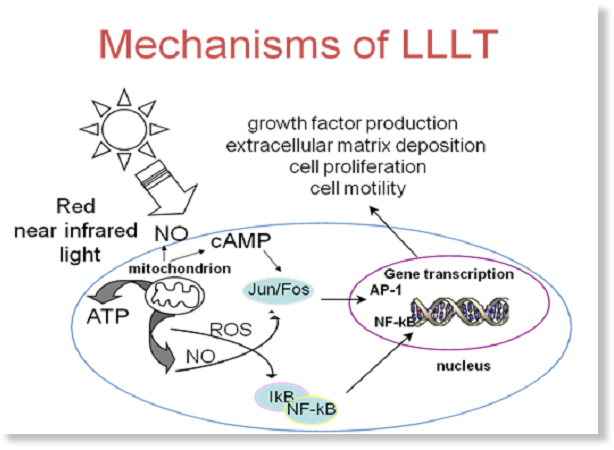
The use of low levels of visible or near-infrared (NIR) light for reducing pain, inflammation and edema, promoting healing of wounds, deeper tissues and nerves, and preventing tissue damage has been known for almost forty years since the invention of lasers.

Originally thought to be a peculiar property of laser light (soft or cold lasers), the subject has now broadened to include photobiomodulation and photobiostimulation using non-coherent light.

Despite many reports of positive findings from experiments conducted in vitro, in animal models and in randomized controlled clinical trials, LLLT remains controversial. This likely is due to two main reasons; firstly, the biochemical mechanisms underlying the positive effects are incompletely understood, and secondly, the complexity of rationally choosing amongst a large number of illumination parameters such as wavelength, fluence, power density, pulse structure and treatment timing has led to the publication of a number of negative studies as well as many positive ones.

In particular, a biphasic dose response has been frequently observed where low levels of light have a much better effect than higher levels.

Comment: See also the recent Health & Wellness show Lightening up: The Benefits of Photobiomodulation and The Therapeutic Effects of Red and Near-Infrared Light


Health

The Therapeutic Effects of Red and Near-Infrared Light

I have previously written about the vast research showing that irradiation by red light or near-infrared appears to have health benefits. Thousands of research articles showing these benefits have been published.

In the scientific literature, this treatment with red light or near-infrared is called either photobiomodulation (PBM) or low-level laser (light) therapy (LLLT). I will be using the term photobiomodulation.

In photobiomodulation, the affected tissue is irradiated by light, usually from a laser or LED source. This irradiation appears to improve the function of the malfunctioning tissue.
photobiomodulation

Alarm Clock

Regularly sleeping less than 6 hours a night could be as dangerous as binge drinking and severely damage your brain

sleep deprivation
Sleep deprivation is linked with acute cognitive impairment which is so severe that driving while sleep deprived could be as dangerous as driving when drunk.
Regularly getting less than six hours sleep a night could cause the same long-term damage as alcohol abuse, according to a worrying new study.

For the body, sleep deprivation results in increased risk of obesity, depression, heart attacks and strokes - causing experts to dub it the 'modern ill'.

However, the most worrying consequences are rooted in the brain and new research suggests the effects are far more destructive than previously thought.

Research suggests that being awake for 18 hours results in the same cognitive impairment people get from being drunk.

This is so severe that driving while sleep deprived could be as dangerous as driving when drunk, researchers found.

Comment: Some helpful information to help counter insomnia and get more quality sleep:


Bulb

What happens when doctors only take cash

doctors
© Dan Farnum / TIMEAnesthesiologists Steven Lantier and Keith Smith founded a cash-based medical center in Oklahoma City that posts its prices online.
When Art Villa found out, after one too many boating accidents, that he needed a total knee replacement, he began asking around to see how much it would cost. The hospital near his home in Helena, Mont., would charge $40,000 for the procedure, he says. But that didn't include the anesthesiologist's fee, physical therapy or a stay at a rehabilitation center afterward. A 2015 Blue Cross Blue Shield study found that one hospital in Dallas billed $16,772 for a knee replacement while another in the same area charged $61,585.

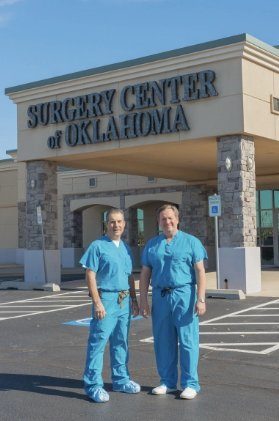
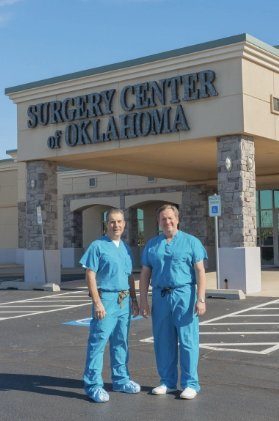
It was in the midst of this confounding research that Villa, who's 68, heard about the Surgery Center of Oklahoma, whose business model is different from that of most hospitals. There, the all-inclusive price for every operation is listed on the website. A rotator-cuff repair for the shoulder costs $8,260. A surgical procedure for carpal tunnel syndrome is $2,750. Setting and casting a basic broken leg: $1,925.

The catch is that the whole facility is cash-based. It doesn't take insurance of any kind. Not Aetna. Not Cigna. Not Medicare or Medicaid. Patients or their employers pay whatever price is listed online, period. There are no negotiated rates, no third-party reimbursements and almost no paperwork. "We say, 'Here's the price. Here's what you're getting. Here's your bill,'" says Keith Smith, who co-founded the Surgery Center in 1997 with fellow anesthesiologist Steven Lantier. "It's as simple as that."

To Villa, the model seemed refreshingly subversive. The Surgery Center would charge $19,000 for his whole-knee replacement, a discount of nearly 50% on what Villa expected to be charged at his local hospital. And that price would include everything from airfare to the organization's only facility, in Oklahoma City, to medications and physical therapy. If unforeseen complications arose during or after the procedure, the Surgery Center would cover those costs. Villa wouldn't see another bill.


Easter Egg 2

EU warns pesticide-contaminated eggs from Dutch farms may have entered four more countries

eggs
© Francois Lenoir / Reuters
The ongoing scandal over contaminated eggs from Dutch farms, which so far has seen millions of them removed from shelves in Germany, the Netherlands and Belgium, has widened to include four more EU countries.

Speaking at a press conference Monday, European Commission spokesperson Anna-Kaisa Itkonen announced that the four more countries now at risk are France, Sweden, Switzerland and the UK.

The European Union has notified food safety authorities in France, Sweden, Switzerland and the UK that some eggs contaminated with the harmful insecticide might have entered their countries.


Snakes in Suits

"Poison Papers": Newly uncovered documents prove EPA colluded with industry to conceal toxicity of widely used chemicals

EPA corruption
Many of the chemical products still in use today were deemed "safe" by EPA based on studies the agency knew were fraudulent and dangerous.
Secrecy, collusion, deception, cover-up, concealment. These are some of the words used in a bombshell report to describe how the Environmental Protection Agency (EPA) and other federal regulators sacrificed human and environmental health on the altar of corporate profit.

Through the determined work of watchdogs at the Bioscience Resource Project and the Center for Media and Democracy, over 20,000 hidden documents have come to light proving that U.S. regulatory agencies betrayed the public trust to unleash highly toxic chemicals - many of which are still in use today.
"The "Poison Papers" represent a vast trove of rediscovered chemical industry and regulatory agency documents and correspondence stretching back to the 1920s. Taken as a whole, the papers show that both industry and regulators understood the extraordinary toxicity of many chemical products and worked together to conceal this information from the public and the press. These papers will transform our understanding of the hazards posed by certain chemicals on the market and the fraudulence of some of the regulatory processes relied upon to protect human health and the environment...

Corporate concealment is not a new story. What is novel in the Poison Papers is abundant evidence that EPA and other regulators were, often, knowing participants or even primary instigators of these cover-ups. These regulators failed to inform the public of the hazards of dioxins and other chemicals; of evidence of fraudulent independent testing; even of one instance of widespread human exposure. The papers thus reveal, in the often-incriminating words of the participants themselves, an elaborate universe of deception and deceit surrounding many pesticides and synthetic chemicals."

Comment: More evidence that the EPA functions more as an arm of the industries they supposedly regulate:


Health

Gut microbes can use flavonoids to prevent severe flu

flavonoids
Microbes that live in the gut don't just digest food. They also have far-reaching effects on the immune system. Now, a new study shows that a particular gut microbe can prevent severe flu infections, likely by breaking down naturally occurring compounds -- called flavonoids -- commonly found in foods such as black tea, red wine and blueberries.

Strong evidence from several studies have shown that individuals consuming fruits and vegetables rich in different flavonoids have a reduced risk of overall mortality and of several chronic diseases.

The research, conducted by scientists at Washington University School of Medicine in St. Louis, also indicates that this strategy is effective in staving off severe damage from flu when the interaction occurs prior to infection with the influenza virus. This work also could help explain the wide variation in human responses to influenza infection.

"For years, flavonoids have been thought to have protective properties that help regulate the immune system to fight infections," said first author Ashley L. Steed, MD, PhD, an instructor in pediatrics who treats intensive care patients at St. Louis Children's Hospital. "Flavonoids are common in our diets, so an important implication of our study is that it's possible flavonoids work with gut microbes to protect us from flu and other viral infections. Obviously, we need to learn more, but our results are intriguing."