Health & WellnessS


Smoking

Rolling Stones guitarist Ronnie Wood, a smoker for 50 years, quits then gets lung cancer

ronnie wood
© Norman SeefRon Wood, 1979
Rolling Stones guitarist Ronnie Wood has revealed he was diagnosed with lung cancer earlier this year.

During a routine health check, his doctor asked if he could also check his heart, lungs and blood - and discovered what Wood describes as "a supernova burning away on my left lung... He asked me what I wanted to do and my answer was simple: 'Just get it out of me.'" The cancer hadn't spread to his lymph nodes, meaning that after a five-hour operation, Wood is healthy for now.

Wood, who smoked for 50 years before giving up when his wife gave birth to twin daughters, told the Mail on Sunday that he hadn't considered chemo - but not because he didn't think it would work. "It's more I wasn't going to lose my hair. This hair wasn't going anywhere. I said, 'No way.' And I just kept the faith it would be all right." He had to wait for a week before receiving his test results: "There was a week when everything hung in the balance and it could have been curtains, time to say goodbye."

Wood warned: "People have to get checked. Seriously have to get checked. I was bloody lucky but then I've always had a very strong guardian angel looking out for me. By rights I shouldn't be here."

Comment: Specifically, he quit in May 2016. By May 2017, they were cutting a tumor out of him.


Arrow Down

World's most evil company - Monsanto rocked by new court documents

Monsanto
© Corbett Report
The case against Monsanto is the gift that keeps on giving.

Previously in these pages I discussed how the trial of Monsanto currently taking place in the California Northern District Court-technically known as "Multidistrict Litigation," with the formal title of "In re: Roundup Products Liability Litigation (MDL No. 2741)"-is airing some of the agrichemical behemoth's dirtiest laundry. In my article "Monsatan On Trial For Roundup Cancer," I revealed how dozens of lawsuits filed against Monsanto for its role in causing the non-Hodgkin lymphoma of thousands of people across the US had been rolled into one dramatic court case, and how discovery from that case had yielded the remarkable deathbed testimony of EPA whistleblower Jess Rowland.

Then new documents emerged from the case confirming what many had long suspected: Monsanto has an entire internal corporate program (appropriately entitled "Let Nothing Go") employing an army of internet trolls who spam the company's propaganda on every social media post, forum and online comment board where its products and practices are being discussed.

Just this week, one of the law firms working on the trial released an equally explosive collection of "Monsanto's Secret Documents," proving another long-suspected claim against the world's most evil company: That it has in fact ghostwritten many of the key articles defending its products in the mainstream press-articles that were supposedly written by "independent" journalists. When the embarrassing details of the story came to light, including a suggested "draft" of an article written by Monsanto for Forbes "journalist" Henry Miller in 2015 that was exactly identical to the article that appeared under his name, Forbes pulled the piece from its website and ended Miller's employment. In a different leaked email exchange, former Monsanto consultant John Acquavella complained to a Monsanto executive, "I can't be part of deceptive authorship on a presentation or publication," adding, "We call that ghost writing and it is unethical."

But if all that weren't bad enough, the latest documents to emerge from the case also detail exactly how Monsanto attempted to smear the research of Gilles-Éric Séralini, the French scientist who published a groundbreaking study showing an increase in tumors among rats fed genetically modified corn and Monsanto's RoundUp herbicide.

Syringe

Polio wasn't vanquished, it was redefined

polio
Opinion piece by Marco Cáceres

Perhaps the most egregious example of clever sleight of hand (... not to mention the outright, blatant rewriting of history) on the part of public health officials in the United States occurred in 1954 when the U.S. government changed the diagnostic criteria for polio. It was the year that medical researcher and virologist Jonas Salk produced his inactivated injectable polio vaccine (IPV). The vaccine was licensed in 1955 and began to be used to inoculate millions of children against polio.

The Salk vaccine has been widely hailed as the vanquisher of polio, and it is commonly used as the shining example of how vaccines are the miracle drugs for combating infectious diseases... and now even against diseases that are not infectious. Pick any disease, illness or disorder you want. You got cancer, cholera, peanut allergies, stress, obesity... we'll develop a vaccine for it.

What the apologists for the Salk vaccine regurgitate from a common script (... some might say scripture) is that before the vaccine was introduced and tested on one million children-the so-called "Polio Pioneers"-in 1954 more than 50,000 people in the U.S. were contracting polio each year, and that by the end of the 1950s the numbers were down to less than 10,000. Ergo, the Salk vaccine saved the U.S. from polio. Open and shut case.

Hmm, not so fast.

What is conveniently omitted from this heroic story is that the reason the number of polio cases in the U.S. dropped so precipitously following the mass introduction of the Salk vaccine in 1955 was not medical, but rather administrative. Yes it's true, in 1952 there were 52,879 reported cases of polio in the U.S. And yes, in 1955 the number went down to 28,985, and by 1959 it had dropped to 8,425. But first of all, it's important to note that the numbers were already declining significantly prior to the initial use of the Salk vaccine. In 1953, there were 35,592 cases of polio in the U.S. So there were other things going on in the U.S. at the time totally unrelated to the Salk vaccine.

More importantly, though, in 1954 the U.S. government simply redefined polio. Yes, the government can do that. It does this kind of stuff occasionally in order to help it meet its public policy objectives when it is unable to actually achieve them. How often have you heard of Congress playing smoke and mirrors, gimmicks with the national budget deficit, or on the issue of the unemployment rate? Exactly.

When it comes to government and public policy, the truth is seldom absolute. That's just the nature of the beast.

According to Dr. Bernard Greenberg, head of the Department of Biostatistics of the University of North Carolina School of Public Health:
In order to qualify for classification as paralytic poliomyelitis, the patient had to exhibit paralytic symptoms for at least 60 days after the onset of the disease. Prior to 1954, the patient had to exhibit paralytic symptoms for only 24 hours. Laboratory confirmation and the presence of residual paralysis were not required. After 1954, residual paralysis was determined 10 to 20 days and again 50 to 70 days after the onset of the disease. This change in definition meant that in 1955 we started reporting a new disease, namely, paralytic poliomyelitis with a longer lasting paralysis.1
As I wrote in my piece The Salk 'Miracle' Myth...
Under the new definition of polio, thousands of cases which would have previously been counted as polio would no longer be counted as polio. The change in the definition laid the groundwork for creating the impression that the Salk vaccine was effective.


Pills

You may not need that long course of antibiotics after all

bacteria petri dish
© Satirus/Shutterstock.comGreen colonies of allergenic fungus Penicillium from air spores on a petri dish. Penicillin was the first antibiotic.
A recent article in the British Medical Journal set off a bit of a firestorm with its claim that "the antibiotic course has had its day." The authors challenged the very widespread belief that you should keep taking every last dose of antibiotic prescribed by your physician even after you feel better. This advice has long been claimed to be key to preventing antibiotic resistance.

The challenge to that claim has sparked a backlash, with physicians and public health officials expressing concern about an overly complex message that could result in encouraging patients to go rogue and ignore their doctors' prescriptions.

All of this is a bit amusing to experts like me, who have been actively challenging this silly dogma for a long time, but without the recent media attention. So let me try to bring some clarity to the debate, which really isn't that complex, so you understand what to do when your doctor gives you a prescription for antibiotics.

Why taking too much of an antibiotic is drug abuse

I'll start with the bottom line first. It is absolutely false that continuing to take antibiotics after you feel completely better will reduce the emergence of antibiotic resistance. Quite to the contrary, it will very likely promote the emergence of antibiotic resistance!

Comment: New study suggests shorter duration of antibiotic therapy is preferable and less likely to fuel drug resistance


X

The failing New York Times - fake news about Iodine

Iodine
© University of Waterloo
A recent article in the New York Times (July 25, 2017) asked the question, "How important is iodized salt to the American or European diet?"

The answer to the question was convoluted. At the beginning of the article the author stated, "Most Americans who eat a varied diet get enough iodine even if they don't use iodized salt."

This statement is a perfect example of "fake news." According to the National Health and Nutrition Examination Survey, U.S. iodine levels have fallen nearly 50% over the last 40 years. (1) And, studies of women of childbearing age show that nearly 60% of U.S. women are deficient in iodine with over 10% severely deficient. (2)

Comment: Read more about the benefits of Iodine:


Health

'Atkins on steroids': One woman's experience with the ketogenic diet

food
© ShutterstockThe keto diet reorganizes the building blocks of the food pyramid.
It was 2 o'clock on a Tuesday, and I felt surprisingly awake. Attentive. Even productive.

I love my job, but on a normal afternoon, I find myself searching for distractions in the depths of my inbox and on Facebook.

That Tuesday in June was different. I knocked out one to-do list item after the next. I felt not just focused, but genuinely happy and relieved to be making so much progress.

It was the moment I realized how effective the ketogenic diet could be.

The "keto" diet is experiencing a surge in popularity thanks to Silicon Valley tech workers who evangelize its ability to promote weight loss, boost energy, and possibly prolong life itself.

Comment: See the following articles for more on the ketogenic diet and helpful tips on transitioning:


Life Preserver

More bone broth benefits

bone broth
I've been writing about bone broth for a long time. I've been drinking it even longer. I'm not sure you can get anything much more primal than a heap of bones cooked for hours into rich, gelatinous glory. Ritual and taste aside, however, I count quality bone broth as an important supplemental food. The copious health benefits are simply too substantial to pass up.

Some of you, I know, are bone broth fans-a few even connoisseurs. You've been making your own for decades, maybe with recipes you learned in your grandparents' kitchen. But what does the average Primal type need to know about bone broth? What goes into making it? What are the distinct health advantages? Are there risks or downsides? What are the alternatives? Finally, what about some recipes? I'm glad you asked....

Comment: Read more about the numerous benefits of bone broth:


Cow Skull

CDC says: 'Don't worry about new Alabama mad cow' - the facts suggest otherwise

mad cows
Government agencies protect big agriculture at the expense of our health.

Don't worry, eat your hamburger. That's what the CDC is saying as another "mad cow" was found in Alabama in July. The cow suffered from an "atypical" version of Mad Cow (BSE), says the CDC, which occurs spontaneously and cannot harm humans. Sounds good until you read that the atypical assertion is merely a CDC "theory" and the agency admits "transmission through feed or the environment cannot be ruled out."

There is a reason government officials are quick to defend the safety of the U.S. beef supply. Within hours of the first mad cow discovered in the U.S. in 2003, China, Mexico, Russia, Brazil, South Africa, Hong Kong, Japan, Singapore, Taiwan, Malaysia, South Korea and 90 other countries banned U.S. beef. Ninety-eight percent of the $3 billion overseas beef market vanished. It has taken 14 years for the U.S. to re-establish its beef exports and other beef-exporting countries have had similar woes. If an atypical version of BSE that threatened no one didn't exist, governments might want to invent one. In fact, the research behind the atypical theory is primarily floated by government ag departments.

Cupcake Choco

Sugar & depression: Scientists just found another worrying link

sweets
© AP Photo/Kathy WillensResearch may make sweets harder to swallow.
Lately, the science has really been stacking up evidence against consuming sugars in excess.

In addition to being linked to conditions like obesity, diabetes, inflammatory diseases, eating high levels of sugar has been associated with mental illnesses like depression. In a study published July 27 in Scientific Reports that followed over 8,000 adults over 22 years, researchers from University College London found that men who reported consuming foods that contained 67 grams of sugar per day or more were 23% more likely to be diagnosed with clinical depression after five years from when the study began.

Comment: Depression: Your brain on sugar
Diet has a tremendous impact on the development of depression and whether or not the sufferer successfully recovers long term. For some unknown reason, however, this basic truth is consistently ignored by most conventional medical authorities other than the possible suggestion of a doctor's office recommended supplement of industrialized fish oil capsules!

Imbalanced, unstable, surging blood sugar is a common source of depression as well as simple irritability and violent tendencies according to Ms. Gedguadas, a board certified Nutritional Therapist and Clinical Neurofeedback Specialist...

Ms. Gedgaudas maintains that blood sugar issues are the #1 influencing factor in mental health with depression being one of the most prominent.

Avoiding the devastating effects of glycation upon the brain which can over the long haul, cause mental illness like depression, anxiety and other mood disorders requires stable, steady blood sugar as much as possible.


Bullseye

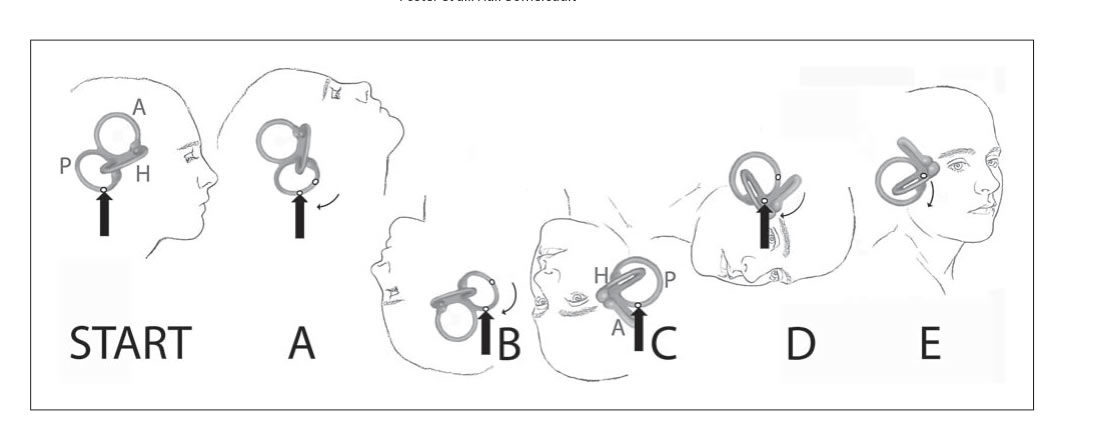
Simple fix for vertigo

halt summer sault maneuver
A doctor at the University of Colorado Hospital has become a YouTube sensation. That's because she has developed a simple maneuver to treat vertigo at home.

CBS4 Health Specialist Kathy Walsh first explained the treatment in a story in 2012. Since then, it's gotten 2.6 million views on cbsdenver.com.

Sue Ricker says that's because it works. Vertigo sent Ricker's world spinning. "It was just debilitating. Everything about you will move, will spin. I couldn't drive. I couldn't walk. I had to hold onto the wall and it was very, very scary," Ricker told CBS4's Walsh. The retired teacher from Aurora had her first vertigo episode 10 years ago. "Eventually it wore off after a few days, but it would come back," said Ricker.

Comment: Watch the maneuver: