Health & WellnessS


Health

An open secret: Childhood allergy epidemic launched by alum adjuvant vaccines

epi pen injection
The epidemic of allergy in children was launched in the period between the late 1980s and early 1990s. ER admission records, back-to-back United Kingdom (UK) cohort studies and eyewitness accounts of teachers confronted by the flood of severely allergic children confirm this period of change. This allergy epidemic occurred in specific countries (UK, Australia, Canada, US primarily), involving just children and at the same time. What has the power to do that?

In my book, I traced some of the history of allergy and anaphylaxis-words coined to describe an outcome of having for the first time paired a vaccine with the needle. Thus, doctors became keenly aware of the danger of contaminant proteins in any injected product.

Using the theory of food oils in the vaccines to explain the sudden nature of epidemic allergy does nothing to forward the conversation. We did not suddenly put food oils, bee venom, latex, dust, pollens, etc. in the vaccines.

Comment: See also:
The Health & Wellness Show: Atchoo! Allergies and Intolerances


Health

The myths behind unnecessary medical tests

fMRI
© L.A. Cicero
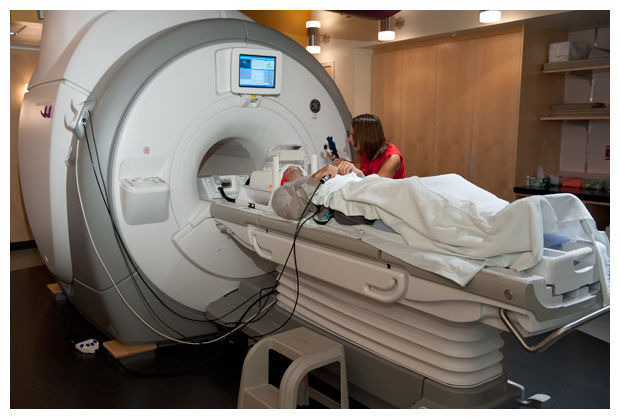
Doctors are often criticized for prescribing unneeded tests and procedures that harm more than they help and add to medical costs that could otherwise be avoided. Diagnostic tests are better than ever but they pick up conditions that might be perfectly harmless, forcing us to rethink when things are best left alone.

The ability of medicine to detect, heal and prevent ill health is undoubtedly among the crowning achievements of humanity. And those with access to state-of-the-art medicine are lucky indeed. In some respects, though, our faith in the increasingly sophisticated healthcare systems can blind us to a potential downside.

Unnecessary tests and occasionally overzealous healthcare systems in the West have created a crisis of overdiagnosis, according to H. Gilbert Welch, a professor of Medicine at the Dartmouth Institute in New Hampshire. Too much medical care is creating unnecessary risk, anxiety and treatment. What might be driving this? Widely held assumptions, Welch argues, that doctors and patients alike need to challenge to keep medicine in a healthy balance. Here are five of them.

Post-It Note

Desk jobs may damage brain and raise dementia risk, study suggests

desk sitting brain damage
© Caiaimage/Paul BradburySedentary behaviour was associated with a thinning in a crucial part of the brain related to memory.
Sitting at a desk all day or spending hours watching television may damage the brain in a way which is known to increase the risk of dementia, a new study suggests.

While researchers have known for some time that sedentary behaviour is bad for physical health, raising the risk of heart disease, diabetes and early death, it is the first study to show it could also influence mental wellbeing.

Scientists at the University of California recruited 35 people aged between 45 and 65 and questioned them about how many hours per day they spent sitting down over the previous week.

Comment: See also:


Health

Parkinson's disease: May begin in the gut and travel to the brain

Gut reaction
© Microscape/Science Photo LibraryGut reaction
We have been thinking about Parkinson's disease all wrong. The condition may arise from damage to the gut, not the brain.

If the idea is correct, it opens the door to new ways of treating the disease before symptoms occur. "That would be game-changing," says David Burn at Newcastle University, UK. "There are lots of different mechanisms that could potentially stop the spread."

Parkinson's disease involves the death of neurons deep within the brain, causing tremors, stiffness and difficulty moving. While there are drugs that ease these symptoms, they become less effective as the disease progresses.

One of the hallmarks of the condition is deposits of insoluble fibres of a substance called synuclein. Normally found as small soluble molecules in healthy nerve cells, in people with Parkinson's, something causes the synuclein molecules to warp into a different shape, making them clump together as fibres.

The first clue that this transition may start outside the brain came about a decade ago, when pathologists reported seeing the distinctive synuclein fibres in nerves of the gut during autopsies - both in people with Parkinson's and in those without symptoms but who had the fibres in their brain. They suggested the trigger was some unknown microbe or toxin.


Comment: See also:


Heart - Black

Put down that beer! Alcohol consumption guidelines may shorten your life expectancy, study says

Beer
© Nguyen Huy Kham / Reuters
If you enjoy kicking back with a few beers at the end of a long day, you may want to change your ways. A study found that even staying within recommended alcohol intake limits of many countries may shorten your life expectancy.

Anyone who enjoys the sound of a wine bottle being uncorked or a beer can being popped will likely find the research upsetting. The study, which was published in the Lancet medical journal, found that drinking more than 100 grams (3.5 ounces) of alcohol per week - around five or six glasses of wine or pints of beer - can lead to a shorter life expectancy and "adverse health outcomes" for both men and women.

The news is somewhat startling, as many countries have recommended weekly limits which are higher than that amount. "Recommended limits in Italy, Portugal, and Spain are almost 50 percent higher than this, and in the USA, the upper limit for men is nearly double," the researchers said, as quoted by AFP.

For instance, the study found that drinking the equivalent of 100-200 grams of pure alcohol a week shortened life expectancy by about six months, compared to drinking less than 100 grams. But drinking up to 196 grams - or 11 glasses of wine per week - is deemed perfectly acceptable for men in the United States.


SOTT Logo Radio

SOTT Focus: The Health & Wellness Show: Atchoo! Allergies and Intolerances

allergy drawing
© Sam Taylor
Do you have allergies? Sneezing, wheezing, burning eyes, or flushing, itchy skin with hives? Do certain foods trigger stomach cramps or diarrhea? Or do you suffer from frequent headaches or migraines, bouts of nausea, severe menstrual cramps, or panic attacks characterized by a racing heart? You're not alone. There are no firms answers as to why we get allergies but whatever the reason, researchers are finding out that food allergies are on the rise with up to 200,000 ER visits each year. Allergies have risen over 300% in just the last 10 years.

Join us for this episode of The Health and Wellness Show where we'll discuss reigning theories about allergies, the differences between allergies and intolerances, histamine and how you can calm your system down and avoid annoying or life-threatening symptoms.

Pets can get allergies too! Stay tuned for Zoya's Pet Health Segment to learn how to treat pet allergies in a natural way.

Running Time: 01:23:26

Download: MP3


Beaker

SOTT Focus: Death by Green Smoothie: The Trendy Killer Cocktail Threatening Millions!

green smoothie
Don't be fooled by its pseudo-delicious convenience - this smoothie poison!
Given that we're on the precipice of World War III, I figured it was important to address a topic that gets little attention in the mainstream media (certainly not an accident). Deadly smoothies.

A couple of paleo peeps around the interwebs have been drawing attention to a study about the case of 65-year-old woman who managed to achieve full kidney failure doing a 10-day "green smoothie cleanse". From the study, "She had normal kidney function before using the cleanse and developed acute kidney injury that progressed to end-stage renal disease."

Wow. I bet the hippies have their yoga pants in a twist over this one!

The whole thing does seem a bit counter-intuitive, though. Green smoothies are supposed to be healthy, after all.

Microscope 1

Neanderthal DNA could affect your health

Ape to Man
© Getty Images
In 2010, scientists mapping the Neanderthal genome finally confirmed that our human ancestors got it on with our Neanderthal Earth-mates. Likewise, even though the last of the Neanderthals died out around 30,000 years ago, most of us still carry a little bit of the Neanderthal genes that we inherited as a result of that interspecies swinging.

How much Neanderthal DNA? Current estimates suggest that anyone of Eurasian descent-and that's pretty much everyone apart from those with strictly African ancestry-have at least 1 to 4 percent Neanderthal DNA. New research also suggests those small bits of Neanderthal genetic code can play a role in human health, and may even elevate your risk for certain diseases.

"The first thing we should understand is that Neanderthal and human DNA are very, very close-almost identical sequences," says Omer Gokcumen, an assistant professor of biological sciences at the University of Buffalo. "So even if you have Version A from modern humans and I have Version B from Neanderthals, most of the time this will not translate into any health consequences."

Comment: See also:


Brain

Good news: Latest research suggests our brains keep making new neurons well into old age

neuroplasticity, neurogenesis hippocampus
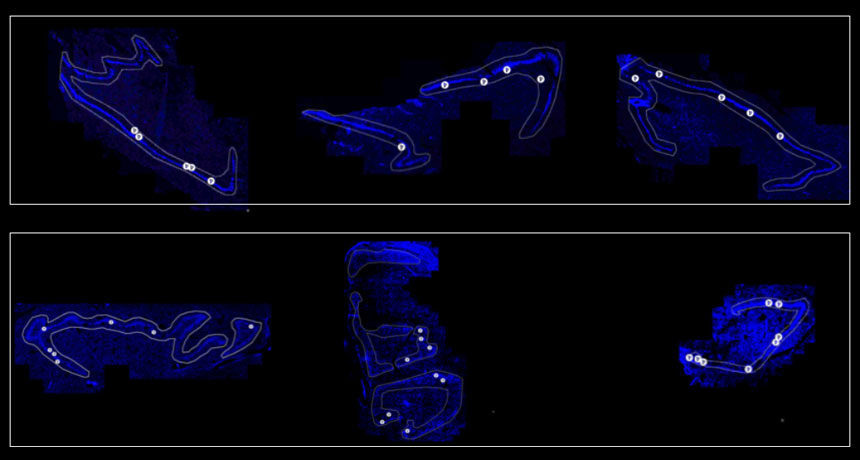
© M. Boldrini/Columbia Univ.NEURON NURSERY Roughly the same number of new nerve cells (dots) exist in the hippocampus of people in their 20s (three hippocampi shown, top row) as in people in their 70s (bottom). Blue marks the dentate gyrus, where new nerve cells are born.
Your brain might make new nerve cells well into old age.

Healthy people in their 70s have just as many young nerve cells, or neurons, in a memory-related part of the brain as do teenagers and young adults, researchers report in the April 5 Cell Stem Cell. The discovery suggests that the hippocampus keeps generating new neurons throughout a person's life.

The finding contradicts a study published in March, which suggested that neurogenesis in the hippocampus stops in childhood (SN Online: 3/8/18). But the new research fits with a larger pile of evidence showing that adult human brains can, to some extent, make new neurons. While those studies indicate that the process tapers off over time, the new study proposes almost no decline at all.

Understanding how healthy brains change over time is important for researchers untangling the ways that conditions like depression, stress and memory loss affect older brains.

Comment: More on neuroplasticity:


Health

Skin infestation delusions may not be so rare after all

magnified skin
© Manuel-F-O/istock
Delusional infestation
de-LU-zhen-al in-fes-TAY-shun n.

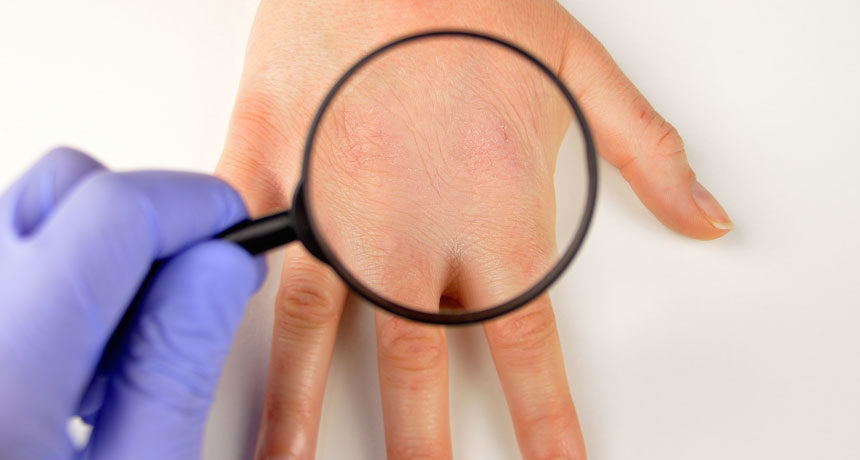
A deep conviction that one's skin is contaminated with insects or other objects despite a lack of medical evidence.
She was certain her skin was infested: Insects were jumping off; fibers were poking out. Fearful her condition could spread to others, the 50-year-old patient told doctors at the Mayo Clinic in Rochester, Minn., that she was avoiding contact with her children and friends.

The patient had delusional infestation, explains Mayo Clinic dermatologist Mark Davis. Sufferers have an unshaking belief that pathogens or inanimate objects pollute their skin despite no medical evidence. Davis and colleagues report online April 4 in JAMA Dermatology that the disorder is not as rare as previously assumed.

Comment: Is the reason that these delusional infestations are more common than previously thought because they aren't 'delusions' in the strict sense of the word? Case in point, Morgellon's: GM Files: Horrifying New Disease Contains Identical Material to GM "Food". The lack of concrete answers does not automatically mean that an infestation is a delusion.