Health & WellnessS


Brain

Brain hacking: Heavy use of wireless devices changes brain structure in children

cell phones
Most people today live in a sea of radio frequencies emitted from wireless technologies of all kinds, from routers to smartphones, tablets, baby monitors, TVs, appliances, smart meters and many more.

According to many experts, chronic, heavy exposure could have severe repercussions for our health, especially that of children, who are now exposed even before birth. Research also suggests interaction with social media, games and apps online produces a number of effects, both physical and psychological.

In the largest long-term study1,2,3 of brain development and youth health in the U.S., the Adolescent Brain Cognitive Development (ABCD) Study,4 reveals the brains of the most prolific users of electronic devices look different compared to those who use smartphones, tablets and video games less frequently.

Comment: Glow Kids: The growing issue of childhood screen addiction


Attention

The high cost of hormone-disrupting chemicals

hormone disrupting chemicals
© BMJ
The diseases caused by exposure to endocrine-disrupting chemicals in our food, environment and household and personal care products cost the U.S. $340 billion a year, says children's environmental health expert Dr. Leonardo Trasande.

Trasande is the author of Sicker, Fatter, Poorer, featured on a recent CBS News segment. The book highlights the potentially harmful effects of thousands of endocrine disruptors, also known as hormone mimickers, which can interfere with the body's endocrine system and cause adverse developmental, reproductive and neurological effects.

Comment: Endocrine Disruptors: What are they & how you can avoid them


Monkey Wrench

Food and Chemical Toxicology Journal: MiRNAs from GMO foods could affect gene expression patterns in humans

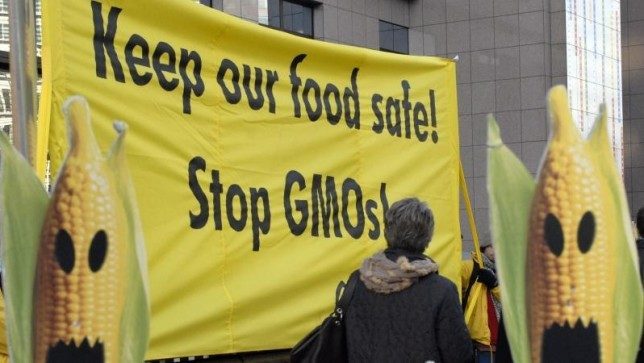
Stop GMOs
An international group of toxicologists from the UK, Russia, the Republic of Korea and Greece have published a review of research papers on the fate of the DNA derived from genetically modified food and feed entering the human body and animals. The article has been published in the prestigious journal Food and Chemical Toxicology.

According to the review data, the DNA from GM foods can survive harsh processing and digestive conditions. The authors stated that there is strong evidence that plant-food-miRNAs can survive digestion, enter the body and affect gene expression patterns.

Comment: The dark and light side of food as information - how dietary RNAs directly impact gene expression
MicroRNAs are used by cells to modify many processes, including how cells grow and die, as well as restore balance in cell function. Many researchers feel that delivering the right microRNAs offer tremendous potential in the treatment of virtually every human disease.

Until recently scientists thought microRNAs were only made by our own cells, but new research shows that microRNAs from plants are absorbed from the diet and affect cell function just like the microRNAs transcribed from our own DNA. In other words, the microRNAs that we ingest from plants can influence the expression of our genetic code and cell function. Since microRNAs affect the expression of up to 30% of our genes, these results are extremely thought-provoking and provide another avenue that plant foods may be influencing our health and reducing our risk for certain diseases.


Biohazard

Ebola "popping up unexpectedly and proving impossible to control"

Ebola
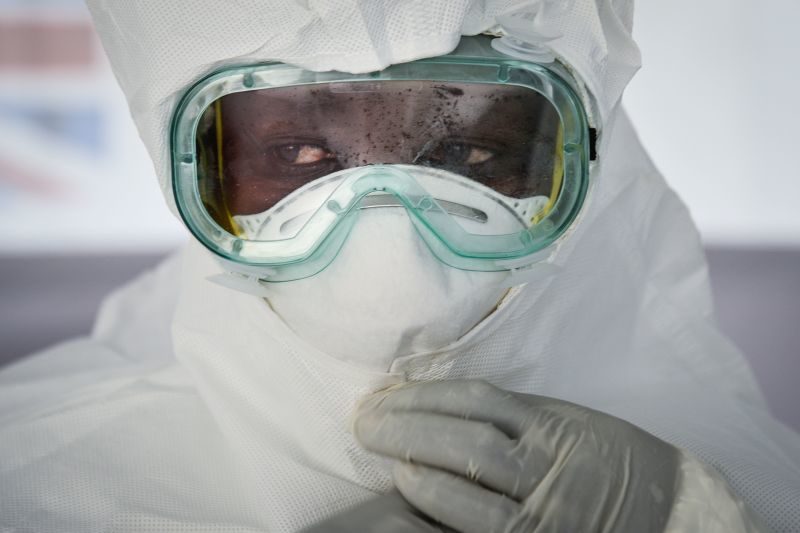
© Isaac Kasmani/AFP/Getty ImagesA member of the medical staff of the Ebola Treatment Unit at the Bwera General Hospital in western Uganda on Dec. 12, 2018.
Nearly 600 people have contracted Ebola since last August in eastern Democratic Republic of the Congo, making the ongoing outbreak the second largest in the 43-year history of humanity's battle with the deadly virus. And there is a genuine threat that this Congo health crisis-the 10th the African nation has faced-could become essentially permanent in the war-torn region bordering South Sudan, Uganda, Rwanda, and Burundi, making a terrible transition from being epidemic to endemic.

Despite having a tool kit at its disposal that is unrivaled-including a vaccine, new diagnostics, experimental treatments, and a strong body of knowledge regarding how to battle the hemorrhage-causing virus-the small army of international health responders and humanitarian workers in Congo is playing whack-a-mole against a microbe that keeps popping up unexpectedly and proving impossible to control. This is not because of any special attributes of the classic strain of Ebola-the same genetic strain that has been successfully tackled many times before-but because of humans and their behaviors in a quarter-century-old war zone.

Comment: Outbreaks of all kinds appear to be catching health professionals unawares, and that with Ebola it may partly due to the unique situation in the region, but there are also other factors to consider that could be effecting its virulency and transmission, see:


Pills

It's the brain-altering drugs stupid: Opioids, SSRIs, anti-psychotics, benzodiazepines & suicidality

drugs
“One of the saddest lessons of history is this: If we've been bamboozled long enough, we tend to reject any evidence of the bamboozle. We're no longer interested in finding out the truth. The bamboozle has captured us. It is simply too painful to acknowledge - even to ourselves - that we've been fooled.” - Carl Sagan,"The Fine Art of Baloney Detection" (February 1, 1987)
This morning, just as I was about to start writing my weekly Duty to Warn column, I glanced through the Duluth News-Tribune and couldn't help but notice a full-page ad on page A3. The ad was titled "Rallying to Address Opioid Addiction". The color-printed ad likely cost well over a thousand dollars and was paid for by an entity that I had never heard of before called "Rx ALI Minnesota" (Rx Abuse Leadership Initiative). The group was apparently a fresh new "alliance" of "concerned" corporate entities that were suddenly interested in the opioid crisis that is affecting all portions of America.

Or maybe the interest of some of the major alliance entities sponsoring the ad had some ulterior motives, such as trying to obscure the guilt that they should be acknowledging in actually causing the addiction and suicidality crises in the first place, wanting to pretend to be a part of the solution rather than admitting that they were a major cause for the crisis. Big Businesses often finagle their way into positions of power and influence when decisions are being made that might affect their share price and prestige.

Info

Qi Gong: What is it?

The goal of qi gong isn’t an addition process; it is more a subtraction process.
The guiding principle of Qi Gong, is the coordination of the eyes with the body movements.

The literal translation of qi gong is "energy work." It is an Asian form of yoga that has been around for thousands of years. Much of it is performed while standing, though there are a number of seated sets as well. There are hundreds of systems of qi gong that have come from various lineages, and many of them focus on different fields.
Many are health oriented, while a separate group comes through the martial arts lineages.

These systems act to harness willpower, to focus, and to help practitioners channel their energy through their palms. There are also a number of systems from the temples and monasteries that are more focused on spiritual cultivation and depth of meditation. Some involve moving, and others are visualization based. Almost all of them involve specialized breathing, which is coordinated with the activity at hand. The guiding principle of all these practices, however, is the coordination of the eyes with the body movements, the focus of the mind, and the breath, especially for the moving practices. For the more passive, non- movement exercises, we focus the vision inward and explore the inner realms as we guide the breath to various inner chambers.

Syringe

Experimental "vaccine" for celiac disease in the works

injection
© CC--Steven Depolo
The "vaccine" Nexvax 2 is designed to work similar to allergy shots.

An experimental "vaccine" called Nexvax 2 is being scheduled for human clinical trials to evaluate its effectiveness in celiac disease. Immusan T is a biotechnology company focusing on developing therapeutic vaccines and received $40 million in 2017 to fund Nexvax 2 to reduce the "suffering of those with celiac disease since it is a serious inflammatory autoimmune disease caused from gluten".

Since there is no cure for celiac disease except following a strict gluten-free diet, symptoms can vary greatly based on age and diet content. Children with DQ2 and DQ8 genes may have a swollen belly, chronic diarrhea and poor appetite which can cause delayed growth. Adults often experience abdominal pain, fatigue, anemia and joint pain.

Comment: The real question is: Is it worth it? Knowing the amount of garbage pharmaceutical companies put in vaccines, not to mention the healthy dose of side-effects that inevitably come in store, is it worth just to be able to eat a sandwich again? Given the prevalence of gluten-free foods on the market at this point, and the fact that a gluten-free diet is healthier for the vast majority of individuals (celiac or not) it kind of seems like the vaccine wouldn't be worth the risk.

See also:


Syringe

WHO says vaccine hesitancy ranks with Ebola and HIV as global threats

vaccination
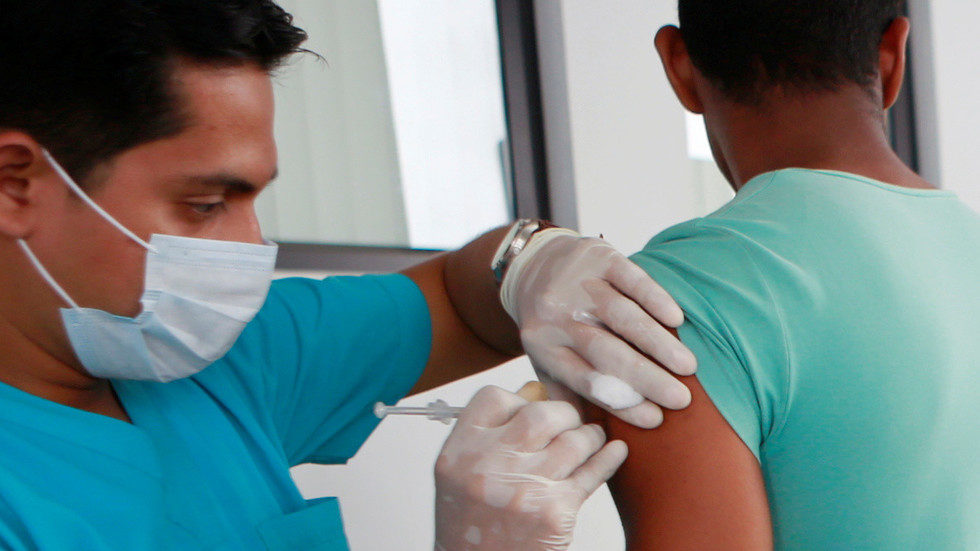
© Douglas Juarez / ReutersA man receives a vaccination in Peru, August 2018.
The anti-vaccination trend has landed next to HIV and Ebola as a key global threat, according to the World Health Organization (WHO). Experts say "vaccine hesitancy" risks reversing progress in fighting preventable diseases.

Although various diseases that can be prevented by vaccines, such as diphtheria and meningitis, were on WHO's health threat lists before, in 2019 the organization included "vaccine hesitancy." Among other top 10 threats are HIV/AIDS, the global influenza pandemic, along with the spread of the deadly Ebola virus and Dengue fever, as well as air pollution, lack of primary care and noncommunicable diseases like diabetes.

Vaccination remains one of the most "cost-effective" ways to avoid infection, WHO stated, and refusing it directly threatens to cancel out the progress made in fighting preventable diseases.

The WHO listed "complacency" and "lack of confidence" among the key reasons why people reject vaccines. Anti-vaxxers usually say they fear the side effects, in particular the possibility of developing autism, although some cite conspiracy theories about big pharma and governments.

SOTT Logo Radio

SOTT Focus: The Health & Wellness Show: The Power of Prayer

prayer
© Unknown
For many the power of prayer can heal emotional, spiritual and physical pain and illness. Therapeutic applications like intersessory prayer, laying on of hands, meditation and mindfulness are just a few of the practices that constitute 'prayer'. What, exactly, is a prayer anyway? How do those who 'feel it's power' know it works?

Researchers in the field of 'Neuro theology' argue that evidence supports a direct 'health bonus' for religious and spiritual people. What does the medical literature say about the healing potential of prayer? There have been over 1,600 published articles looking into the topic of prayer and healing. Join us on the Heath and Wellness show as we discuss the power of prayer.

And stay tuned for Zoya's Pet Health Segment where the topic will be pet therapy.

Running Time: 01:07:49

Download: MP3


Attention

Time to set the record straight: Even low levels of glyphosate are unsafe

glyphosate
Proponents of GMOs and Glyphosate-based herbicides and staunch believers in the EPA have long argued that low levels of glyphosate exposure are safe for humans. Even our own EPA tells us that Americans can consume 17 times more glyphosate in our drinking water than European residents. The EWG asserts that 160 ppb of glyphosate found in breakfast cereal is safe for a child to consume due to their own safety assessments, and yet renowned scientists and health advocates have long stated that no level is safe. Confusion amongst consumers and the media is rampant.

Glyphosate is the declared active chemical ingredient in Roundup and Ranger Pro, which are both manufactured by Monsanto, the original manufacturer of Agent Orange and DDT. There are 750 brands of glyphosate-based herbicides. Glyphosate based herbicides are the most widely used in the world and residues of glyphosate have been found in tap water, children's urine, breast milk, chips, snacks, beer, wine, cereals, eggs, oatmeal, wheat products, and most conventional foods tested.

The detection of glyphosate in these foods has set off alarms of concern in households and food manufacturers' offices around the world. Lawsuits have sprung up against companies that make food products that claim to be "100% Natural" and yet contain glyphosate residues. These lawsuits have been successful. Debates, using the argument that "the dose makes the poison," have been pushed by media. Speculation is that these media outlets are funded by advertisers that make or sell these chemicals or have sister companies that do, and threatening their profits would be unwise for all involved - except the consumers.

Comment: Given that glyphosate is ubiquitous and difficult to avoid, it's important to understand how it affects the body and how to help the body detox: