Health & WellnessS


Pills

Do I Look Fat in This Mirror? Why a Woman Sees Her Reflection as a Shorter, Wider Version of Reality

Image
© Getty Images'Distorted': A woman will see her reflection as shorter and fatter, the study suggests.
Women's brains 'massively distort' their own body image, creating a shorter figure which can be two-thirds wider than in real life, scientists have suggested.

The research, which could explain why some slim people look in the mirror and see themselves as fat, may help to further understanding eating disorders, such as anorexia.

Scientists at University College London made the 'hall of mirrors' discovery while carrying out an experiment on people's hands.

Researchers asked volunteers to place their left hand under a board and guess the positions of the knuckles and fingertips, pointing them out with a baton.

The results, reported today in the journal Proceedings of the National Academy of Sciences, were used to assess mental models of finger length and hand width.

In general, participants estimated their hands to be about two-thirds wider and a third shorter than actual measurements showed they were.

Magnify

Big Pharma Lies About Statin Drugs Finally Exposed in British Medical Journal

Image
© NaturalNews
To hear Big Pharma tell it, statin drugs are "miracle" medicines that have prevented millions of heart attacks and strokes. But a recent study published in the British Medical Journal tells a completely different story: For every heart attack prevented by the drug, two or more people suffered liver damage, kidney failure, cataracts or extreme muscle weakness as a result of taking the drug.

Statin drugs, in other words, harm far more people than they help.

Julia Hippisley-Cox and Carol Coupland led the study which examined data from over two million patients, including over 225,000 patients who were new statin drug users.

They found that for every 10,000 women being treated with statins, there were only 271 fewer cases of heart disease.

And yet, at the same time, the statin drugs caused 74 cases of liver damage, 23 cases of acute kidney failure, 39 cases of extreme muscle weakness and 307 cases of cataracts.

Attention

Why Lead Poisoning May Be Causing Your Health Problems

We are too heavy, and I don't mean overweight. We're heavy with metals, not fat. Nearly 40 percent of us have toxic levels of lead in our bodies. And we don't even know it. But that doesn't mean we don't have symptoms...

You may have headaches, insomnia, irritability, a low sex drive or tremors. You may have mood problems, nausea, depression, memory difficulties, trouble concentrating, poor coordination or even constipation. Yet most of us attribute these symptoms to other problems. We don't recognize that they may be caused by lead poisoning.


Magnify

British People Lonelier Than Ever with Fewer Friends Than 30 Years Ago, Study Finds

Image
© AlamyResearch, carried out by polling group YouGov, shows a country more 'atomised' than ever
Britons are lonelier, less neighbourly and have fewer friends than 30 years ago, a study has revealed.

The research, which examined social attitudes today compared to those of the early 1980s shows a country more 'atomised' than ever.

It also contained a warning for couples that parenthood will reduce their circle of friends.

Despite many people having hundreds of friends on Facebook and similar internet sites, true friendships can be counted on the fingers of one hand, the study found.

We are also more likely to consider our neighbours as pests and less likely to know them well speak often or lend a hand.

Common complaints include noise, anti-social behaviour, nuisance children and pets and unkempt trees and bushes.

The study, carried out by polling group YouGov, imitated many of the questions asked by a similar poll three decades ago.

Now three out of four of us are prepared to admit to feeling lonely, compared to less than one in three then.

Info

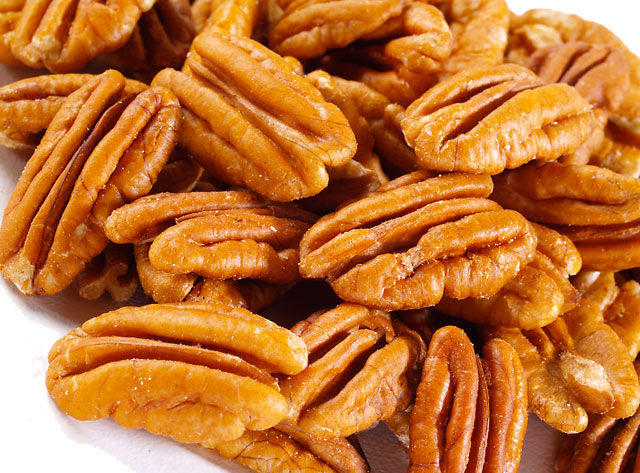
Pecans Provide Neurological Protection

Image
Study suggests pecans may delay progression of motor neuron degeneration

Lowell, MA - Eating about a handful of pecans each day may play a role in protecting the nervous system, according to a new animal study published in the current issue of Current Topics in Nutraceutical Research. The study, conducted at the Center for Cellular Neurobiology at the University of Massachusetts Lowell, suggests adding pecans to your diet may delay the progression of age-related motor neuron degeneration. This may include diseases like amyotropic lateral sclerosis (ALS), also known as Lou Gehrig's Disease.

Pills

Disease Mongering and Big Pharma: Enough Already!

You may think there is enough disease in the world already, and that no one would want to add to the diseases that we humans must deal with. But there is a powerful industry in our society that is working overtime to invent illnesses and to convince us we are suffering from them.

This effort is known as "disease mongering," a term introduced by health-science writer Lynn Payer in her 1992 book Disease-Mongers: How Doctors, Drug Companies, and Insurers Are Making You Feel Sick. Payer defined disease mongering as "trying to convince essentially well people that they are sick, or slightly sick people that they are very ill." This strategy has also been called "the corporate construction of disease" by Ray Moynihan, Iona Heath, and David Henry in the British Medical Journal. "There's a lot of money to be made from telling healthy people they're sick," they say.

"Pharmaceutical companies are actively involved in sponsoring the definition of diseases and promoting them to both prescribers and consumers."

Health

Overtreated: More Medical Care Isn't Always Better

Washington D.C. - More medical care won't necessarily make you healthier - it may make you sicker. It's an idea that technology-loving Americans find hard to believe.

Anywhere from one-fifth to nearly one-third of the tests and treatments we get are estimated to be unnecessary, and avoidable care is costly in more ways than the bill: It may lead to dangerous side effects.

It can start during birth, as some of the nation's increasing C-sections are triggered by controversial fetal monitors that signal a baby is in trouble when really everything's fine.

It extends to often-futile intensive care at the end of the life.

Magnify

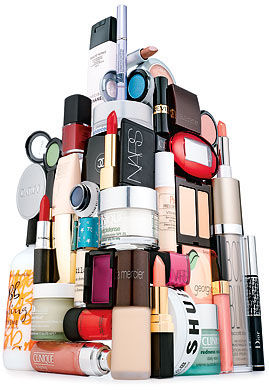
Toxic Cosmetic Ingredients

Image
The greener we become, the more we have to scrutinize. I for one have cleaned up my home, my diet, my cleaning products and of utmost importance the products I put on my skin. I'm an avid ingredient reader and do the research after all, my skin is the largest organ in my body! Here's a list of some common skin and hair care chemicals we all need to avoid.

Heart

Now, Saturated Dairy Fat Reduces The Risk of a Heart Attack!

We have been told for decades that, to reduce our risk of a heart attack, we should cut down on saturated fats. And the fat on milk - the cream - is rich in saturated fat. Not surprisingly, more and more people are drinking skim and semi-skim milk, low-fat yogurt and 'light' cheeses.

However, studies over a decade it was shown that use of low-fat dairy products increased the risk of prostate cancer in men,[1-4] and ovarian cancer in women.[5,6] So you won't be surprised that these cancers have increased in number since 'healthy eating' was introduced in the 1980s.

Now, a new study published in the prestigious American Journal of Clinical Nutrition, shows that, far from increasing the risk of heart attack, drinking dairy fat actually reduces the risk![7]

Not only that, but the researchers found that drinking full-cream milk and eating other full-fat dairy products also reduced the risk factors for the metabolic syndrome - a collection of conditions which includes obesity and diabetes.

Comment: Readers who wish to find out more on Diet and Health related issues, can do so here.


Health

A Brief History of "the Big 4″

I have been gluten-free for over ten years now. But it did not take long for me to realize that there were other foods that needed to be eliminated from our diets...and those of my veterinary patients. Within a few months of starting down this road, I had discovered that dairy was not "nature's perfect food", soy was not a "health food" and that corn was the fourth food that induced villous atrophy of the small intestine, just as gluten does. Turns out, my four-legged patients needed this info as badly as I did.

Yes, I began placing all of my dog and cat patients on the same diet that I had adopted for myself, starting with the elimination of wheat and later adding restrictions from soy, corn and all dairy products. Miracles started happening in my veterinary patients! And why wouldn't they? Dogs and cats are carnivores and not only would they never elect to eat gluten grains, dairy, soy and corn, they would never even be exposed to them, as they are all man-cultivated items.

So, when did we mess things up so badly? Look back...way back.