Health & WellnessS


Info

Scientists Believe BPA is Risky - it's Just a Matter of Agreeing on How Much

Image
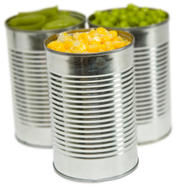
On the heels of Canada's recently announced ban on bisphenol-A (BPA), The New York Times has a substantial report reviewing the state of the science regarding the safety of this substance. Used primarily to line food and drink cans, some studies have shown BPA to be a hormone disruptor and a potential factor in the rise of obesity. Even the FDA has acknowledged we should reduce our exposure to it.

The Times piece is dedicated to comments from scientists, rather than from industry spokespeople, which is all to the good, though I'm not crazy about the headline: "In Feast of Data on BPA Plastic, No Final Answer." The good news is that the thrust of the article undercuts this declaration quite a bit.

It's true that the piece is chock full of scientific circumspection - many scientists are waiting for definitive results before declaring an unequivocal position on the BPA controversy, including whether low-dose exposure to the chemical truly represents a health risk. But most scientists quoted in the article chalked up much of the uncertainty to details of the experimental techniques used, rather than to real doubts about the underlying hypotheses. In fact, the only denials mentioned were from industry and the Republican party - and no corporate or GOP spokesperson seemed willing to offer a quote on the subject.

Health

Chemicals in Rugs, Cookware May Be Linked to Raised Cholesterol in Teens

non-stick cookware
© unknown
Common chemicals found in everything from non-stick cookware to grease-resistant food packaging appear to be associated with increases in cholesterol levels in adolescents, a new study suggests.

People are exposed to these chemicals -- known as perfluoroalkyl acids (PFAAs) -- in dust, drinking water, non-stain carpets, waterproof fabrics, microwave popcorn bags and a host of other household products.

"This is the first study that takes an in-depth look at an association between these chemicals and health effects in children," said study author Stephanie J. Frisbee, research instructor in the Department of Community Medicine at West Virginia University School of Medicine in Morgantown.

The PFAA compounds in question include perfluorooctanoic acid (PFOA) and perfluorooctanesulfonate (PFOS).

"We found a positive association between PFOA and PFOS and total [cholesterol] and LDL cholesterol," she said. As the blood levels of these chemical increased, so did cholesterol, Frisbee added.

Magnify

Study Examines Association Between Urban Living and Psychotic Disorders

Image
© Getty Images/Jenny Gaulitz
The association between psychotic disorders and living in urban areas appears to be a reflection of increased social fragmentation present within cities, according to a report in the September issue of Archives of General Psychiatry, one of the JAMA/Archives journals.

"There is a substantial worldwide variation in incidence rates of schizophrenia," the authors write as background in the article. "The clearest geographic pattern within this distribution of rates is that urban areas have a higher incidence of schizophrenia than rural areas." Characteristics of neighborhoods that have been associated with an increased risk of developing psychosis include population and ethnic density, deprivation and social fragmentation or reduced social capital and cohesion.

To examine whether individual, school or area characteristics are associated with psychosis and can explain the association with urbanicity (the quality of being urban), Stanley Zammit, Ph.D., of Cardiff University, Cardiff, Wales, and colleagues studied a total of 203,829 individuals living in Sweden, with data at the individual, school, municipality and county levels.

Question

Afghan School Poisonings Linked to Toxic Chemicals

Kabul, Afghanistan - Blood samples taken from Afghan schoolgirls who collapsed in apparent mass poisonings showed traces of toxic chemicals found in herbicides, pesticides and nerve gas, the Health Ministry said Wednesday.

Suspicion has fallen on sympathizers of the Taliban, the hard-line Islamist militia that opposes education for women and prohibited girls from going to school when it was in power until it being ousted by a 2001 U.S.-led invasion.

Poisonous levels of organophosphates were found in samples taken from girls sickened in incidents over the past two years, said ministry spokesman Dr. Ghulam Sakhi Kargar.

Samples from more recent cases have been sent to Turkey for analysis and no results have been issued yet, Kargar said.

Evil Rays

The Story of Cosmetics

Image
The Story of Cosmetics, examines the pervasive use of toxic chemicals in our everyday personal care products, from lipstick to baby shampoo. Produced with Free Range Studios and hosted by Annie Leonard, the seven-minute film by The Story of Stuff Project reveals the implications for consumer and worker health and the environment, and outlines ways we can move the industry away from hazardous chemicals and towards safer alternatives. The film concludes with a call for viewers to support legislation aimed at ensuring the safety of cosmetics and personal care products.


Chalkboard

Forget What You Know About Good Study Habits

Image
© Ellen Weinstein
Every September, millions of parents try a kind of psychological witchcraft, to transform their summer-glazed campers into fall students, their video-bugs into bookworms. Advice is cheap and all too familiar: Clear a quiet work space. Stick to a homework schedule. Set goals. Set boundaries. Do not bribe (except in emergencies).

And check out the classroom. Does Junior's learning style match the new teacher's approach? Or the school's philosophy? Maybe the child isn't "a good fit" for the school.

Such theories have developed in part because of sketchy education research that doesn't offer clear guidance. Student traits and teaching styles surely interact; so do personalities and at-home rules. The trouble is, no one can predict how.

Yet there are effective approaches to learning, at least for those who are motivated. In recent years, cognitive scientists have shown that a few simple techniques can reliably improve what matters most: how much a student learns from studying.

Arrow Down

Facebook "Lowers Exam Results By 20 Percent"

Image
© Australian Associated PressStudents admitted using social networking sites are a distraction
Students who use social networking sites like Facebook while doing their homework get much lower grades, says a new study.

And it makes no difference if the site is on in the background - exam results were 20 per cent lower than for non-users.

Study author Prof. Paul Kirschner said the research countered the trendy view that children can multi-task and education systems should keep up with the times.

"The problem is that most people have Facebook or other social networking sites, their emails and maybe instant messaging constantly running in the background while they are carrying out other tasks," he said.

Student Brittany, 17, from Melbourne's Strathcona Baptist Girls Grammar school said Facebook was useful when doing group study tasks, but could also be a distraction.

Hourglass

In Young Kids, Lack of Sleep Linked to Obesity Later

Image
© Unknown
Can you sleep away pounds? Well, not exactly, but research has shown that people who sleep a good eight hours-plus are more likely to maintain a normal weight than those who sleep less than eight hours a night. Now, a new study finds that even for infants and preschoolers, a good, long night's sleep may be just as important as diet and physical activity.

Over the past three decades, obesity rates have doubled among children age 2 to 5, and tripled among 6- to 11-year-olds. So University of Washington maternal and child health researcher Janice Bell wanted to know whether sleep had anything to do with it.

She looked at federal data collected on nearly 2,000 children and compared those who slept 10 hours or more a night with those who slept less. She also looked at how much the children weighed over a five-year period. The most striking findings had to do with infants and toddlers. The study appears in the Archives of Pediatrics and Adolescent Medicine.

"They were nearly twice as likely to move from normal weight to overweight, or overweight to obese in that five-year period," she says.

Cheeseburger

40 percent of New York kids are obese, overweight

Image
© Dazeley/GettyMore than 250,000 students in New York City were found to be too heavy
A shocking number of young city students are overweight or obese - with about half the youngsters in some zip codes tipping the scales too heavily, a new city report shows.

In the largest study of childhood obesity ever conducted in the city, 40% of kindergartners through eighth-graders - more than 250,000 kids - were found to be too heavy.

Officials say even though the data seem startling, the rate of obesity in city kids is actually flat-lining, while it's rising nationwide.

"While it would be great if we saw the numbers go down, it is encouraging that they're holding steady," said Laurie Benson, executive director of the Department of Education's Office of School Wellness, refering to previous studies with smaller sample sizes.

Fish

'Frankensalmon' ruled safe to eat: Fast-growing GM fish approved by scientists

Image
© ReutersHow they compare: The larger fish is the GM salmon (24in in length and 6.6lb) and the Farm salmon (13in in length and 2.8lb)
Genetically modified salmon, which grows at a superfast rate, is safe to be farmed and eaten, American scientists have declared. The move by experts advising U.S. watchdogs will clear the way for the first GM creature to be sold as food.

The first GM salmon could be on American dinner tables within two to three years, and possibly on British plates soon after that, paving the way for the genetic modification of other fish and food animals into what critics are calling 'Frankenfood'.

Shares in the company behind the technology leapt by 26 per cent on the London Stock Exchange on Friday, providing evidence that analysts see GM as the future of fish production.

However, the science is highly controversial and consumers will have questions about the impact on human health and the environment.